Running watts and starting watts
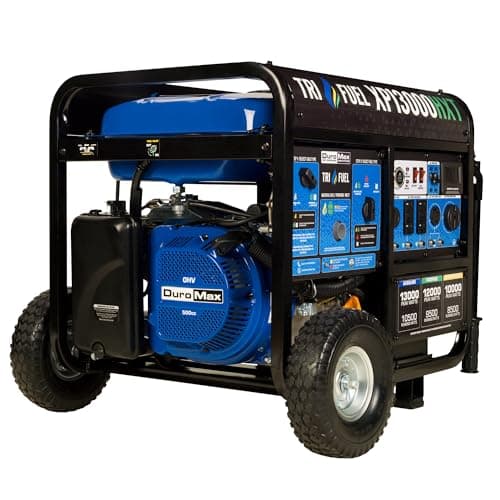
Every generator is sold on two numbers and buyers routinely read the wrong one. Running watts — sometimes “rated watts” — is what the machine sustains indefinitely. That is the number that matters. Peak, starting or surge watts is what it can supply for a few seconds while a motor spins up. It is always the larger figure, so it is always the one on the box.
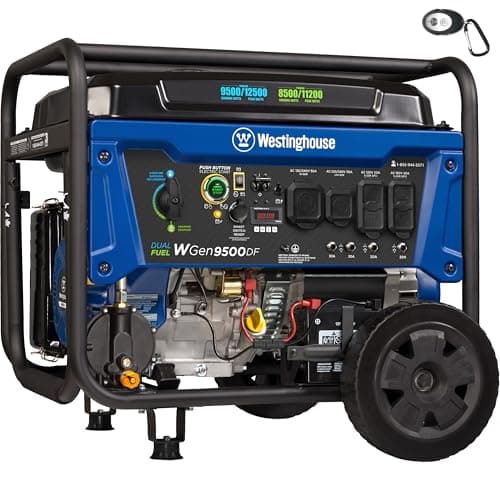
A generator advertised as “12,500 watts” is very often a 9,500-watt machine. Neither figure is dishonest; the marketing simply leads with the flattering one. Size your house against running watts and treat the surge headroom as insurance for the moment the well pump and the fridge start together.
Conventional, inverter, dual fuel
Conventional generators run the engine at a fixed 3,600rpm to hold 60Hz, whatever the load. They are cheap per watt, loud, and their output is a rougher approximation of a sine wave — fine for a fridge or a heater, less ideal for a laptop.
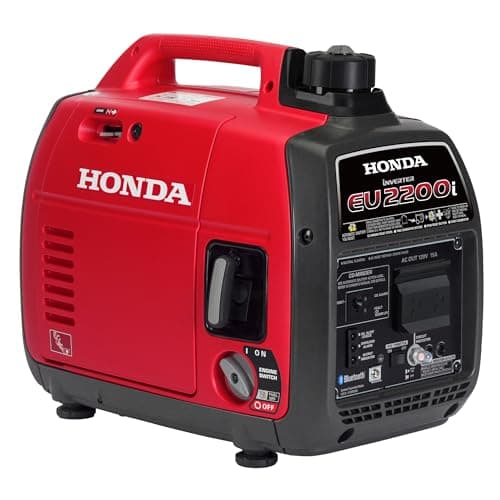
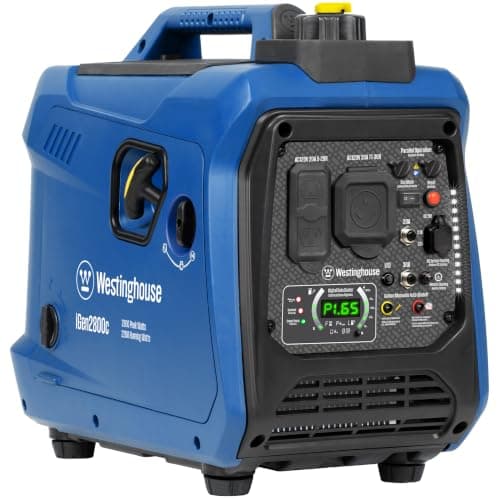
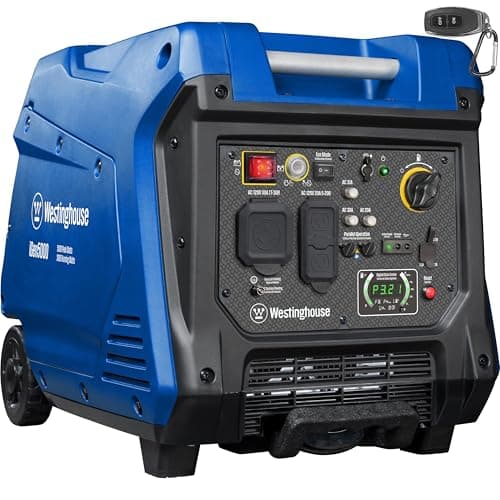
Inverter generators produce AC, rectify it to DC, and synthesize a clean sine wave back out. That lets the engine throttle down when the load is light, which is why they are dramatically quieter and more frugal at partial load. Honda's EU2200i publishes 48–57dB(A) depending on load; a conventional open-frame machine of similar output sits nearer 70dB. Every 10dB is roughly a doubling of perceived loudness, so that gap is not a detail.
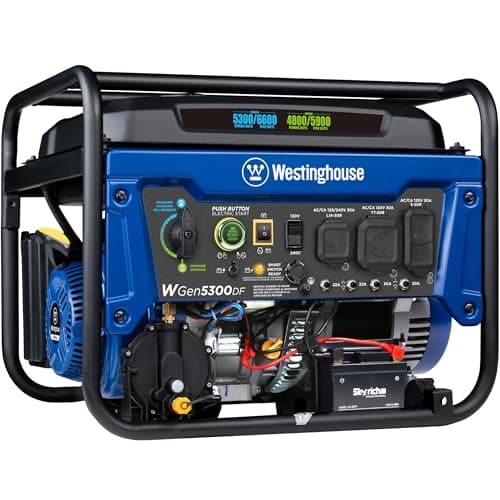
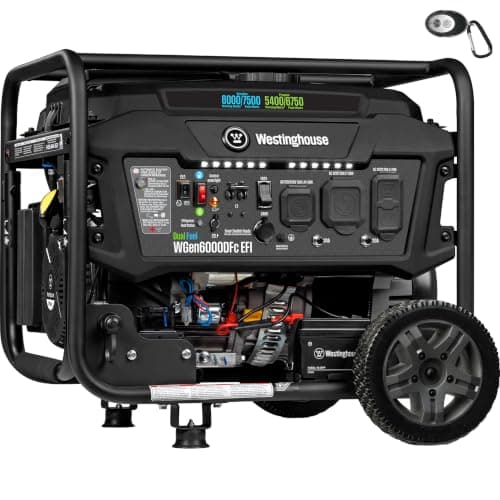
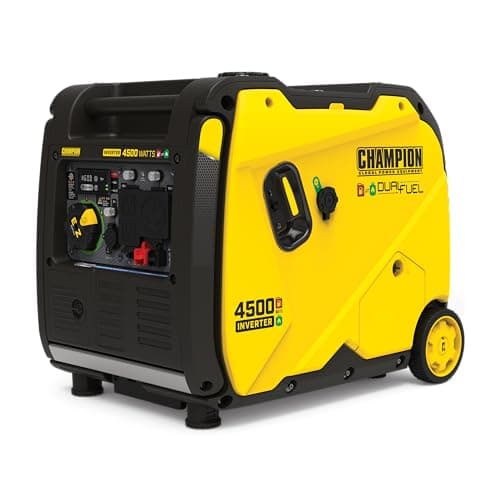
Dual fuel runs on gasoline or propane. Propane typically yields 10–15% less power — Westinghouse publishes 5,300 running watts on gasoline against 4,800 on propane for the same WGen5300DF — but it stores indefinitely, does not gum a carburetor, and is available when every gas station within thirty miles has no power to run its pumps. In an actual regional outage that last point is the one that matters.
What it costs to run, not to buy
This is the arithmetic the category almost never publishes. A mid-sized generator burns somewhere around 0.75 gallons an hour at half load. At the EIA's reported average of $4.071 a gallon for regular gasoline in the week ending 31 August 2026, that is about $3.05 an hour, or roughly $73 a day running continuously.
Three days of that is $220 in fuel, on top of the machine. It is also about eighteen gallons — more than most households store, and more than six trips to a five-gallon can. Knowing that number before the storm is the difference between a plan and a purchase. The full fuel arithmetic is here.
How you connect it matters more than which one you buy
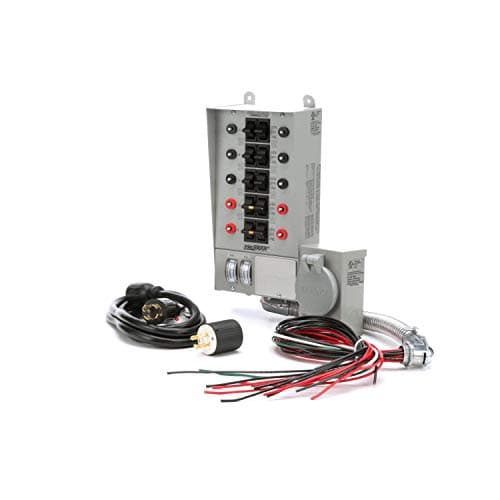
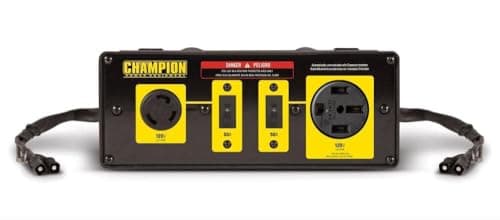
Extension cords through a window are how most people start, and for a fridge and a couple of lamps that is legitimate. Anything hard-wired — a furnace, a well pump, a sump pump — needs a transfer switch or an interlock kit.
What you must never do is backfeed: plugging a generator into a wall outlet with a double-male cord to energize the house circuits. It sends power back up the utility line at lethal voltage, it can kill the lineworker restoring your street, and it is illegal essentially everywhere. A transfer switch exists specifically to make that impossible.
Sizing, and buying by the job
Two ways into this hub. By wattage class — 2,000 watts for camping and a refrigerator, 5,000 watts for the smallest credible house backup, and 7,500 watts, which is exactly what a standard 30A transfer switch passes.
Or by the job you are actually solving: an RV, a refrigerator, a well pump or a cabin. There are also three pages on the axes that cut across all of those — propane, open frame and remote start.
The budget where the choice gets real
Under $2,000 is the level where you can afford either serious output or serious quiet, and picking the wrong one is the expensive mistake. The question that settles it is not budget — it is whether anything on your list is hardwired at 240V.
Two more ways into this hub
If the machine has to earn its keep, the jobsite roundup covers duty cycle and the GFCI requirement that decides which outlets you need. And if you are stuck on which name to trust, the brand comparison sets out what a badge actually predicts — parts, dealers and resale — and what it does not.
The comparisons buyers actually run
Fuel first: dual fuel against tri fuel turns on whether you have a gas line, and propane against gasoline on whether the machine sits idle most of the year. Then brands: Honda against Westinghouse at the quiet end, and Champion against DuroMax at the large one. If you are weighing two small machines against one big one, the 240V question settles it — and for a house under about 1,200 square feet, the right machine is smaller than most people buy.
Brands, models and the boring maintenance
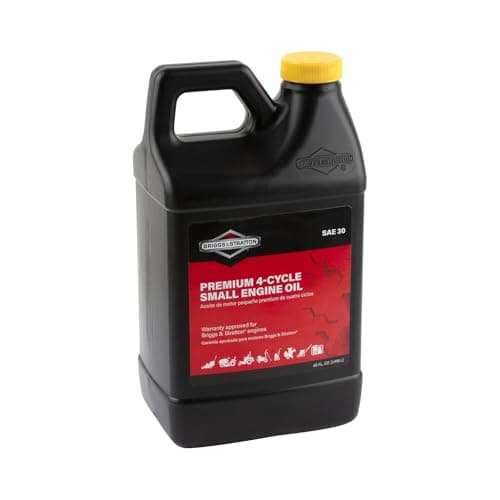
Two brands own the middle of this market, and Champion against Westinghouse compares them tier by tier on published numbers. The WGen9500DF review covers the house-sized machine in detail. For the part that decides whether any of them starts in year six, what oil to use is the shortest useful page in this hub. And if there is an electric car in the driveway, charging it from a generator works, slowly, with one electrical catch.
The part that actually kills people
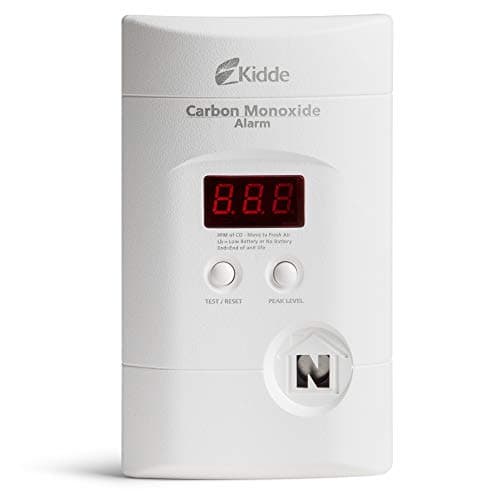
Carbon monoxide from portable generators kills people in the United States every year, and the pattern is depressingly consistent: the machine was in a garage, on a porch, in a basement, or under a window, during or after a storm. CO is colorless and odorless and the early symptoms — headache, nausea, confusion — are indistinguishable from being tired and cold, which is exactly how you feel on the second day of an outage.
Run it outdoors, at least twenty feet from the house, with the exhaust pointed away from every door, window and vent. Fit a working CO alarm on every level of the house before storm season, not during it. The full safety guide is here and it is not optional reading.