Three things cold breaks
Winter is when you most need a generator and when it is least likely to start. Three mechanisms, all fixable.
1. Oil is too thick
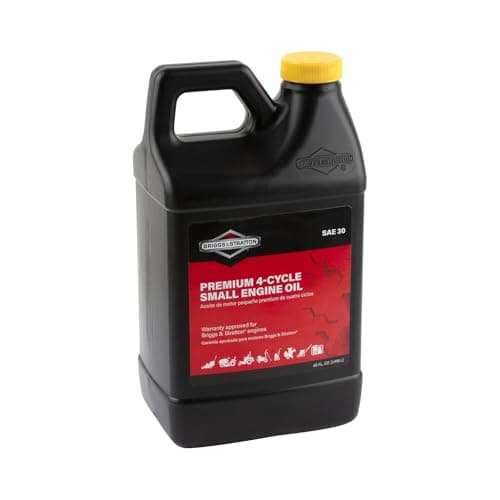
SAE 30 is the standard grade for a small air-cooled engine above about 40°F. Below that it thickens enough to matter in two ways: the engine is physically harder to turn over, and once it fires the oil takes longer to reach where it is needed.
The fix is a multigrade — your manual will have a temperature table specifying which. A seasonal oil change costs the price of a bottle and it removes one of the three failure modes entirely.
2. The starting battery is weakest when the engine is hardest
On an electric-start machine this is the most common winter no-start, and it is a compounding problem: batteries deliver less cranking current in the cold, and the cold engine needs more of it.
A battery that turns the engine over happily in September may click in January. Two responses:
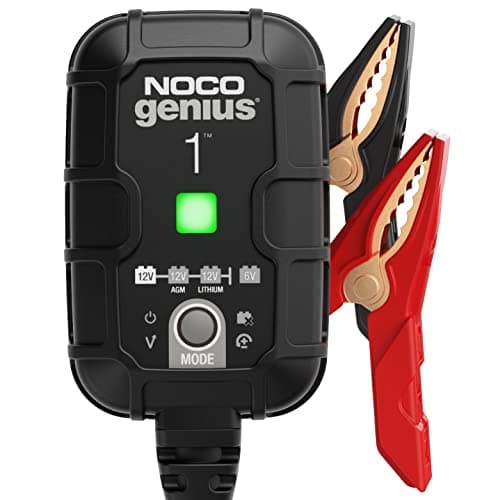
- Keep it maintained with a charger rated for the temperature it will live at.
- Replace it on age rather than on failure. Three to five years, less in heat, and the failure is sudden.
3. Propane vaporizes more slowly
Propane has to boil off from liquid to gas before an engine can use it, and that process slows as the temperature drops.
Practically, in severe cold you may find a machine that runs fine on propane in October struggles in January, particularly under load. Mitigations:
- Use a larger tank. More liquid surface area means more vaporization. A 100 lb tank behaves far better than a 20 lb cylinder.
- Keep it out of the wind. Wind chill on the cylinder makes it worse.
- Do not let it run low. A nearly empty cylinder has less liquid and vaporizes worse still.
- Keep gasoline as the cold-weather fallback on a dual-fuel machine.
The dual-fuel page covers the fuel trade generally.
What to look for in a winter machine
| Feature | Why it matters in cold |
|---|
| Electric start | Removes the hardest physical task at the worst possible moment |
|---|
| Remote start | You do not have to stand over it in driving snow |
|---|
| Dual fuel | Gasoline as the cold fallback when propane vaporizes poorly |
|---|
| Large-displacement OHV engine | Generally starts and runs more willingly cold |
|---|
| Low-oil shutdown | Standard now, and it protects an engine running thick cold oil |
|---|
| Wheels and a handle | You will be moving it through snow, not across a lawn |
|---|
These are design characteristics rather than measured cold-start performance. We have not cold-tested any generator, and manufacturers do not generally publish a minimum starting temperature.
Where you put it changes in winter
The safety rules do not relax, and snow adds a hazard the summer guidance does not mention.
- Still twenty feet from windows, doors and attached garages, exhaust pointed away. Sealed winter houses make carbon monoxide worse, not better.
- Clear a path and keep it clear. You will be walking to it repeatedly in the dark.
- Clear around the machine after every few hours of snowfall. Drifting can bury the air intake or block the exhaust.
- Raise it off the ground where you can — a pallet or a block keeps it out of accumulating snow and melt water.
- Never in a garage, shed or under a tarp to keep it out of the weather. That is the decision that kills people, and it is most tempting in exactly these conditions.
The full safety guidance and the winter kit cover the rest of the season's differences.
The October checklist
Everything on this page is easier before the season than during it.
- Change to the winter oil grade your manual specifies.
- Charge or replace the starting battery. Test it by actually starting the machine, not by looking at it.
- Run it under load for fifteen minutes.
- Rotate the stored fuel and treat the fresh batch.
- Check the propane cylinder is full and consider a larger one if you rely on it in winter.
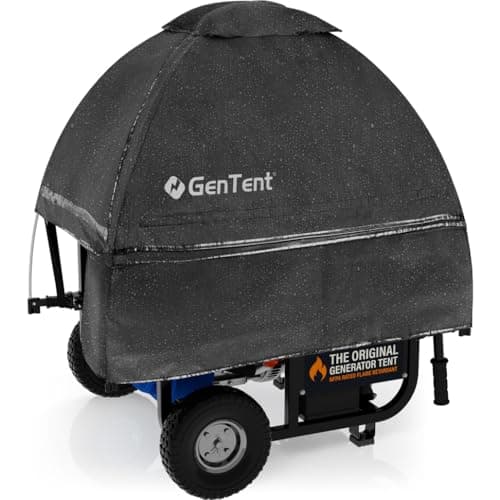
- Fit and test the running cover in daylight.
- Test every CO alarm and check the printed expiration dates.
- Decide where it will stand when there is two feet of snow on the ground.
The battery half of a winter setup
Worth saying because it changes what the generator has to do. A gas furnace needs only its blower — Champion publishes 300-800 running watts for a half-horsepower fan — which a 2kWh battery covers for hours, silently, indoors.
So the winter arrangement that works is the generator running in daylight blocks to carry the heavy loads and refill the battery, and the battery keeping the house above freezing overnight with no engine running at all.
One caution specific to the season: lithium batteries generally refuse to charge below a temperature threshold, so the battery half of that arrangement has to live indoors. The storage page covers it.