Skip to content
Watt Warden

Scenarios

Backup Power for a Storm Outage

Hurricanes Beryl, Helene and Milton caused 80% of all U.S. outage hours in 2024. This is the outage everything on this site is sized against — days long, in bad weather, with no working gas stations.

By Sawyer V.Updated Published How we work this out
Heavy rain falling on a suburban street at night.

Watt & Warden earns a commission on qualifying purchases made through links on this page, at no extra cost to you. It never changes a ranking, and our picks include products we tell you to skip. Full disclosure.

What this scenario actually looks like

Not a two-hour interruption. This page is written for the event the EIA's 2024 data describes: hurricanes Beryl, Helene and Milton accounted for 80% of all U.S. outage hours that year, and customers in South Carolina averaged nearly 53 hours of interruption across 2024.

The shape of it, in order:

  1. The storm itself. Power goes out while the wind is still dangerous. A generator cannot be started or run safely, and going outside to try is a bad idea. Anything that helps in this window has to work indoors.
  2. The first night. The wind drops. The fridge has been off for six hours. It is dark, possibly hot, possibly cold, and nobody knows how long this lasts.
  3. Days two to five. The generator becomes the whole plan. Fuel becomes a logistics problem, because station pumps are electric and the ones with power have queues.
  4. Day five onward, if unlucky. Stored fuel is gone. What keeps working is whatever needs no fuel.

Equipment that handles only stage three is the common mistake. The kit below covers all four.

The sizing math for this scenario

Storm outages are usually warm-weather events in hurricane regions and cold-weather events in ice-storm regions, so the load lists differ:

LoadRunning WStarting WSeason
Refrigerator150–400800–1,200Both
Freezer100–500500–1,000Both
Sump pump (⅓ HP)500–8001,000–1,600Both — storms mean water
Window AC (10,000 BTU)900–1,2001,800–2,400Hurricane season
Furnace fan (½ HP)300–800800–1,600Ice storm
Well pump (½ HP)750–1,0001,500–2,000Both, if applicable
Router, modem, lighting~110Both

Source: Champion Power Equipment's published wattage chart, except the router and modem figure, which comes from typical consumer power-supply ratings.

Taking the upper end of a summer list — fridge, freezer, sump pump, window AC, lighting — gives about 3,010W running. The largest surge is the window air conditioner at 2,400W, so peak = 3,010 − 1,200 + 2,400 = 4,210W. That is why 5,300 running watts is the tier this page recommends: it covers the list with real margin rather than marketing margin. The full method.

Match the purchase to the outage

Capacity is not a preference. It falls out of two numbers: how long your power is usually off, and what you refuse to lose while it is.

Your outage lastsWhat has to keep runningRealistic product class
During the stormFridge, router, lights — indoors onlyA battery. A generator cannot be used yet.
See power stations
Day 1–2Above, plus a sump pump and cooling or heating5,300W dual-fuel generator, run in blocks
See the hurricane picks
Day 3–5Same, with fuel becoming the constraintGenerator plus battery, block running
The fuel arithmetic
Day 5+Fridge and communications, minimum viableBattery plus solar — the only fuel-free option
See solar generators

The full kit list

Not just the headline machine. This is everything, and the small items are the ones people discover they need at the worst moment.

  • A battery, 1,000Wh+ with an 1,800W inverter — works during the storm, indoors, silently
  • A generator, 5,000W+, dual fuel, electric start
  • A transfer switch or interlock kit, professionally fitted, out of season
  • A 25 ft L14-30 cord, so the generator can sit twenty feet away
  • CO alarms on every level, with battery backup, tested
  • A generator cover or open-sided shelter — never a tarp
  • Fuel: three to four five-gallon cans, treated and rotated, plus two or three propane cylinders
  • Engine oil and a funnel, the grade your manual specifies — you may need an oil change on day two
  • Solar panels, 200W+, if fuel may become unobtainable
  • A small UPS on the modem and router, so the internet survives the switchover
  • Flashlights and battery lanterns — not candles
  • Water, especially on a private well, where no power means no water at all

Three budget tiers

Tier 1 — the first night, indoors

A 1,000–1,200Wh battery with an 1,800W inverter, plus CO alarms if you might ever use a generator. Covers the fridge for about six hours, the router for two days, and works while the storm is still happening. For a region with occasional overnight outages, this is a complete answer.

Tier 2 — days two to five

Add a 5,000W+ dual-fuel generator, a transfer switch fitted by an electrician, a 25-foot cord, a cover, and fuel. This is the serious storm-region purchase and it is where most of the money goes. Run it in blocks rather than continuously.

Tier 3 — when the fuel runs out

Add 200–400W of solar panel, and consider a larger battery. This is the tier for genuine regional disasters where nothing can be bought for days, and it is the one that keeps working when everything else has stopped.

Run it in blocks, not continuously

What it costs to actually run

The sticker price of a dual-fuel generator is a fraction of what it costs you. The sticker price of a battery is nearly all of it. Here is the arithmetic, with the inputs stated so you can redo it with your own fuel price.

UnitPublished consumptionCost per hourCost per 24 h
Generator, continuous0.75 gal/hr × 24 h = 18 gal/day$3.05$73.28
Generator, 6 h blocks0.75 gal/hr × 6 h = 4.5 gal/day$3.05$18.32
Generator 2 h + battery overnight0.75 gal/hr × 2 h = 1.5 gal/day$3.05$6.11
Gasoline at $4.071/gal (EIA weekly retail, week ending 31 August 2026). Five days of continuous running is 90 gallons — eighteen five-gallon cans, well beyond what any residential garage may legally store. Five days of the bottom row is 7.5 gallons, which is two cans. That is the difference between a plan and a problem.

Block running is safe for food: the USDA puts a sealed refrigerator at about four hours and a full freezer at about 48. Run the generator hard for two hours to cool everything down and fill the battery, then run the essentials off the battery overnight.

The rules that do not bend

Twenty feet, exhaust pointed away, every time. CPSC records nearly 100 deaths a year from portable generator carbon monoxide, most in residential locations, concentrated around storms. Not in a garage, not on a porch, not in a carport, not under a window — and not on day four when everyone is tired. The full guide.

Never backfeed. A double-male cord into a wall outlet sends power up the utility line at lethal voltage and can kill the lineworker restoring your street. The safe methods.

Never run the generator during the storm. It cannot be used safely in high wind and driving rain, and that is exactly the window the battery exists for.

Before the season, not during it

  1. Get the transfer switch fitted. Electricians are unavailable when a storm is forecast.
  2. Start the generator, run it under load for fifteen minutes, change the oil if it is due.
  3. Rotate the stored fuel and refill the propane cylinders.
  4. Charge the battery fully, then take it down to 60–80% for storage.
  5. Test every CO alarm and check its manufacture date — sensors expire.
  6. Decide where the generator will stand, measure twenty feet, and confirm the cord reaches.
  7. Look up your utility's outage number and save it in your phone.

Then the outage sequence is the thing to read when it actually happens.

Quick picks

#ProductBest forPrice
1
No photo

Tier 1 — the first night

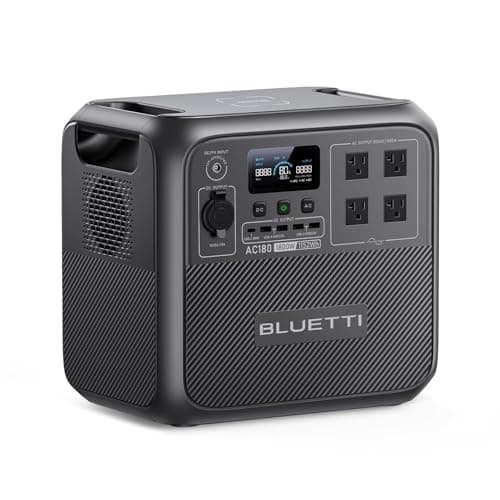
BLUETTI AC180

1,152Wh and 1,800W — the thing that works during the storm itself, when a generator cannot be started.

Fridge, router and lights, silently, indoors
2
No photo

Tier 2 — days two through five

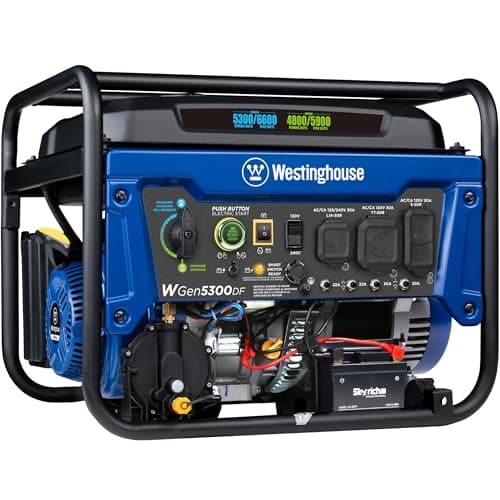
Westinghouse WGen5300DF

5,300 running watts, dual fuel, 14.5 hours a tank, transfer-switch ready.

The whole critical-load list, once the wind drops
3
No photo

Tier 2 — the connection

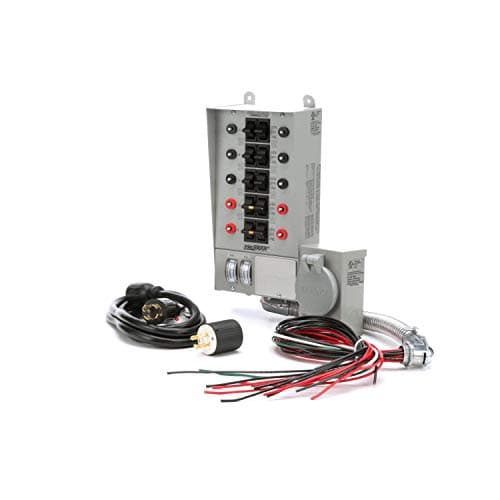
Reliance Controls 31410CRK Pro/Tran

Ten circuits, 30A, 7,500W, with mechanical backfeed prevention.

Reaching the furnace and the sump pump
4
No photo

Every tier — not optional

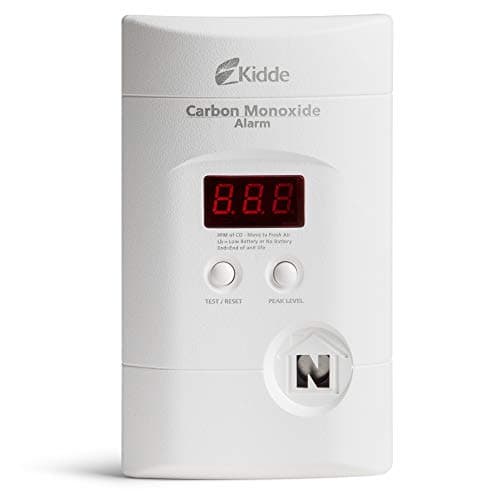
Kidde Nighthawk KN-COPP-3 CO alarm

Plug-in CO alarm with battery backup and a digital ppm readout.

Every level of the house
5
No photo

Tier 3 — when the fuel runs out

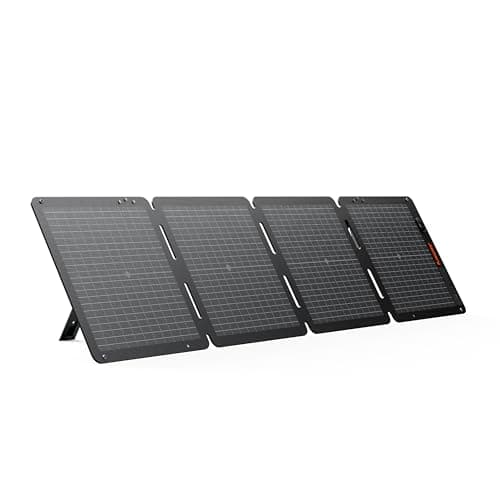
Jackery SolarSaga 100W

100W bifacial — the only recharge path that works when there is no fuel and nowhere with power.

Regional outages where nothing can be bought

Prices come from the retailer at page-build time and change constantly. Where no live price is available the button reads “Check price” rather than showing a number we cannot stand behind.

The picks in full

01Tier 1 — the first night

BLUETTI AC180

1,152Wh and 1,800W — the thing that works during the storm itself, when a generator cannot be started.

The first tier exists for the part of a storm outage nobody plans for: the storm itself. A generator cannot be safely started or run in high wind and driving rain, and going outside to try is dangerous.

A battery works indoors, immediately, silently, while the weather is still happening — which is exactly the window in which people otherwise make bad decisions about garages.

Skip it ifyour outages run past a day and you have no other equipment. It will be empty by the second morning.

Published specifications for the BLUETTI AC180
SpecificationPublished figure
Usable capacity1,152 Wh (32 V, 36 Ah)
Cell chemistryLiFePO4 (LFP)
AC output1,800 W continuous / 2,700 W surge, 4 outlets
Cycle life3,500+ cycles to 80% capacity
Weight35.3 lb
Fast charge0–80% in 45 min
Max solar input500 W
Warranty5 years on registration

Source: BLUETTI — AC180 product specifications. These are the manufacturer's published figures, not ours — we have not tested this unit.

02Tier 2 — days two through five

Westinghouse WGen5300DF

5,300 running watts, dual fuel, 14.5 hours a tank, transfer-switch ready.

Once the storm passes, endurance becomes the whole problem and only fuel solves it. 5,300 running watts carries a fridge, a furnace fan or a window air conditioner, a sump pump and lighting together.

Dual fuel is not optional in this scenario. Gas station pumps are electric; in a regional outage they do not work, and propane from an unpowered exchange cage is the fuel you can actually get.

Skip it ifyou have central air conditioning that must run. A three-ton compressor needs 5,000–6,000W to start on its own.

Published specifications for the Westinghouse WGen5300DF
SpecificationPublished figure
Output (gasoline)5,300 running W / 6,600 peak W
Output (propane)4,800 running W / 5,900 peak W
Engine274cc 4-stroke OHV
Tank4.7 gal (18 L)
Run timeup to 14.5 h on a full tank
Transfer-switch outlet120/240 V L14-30R, 30 A
RV outlet120 V TT-30R, 30 A
StartingPush-button electric with remote key fob

Source: Westinghouse — WGen5300DF product specifications. These are the manufacturer's published figures, not ours — we have not tested this unit.

03Tier 2 — the connection

Reliance Controls 31410CRK Pro/Tran

Ten circuits, 30A, 7,500W, with mechanical backfeed prevention.

The generator is useless for the two things that matter most in a storm — the furnace and the sump pump — without this, because both are hard-wired.

Fit it out of season. Electricians are unavailable the week a hurricane is forecast and for weeks afterwards.

Skip it ifyou only need the fridge. Extension cords cover that and need no installation.

Published specifications for the Reliance Controls 31410CRK Pro/Tran
SpecificationPublished figure
Circuits10 — six 15 A and four 20 A single-pole breakers
Rating30 A, up to 7,500 W
MeteringTwo watt meters for balancing the load
SwitchingBreak-before-make double-throw, Line / Off / Gen
BackfeedMechanically prevented — the grid cannot be energized
InstallationLicensed electrician; a permit is usually required

Source: Reliance Controls — Pro/Tran 31410CRK product page. These are the manufacturer's published figures, not ours — we have not tested this unit.

04Every tier — not optional

Kidde Nighthawk KN-COPP-3 CO alarm

Plug-in CO alarm with battery backup and a digital ppm readout.

CPSC records nearly 100 deaths a year in the United States from portable generator carbon monoxide, most in residential locations, clustered around exactly this event.

Battery backup is the specification that matters — an alarm that works only on utility power is useless in the situation a generator creates.

Skip it ifyou have in-date alarms on every level already. Check the manufacture date.

Published specifications for the Kidde Nighthawk KN-COPP-3 CO alarm
SpecificationPublished figure
SensorElectrochemical
Power120 V AC plug-in with 9 V battery backup
DisplayDigital, 30–999 ppm, refreshed every 15 s
Alarm85 dB
MemoryPeak-level memory of the last detection or test
Warranty10-year limited; UL certified

Source: Kidde — Nighthawk KN-COPP-3 product page. These are the manufacturer's published figures, not ours — we have not tested this unit.

05Tier 3 — when the fuel runs out

Jackery SolarSaga 100W

100W bifacial — the only recharge path that works when there is no fuel and nowhere with power.

This is the tier most households skip and the one that matters in a genuine regional disaster: no grid, no fuel, no working stations, no functioning shops within driving distance.

Roughly 400–500Wh of harvest across a good day. Not a lot. Enough to keep a fridge and a phone alive indefinitely.

Skip it ifyour storms cause outages under a day. There is nothing for it to refill.

Published specifications for the Jackery SolarSaga 100W
SpecificationPublished figure
Rated output100 W
Cell typeMonocrystalline, bifacial
Conversion efficiencyup to 25%
Ingress ratingIP68
Weight4.52 lb
CompatibilityJackery Explorer stations

Source: Jackery — SolarSaga 100W product specifications. These are the manufacturer's published figures, not ours — we have not tested this unit.

How these were chosen

We did not test these. Nobody at Watt & Warden has plugged one in. What we did instead: read the manufacturer's published specifications, compile them into a table where the figures line up, and compute the numbers manufacturers leave out — runtime against a real appliance load, and what an hour of running actually costs.

Anything that could not be sourced was left out rather than estimated, and every pick names the buyer who should skip it. The full method is here, including where it is weaker than a publisher with a test bench.

Questions people actually ask

What size generator do I need for a hurricane?

5,000-7,500 running watts covers a fridge, a freezer, a sump pump, a window air conditioner and lighting for most homes -- taking Champion's published upper-range figures, that list peaks around 4,200W. Add a well pump and you want 7,500-9,500. Central air conditioning pushes you to 13,000 or to a standby installation.

Can I run a generator during a storm?

No. It must run outdoors and it cannot be started or run safely in high wind and driving rain, and going outside to try is dangerous. Generators are for after the storm passes -- which is precisely why a battery that works indoors covers the first several hours.

How much fuel should I store for hurricane season?

Enough for block running rather than continuous. At six hours a day, five days needs about 22 gallons; at two hours a day with a battery covering the nights, about 7.5. Continuous running for five days would be 90 gallons, which no residential garage may legally hold.

Do I need both a battery and a generator for storms?

For a multi-day storm region, yes, and they cover different phases. The battery works during the storm itself when a generator cannot be used, and overnight when you do not want an engine running. The generator carries the days and refills the battery.

Why is dual fuel important for storm outages?

Gas station pumps are electric. In a regional outage they stop working, so gasoline becomes unobtainable for days while propane is still sold from unpowered exchange cages. Propane also stores for years without degrading and does not gum a carburetor.

Sources