Skip to content
Watt Warden

Generators

Generator Maintenance Schedule

Manufacturers publish an hours-based schedule. A machine kept for emergencies almost never reaches those hours, so what actually protects it is a calendar routine that nobody writes down for you.

By Sawyer V.Updated Published How we work this out
Hands servicing a small engine with tools.

Watt & Warden earns a commission on qualifying purchases made through links on this page, at no extra cost to you. It never changes a ranking, and our picks include products we tell you to skip. Full disclosure.

Your manual is the authority. This page is the shape of it.

Intervals differ by manufacturer and by engine, sometimes considerably — one manual's oil change at 50 hours is another's at 100. Nothing here replaces the schedule printed in your own manual.

What this page does is show you what such a schedule looks like, using a real published one, and then fill in the part manufacturers do not cover: what to do with a machine that sits for eleven months and has to start on the twelfth.

A published hours-based schedule

From the operator's manual for a Briggs & Stratton 8,000-watt portable generator:

IntervalTasks
Before each useClean debris; check oil level
First 5 operating hoursChange engine oil (break-in)
Every 25 hoursService air cleaner pre-filter
Every 50 hours or yearlyChange engine oil; service air cleaner paper filter; service spark plug; service spark arrester; clean cooling system
Every 100 hours or yearlyCheck valve clearance
Idle longer than 30 daysPrepare for storage

Transcribed from the operator's manual linked in Sources. The manual also states that more frequent service is required in dirty or dusty conditions. Other manufacturers publish different figures — treat this as an illustration of the structure, not as your machine's schedule.

Two things stand out. The break-in oil change comes very early — five hours on this machine, and the first 25 on some others — which is roughly one long outage. And the whichever-comes-first clause means the yearly items are due whether or not you have run the machine at all.

The problem with hours-based schedules

A generator bought for emergencies might run 20 hours in a bad year and zero in a good one. On hours alone, it would go a decade without service.

Meanwhile the things that actually kill it are all calendar-driven. Gasoline oxidizes and forms gum in the carburetor whether the engine runs or not. Rubber fuel lines harden. Oil absorbs moisture. Rodents nest in the air intake. None of that is measured in operating hours.

So the useful schedule for a standby portable machine has two halves: the manufacturer's hours-based list for when you are running it, and a calendar routine for when you are not.

The calendar routine

Monthly, in season — five minutes

Where you have a defined risk window — a hurricane season, a winter storm season — start the machine once a month during it and let it run for ten to fifteen minutes with something plugged in. Not at no load: a partial load gets it properly warm and circulates oil.

This one habit prevents most no-start failures, because it burns off the fuel sitting in the carburetor bowl before it can turn to varnish.

Twice a year — under an hour

Spring and fall, or before and after your risk season:

  • Start it and run it under load for 15 minutes. The single most valuable thing on this list.
  • Check the oil level and condition. Milky means water; black and thin means overdue.
  • Rotate the stored fuel. Pour the cans into your vehicle and refill them with fresh, treated gasoline. The storage guidance covers the rest.
  • Look at the air filter. Tap it out, or replace it if it is gray through.
  • Check the cords and the CO alarm. Both fail silently. Alarms expire on a date printed on the housing.
  • Confirm you can still lift or wheel it. Sounds trivial; people discover a seized wheel in the dark.

Yearly — the service items

The whichever-comes-first clause makes these annual regardless of hours: oil and filter, air cleaner, spark plug. On a machine that runs a handful of hours a year, doing all three every spring is simpler than tracking an hour meter and costs very little. The kit that covers it is three items on a shelf.

During a long outage

This is the one time hours matter, and they accumulate faster than people expect — two days of block running is more hours than a typical year.

  • Check the oil every 8 to 12 running hours, not every tank. Small air-cooled engines consume oil under sustained load.
  • Shut down and let it cool before refueling. Every time. Gasoline on a hot muffler ignites. Fifteen minutes is the usual advice.
  • Do the break-in change if the machine is new. A first real outage will pass five hours in an afternoon.
  • Keep the cooling airflow clear. Leaves and debris against the intake in a storm is a real failure mode.
  • Run it in blocks, not continuously. Six hours a day keeps a fridge and freezer safe, and gives the engine cooling and refueling windows it needs anyway.

Storage preparation — the part that matters most

The manual's trigger is 30 days idle, which for a standby machine means every time. You have two workable options and one bad one.

Option 1 — run it dry. Close the fuel valve and let the engine run until it stalls. The carburetor bowl empties, so there is nothing left to varnish. This is the most reliable method for a machine that will sit for months.

Option 2 — store it treated and full. Fill the tank with stabilized fuel, then run the engine for several minutes so the treated fuel reaches the carburetor. A full tank leaves less air for condensation. Treating fuel after it has gone stale does not work.

Option 3, if you have it — store it on propane. On a dual-fuel machine, run the gasoline system dry and exercise it monthly on propane. Propane does not degrade, so the fuel half of this schedule stops existing. The dual-fuel case rests as much on this as on availability.

The bad option is leaving untreated gasoline in the tank for a year, which is what most people do and why most stored generators need carburetor work before they will run.

What none of this applies to

A battery has no schedule. No oil, no filter, no plug, no fuel, no exercise routine, nothing to run dry before storage. The only thing worth doing is recharging it every six months or so, and most units will remind you through their app.

If maintenance is what puts you off owning backup power, that is a real argument for a power station instead of an engine — and one of the honest reasons the category has grown so fast.

Quick picks

#ProductBest forPrice
1
No photo

For the oil changes on this schedule

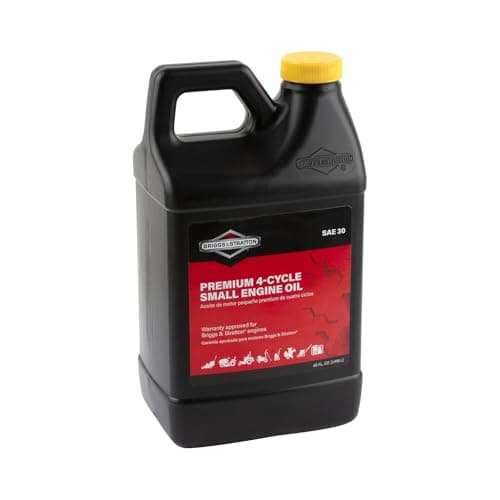
Briggs & Stratton SAE 30 engine oil, 48 oz

48oz of SAE 30 detergent oil to API SJ or higher — the standard grade for an air-cooled engine above 40°F.

Warm-weather running and general use
2
No photo

For the fuel side of the schedule

STA-BIL 360 Protection fuel stabilizer

One ounce treats up to five gallons; the label claims fuel stays usable for up to 12 months.

Anything stored between outages
3
No photo

The maintenance-friendly buy

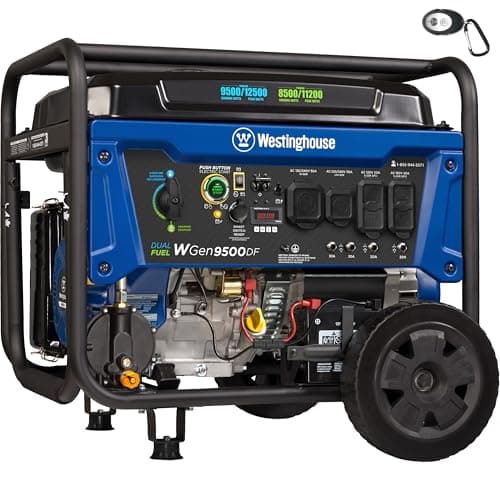
Westinghouse WGen9500DF

9,500 running watts on gasoline, and propane capability that removes most of the fuel-storage problem.

Anyone who dislikes storage prep

Prices come from the retailer at page-build time and change constantly. Where no live price is available the button reads “Check price” rather than showing a number we cannot stand behind.

The picks in full

01For the oil changes on this schedule

Briggs & Stratton SAE 30 engine oil, 48 oz

48oz of SAE 30 detergent oil to API SJ or higher — the standard grade for an air-cooled engine above 40°F.

One 48oz bottle is roughly one change on most portable generators, which take 0.6 to 1.2 quarts. Buy two so a change never waits on a shopping trip.

Check the grade table in your own manual before buying. This is the common warm-weather specification, not a universal answer.

Skip it ifyour machine runs in winter. Below 40°F, SAE 30 is too thick to start and circulate well; use the multigrade your manual specifies.

Published specifications for the Briggs & Stratton SAE 30 engine oil, 48 oz
SpecificationPublished figure
GradeSAE 30 detergent, 4-cycle
Volume48 oz
SpecificationAPI SJ/CD or higher
TemperatureAbove 40°F; use a multigrade below that
CoversAbout one change on most portable generators

Source: Briggs & Stratton — engine oil product page. These are the manufacturer's published figures, not ours — we have not tested this unit.

02For the fuel side of the schedule

STA-BIL 360 Protection fuel stabilizer

One ounce treats up to five gallons; the label claims fuel stays usable for up to 12 months.

Stale gasoline is the single most common reason a stored generator will not start, and it is entirely preventable. Treat the fuel when you buy it rather than when you store it — the additive cannot reverse gum that has already formed.

Skip it ifyou run the tank and cans dry between seasons instead. Both approaches work; doing neither does not.

Published specifications for the STA-BIL 360 Protection fuel stabilizer
SpecificationPublished figure
Treats40 gallons (8 fl oz bottle)
Storage lifeKeeps ethanol-blended fuel fresh up to 12 months
Dose1 oz treats up to 5 gallons of fuel
Also doesFuel-system cleaning, corrosion and water-absorption protection
UseAdd before filling, then run the engine 5 minutes

Source: STA-BIL — 360 Protection product page. These are the manufacturer's published figures, not ours — we have not tested this unit.

03The maintenance-friendly buy

Westinghouse WGen9500DF

9,500 running watts on gasoline, and propane capability that removes most of the fuel-storage problem.

The maintenance argument for dual fuel rarely gets made and it is the strongest one. Propane does not oxidize, gum, or absorb water, so a machine stored and exercised on propane skips the fuel half of this schedule entirely.

Run it on propane between outages and keep gasoline only as the second option, and stale-fuel starting failures stop being something you can have.

Skip it ifyou already own a machine. This is not a reason to replace one that works.

Published specifications for the Westinghouse WGen9500DF
SpecificationPublished figure
Output (gasoline)9,500 running W / 12,500 peak W
FuelGasoline or propane (dual fuel)
Engine457cc 4-stroke OHV, cast iron sleeve
Tank6.6 gal (25 L)
Run timeup to 12 h on a full tank
Transfer-switch outlet120/240 V L14-30R, 30 A
RV outlet120/240 V 14-50R, 50 A
StartingPush-button electric with remote key fob
Warranty3-year limited

Source: Westinghouse — WGen9500DF product specifications. These are the manufacturer's published figures, not ours — we have not tested this unit.

How these were chosen

We did not test these. Nobody at Watt & Warden has plugged one in. What we did instead: read the manufacturer's published specifications, compile them into a table where the figures line up, and compute the numbers manufacturers leave out — runtime against a real appliance load, and what an hour of running actually costs.

Anything that could not be sourced was left out rather than estimated, and every pick names the buyer who should skip it. The full method is here, including where it is weaker than a publisher with a test bench.

Questions people actually ask

How often should I change the oil in a generator?

Follow your own manual -- figures vary widely. As an illustration, the operator's manual for a Briggs & Stratton 8,000-watt portable specifies a break-in change after the first 5 operating hours, then every 50 hours or yearly, whichever comes first, with more frequent service in dusty conditions.

Do I need to maintain a generator I never use?

Yes, and it is the case most people get wrong. Gasoline oxidizes and gums the carburetor whether the engine runs or not, fuel lines harden, and the yearly service items are due on a whichever-comes-first basis regardless of hours. Exercise it monthly in season and service it annually.

How long can a generator sit before it needs storage preparation?

The manual we transcribed uses 30 days idle as the trigger, which for an emergency machine means every time. Either run the carburetor dry by closing the fuel valve until the engine stalls, or store it full of stabilized fuel that has been run through the carburetor.

Should I run my generator every month?

During your risk season, yes -- ten to fifteen minutes with a load attached, not at no load. It burns off the fuel standing in the carburetor bowl before it can varnish, which prevents the most common no-start failure, and it confirms the machine works while you still have time to fix it.

Do power stations need maintenance?

Effectively none. No oil, filter, spark plug, fuel or storage preparation. Recharge it every six months or so to keep the cells in a healthy state and that is the whole routine -- which is a genuine argument for a battery if maintenance is what puts you off owning backup power.

Sources

Every figure on this page comes from a published source. We have not tested this equipment, so the specifications are the manufacturer's and the statistics are the dataset's — the arithmetic on top of them is ours, and it is shown in full so you can check it. How we work this out.