Skip to content
Watt Warden

Generators

How Long Do Generators Last?

Manufacturers quote engine hours. A generator kept for emergencies will die of neglect decades before it wears out - which means the question is really about storage.

By Sawyer V.Updated Published How we work this out
Old worn machinery in a workshop.

Watt & Warden earns a commission on qualifying purchases made through links on this page, at no extra cost to you. It never changes a ranking, and our picks include products we tell you to skip. Full disclosure.

Two different questions

"How long does a generator last" means two things, and mixing them up is why the answers in this category are so unhelpful.

Engine hours — how long the mechanical parts survive continuous running. This is what manufacturers and rental fleets care about, and the figures vary enormously with engine design.

Calendar years — how long the machine remains a working piece of equipment sitting in your garage. This is what you care about, and it has almost nothing to do with the first.

Why hours are the wrong measure for you

Work out your actual annual usage honestly. A household generator kept for emergencies might see:

  • Two outages a year, six hours each: 12 hours
  • Monthly exercise runs of fifteen minutes through a six-month season: 1.5 hours
  • Two seasonal service runs of fifteen minutes: 0.5 hours
  • Total: around 14 hours a year

Even against a conservative engine life figure, that is decades of service — far longer than the machine will actually survive in practice.

A bad year with a five-day outage changes the arithmetic — that alone is around 30 hours of block running — but it does not change the conclusion. Mechanical wear is not what will end your generator.

What actually kills stored generators

CauseHow it happensPrevention
Stale fuelGum and varnish block the carburetor jets over months of standingTreat the fuel, or run the carburetor dry
CorrosionDamp storage rusts the tank internals and corrodes electrical contactsDry storage, a cover for running, full tank or dry tank
Perished rubberFuel lines and diaphragms harden and crack with age and ethanolNothing prevents it entirely — these are service parts
RodentsNests in the air intake, chewed wiring and fuel linesCheck twice a year; store away from feed and nesting material
Starting batterySelf-discharge and sulfation over months of standingA maintainer, or an annual charge
Oil neglectMissed break-in change, or running low during a long outageThe break-in change, and level checks every 8-12 running hours

Every row here is a storage or maintenance failure rather than a wear failure, and every one is preventable for less than the cost of a carburetor. That is the whole point of the page.

What genuinely differs between machines

Design does affect longevity, and it is worth knowing which specifications actually speak to it.

  • Cast iron cylinder sleeve versus a plain aluminum bore. Iron wears more slowly. On a machine that may run for days at a time, this is the most meaningful durability specification a spec sheet carries.
  • OHV versus side-valve. Overhead valve engines generally run cooler and more efficiently, and dominate the current market for good reason.
  • Engine displacement relative to output. A larger engine producing a given output is working less hard for it.
  • Copper windings. Full copper alternator windings handle heat better than copper-clad aluminum.
  • Fuel injection instead of a carburetor. The single biggest change available, because it removes the component that stale fuel destroys — EFI versus carbureted covers it.

Warranty length is also a signal, though an imperfect one. A three-year limited warranty says something about what the manufacturer expects; it says nothing about year seven.

Parts availability decides the real endpoint

The thing nobody checks at purchase and everybody discovers at year six.

A generator with a blocked carburetor is a cheap repair if the carburetor is available and a scrap machine if it is not. The same goes for a recoil spring, a voltage regulator or an air filter with an unusual shape.

  • Established brands keep parts longer. This is most of the argument for paying more up front.
  • Common engines have common parts. A machine built around a widely used engine platform is repairable long after the badge on the front has been discontinued.
  • Check before you buy. Search for a carburetor and an air filter for the specific model. If nothing comes up now, nothing will come up in five years either.

How to actually make one last

  1. Do the break-in oil change. On a driveway, not in a storm. How and when.
  2. Never store it with untreated gasoline. Either treat the fuel or run the carburetor dry. This single habit prevents the most common failure there is.
  3. Exercise it monthly in season. Ten to fifteen minutes under load burns off the fuel standing in the carburetor bowl.
  4. Store it dry and covered, off a concrete floor if you can, away from anything that attracts rodents.
  5. Maintain the starting battery if it has one.
  6. Do the annual service items — oil, air filter, spark plug — regardless of hours. The whichever-comes-first clause makes them annual.
  7. Keep the paperwork and the part numbers somewhere you will find them in a decade.

That routine is under an hour a year. The full schedule sets out the intervals.

Batteries, for contrast

A power station has no fuel to go stale, no carburetor to varnish, no rubber fuel lines and no starting battery. What it has instead is calendar degradation — slow, predictable capacity loss simply from existing.

Manufacturers now publish ten-year design lives on LiFePO4 units, and the maintenance is a top-up twice a year. That is a genuinely different ownership proposition, and for a lot of households it is the deciding argument rather than a footnote.

How long power stations last covers the other side, and the comparison weighs both.

Quick picks

#ProductBest forPrice
1
No photo

Built for a long life

Westinghouse WGen9500DF

A 457cc OHV engine with a cast iron cylinder sleeve and a 3-year limited warranty.

A machine you expect to keep for a decade
2
No photo

What actually extends the life

STA-BIL 360 Protection fuel stabilizer

One ounce treats up to five gallons; the label claims up to 12 months of storage protection.

Any gasoline that will sit
3
No photo

For electric-start machines

NOCO GENIUS1 battery charger and maintainer

1A maintainer for 6V or 12V, with desulfation and temperature compensation.

The starting battery that dies before the engine does
4
No photo

For the corrosion side

GenTent Safety Canopy, open-frame

NFPA 701 canopy rated to 110 mph wind, 12 in of rain per hour and 18 in of snow load.

A machine that runs in weather

Prices come from the retailer at page-build time and change constantly. Where no live price is available the button reads “Check price” rather than showing a number we cannot stand behind.

The picks in full

01Built for a long life

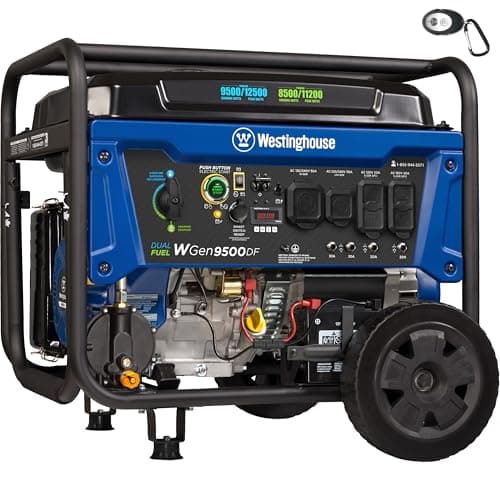
Westinghouse WGen9500DF

A 457cc OHV engine with a cast iron cylinder sleeve and a 3-year limited warranty.

The cast iron sleeve is the specification that speaks to longevity. An aluminum bore wears faster than an iron one, and on an engine expected to run hard for days at a time that difference compounds.

Dual fuel is the other longevity feature, and it is the bigger one: stored and exercised on propane, the machine never sees stale gasoline, which is what actually kills stored generators.

Skip it ifyou need something light to carry. Durability and weight trade against each other.

Published specifications for the Westinghouse WGen9500DF
SpecificationPublished figure
Output (gasoline)9,500 running W / 12,500 peak W
FuelGasoline or propane (dual fuel)
Engine457cc 4-stroke OHV, cast iron sleeve
Tank6.6 gal (25 L)
Run timeup to 12 h on a full tank
Transfer-switch outlet120/240 V L14-30R, 30 A
RV outlet120/240 V 14-50R, 50 A
StartingPush-button electric with remote key fob
Warranty3-year limited

Source: Westinghouse — WGen9500DF product specifications. These are the manufacturer's published figures, not ours — we have not tested this unit.

02What actually extends the life

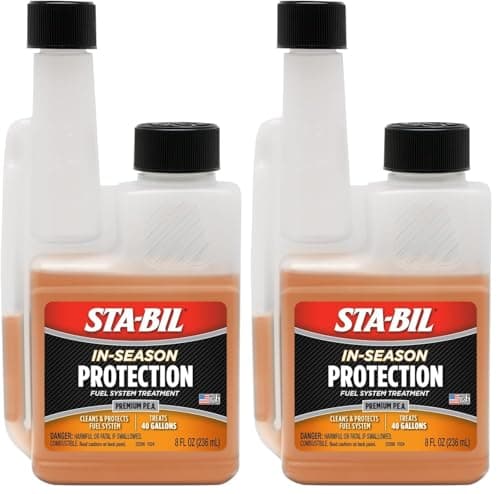
STA-BIL 360 Protection fuel stabilizer

One ounce treats up to five gallons; the label claims up to 12 months of storage protection.

Cheaper than any component on the machine, and it prevents the failure that ends more generators than wear ever does. Ethanol-blended fuel absorbs water and oxidizes into gum that varnishes a carburetor shut.

Treat fuel when you buy it. Stabilizer cannot reverse gum that has already formed.

Skip it ifyou run the tank and cans dry between seasons instead. Both work; doing neither does not.

Published specifications for the STA-BIL 360 Protection fuel stabilizer
SpecificationPublished figure
Treats40 gallons (8 fl oz bottle)
Storage lifeKeeps ethanol-blended fuel fresh up to 12 months
Dose1 oz treats up to 5 gallons of fuel
Also doesFuel-system cleaning, corrosion and water-absorption protection
UseAdd before filling, then run the engine 5 minutes

Source: STA-BIL — 360 Protection product page. These are the manufacturer's published figures, not ours — we have not tested this unit.

03For electric-start machines

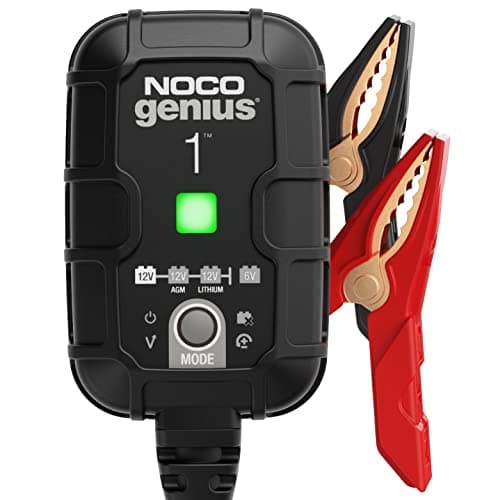
NOCO GENIUS1 battery charger and maintainer

1A maintainer for 6V or 12V, with desulfation and temperature compensation.

On an electric-start generator the starting battery is the shortest- lived component in the whole machine — three to five years, less in heat, and it fails suddenly.

A maintainer keeps it topped and desulfated between uses, which roughly doubles what you get out of it and removes the most common no-start cause on that class of machine.

Skip it ifyour machine is recoil start only. Then there is no battery to maintain.

Published specifications for the NOCO GENIUS1 battery charger and maintainer
SpecificationPublished figure
Output1 A DC at 6 V or 12 V
Capacity rangeUp to 30 Ah, maintains larger batteries
ChemistriesFlooded, gel, AGM, SLA, maintenance-free and LiFePO4
RepairDetects sulfation and acid stratification, desulfation mode
RecoveryCharges from 1 V, or from 0 V in Force Mode
CompensationThermal sensor adjusts charging for ambient temperature
Operating range-4°F to 104°F
Size3.5 x 2.3 x 1.3 in

Source: NOCO — GENIUS1 product page. These are the manufacturer's published figures, not ours — we have not tested this unit.

04For the corrosion side

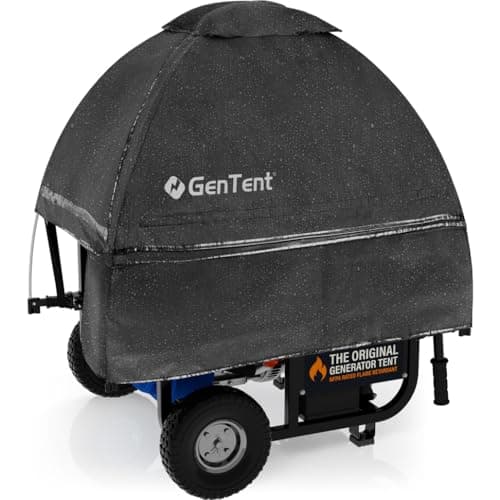
GenTent Safety Canopy, open-frame

NFPA 701 canopy rated to 110 mph wind, 12 in of rain per hour and 18 in of snow load.

Water is the second-largest killer of stored generators after fuel. A running cover keeps rain off the control panel and outlets while leaving cooling airflow and the exhaust path clear.

It is a running cover, not a storage cover. The two are different products and confusing them is dangerous — the distinction matters.

Skip it ifyour machine is a fully encased inverter — use the inverter version instead.

Published specifications for the GenTent Safety Canopy, open-frame
SpecificationPublished figure
FitsOpen-frame generators, 3,000–10,000 W
FabricNFPA 701 flame-certified
Wind ratingup to 110 mph
Rain ratingup to 12 in per hour
Snow loadup to 18 in
InstallationTool-free clamp mount

Source: GenTent — Safety Canopy product page. These are the manufacturer's published figures, not ours — we have not tested this unit.

How these were chosen

We did not test these. Nobody at Watt & Warden has plugged one in. What we did instead: read the manufacturer's published specifications, compile them into a table where the figures line up, and compute the numbers manufacturers leave out — runtime against a real appliance load, and what an hour of running actually costs.

Anything that could not be sourced was left out rather than estimated, and every pick names the buyer who should skip it. The full method is here, including where it is weaker than a publisher with a test bench.

Questions people actually ask

How many hours will a portable generator last?

Engine hours are the wrong question for a household machine. Two outages a year at six hours each, plus monthly exercise runs, is roughly 14 hours a year -- decades against any reasonable engine life. Mechanical wear will not be what ends your generator.

What actually kills a stored generator?

Stale fuel above everything -- gum and varnish blocking the carburetor over months of standing. Then corrosion from damp storage, perished rubber fuel lines, rodent damage, a flat starting battery, and oil neglect. Every one is a storage failure rather than a wear failure, and every one is preventable.

What makes one generator last longer than another?

A cast iron cylinder sleeve rather than a plain aluminum bore is the most meaningful durability specification on a spec sheet. Then OHV design, engine displacement relative to output, full copper windings, and -- the biggest change available -- fuel injection instead of a carburetor.

How long should a generator last in years?

As long as you maintain the fuel and the storage, which is what actually decides it. The practical endpoint is usually parts availability rather than wear: a blocked carburetor is a cheap repair if the part exists and a scrap machine if it does not. Check parts availability before buying, not after.

Do power stations last longer than generators?

They fail differently. A battery has no fuel to go stale, no carburetor, no rubber lines and no starting battery -- what it has is slow calendar degradation. Manufacturers publish ten-year design lives on LiFePO4 units, with maintenance amounting to a top-up twice a year.

Sources

Every figure on this page comes from a published source. We have not tested this equipment, so the specifications are the manufacturer's and the statistics are the dataset's — the arithmetic on top of them is ours, and it is shown in full so you can check it. How we work this out.