What 5,000 watts actually covers
This is the size where a portable generator becomes a plausible answer to an outage rather than a way to charge phones. It covers the loads that make a house habitable and stops short of the loads that make it comfortable.
| Load | Running watts | Inside 5,000 W? |
|---|
| Refrigerator and freezer | 300 W combined, cycling | Comfortably |
|---|
| Furnace blower | Up to 1,600 W | Yes, with margin |
|---|
| Sump pump | Up to 2,150 W starting | Yes, if little else starts at the same moment |
|---|
| Well pump, 1/2 to 1 HP | Very high starting surge | Marginal — check the plate |
|---|
| Central air conditioning | 3,000-5,000 W starting | No |
|---|
| Electric water heater or range | 4,500 W and up, sustained | No |
|---|
Appliance figures are the ranges used across this site — see the appliance wattage chart for the full list and sources.
The pattern is clear once you see it. Motors that run intermittently are fine; anything that heats or cools continuously is not.
The advertised number is not the running number
This is the single most expensive misunderstanding in the category, and it is worst exactly at this size.
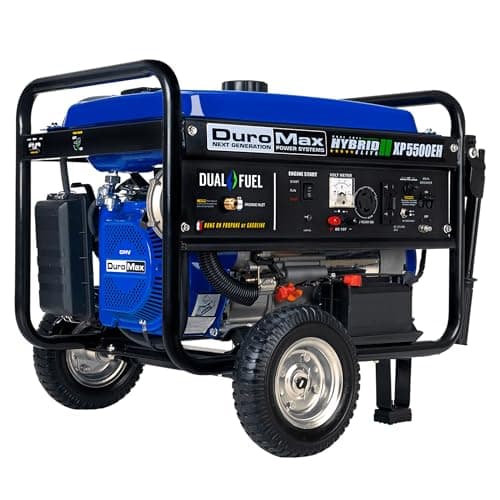
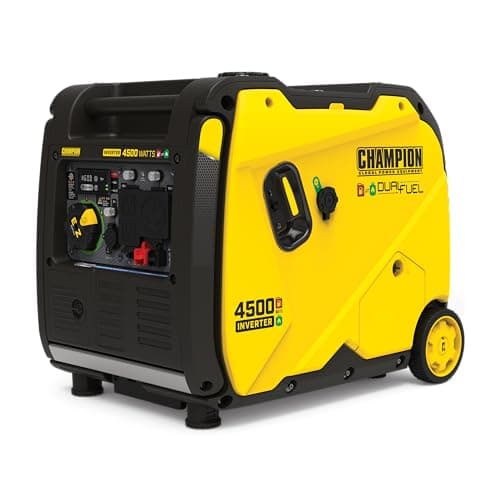
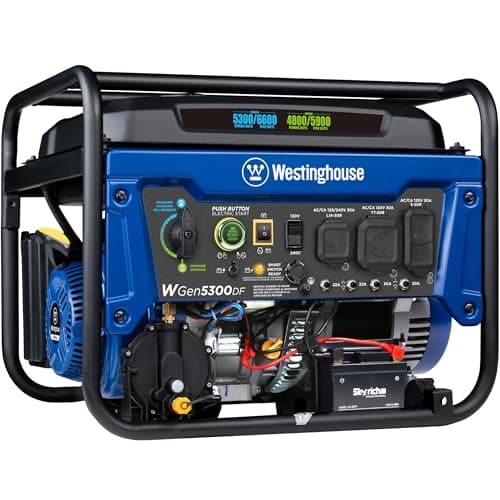
A generator advertised as "5,500 watts" is very often 5,500 peak and 4,500 running. Peak watts last a fraction of a second and exist to absorb a motor start. Running watts are what the machine will actually sustain, and that is the number your load list has to fit inside.
The two picks above illustrate it precisely: 5,500 peak / 4,500 running, and 6,600 peak / 5,300 running. The starting watts page sets out the arithmetic, and the sizing guide works a real house through it.
Add margin, then check the switch
Two adjustments turn a load total into a purchase.
Add 20%. Nameplate figures are optimistic and older appliances draw more than new ones. A 3,500W load list wants a 4,200W machine, not a 3,600W one.
Then check what your transfer switch allows. A 30A switch caps a house feed at 7,500W regardless of what the generator can produce — which means everything in this class fits, but also that upgrading the generator alone buys you nothing. The transfer switch page covers sizing both together.
What a 5,000 watt machine costs to run
At the roughly 0.75 gallons per hour figure this site uses and the EIA gasoline price documented on the methodology page, continuous running is expensive and block running is not.
The realistic pattern is four to six hours a day, split into blocks. A closed refrigerator holds temperature for hours between runs, a furnace only needs to bring the house back up periodically, and the freezer is fine. That turns a multi-day outage from eleven cans of gasoline into three. The fuel consumption page has the full arithmetic.
The short version
- Read the running figure. The headline number is often the peak.
- Add 20% margin to your load list before choosing.
- This size covers the fridge, freezer and furnace. Not central air and not electric heat.
- Dual fuel is worth more at this size because gasoline logistics get harder as the machine gets bigger.