Skip to content
Watt Warden

Generators

Dual Fuel vs Tri Fuel Generators

The third fuel is natural gas, and it is either the best fuel you can have in an outage or completely irrelevant to you. There is very little middle ground.

By Sawyer V.Updated Published How we work this out
An industrial fuel tank photographed in black and white.

Watt & Warden earns a commission on qualifying purchases made through links on this page, at no extra cost to you. It never changes a ranking, and our picks include products we tell you to skip. Full disclosure.

Quick picks

#ProductBest forPrice
1
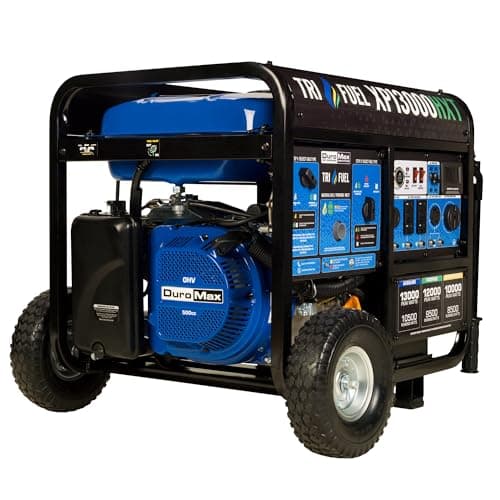
DuroMax XP13000HXT tri-fuel generator

The tri fuel case

DuroMax XP13000HXT tri-fuel generator

One machine with three published output ratings — gasoline, propane and natural gas.

A house with a natural gas line
$1,499.00 · Check price on Amazon

#ad how this is funded · price as of October 21, 2026 · $2,499.00 40% off

2
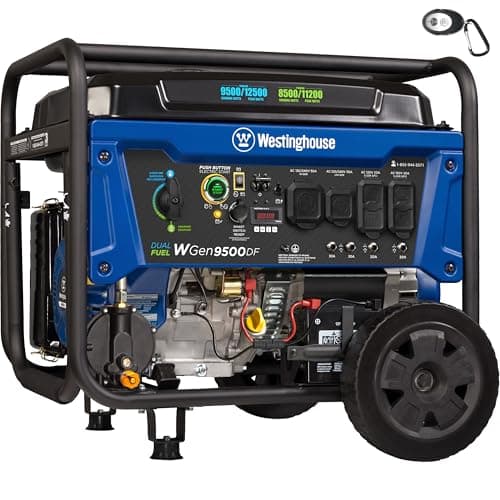
Westinghouse WGen9500DF

The dual fuel case

Westinghouse WGen9500DF

9,500 running watts on gasoline, dual fuel, with an L14-30R and a 50A 14-50R.

Most households
$999.00 · Check price on Amazon

#ad how this is funded · price as of October 21, 2026

3
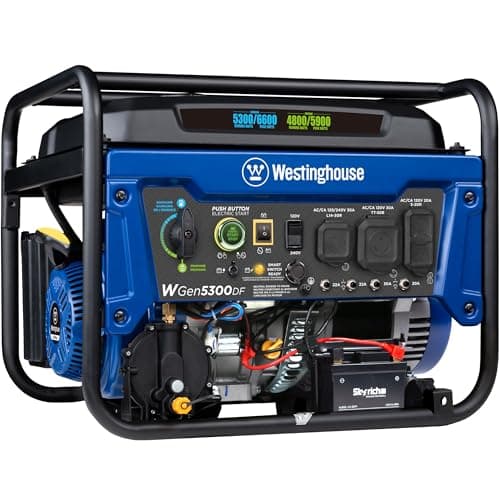
Westinghouse WGen5300DF

Dual fuel, smaller

Westinghouse WGen5300DF

5,300 running watts of dual fuel, transfer-switch ready.

A critical-load list rather than a whole panel
$649.00 · Check price on Amazon

#ad how this is funded · price as of October 21, 2026

4
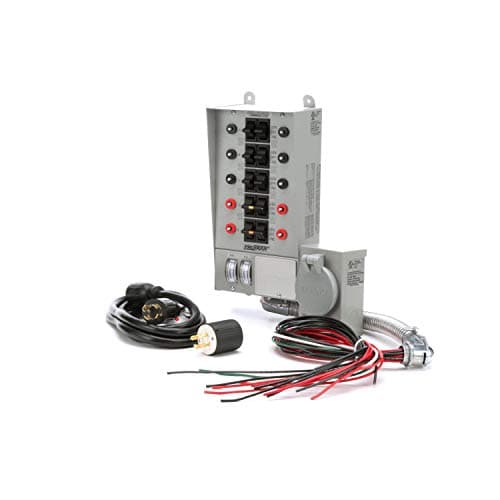
Reliance Controls 31410CRK Pro/Tran

The part that matters more than the fuel

Reliance Controls 31410CRK Pro/Tran

A 10-circuit manual transfer switch kit — the legal, non-lethal connection method.

Connecting any of them to the house
$475.20 · Check price on Amazon

#ad how this is funded · price as of October 21, 2026

Prices come from the retailer at page-build time and change constantly. Where no live price is available the button reads “Check price” rather than showing a number we cannot stand behind.

What the third fuel actually is

A dual fuel generator runs on gasoline or propane. A tri fuel generator adds natural gas — the same supply that feeds a furnace or a range in a house with a gas meter.

That is the entire difference. Tri fuel machines are not more powerful, quieter or more reliable than their dual fuel equivalents. They have one extra inlet and a regulator, and they cost more.

The one question that decides it

Does your house have a natural gas line, and are you prepared to pay to plumb an outdoor connection point?

If the answer is no — no gas service, a propane-only rural property, or an unwillingness to add a gas outlet — then tri fuel is money spent on a fuel you cannot use. If the answer is yes, the third fuel changes what a long outage feels like.

How the three fuels compare

FuelOutputStorageRuns out?
GasolineHighest of the threeDegrades in months; needs stabilizer and rotationYes — and stations need power to pump
PropaneLower than gasoline on the same machineIndefinite in a sealed cylinderYes, but you can store a lot of it safely
Natural gasLowest of the threeNone — it arrives by pipeNo, unless the utility loses supply

Output varies by machine and each manufacturer publishes its own figures per fuel — the DuroMax tri fuel unit above states all three. Never assume the headline gasoline number applies on gas or propane.

Note the pattern: the more convenient the fuel, the less power you get from it. A generator that makes 13,000W on gasoline makes meaningfully less on natural gas, so a tri fuel machine has to be sized against its natural gas rating if that is how you plan to run it.

What tri fuel costs you beyond the sticker

  • A gas outlet. An outdoor quick-connect plumbed from the house supply, fitted by a licensed plumber in most jurisdictions.
  • Derated output. Size the machine on the natural gas figure, not the gasoline one, or the whole plan fails on the first cold night.
  • A dependency on the utility. Gas supply usually survives storms that take out power, but not always — earthquakes and major infrastructure damage can take both.

What dual fuel gets right

Propane is the underrated fuel in this comparison. It stores indefinitely, which is exactly what a machine used twice a year needs; it burns cleaner through a carburetor, so the machine is less likely to refuse to start after a year in the garage; and a few 20 lb cylinders in a shed is a genuinely practical store — the propane roundup covers the trade in full.

Gasoline remains the fuel for maximum output, and the sensible pattern is to run propane by default and keep gasoline for the moments you need the machine at full capacity.

Who should buy which

  • Buy tri fuel if you have natural gas service, expect multi-day outages, and will pay for the gas outlet.
  • Buy dual fuel if you have no gas line, if outages are hours rather than days, or if you want the money to go into a transfer switch instead.
  • Consider neither if a battery covers your outage history — the generator versus power station page frames that decision.

The short version

  • Tri fuel = dual fuel + natural gas. Nothing else changes.
  • No gas line, no reason. The capability is unusable without one.
  • Natural gas gives the lowest output of the three fuels — size against that rating.
  • Propane is the quiet winner for storage, which is why dual fuel suits most households.

The picks in full

01 — The tri fuel case

DuroMax XP13000HXT tri-fuel generator

One machine with three published output ratings — gasoline, propane and natural gas.

The reason to buy tri fuel is unlimited runtime. A natural gas line does not run out, does not need refueling at 3am and does not need storing, which removes the single worst part of running a generator through a multi-day outage.

This machine is also the clearest illustration of the trade, because DuroMax publishes a separate output figure for each fuel rather than quoting the gasoline number and hoping you do not ask.

The honest catch: connecting it to the house gas supply is plumbing work, and in most places that means a licensed plumber and a permit. Budget for that before you compare sticker prices.

Skip it ifyou have no gas line. You are paying for a capability you cannot connect.

DuroMax XP13000HXT tri-fuel generator
$1,499.00 · Check price on Amazon

#ad how this is funded · price as of October 21, 2026 · $2,499.00 40% off

Published specifications for the DuroMax XP13000HXT tri-fuel generator
SpecificationPublished figure
Gasoline13,000 peak W / 10,500 running W
Propane12,000 peak W / 9,500 running W
Natural gas10,000 starting W / 8,500 running W
Engine500cc OHV, 100% copper windings
Tank8.3 gal
Run time8.82 h on gasoline at 50% load, 7.63 h on propane
OutletsTransfer-switch-ready 50 A outlet
StartingPush-button electric with remote start
SafetyBuilt-in CO Alert shutdown

Source: DuroMax — XP13000HXT tri-fuel generator listing. These are the manufacturer's published figures, not ours — we have not tested this unit.

02 — The dual fuel case

Westinghouse WGen9500DF

9,500 running watts on gasoline, dual fuel, with an L14-30R and a 50A 14-50R.

Dual fuel covers the two fuels you can actually store yourself. Gasoline gives the highest output, propane stores for years without degrading, and between them you can prepare for a storm without a plumber.

For the overwhelming majority of households this is the right answer, and the money saved buys the transfer switch that makes the machine usable.

The honest catch: in an outage long enough to empty your fuel store, a gas line would have kept running. That is the scenario tri fuel exists for.

Skip it ifyou want to run on natural gas. This machine cannot.

Westinghouse WGen9500DF
$999.00 · Check price on Amazon

#ad how this is funded · price as of October 21, 2026

Published specifications for the Westinghouse WGen9500DF
SpecificationPublished figure
Output (gasoline)9,500 running W / 12,500 peak W
FuelGasoline or propane (dual fuel)
Engine457cc 4-stroke OHV, cast iron sleeve
Tank6.6 gal (25 L)
Run timeup to 12 h on a full tank
Transfer-switch outlet120/240 V L14-30R, 30 A
RV outlet120/240 V 14-50R, 50 A
StartingPush-button electric with remote key fob
Warranty3-year limited

Source: Westinghouse — WGen9500DF product specifications. These are the manufacturer's published figures, not ours — we have not tested this unit.

03 — Dual fuel, smaller

Westinghouse WGen5300DF

5,300 running watts of dual fuel, transfer-switch ready.

Most households need less generator than they buy. A furnace, a refrigerator, a freezer, a well pump and lights fit inside 5,300W with the surge headroom to start them one at a time.

Smaller machines also burn less, which matters more than the purchase price across a long outage.

The honest catch: no headroom for an air conditioner compressor, and no natural gas option.

Skip it ifcentral air conditioning is on the list.

Westinghouse WGen5300DF
$649.00 · Check price on Amazon

#ad how this is funded · price as of October 21, 2026

Published specifications for the Westinghouse WGen5300DF
SpecificationPublished figure
Output (gasoline)5,300 running W / 6,600 peak W
Output (propane)4,800 running W / 5,900 peak W
Engine274cc 4-stroke OHV
Tank4.7 gal (18 L)
Run timeup to 14.5 h on a full tank
Transfer-switch outlet120/240 V L14-30R, 30 A
RV outlet120 V TT-30R, 30 A
StartingPush-button electric with remote key fob

Source: Westinghouse — WGen5300DF product specifications. These are the manufacturer's published figures, not ours — we have not tested this unit.

04 — The part that matters more than the fuel

Reliance Controls 31410CRK Pro/Tran

A 10-circuit manual transfer switch kit — the legal, non-lethal connection method.

Fuel flexibility is worth nothing if the machine is still feeding three extension cords through a window. The switch is what turns a generator into house power.

It also outlives the generator, and it works with whatever you buy next — the connection guide covers the options.

The honest catch: installation is electrician work and usually costs about what the switch does.

Skip it ifyou already have an interlock kit fitted.

Reliance Controls 31410CRK Pro/Tran
$475.20 · Check price on Amazon

#ad how this is funded · price as of October 21, 2026

Published specifications for the Reliance Controls 31410CRK Pro/Tran
SpecificationPublished figure
Circuits10 — six 15 A and four 20 A single-pole breakers
Rating30 A, up to 7,500 W
MeteringTwo watt meters for balancing the load
SwitchingBreak-before-make double-throw, Line / Off / Gen
BackfeedMechanically prevented — the grid cannot be energized
InstallationLicensed electrician; a permit is usually required

Source: Reliance Controls — Pro/Tran 31410CRK product page. These are the manufacturer's published figures, not ours — we have not tested this unit.

How these were chosen

We did not test these. Nobody at Watt & Warden has plugged one in. What we did instead: read the manufacturer's published specifications, compile them into a table where the figures line up, and compute the numbers manufacturers leave out — runtime against a real appliance load, and what an hour of running actually costs.

Anything that could not be sourced was left out rather than estimated, and every pick names the buyer who should skip it. The full method is here, including where it is weaker than a publisher with a test bench.

Questions people actually ask

Is a tri fuel generator worth the extra money?

Only if your house has a natural gas line and you will pay to have an outdoor gas connection plumbed. With that in place, natural gas gives effectively unlimited runtime in an outage. Without it, you are buying a third inlet you can never connect.

Does a generator make less power on natural gas?

Yes. Manufacturers publish separate output ratings per fuel, and natural gas is normally the lowest of the three, with propane in the middle and gasoline highest. Size the machine against the fuel you actually intend to run, not the headline gasoline figure.

Can I convert a dual fuel generator to run on natural gas?

Third-party conversion kits exist, but they can void the warranty and they are outside what the manufacturer has tested and published. If natural gas matters to you, buying a machine the manufacturer sells as tri fuel keeps both the warranty and the published ratings intact.

Which fuel should I run day to day?

Propane, for most households. It does not degrade in storage, which is the failure mode that kills more generators than anything mechanical, and it burns cleaner through the carburetor. Keep gasoline for the moments you need the machine's full output.

Is natural gas safe during a storm?

Gas supply usually survives weather events that take down power lines, which is the whole appeal. It is not guaranteed -- major infrastructure damage or an earthquake can interrupt both. A tri fuel machine keeps gasoline and propane as fallbacks, which is part of its value.

Sources

Every figure on this page comes from a published source. We have not tested this equipment, so the specifications are the manufacturer's and the statistics are the dataset's — the arithmetic on top of them is ours, and it is shown in full so you can check it. How we work this out.