Skip to content
Watt Warden

Generators

How to Break In a New Generator

A new engine sheds metal into its oil while the rings seat. The manual tells you to change that oil early, and almost nobody does it before the first real outage.

By Sawyer V.Updated Published How we work this out
New engine oil being poured.

Watt & Warden earns a commission on qualifying purchases made through links on this page, at no extra cost to you. It never changes a ranking, and our picks include products we tell you to skip. Full disclosure.

What break-in actually is

A new engine has machined surfaces that have never touched each other. During the first hours of running, the piston rings wear into the cylinder bore until they seal properly, and the bearings and valve train bed in.

That process sheds fine metal particles into the oil. It is normal and expected — and it is why the manual specifies an early oil change that the regular schedule does not repeat.

Leave that oil in and you are circulating the debris from the seating process through the engine for its whole life. Change it and the engine starts its real life clean.

When the change is due

Earlier than most people expect, and the figure varies by manufacturer.

SourceBreak-in interval
Briggs & Stratton 8,000W portable, operator's manualChange oil after the first 5 operating hours
Generac home standby, published guidanceOil and filter at the first 25 hours of total runtime, however accumulated
Generac PowerPact 7.5 kW20 hours
Common range across manufacturersSomewhere between the first 5 and the first 25 hours

Transcribed from the sources linked below. Your own manual is the authority and the figure genuinely differs — this table exists to show that the interval is early rather than to give you a number to use instead of your manual's.

Put that against a real outage. A generator running six-hour blocks passes five hours on the first day and twenty-five hours inside a week. The break-in change is not a distant milestone — it arrives during your first serious use.

Do it before you need the machine

This is the whole argument of the page. The choice is between doing a twenty-minute job on a dry Saturday with the shops open, or doing it in a storm, in the dark, with no oil on the shelf.

The sensible sequence when a generator arrives:

  1. Read the manual's break-in section. Some manufacturers specify a particular load pattern for the first hours; most simply specify the oil change.
  2. Fill with the correct oil — many machines ship dry — and with fresh treated fuel.
  3. Run it under a moderate load for the specified hours. Not at no load, and not flat out. A couple of work lights, a space heater or a fan heater makes an easy, controllable load.
  4. Change the oil while the engine is warm, which drains more completely and takes more debris with it.
  5. Refill and check the level on level ground.
  6. Note the date and the hours somewhere you will find again — inside the manual, or a label on the machine.

Five hours is one afternoon. Twenty-five is a few weekends, or one long exercise session per month across a season.

Load matters during break-in

The instruction most people miss. Running a new engine at no load for hours is not a break-in — it is idling.

Rings seat under combustion pressure, and combustion pressure comes from the engine doing work. A generator with nothing plugged in produces very little, which is why some manufacturers specify a load range for the break-in period.

  • Aim for a moderate steady load — commonly around a third to a half of rated output, but follow your manual where it specifies one.
  • Resistive loads are ideal. Heaters and incandescent work lights are steady and predictable in a way a fridge is not.
  • Avoid sustained full load during the first hours unless the manual says otherwise.
  • Vary it a little rather than holding one figure for hours, where the manual allows.

Standby units break in too, and nobody notices

Worth stating because it catches owners of permanently installed generators completely off guard.

Generac specifies the break-in oil and filter change at the first 25 hours of total engine runtime, regardless of how those hours were accumulated — exercise cycles count exactly the same as outages.

A weekly self-test of fifteen minutes is about thirteen hours a year. So a house that has never lost power reaches 25 engine hours inside two years, and the owner has had no reason to think anything is due. Warranty coverage generally depends on it.

The standby maintenance page covers the full published schedule.

What to do with the old oil

Used engine oil is accepted free by most auto parts stores and municipal recycling centers. Drain it into a sealed container — the bottle the new oil came in is the obvious choice — label it, and drop it off.

Never down a drain, never onto ground. A single oil change is a surprisingly large amount of contamination for the volume involved.

After the break-in

The engine is now in normal service, and the schedule that matters is the calendar one rather than the hours one — because a machine kept for emergencies almost never accumulates hours.

  • Monthly in your risk season: start it, ten to fifteen minutes under load.
  • Twice a year: run it under load for fifteen minutes, check the oil, rotate the stored fuel.
  • Yearly: oil, air filter, spark plug — the whichever-comes-first clause makes these annual regardless of hours.

The full schedule by interval sets it out, and the kit is three items on a shelf.

Quick picks

#ProductBest forPrice
1
No photo

What the break-in change needs

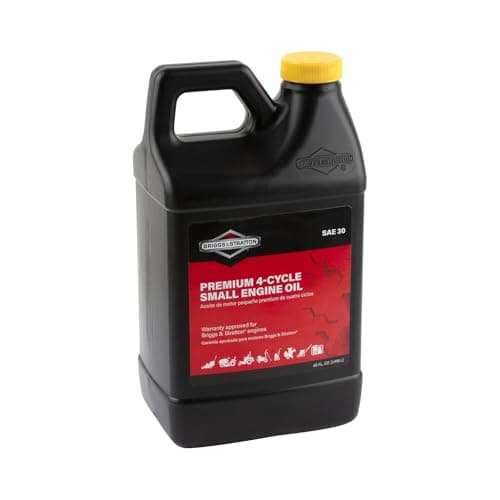
Briggs & Stratton SAE 30 engine oil, 48 oz

48oz of SAE 30 detergent oil to API SJ or higher — about one change on most portables.

Warm-weather running
2
No photo

For the fuel you break it in on

STA-BIL 360 Protection fuel stabilizer

One ounce treats up to five gallons; the label claims up to 12 months of storage protection.

The tank that will sit afterwards
3
No photo

An easy machine to break in

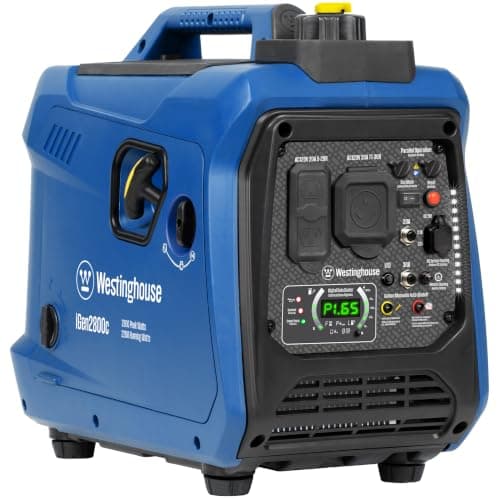
Westinghouse iGen2200

1,800 running watts at as low as 52 dBA, 46 lb, up to 12 hours on 1.2 gallons.

A first generator

Prices come from the retailer at page-build time and change constantly. Where no live price is available the button reads “Check price” rather than showing a number we cannot stand behind.

The picks in full

01What the break-in change needs

Briggs & Stratton SAE 30 engine oil, 48 oz

48oz of SAE 30 detergent oil to API SJ or higher — about one change on most portables.

Buy two bottles at the same time as the generator. One for the break-in change and one on the shelf, because the second most common way this goes wrong is having the time and not the oil.

Most portable generators take between 0.6 and 1.2 quarts, so a 48oz bottle is roughly one change.

Skip it ifyour machine runs below 40°F. Use the multigrade your manual specifies instead.

Published specifications for the Briggs & Stratton SAE 30 engine oil, 48 oz
SpecificationPublished figure
GradeSAE 30 detergent, 4-cycle
Volume48 oz
SpecificationAPI SJ/CD or higher
TemperatureAbove 40°F; use a multigrade below that
CoversAbout one change on most portable generators

Source: Briggs & Stratton — engine oil product page. These are the manufacturer's published figures, not ours — we have not tested this unit.

02For the fuel you break it in on

STA-BIL 360 Protection fuel stabilizer

One ounce treats up to five gallons; the label claims up to 12 months of storage protection.

The break-in run puts fuel through a brand new fuel system, and then the machine sits. Treating that fuel is what stops the carburetor varnishing before its first real use.

Treat the fuel when you buy it rather than after the run — additives cannot reverse gum that has already formed.

Skip it ifyou will run the machine dry immediately after the break-in.

Published specifications for the STA-BIL 360 Protection fuel stabilizer
SpecificationPublished figure
Treats40 gallons (8 fl oz bottle)
Storage lifeKeeps ethanol-blended fuel fresh up to 12 months
Dose1 oz treats up to 5 gallons of fuel
Also doesFuel-system cleaning, corrosion and water-absorption protection
UseAdd before filling, then run the engine 5 minutes

Source: STA-BIL — 360 Protection product page. These are the manufacturer's published figures, not ours — we have not tested this unit.

03An easy machine to break in

Westinghouse iGen2200

1,800 running watts at as low as 52 dBA, 46 lb, up to 12 hours on 1.2 gallons.

Small machines are easier to break in properly because the load you need to apply is small — a couple of work lights and a space heater covers a useful fraction of 1,800W.

52 dBA also means you can run it for a couple of hours on a Saturday without an argument, which is exactly what a break-in needs.

Skip it ifyou already own a machine. This page applies to yours too.

Published specifications for the Westinghouse iGen2200
SpecificationPublished figure
Output1,800 running W / 2,200 peak W
Noiseas low as 52 dBA
Weight46 lb
Tank1.2 gal
Run timeup to 12 h
WaveformLess than 3% THD
ParallelCapable with a second unit

Source: Westinghouse — iGen2200 published specifications. These are the manufacturer's published figures, not ours — we have not tested this unit.

How these were chosen

We did not test these. Nobody at Watt & Warden has plugged one in. What we did instead: read the manufacturer's published specifications, compile them into a table where the figures line up, and compute the numbers manufacturers leave out — runtime against a real appliance load, and what an hour of running actually costs.

Anything that could not be sourced was left out rather than estimated, and every pick names the buyer who should skip it. The full method is here, including where it is weaker than a publisher with a test bench.

Questions people actually ask

Do you need to break in a new generator?

Yes, and the important part is the early oil change. A new engine sheds fine metal particles as the rings seat into the bore, and the manual specifies a change that the regular schedule does not repeat. Leaving that oil in circulates the debris from the seating process for the engine's whole life.

When is the first oil change on a new generator?

Earlier than most people expect, and it varies. The Briggs & Stratton 8,000W portable manual specifies 5 operating hours; Generac specifies 25 hours of total runtime for home standby units, or 20 on PowerPact 7.5kW models. Somewhere between the first 5 and 25 hours is the common range -- your manual is the authority.

Should I run a generator with no load during break-in?

No -- that is idling rather than breaking in. Rings seat under combustion pressure, which comes from the engine doing work. Aim for a moderate steady load, commonly around a third to a half of rated output, using resistive loads like heaters or work lights, and follow your manual where it specifies a range.

Does a standby generator need breaking in?

Yes, and owners routinely miss it. Generac specifies the break-in change at the first 25 hours of total engine runtime regardless of how they accumulated -- and a weekly fifteen-minute self-test is about thirteen hours a year, so a house that has never lost power reaches it inside two years. Warranty coverage generally depends on it.

How long does it take to break in a generator?

Five hours is one afternoon; twenty-five is a few weekends or a season of monthly exercise runs. The point of doing it deliberately is that the alternative is reaching the interval during your first real outage, in the dark, with no oil on the shelf.

Sources

Every figure on this page comes from a published source. We have not tested this equipment, so the specifications are the manufacturer's and the statistics are the dataset's — the arithmetic on top of them is ours, and it is shown in full so you can check it. How we work this out.