Skip to content
Watt Warden

Generators

How Long Can a Generator Run Continuously?

Three limits stack up, and the fuel tank is only the first. The one that actually damages engines is the one nobody plans for.

By Sawyer V.Updated Published How we work this out
A clock beside running machinery.

Watt & Warden earns a commission on qualifying purchases made through links on this page, at no extra cost to you. It never changes a ranking, and our picks include products we tell you to skip. Full disclosure.

Three limits, in the order they bite

“How long can it run” has three answers and people only plan for the first one.

1. The fuel tank — 8 to 14 hours typically

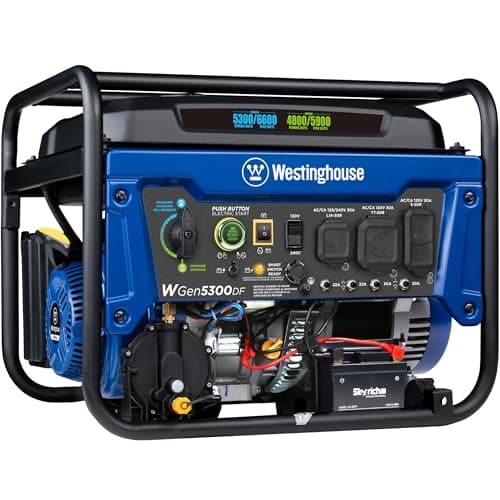
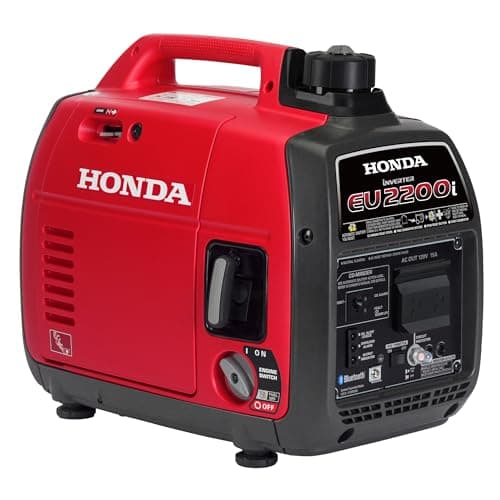
The obvious limit, and the one on the box. Westinghouse publishes up to 14.5 hours for the WGen5300DF on its 4.7-gallon tank and up to 12 hours for the WGen9500DF on 6.6 gallons. Honda publishes 8.1 hours for the EU2200i on 0.95 gallons.

Compare hours per gallon rather than hours. A large tank flatters a thirsty engine, and in an outage the constraint is how much fuel you can obtain rather than how long between fills.

2. Oil — the limit that damages the engine

This is the one that ruins machines, and it is invisible until it is not. A small air-cooled engine consumes and degrades oil considerably faster than a car engine, and it has no oil filter to speak of and a small sump.

Manuals commonly specify a first oil change at 20 to 30 hours on a new machine, and intervals in the low hundreds of hours thereafter. Run continuously, twenty hours arrives on the second day of an outage.

Most modern generators have an automatic low-oil shutdown that stops the engine before it destroys itself. That is a safeguard, not a schedule — it protects against catastrophe, not against wear. Check the level every eight to twelve hours of running, and carry the correct oil and a funnel with the fuel. Your manual gives the grade and the interval; use it in preference to anything on this page.

3. Heat and refuelling — the safety limit

Manufacturers generally direct you to shut the engine down and let it cool before refuelling. Gasoline spilled on a hot muffler ignites, and that is a fire next to a fuel tank, in the dark, in bad weather.

Which means “continuous” running is punctuated by definition: the machine has to stop to be fed. Allowing fifteen minutes to cool between shutdown and refuelling is the standard advice, and it is worth planning the timing rather than discovering it at 1am.

Why continuous running is the wrong plan anyway

Even setting the limits aside, running a generator around the clock is the most expensive and least pleasant way to get through an outage.

At 0.75 gallons an hour and the EIA's reported $4.071 a gallon for the week ending 31 August 2026, continuous running costs about $73 a day and consumes 18 gallons — nearly four five-gallon cans. Over three days that is 54 gallons, which most households cannot legally or safely store.

Block running solves all of it. Six hours a day costs about $18 and needs three cans over three days, and it keeps a fridge and freezer perfectly safe: FoodSafety.gov puts a sealed refrigerator at about four hours and a full freezer at about 48. Run the generator through the evening, shut it down overnight, run it again in the morning.

The pattern that works best

Pair the generator with a battery. Run the generator for two to three hours in the afternoon: it carries the house, cools the fridge and freezer hard, and refills the power station. Then shut it down and run the essentials off the battery overnight — silently, with no fuel consumption and nobody outside in the dark.

You get generator endurance with battery quiet, you burn roughly a quarter of the fuel, and your neighbors can sleep. The charging arrangement is covered here and the full comparison here.

Running a generator for days: the checklist

  1. Check the oil every 8–12 running hours. Carry the right grade and a funnel.
  2. Plan the first oil change. If the machine is new, that is 20–30 hours in — day two of a continuous run.
  3. Shut down and cool before refuelling. Fifteen minutes, every time, no exceptions in the rain.
  4. Run in blocks, not continuously. Cheaper, quieter, less fuel, and easier on the engine.
  5. Rotate the load. A generator running near its limit for days is working much harder than one at half load.
  6. Keep it clear. Air-cooled engines need airflow. Do not let debris, snow or a cover restrict it.
  7. Twenty feet, exhaust pointed away, CO alarms working. The rules do not relax on day three — they matter more.

What about standby generators?

A permanently installed standby unit on natural gas is a different machine with a different answer. Fuel is not a limit at all — the gas main does not run out — and these are engineered for extended running with proper cooling and larger oil capacity.

They still need oil changes, and manufacturers publish maintenance intervals in running hours for exactly that reason. The practical limit is a service interval rather than a tank. The standby hub covers that trade-off.

Quick picks

#ProductBest forPrice
1
No photo

Longest run per gallon here

Westinghouse WGen5300DF

Up to 14.5 hours on a 4.7-gallon tank — a full overnight plus most of a morning.

Multi-day outages with limited fuel
2
No photo

Most efficient engine here

Honda EU2200i

8.1 hours on 0.95 gallons — about 0.117 gal/hr, which nothing else here approaches.

Light loads over long periods

Prices come from the retailer at page-build time and change constantly. Where no live price is available the button reads “Check price” rather than showing a number we cannot stand behind.

The picks in full

01Longest run per gallon here

Westinghouse WGen5300DF

Up to 14.5 hours on a 4.7-gallon tank — a full overnight plus most of a morning.

14.5 hours on 4.7 gallons is the best hours-per-gallon figure on this site, and it is the number to compare rather than raw run time — a bigger tank is not the same as a more efficient engine.

Practically, it means one fill covers an overnight run without anybody going outside in the dark with a fuel can.

Skip it ifyou need over 5,300 running watts. Run time is only useful if the machine carries your load.

Published specifications for the Westinghouse WGen5300DF
SpecificationPublished figure
Output (gasoline)5,300 running W / 6,600 peak W
Output (propane)4,800 running W / 5,900 peak W
Engine274cc 4-stroke OHV
Tank4.7 gal (18 L)
Run timeup to 14.5 h on a full tank
Transfer-switch outlet120/240 V L14-30R, 30 A
RV outlet120 V TT-30R, 30 A
StartingPush-button electric with remote key fob

Source: Westinghouse — WGen5300DF product specifications. These are the manufacturer's published figures, not ours — we have not tested this unit.

02Most efficient engine here

Honda EU2200i

8.1 hours on 0.95 gallons — about 0.117 gal/hr, which nothing else here approaches.

8.1 hours from under a gallon is what Eco Throttle buys: engine speed tracks the load, so a light load costs very little fuel.

The tank is small, so absolute run time is unremarkable — but on a per-gallon basis nothing else on this site is close, and in an outage fuel is the constraint rather than time.

Skip it ifyour load is over 1,800W rated. The efficiency comes partly from the small engine.

Published specifications for the Honda EU2200i
SpecificationPublished figure
Output2,200 W max / 1,800 W rated
TypeInverter (pure sine wave)
Noise48–57 dB(A)
Weight47.4 lb
Tank0.95 gal
Run timeup to 8.1 h on a full tank
FeaturesEco Throttle, CO-Minder, Bluetooth app monitoring

Source: Honda Power Equipment — EU2200i specifications. These are the manufacturer's published figures, not ours — we have not tested this unit.

How these were chosen

We did not test these. Nobody at Watt & Warden has plugged one in. What we did instead: read the manufacturer's published specifications, compile them into a table where the figures line up, and compute the numbers manufacturers leave out — runtime against a real appliance load, and what an hour of running actually costs.

Anything that could not be sourced was left out rather than estimated, and every pick names the buyer who should skip it. The full method is here, including where it is weaker than a publisher with a test bench.

Questions people actually ask

How long can a portable generator run continuously?

The tank gives 8 to 14 hours typically, but oil is the real limit -- manuals commonly specify a first oil change at 20 to 30 hours on a new machine. And manufacturers direct you to shut down and cool before refuelling, so continuous running is punctuated by definition.

Can I run a generator 24 hours a day?

Mechanically, with fuel stops and oil checks, yes for a while -- but it is the most expensive way to get through an outage. At 0.75 gallons an hour it costs about $73 a day and consumes nearly four five-gallon cans. Six-hour blocks keep a fridge and freezer perfectly safe for about $18.

Can I refuel a generator while it is running?

No. Manufacturers direct you to shut it down and let it cool first, because gasoline spilled on a hot muffler ignites -- next to a full fuel tank, in the dark. Allow about fifteen minutes to cool.

How often should I change the oil in a generator?

Follow your manual, which is the only authority here. Manuals commonly specify a first change at 20 to 30 hours on a new machine and intervals in the low hundreds of hours afterwards. Check the level every 8 to 12 running hours during an extended outage.

Sources

Every figure on this page comes from a published source. We have not tested this equipment, so the specifications are the manufacturer's and the statistics are the dataset's — the arithmetic on top of them is ours, and it is shown in full so you can check it. How we work this out.