Before anything: the safe-to-work checklist
- Outdoors only, at least twenty feet from windows, doors and attached garages. Troubleshooting is not an exception to this.
- Engine off and cool before touching fuel or the spark plug.
- Disconnect the spark plug lead before anything that could turn the engine over unexpectedly.
- No smoking, no open flame, no sparks anywhere near the fuel system.
The four checks, in order
1. Is the fuel valve open, and the choke set?
Genuinely the most common cause, and the most embarrassing. Three switches usually have to agree before anything happens:
- Fuel valve open. If you ran it dry for storage, you closed it. It is still closed.
- Engine switch on. Some machines have a separate engine switch and ignition key, and both count.
- Choke closed for a cold start. Full choke cold, then open it as the engine warms. A machine that fires and immediately dies usually wants the choke left on a moment longer; one that will not fire at all after several pulls may be flooded from too much choke.
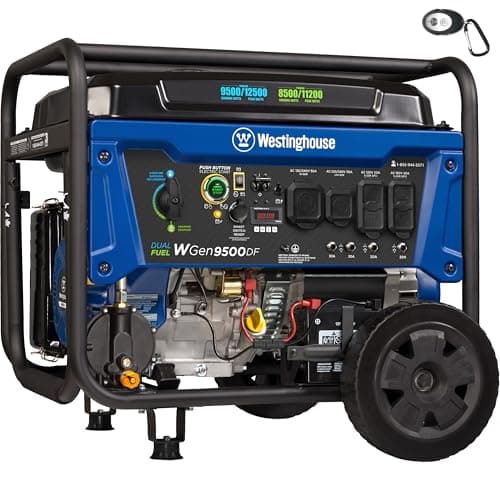
- Dual-fuel selector on the right fuel. If it is set to propane and there is no cylinder connected, it will turn over forever.
Run through all four before doing anything else. It costs thirty seconds.
2. Is there fresh fuel in it?
Not "is there fuel" — is it fresh. Untreated gasoline begins oxidizing within months, and a machine that ran fine last September may have gum in the carburetor by March.
- Look at it and smell it. Old gasoline goes darker and smells sour or of varnish rather than of gasoline.
- Drain and refill with fresh treated fuel if there is any doubt. Dispose of the old fuel properly — most municipal household hazardous waste sites take it.
- If fresh fuel does not fix it, the carburetor bowl probably has varnish in it, and that is a clean-or-replace job. On many small engines the carburetor is an inexpensive part.
The fuel storage guidance is how you avoid ever being here again.
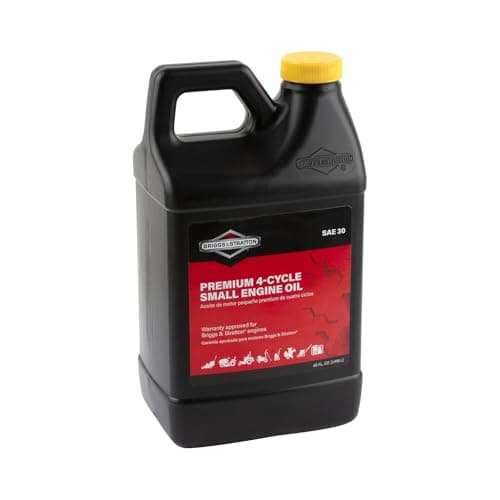
3. Is the oil level right?
Nearly every modern generator has low-oil shutdown, and on most machines it prevents starting rather than warning you. The engine turns over normally and simply does not fire, which reads exactly like an ignition problem.
- Check on level ground. A machine on a slope reads wrong and the sensor sees what the dipstick sees.
- Fill to the mark, not above. Overfilling causes its own problems.
- Look at the condition too. Milky means water; black and thin means overdue.
If the machine ran a long outage recently, this rises up the list — small air-cooled engines consume oil under sustained load, and the maintenance schedule exists for this reason.
4. Is the starting battery alive?
Electric-start only. If pressing the button gives a click or a slow crank, the battery is flat.
- Try the recoil starter if the machine has one. If it starts on the cord, the engine is fine and you have a battery problem.
- Charge it. Starting batteries self-discharge over months of storage, and many machines do not maintain them.
- Expect three to five years of life, less in heat.
If those four are clear
| Symptom | Likely cause | Next step |
|---|
| Turns over, never fires | No fuel reaching the cylinder, or no spark | Check the plug — wet means fuel is arriving |
|---|
| Fires then dies immediately | Choke or a partly blocked carburetor jet | Choke a moment longer; then clean the carburetor |
|---|
| Runs rough, will not take load | Dirty air filter or stale fuel | Air filter first — it takes two minutes |
|---|
| Starts but no power at the outlets | Tripped breaker or an idle-control switch | Reset the breaker; switch idle control off |
|---|
| Very hard to pull, then kicks back | Flooded from too much choke or priming | Open the choke fully and crank to clear it |
|---|
This table is general small-engine troubleshooting, not manufacturer guidance for your machine. Your manual's own troubleshooting section takes precedence, and anything involving the fuel system on a machine under warranty is worth a call to the dealer first.
The spark plug check
One diagnostic worth knowing because it splits the problem in half.
With the engine cool, remove the spark plug. If it is wet with fuel, fuel is arriving and you have an ignition problem — a fouled plug, a bad lead, or a failed coil. If it is dry, fuel is not arriving and the problem is in the tank, the valve, the line or the carburetor.
A fouled plug is cheap to replace and is an annual service item anyway, which is why a spare belongs on the shelf with the oil.
What not to do
- Do not spray starting fluid into the intake. It gets machines running and does real damage to small engines over time, and it can cause a backfire.
- Do not keep cranking an electric start. Ten seconds, then rest. Continuous cranking overheats the starter.
- Do not move it indoors to work on it, however cold and wet it is outside. This is the decision that kills people.
- Do not troubleshoot the fuel system by lamplight next to an open can. Wait for daylight if you safely can.
Preventing all of this
Every cause above is prevented by the same short routine, twice a year: start it, run it under load for fifteen minutes, check the oil, and rotate the stored fuel.
A monthly five-minute run during your risk season is better still, because it burns off the fuel standing in the carburetor bowl before it can varnish. The full schedule takes under an hour a year, and it is the difference between equipment you own and equipment that works.
If none of this appeals, that is a legitimate argument for a battery instead of an engine — there is no fuel to go stale, no oil to check and nothing to start.