What this budget actually gets you
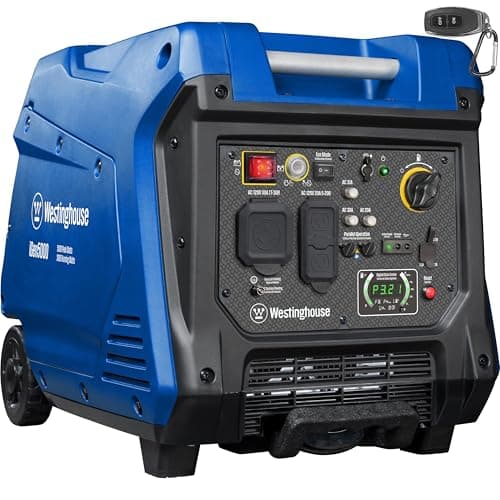
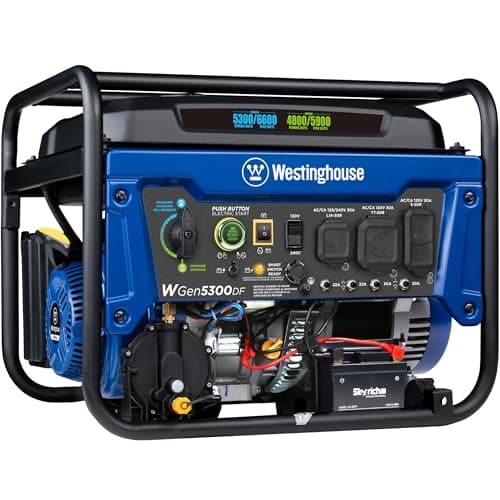
Under $1,000 is a genuinely good place to buy a generator, which is not true of most equipment categories. It covers 3,500 to 5,300 running watts, dual fuel on most models, electric start, and the transfer-switch outlets that let the machine reach hard-wired circuits.
That is enough for the critical-load list most houses actually have. On Champion's published figures, a refrigerator (150–400W running), a half-horsepower furnace fan (300–800W), a third-horsepower sump pump (500–800W) and LED lighting total roughly 1,500W running with a peak near 3,200W. A 5,300W machine covers that with room for a microwave.
What it does not cover is central air conditioning — Champion puts a three-ton unit at 5,000–6,000W starting — or an electric range, or an electric water heater at 3,000–4,500W. Those need whole-house equipment, and that is a five-figure conversation rather than a four-figure one.
Where the money goes as you go up
Understanding what the next thousand dollars buys helps you decide whether to spend it:
- Watts. The most linear relationship. 5,300 to 9,500 running watts roughly doubles what you can run at once.
- Inverter technology. Roughly double the price per watt, bought for quiet and clean power rather than capability. Worth it in dense housing; not worth it on an acre.
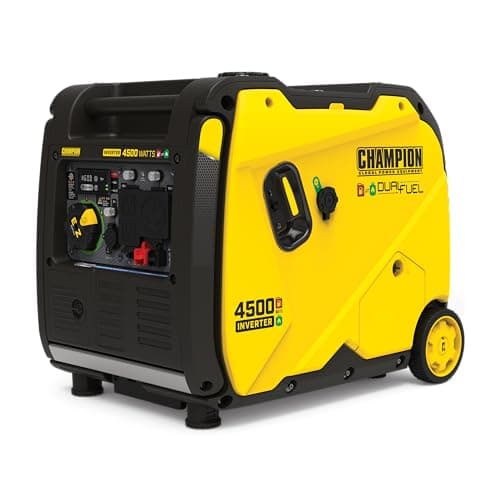
- Dual fuel. A modest premium and the best-value upgrade on this page, because it is the difference between a machine that runs on day four of a regional outage and one that does not.
- Electric start. Standard at this budget now, and worth insisting on. Pull-starting a 274cc engine in wind and rain on the second day is a real physical task.
- Run time. A larger tank rather than better efficiency, mostly. Compare hours-per-gallon, not hours.
What it costs to run
What it costs to actually run
The sticker price of a dual-fuel generator is a fraction of what it costs you. The sticker price of a battery is nearly all of it. Here is the arithmetic, with the inputs stated so you can redo it with your own fuel price.
| Unit | Published consumption | Cost per hour | Cost per 24 h |
|---|
| 5,300W conventional, half load | ~0.65 gal/hr | $2.65 | $63.51 |
|---|
| 4,500W inverter, quarter load | ~0.30 gal/hr | $1.22 | $29.31 |
|---|
| Block running, 6 h a day, conventional | 0.65 gal/hr × 6 h | $2.65 | $15.88 |
|---|
| Block running, 6 h a day, inverter at light load | 0.30 gal/hr × 6 h | $1.22 | $7.33 |
|---|
Gasoline at $4.071/gal (EIA weekly retail, U.S. average, week ending 31 August 2026). Consumption figures are working estimates for machines of this size at the stated load — your manual publishes the manufacturer's own figure and you should use it. The inverter rows show its real advantage: at light load an inverter throttles back, and a conventional machine cannot.
The inverter's fuel advantage at light load is worth as much as the noise advantage over a multi-day outage, and it is rarely mentioned. A conventional generator holds 3,600 rpm whether it is powering a fridge or a whole house; an inverter does not.
The two things to buy alongside it
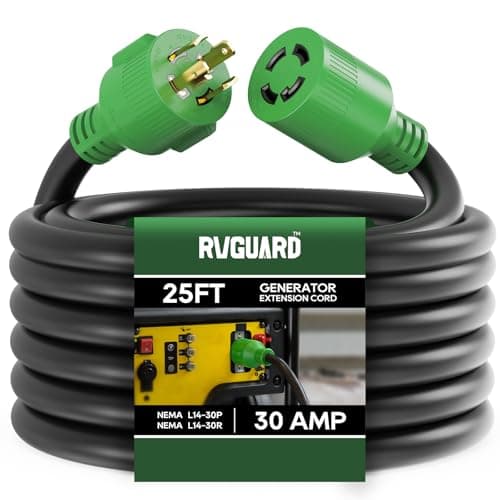
A way to connect it. Extension cords reach appliances with plugs. A furnace, a well pump and a sump pump are hard-wired and need a transfer switch or an interlock kit, fitted by an electrician. Budget for the labor, which usually exceeds the hardware, and do it out of season.
A carbon monoxide alarm on every level. Not optional and not expensive. The full safety guide explains why this is the one item on this site we would call mandatory.
Where a battery beats all of these
For outages under about eight hours, honestly, a power station is the better purchase at this budget. It is silent, it works indoors, it needs no fuel and no maintenance, and it starts every time. A generator earns its place when the outage is long enough that a fixed amount of stored energy runs out — which is the whole of the comparison.