
Skip to content
Watt Warden

Generators

Propane vs Gasoline for a Portable Generator

Gasoline makes more watts and propane makes more mornings where the engine actually starts. On a dual fuel machine you do not have to choose once.

By Sawyer V.Updated Published How we work this out
A person filling a fuel container at a gas station.

Watt & Warden earns a commission on qualifying purchases made through links on this page, at no extra cost to you. It never changes a ranking, and our picks include products we tell you to skip. Full disclosure.

Quick picks

#ProductBest forPrice
1
Westinghouse WGen9500DF

The machine that ends the argument

Westinghouse WGen9500DF

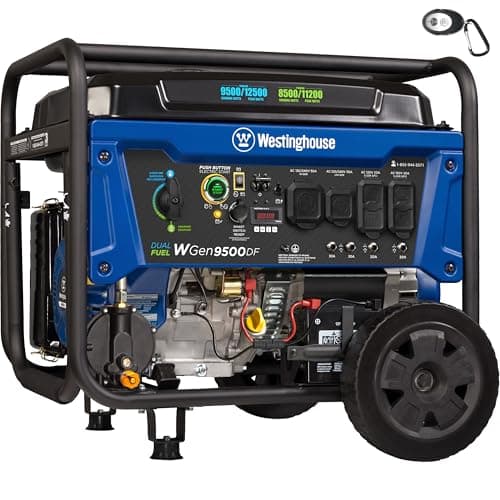
9,500 running watts on gasoline, dual fuel, with an L14-30R and a 50A 14-50R.

Running either fuel, whichever you have
$999.00 · Check price on Amazon

#ad how this is funded · price as of October 21, 2026

2
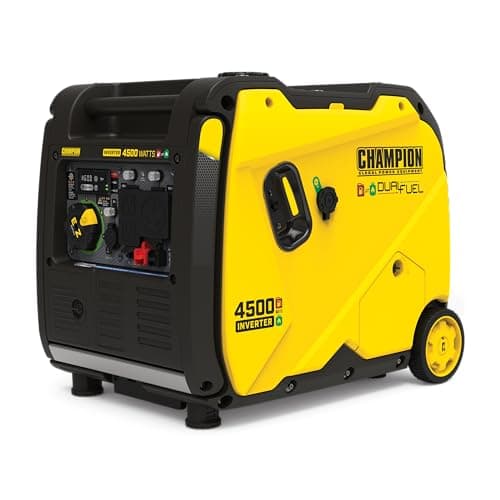
Champion 4500W dual fuel inverter generator

Dual fuel, quiet, portable

Champion 4500W dual fuel inverter generator

4,500 starting / 3,500 running watts of dual-fuel inverter power with electric start.

An RV, a tailgate or a short outage
$988.62 · Check price on Amazon

#ad how this is funded · price as of October 21, 2026

3
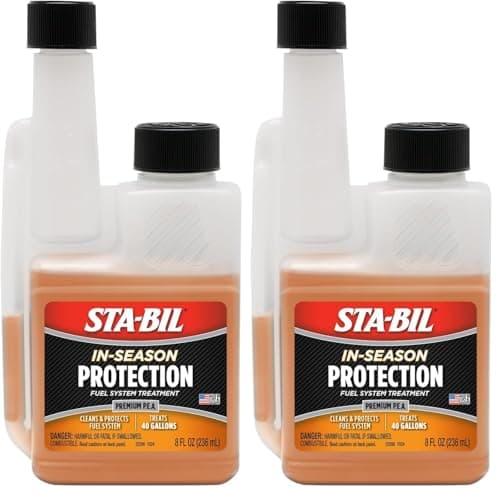
STA-BIL 360 Protection fuel stabilizer

What gasoline needs and propane does not

STA-BIL 360 Protection fuel stabilizer

Fuel stabilizer, which prevents the varnish that blocks carburetor jets.

Anyone keeping gasoline for more than a month
4
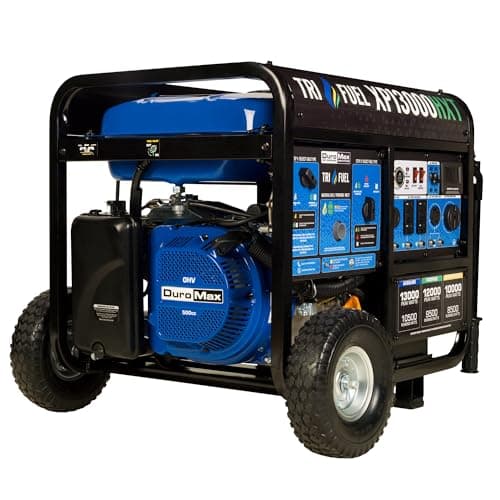
DuroMax XP13000HXT tri-fuel generator

If you want a third option

DuroMax XP13000HXT tri-fuel generator

One machine with three published output ratings — gasoline, propane and natural gas.

Houses with a natural gas line
$1,499.00 · Check price on Amazon

#ad how this is funded · price as of October 21, 2026 · $2,499.00 40% off

Prices come from the retailer at page-build time and change constantly. Where no live price is available the button reads “Check price” rather than showing a number we cannot stand behind.

The trade in one paragraph

Gasoline gives you more watts. Propane gives you more reliability. Every dual fuel machine publishes a lower output on propane than on gasoline, and every generator owner who has fought a varnished carburetor in October understands what propane is buying.

Where each fuel wins

GasolinePropane
OutputHigher — the headline ratingLower on the same machine
Storage lifeMonths, with stabilizerIndefinite in a sealed cylinder
Cold startingReliableHarder in deep cold — vapor pressure falls
Carburetor healthVarnishes when left standingBurns clean, leaves nothing behind
Refueling during a runMust shut down and cool firstSwap cylinders, with the same care
Availability in a stormStations need power to pumpExchange cages are everywhere, and you can stock up

Output and run-time figures differ by machine; each manufacturer publishes separate ratings per fuel. The behavior above is general to the fuels themselves.

The cold-weather caveat nobody mentions

Propane is stored as a liquid and burns as a vapor, and the colder it gets the less readily it vaporizes. In deep cold a small cylinder can struggle to keep up with a hard-working engine, especially when it is nearly empty.

Practical answers: use a larger cylinder, keep it out of the wind, and do not run a nearly empty tank in freezing weather. If your outages are winter outages, gasoline is the more dependable starting fuel — the cold-weather page covers the rest of the winter problem.

How much of each to store

A generator at half load burns roughly half a gallon of gasoline an hour; the fuel-use page works through real figures. Translate that into a store:

OutageGasoline to storePropane to store
12 hoursAbout 6 gallonsOne or two 20 lb cylinders
3 days, intermittent running15-20 gallons, rotatedThree or four 20 lb cylinders
A weekImpractical to store safelyA larger tank, or a gas line

Figures assume the generator runs intermittently rather than continuously, which is how most households actually use one. Store gasoline in approved containers, outside living space, and rotate it.

This table is the strongest argument for propane in a storm-prone house: storing four cylinders safely is easy, and storing twenty gallons of gasoline safely is not.

Which to run, and when

  • Default to propane if the machine sits idle most of the year. It removes the fuel-degradation failure mode entirely.
  • Switch to gasoline when you need the machine's full rated output, or when it is very cold.
  • Run the carburetor dry before storage if you have been running gasoline.
  • Keep a small gasoline reserve regardless — it starts more easily and it is the fuel most machines are rated on.

The short version

  • Gasoline: more power, more maintenance.
  • Propane: fewer watts, indefinite storage, cleaner starting.
  • Deep cold favors gasoline because propane vaporizes less readily.
  • Buy dual fuel and you never have to commit to one.

The picks in full

01 — The machine that ends the argument

Westinghouse WGen9500DF

9,500 running watts on gasoline, dual fuel, with an L14-30R and a 50A 14-50R.

Dual fuel removes the decision from the purchase and moves it to the moment you start the machine. Run propane through storm season, put gasoline in when you need the full output, and keep both stores small.

The outlets are the other reason to buy this size — this connects to a transfer switch properly rather than through cords.

The honest catch: Westinghouse publishes the gasoline figures. Output on propane is lower on every dual fuel machine, so read the plate before you plan around a number.

Skip it ifyour critical list is a fridge and the internet. That is a smaller machine.
Westinghouse WGen9500DF
$999.00 · Check price on Amazon

#ad how this is funded · price as of October 21, 2026

Published specifications for the Westinghouse WGen9500DF
SpecificationPublished figure
Output (gasoline)9,500 running W / 12,500 peak W
FuelGasoline or propane (dual fuel)
Engine457cc 4-stroke OHV, cast iron sleeve
Tank6.6 gal (25 L)
Run timeup to 12 h on a full tank
Transfer-switch outlet120/240 V L14-30R, 30 A
RV outlet120/240 V 14-50R, 50 A
StartingPush-button electric with remote key fob
Warranty3-year limited

Source: Westinghouse — WGen9500DF product specifications. These are the manufacturer's published figures, not ours — we have not tested this unit.

02 — Dual fuel, quiet, portable

Champion 4500W dual fuel inverter generator

4,500 starting / 3,500 running watts of dual-fuel inverter power with electric start.

Inverter output plus dual fuel is a rare combination at this size, and it is the one that suits a machine used a few times a year for short stretches.

Propane is especially well suited to that pattern: the cylinder you bought two summers ago still works.

The honest catch: 3,500 running watts is a camper and critical-load answer, not a house answer.

Skip it ifyou are backing up a panel. No 120/240V transfer-switch outlet.

Champion 4500W dual fuel inverter generator
$988.62 · Check price on Amazon

#ad how this is funded · price as of October 21, 2026

Published specifications for the Champion 4500W dual fuel inverter generator
SpecificationPublished figure
Output4,500 starting W / 3,500 running W (gasoline)
TypeInverter, RV ready
FuelGasoline or propane (dual fuel)
StartingElectric start
RV outlet120 V TT-30R, 30 A
Warranty3-year limited with free lifetime technical support

Source: Champion Power Equipment — 4500-watt dual fuel inverter specifications. These are the manufacturer's published figures, not ours — we have not tested this unit.

03 — What gasoline needs and propane does not

STA-BIL 360 Protection fuel stabilizer

Fuel stabilizer, which prevents the varnish that blocks carburetor jets.

Untreated gasoline in a carburetor is the single commonest reason a stored generator will not start. Stabilizer plus a monthly run prevents nearly all of it.

That maintenance burden is the real cost of choosing gasoline, and it is the strongest argument for propane in a machine that sits idle — the fuel storage guide has the full routine.

The honest catch: stabilizer slows degradation rather than stopping it. Rotate the fuel anyway.

Skip it ifyou run propane exclusively. Then this is a problem you do not have.

Published specifications for the STA-BIL 360 Protection fuel stabilizer
SpecificationPublished figure
Treats40 gallons (8 fl oz bottle)
Storage lifeKeeps ethanol-blended fuel fresh up to 12 months
Dose1 oz treats up to 5 gallons of fuel
Also doesFuel-system cleaning, corrosion and water-absorption protection
UseAdd before filling, then run the engine 5 minutes

Source: STA-BIL — 360 Protection product page. These are the manufacturer's published figures, not ours — we have not tested this unit.

04 — If you want a third option

DuroMax XP13000HXT tri-fuel generator

One machine with three published output ratings — gasoline, propane and natural gas.

Where a gas line exists, natural gas beats both fuels on convenience because it never needs storing or refilling.

It also produces the least power of the three, which is the trade — dual fuel versus tri fuel works it through.

The honest catch: plumbing a gas outlet is a licensed job and a real cost.

Skip it ifyou have no gas service. Then the third inlet is decoration.

DuroMax XP13000HXT tri-fuel generator
$1,499.00 · Check price on Amazon

#ad how this is funded · price as of October 21, 2026 · $2,499.00 40% off

Published specifications for the DuroMax XP13000HXT tri-fuel generator
SpecificationPublished figure
Gasoline13,000 peak W / 10,500 running W
Propane12,000 peak W / 9,500 running W
Natural gas10,000 starting W / 8,500 running W
Engine500cc OHV, 100% copper windings
Tank8.3 gal
Run time8.82 h on gasoline at 50% load, 7.63 h on propane
OutletsTransfer-switch-ready 50 A outlet
StartingPush-button electric with remote start
SafetyBuilt-in CO Alert shutdown

Source: DuroMax — XP13000HXT tri-fuel generator listing. These are the manufacturer's published figures, not ours — we have not tested this unit.

How these were chosen

We did not test these. Nobody at Watt & Warden has plugged one in. What we did instead: read the manufacturer's published specifications, compile them into a table where the figures line up, and compute the numbers manufacturers leave out — runtime against a real appliance load, and what an hour of running actually costs.

Anything that could not be sourced was left out rather than estimated, and every pick names the buyer who should skip it. The full method is here, including where it is weaker than a publisher with a test bench.

Questions people actually ask

Does a generator produce less power on propane?

Yes. Every dual fuel machine publishes a lower output on propane than on gasoline, which is why manufacturers quote both. If you plan to run propane routinely, size the generator against its propane rating rather than the headline gasoline figure.

Is propane or gasoline better for a generator that sits unused?

Propane, clearly. Gasoline degrades in months and varnishes carburetor jets, which is the commonest reason a stored generator will not start. Propane keeps indefinitely in a sealed cylinder and burns without leaving deposits behind.

Does propane work in cold weather?

It works, but less readily. Propane is stored as a liquid and burns as a vapor, and vapor pressure falls as temperature drops, so a small or nearly empty cylinder can struggle to feed a hard-working engine in deep cold. Use a larger cylinder, keep it out of the wind, and keep gasoline as the winter fallback.

How much fuel should I store for an outage?

For a three-day outage with intermittent running, roughly 15 to 20 gallons of gasoline or three to four 20 lb propane cylinders. Storing that much propane safely is straightforward; storing that much gasoline safely is not, which is the practical argument for propane in storm-prone houses.

Can I switch fuels while the generator is running?

No. Changing fuel means shutting the engine down and following the manufacturer's changeover procedure. The same applies to refueling with gasoline, which must be done with the engine off and cool -- pouring gasoline near a hot engine is how generator fires start.

Sources

Every figure on this page comes from a published source. We have not tested this equipment, so the specifications are the manufacturer's and the statistics are the dataset's — the arithmetic on top of them is ours, and it is shown in full so you can check it. How we work this out.