The air conditioner decides everything
Add up an RV's loads without the air conditioner and the total is embarrassing: a converter charging the house battery, a few LED lights, a water pump that runs in bursts, a TV. Three hundred watts covers a quiet evening.
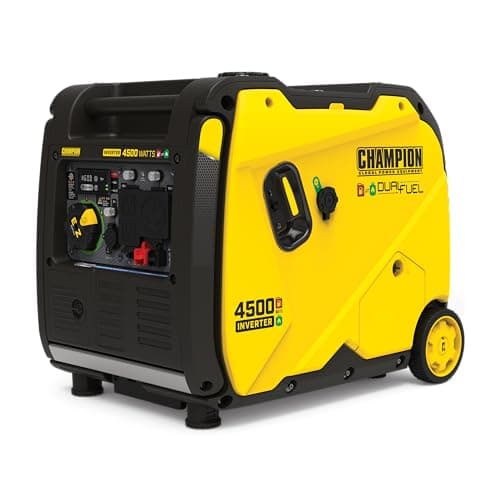
Then one 13,500 BTU roof unit asks for 1,200 to 1,700 running watts and somewhere between 2,800 and 3,500 watts for the fraction of a second the compressor starts.
So the question is not "what size generator for an RV". It is "will you run the air conditioner", and the two answers point at completely different machines.
| Plan | Running watts needed | Machine |
|---|
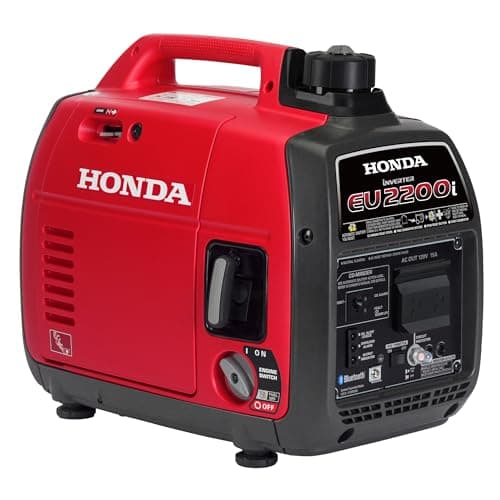
| No air conditioning | 300-600 W | A 2,000W-class inverter unit |
|---|
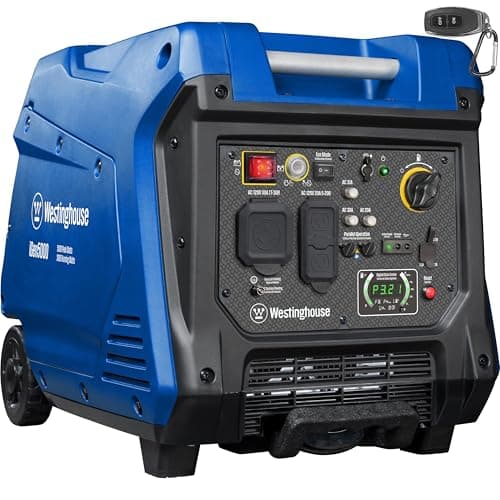
| 13,500 BTU unit | 1,700 W running, up to 3,500 W starting | A 3,500-3,700W inverter unit |
|---|
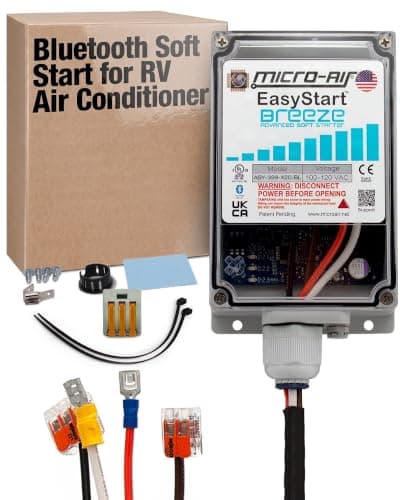
| 15,000 BTU unit | Up to 2,000 W running, more on start | 3,700W minimum, or a soft starter first |
|---|
| Two roof units | Well past 4,000 W | Shore power, honestly |
|---|
Air conditioner figures are typical published ranges for RV roof units; yours is on the nameplate. Reading a nameplate explains what those numbers do and do not tell you.
Check the outlet before anything else
An RV shore cord ends in a TT-30P — a 30A, 120V three-prong plug that looks superficially like a dryer connector and is not one. A generator without a matching TT-30R outlet needs an adapter, and adapters are where the connection gets warm.
Every generator here that is intended for RV use publishes a TT-30R. Machines that do not are usable through a dogbone adapter, but treat that as a compromise rather than the plan.
Why inverter output is not optional here
In a house, a conventional generator's rough waveform mostly runs motors and heating elements and nobody notices. An RV is the opposite: a converter, a control board on the refrigerator, a TV, and increasingly a residential-style fridge, all of them switch-mode supplies.
An inverter generator synthesizes its output electronically and publishes a total harmonic distortion figure — under 3% on the units here. The architecture comparison sets out why that number exists and what it protects.
It also decides whether you can sleep. Inverter units throttle the engine to the load, so a quiet evening is genuinely quiet; a conventional machine runs at 3,600 rpm whatever you are drawing.
Where a battery beats a generator in an RV
For everything except the air conditioner, a power station is the better product: silent, usable inside the coach, no exhaust, no fuel, and it recharges from panels on the roof while you drive.
The honest boundary is the compressor. The RV power station roundup covers that side, and the camping and RV scenario page works through owning both, which is what a lot of people end up doing.
Rules that matter in a campground
- Generator hours are real. Most parks restrict running to daytime windows, which is exactly when you least need cooling.
- Exhaust direction matters more in a row of coaches. Carbon monoxide from your machine reaches the neighbor's open window before it reaches yours — the CO safety page is the one to read first.
- Never run one in a bay with the door partly closed. Built-in RV generators are engineered for enclosure; portables are not.
The short version
- Decide about air conditioning first. It doubles the machine.
- Price a soft starter before a bigger generator. It is usually the cheaper fix.
- Insist on a TT-30R outlet. Adapters are a compromise.
- Inverter output, not conventional. Coaches are full of electronics.