The gap this page fills
Every backup power guide sizes by appliance list: write down the fridge, the furnace, the lights, add the watts, buy a machine that covers it. That is necessary and it is only half the calculation.
The other half is duration, and it decides more than the appliance list does. A refrigerator, a furnace fan and some lighting is roughly the same 1,500 watts whether your power is off for two hours or six days — but the machine you should buy is a $300 battery in one case and a multi-thousand-dollar generator installation in the other.
Duration is the variable that selects the product class. Wattage only selects the size within that class. Getting them in that order is what stops people buying a large battery for a three-day outage, which is the most common and most expensive mistake in this category.
What the national data says, and why it is not enough
The U.S. Energy Information Administration's Electric Power Annual for 2024 — released 1 December 2025 — reports that U.S. electricity customers experienced an average of eleven hours of interruption that year. That is the highest in a decade and roughly twice the annual average of the preceding ten years.
The breakdown is where it becomes useful:
- About two hours came from ordinary, non-major-event faults — a tree on a line, a failed transformer, a car into a pole.
- Nearly nine hours came from major events. In 2014–2023 that major-event figure averaged nearly four hours a year.
- Hurricanes Beryl, Helene and Milton alone accounted for 80% of all outage hours nationally in 2024.
So the national average is not one experience. It is two hours of background annoyance plus, for some households, one very long event. The state spread makes the point unmistakably: customers in South Carolina averaged nearly 53 hours in 2024, while customers in Arizona, South Dakota, North Dakota and Massachusetts averaged under two.
Fifty-three hours against under two is not a difference in degree. It is a different purchase, and possibly no purchase at all.
Find your own number
This takes about fifteen minutes and is worth more than every product review on this site put together.
- Search your utility's name plus “SAIDI” or “reliability report”. SAIDI — System Average Interruption Duration Index — is the average minutes of interruption per customer per year. Utilities report it to regulators and most publish it.
- Check your state utility commission. Regulators publish comparative reliability data across utilities, often by service territory.
- Look at both the with-major-events and without-major-events figures. The gap between them is precisely the storm risk you are deciding whether to insure against.
- Ask your neighbors. Genuinely. Anyone who has lived on the street for ten years knows whether the power goes out for two hours or two days, and that lived answer is often better than the averaged one.
One caveat on SAIDI: it is an average across a whole service territory, and your street may be considerably better or worse than it. A rural feeder at the end of a long line fails more often than an urban one. Use it as a starting point, not a verdict.
Duration to capacity
Match the purchase to the outage
Capacity is not a preference. It falls out of two numbers: how long your power is usually off, and what you refuse to lose while it is.
| Your outage lasts | What has to keep running | Realistic product class |
|---|
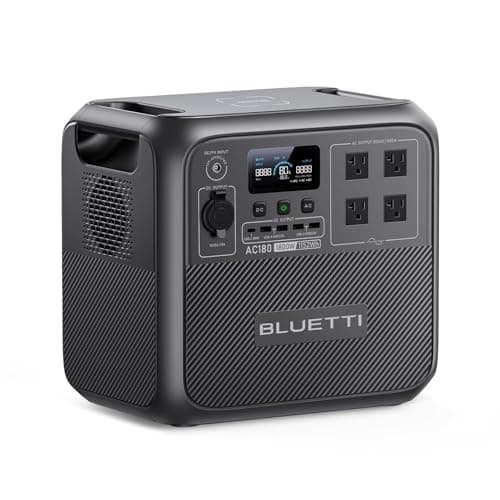
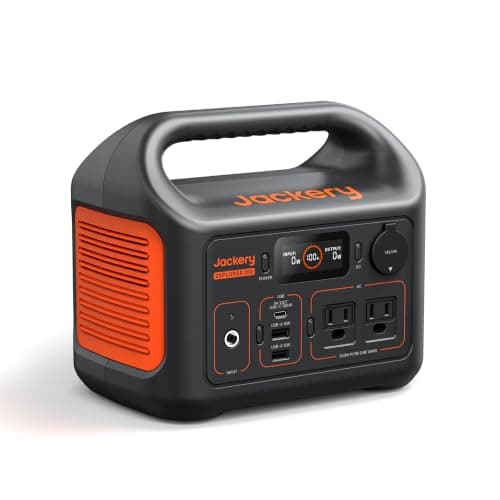
| Under 4 hours | Router, phones, a few lights. The fridge does not need power — a sealed one holds temperature about four hours. | 250–300Wh station, or a small UPS
See the under-$500 picks |
|---|
| 4–8 hours | Above, plus the fridge run in blocks and a laptop working day | 500–1,000Wh, 1,000W+ inverter
See the outage picks |
|---|
| Overnight, 8–14 hours | Fridge cycling, furnace fan, router, lighting | 1,100–1,200Wh, 1,800W inverter
See the home-backup picks |
|---|
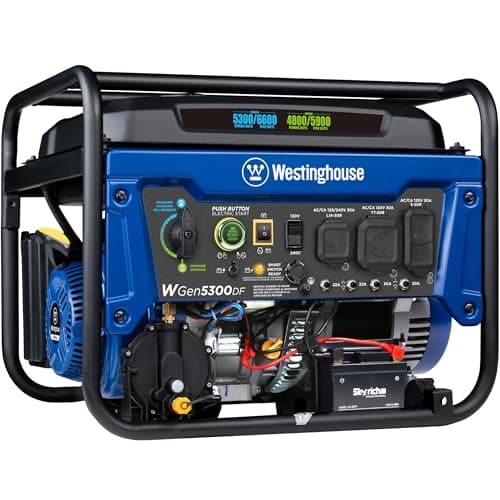
| 1–2 days | Above, sustained, plus a sump pump cycling | 2,000Wh+ with solar, or a 3,500–5,300W generator
See generators under $1,000 |
|---|
| 3–7 days | Everything above, plus a refueling strategy and a well pump | 5,300–9,500W dual-fuel generator, transfer switch
See the hurricane-season picks |
|---|
| 7+ days, or unattended | The whole house, starting itself, with nobody home | Standby generator on natural gas
See whole-house options |
|---|
Duration data: U.S. Energy Information Administration,
Electric Power Annual 2024. Appliance holding times: FoodSafety.gov. Appliance wattages: Champion Power Equipment's published chart. Capacity figures are computed from those inputs —
the arithmetic is shown here.
Where the boundaries actually fall
Four hours is the first boundary, and it is set by the refrigerator. FoodSafety.gov puts a sealed refrigerator at about four hours before food safety becomes a concern, a half-full freezer at about 24 and a full one at about 48. Below four hours, the fridge simply does not need power — which removes the load that dominates every sizing calculation.
Eighteen hours is the second boundary, and it is where batteries stop. A 2,000Wh station running a 300W mixed critical load gives about 5.7 hours after conversion losses. Even with aggressive load shedding, a battery covers a night and not a day. Past that you need either a recharge path or fuel.
Three days is the third boundary, and it is about logistics rather than capacity. Three days of continuous generator running is roughly 54 gallons of fuel — eleven five-gallon cans, more than most garages may legally hold. At that point the answer is either block running with a battery, or a standby unit on a gas main that never runs out.
The hybrid that beats every single-machine answer
For the very common profile — frequent short outages, plus one long event every few years — the best answer is not one machine sized for the worst case.
Buy a battery for the common case. It handles the two-hour outages silently, indoors, with no fuel and no maintenance, and it is the thing that gets used. Then, if your history genuinely includes multi-day events, add a modest generator to refill it.
Run the generator two hours in the afternoon: it carries the house, cools the freezer hard and fills the battery. Shut it down; run the essentials off the battery overnight. A quarter of the fuel, none of the noise, and no one outside in the dark. The full comparison works through the economics.
What this page cannot tell you
Your own outage history, which is the input that matters most. We can point you at the EIA's national picture and at how to find your utility's figures; we cannot know whether your particular feeder is the good one or the bad one on your street.
We also cannot tell you what a lost freezer or a flooded basement is worth to you. The arithmetic above tells you what each duration requires. What that is worth spending is a judgment, and it is yours. What our method covers and where it stops.