Skip to content
Watt Warden

Home Standby

Transfer Switch vs Interlock Kit

Both do the same essential job — make it impossible to send power back up the utility line. They differ in cost, in flexibility, and in how much they protect you from your own mistakes.

By Sawyer V.Updated Published How we work this out
A circuit breaker panel with switches, photographed close up.

Watt & Warden earns a commission on qualifying purchases made through links on this page, at no extra cost to you. It never changes a ranking, and our picks include products we tell you to skip. Full disclosure.

What both of them are for

There is exactly one reason both of these devices exist: to make backfeed impossible.

Backfeeding means energizing your house wiring from a generator in a way that also sends power out through the meter and up the utility line. The transformer on the pole steps that up to distribution voltage, which means a lineworker who has isolated your street and is working on what they believe is a dead conductor can be electrocuted by your generator.

It is illegal essentially everywhere, and both devices prevent it mechanically rather than by asking you to remember. That is the point: they are designed so the dangerous configuration cannot be selected, not so that it is discouraged.

The transfer switch

A separate box mounted beside your main panel, wired to a chosen group of circuits. Each circuit gets a three-position toggle: Line, Off, Generator. In normal use everything sits on Line. In an outage you start the generator, plug it into the inlet, and flip the toggles.

What it does well:

  • Per-circuit control. You choose which circuits are on the generator at any moment, which makes load shedding trivial.
  • Load metering. Watt meters show what you are drawing on each leg, so balancing is a reading rather than a guess.
  • Foolproof. The switch physically cannot connect a circuit to both sources.
  • Obvious to operate. Anyone can be shown how in two minutes, which matters if the person home is not the person who installed it.

What it costs you: more hardware, a longer installation, and a fixed circuit list. A ten-circuit switch backs ten circuits chosen at installation, and adding an eleventh later means an electrician.

The interlock kit

A metal plate fitted to your existing panel that physically prevents the main breaker and a dedicated generator breaker being on at the same time. Turn off the main, slide the plate, turn on the generator breaker — and the panel is now fed from the generator instead of the utility.

What it does well:

  • Every circuit is available. The whole panel is fed, so you can use any breaker you like — subject to the generator's output.
  • Cheaper hardware. A plate rather than a second panel.
  • Neater. No extra box on the wall.
  • Flexible. Priorities can change during the outage without any rewiring.

What it costs you: discipline. Because every circuit is available, nothing stops you turning on more than the generator can supply — it will simply overload and trip, possibly repeatedly, at the least convenient moment. There is no metering, so managing load is entirely on you.

Interlock kits must also be listed for your specific panel make and model. A generic plate is not acceptable and inspectors check. Some panels have no listed interlock available at all, which settles the question by itself.

Side by side

PropertyTransfer switchInterlock kit
Prevents backfeedYes, mechanicallyYes, mechanically
Circuits availableThe ones wired to it, typically 6–12Every circuit in the panel
Load meteringUsually includedNone
Overload protection from yourselfLimited circuit list caps itNone — you must manage it
Hardware costHigherLower
Panel compatibilityWorks with any panelMust be listed for your exact panel
Ease for a non-technical userLabeled toggles, very clearA sequence that must be followed
Permit and electricianYes, in most jurisdictionsYes, in most jurisdictions

Which to choose

A transfer switch if you have a defined critical-load list, if the person most likely to be home is not the person who understands the panel, or if you want metering so you can use the generator's full output without tripping it. This is the right answer for most households.

An interlock kit if you have a large generator, you want access to circuits that are not on a fixed list, you are confident about managing load, and a listed kit exists for your panel. It is also the better fit for a well pump or an electric water heater, which are awkward to put on a small transfer switch.

Neither if you only intend to run extension cords to a fridge and a couple of lamps. That is perfectly legitimate, needs no installation, and is how most people start. The switch becomes necessary the moment you want a furnace, a well pump or a sump pump — all of which are hard-wired.

Two things that apply to both

You need an inlet box. Neither device includes the weatherproof exterior inlet the generator cord plugs into. It mounts on an outside wall, ideally at least twenty feet from where the generator will stand, so the carbon monoxide clearance is achievable with a 25-foot cord rather than by moving the machine closer.

Both need an electrician and usually a permit. This is live-panel work where a mistake is fatal, and an unpermitted alteration to your service can affect an insurance claim. The labor typically exceeds the hardware cost for either option — budget for it, and do it in the spring rather than the week a storm is forecast, because electricians are unavailable exactly when you want one.

The full connection guide, including what not to do.

Quick picks

#ProductBest forPrice
1
No photo

The transfer switch option

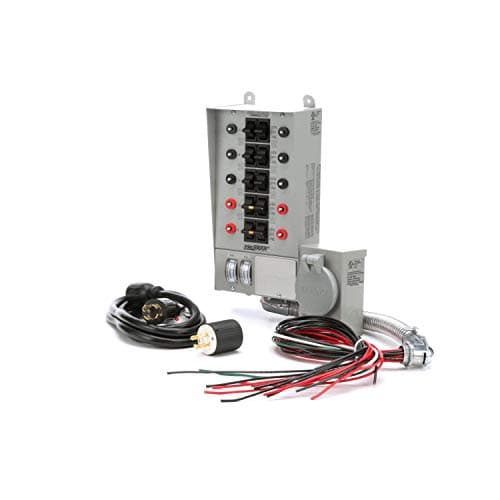
Reliance Controls 31410CRK Pro/Tran

Ten circuits, 30A, 7,500W, with watt meters and break-before-make switching.

A defined critical-load list
2
No photo

Required for either option

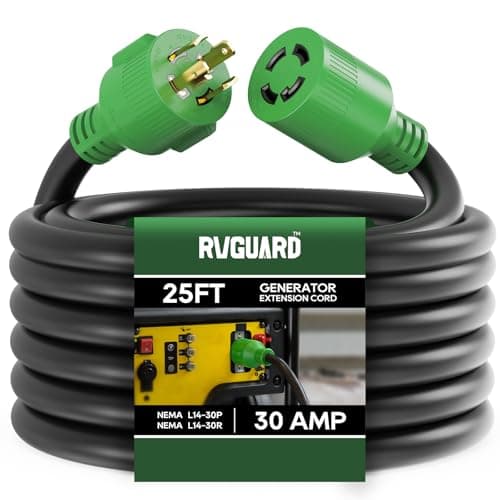
GearIT 30A L14-30 generator cord, 25 ft

25 ft of 10/4 SJTW twist-lock, rated for the full 30A.

Reaching the inlet from twenty feet away
3
No photo

The generator either one connects to

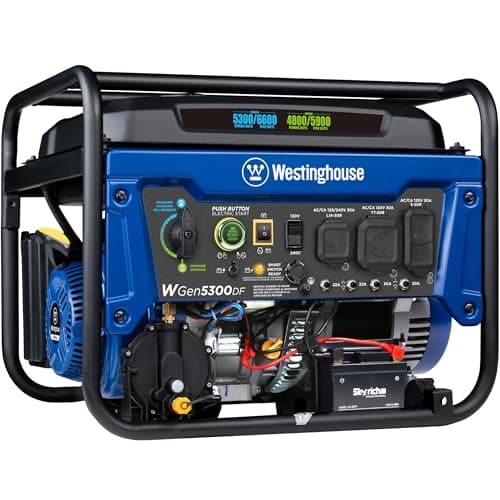
Westinghouse WGen5300DF

5,300 running watts with an L14-30R outlet that matches a 30A switch or inlet exactly.

A critical-load list on a 30A connection

Prices come from the retailer at page-build time and change constantly. Where no live price is available the button reads “Check price” rather than showing a number we cannot stand behind.

The picks in full

01The transfer switch option

Reliance Controls 31410CRK Pro/Tran

Ten circuits, 30A, 7,500W, with watt meters and break-before-make switching.

Six 15A and four 20A single-pole breakers, each on a three-position Line / Off / Gen toggle. You pick which ten circuits get wired to it at installation, and those are the ten you have.

The two watt meters are more useful than they sound: a generator supplies power across two 120V legs, and balancing the load between them is the difference between using the machine's full output and tripping one side while the other idles.

Backfeed is prevented mechanically by the break-before-make design — the circuit cannot be connected to both sources at once, by construction rather than by attention.

Skip it ifyou want access to any circuit in the panel. A ten-circuit switch is ten circuits, chosen at installation.

Published specifications for the Reliance Controls 31410CRK Pro/Tran
SpecificationPublished figure
Circuits10 — six 15 A and four 20 A single-pole breakers
Rating30 A, up to 7,500 W
MeteringTwo watt meters for balancing the load
SwitchingBreak-before-make double-throw, Line / Off / Gen
BackfeedMechanically prevented — the grid cannot be energized
InstallationLicensed electrician; a permit is usually required

Source: Reliance Controls — Pro/Tran 31410CRK product page. These are the manufacturer's published figures, not ours — we have not tested this unit.

02Required for either option

GearIT 30A L14-30 generator cord, 25 ft

25 ft of 10/4 SJTW twist-lock, rated for the full 30A.

Whichever connection method you choose, the generator has to reach it — and it has to do so from at least twenty feet away, which is the carbon monoxide clearance.

10-gauge four-conductor carries the full 30A over 25 feet without meaningful voltage drop, and the twist-lock ends cannot pull apart underfoot.

Skip it ifyour inlet is more than 25 feet from where the generator will stand. Then buy longer rather than moving the generator closer.

Published specifications for the GearIT 30A L14-30 generator cord, 25 ft
SpecificationPublished figure
ConnectorsNEMA L14-30P to L14-30R, 4-prong twist lock
Conductor10/4 SJTW copper
Rating30 A, 125/250 V, up to 7,500 W
Length25 ft
JacketOutdoor-rated SJTW, UV and oil resistant

Source: GearIT — 30A L14-30 generator cord listing. These are the manufacturer's published figures, not ours — we have not tested this unit.

03The generator either one connects to

Westinghouse WGen5300DF

5,300 running watts with an L14-30R outlet that matches a 30A switch or inlet exactly.

The L14-30R outlet is what pairs with a 30A transfer switch or inlet box, and 5,300 running watts sits comfortably inside the 7,500W rating of a typical ten-circuit switch.

The 120/240V selector matters if any of your backed circuits is 240V — a well pump, for example.

Skip it ifyou fitted a 50A inlet for a larger machine. Then size the generator to the inlet.

Published specifications for the Westinghouse WGen5300DF
SpecificationPublished figure
Output (gasoline)5,300 running W / 6,600 peak W
Output (propane)4,800 running W / 5,900 peak W
Engine274cc 4-stroke OHV
Tank4.7 gal (18 L)
Run timeup to 14.5 h on a full tank
Transfer-switch outlet120/240 V L14-30R, 30 A
RV outlet120 V TT-30R, 30 A
StartingPush-button electric with remote key fob

Source: Westinghouse — WGen5300DF product specifications. These are the manufacturer's published figures, not ours — we have not tested this unit.

How these were chosen

We did not test these. Nobody at Watt & Warden has plugged one in. What we did instead: read the manufacturer's published specifications, compile them into a table where the figures line up, and compute the numbers manufacturers leave out — runtime against a real appliance load, and what an hour of running actually costs.

Anything that could not be sourced was left out rather than estimated, and every pick names the buyer who should skip it. The full method is here, including where it is weaker than a publisher with a test bench.

Questions people actually ask

What is the difference between a transfer switch and an interlock kit?

A transfer switch is a separate box wired to a chosen group of circuits, each with a Line/Off/Generator toggle and usually a watt meter. An interlock kit is a plate on your existing panel that prevents the main breaker and a generator breaker being on together, feeding the whole panel. Both prevent backfeed mechanically.

Is an interlock kit legal?

Where a kit listed for your specific panel make and model is used and the installation is permitted and inspected, yes in most jurisdictions. A generic or homemade plate is not, and inspectors check. Some panels have no listed interlock available, which settles the question.

Can I install a transfer switch myself?

It ties directly into your service panel, so most jurisdictions require a licensed electrician and a permit. Even where DIY is permitted, this is live-panel work where a mistake is fatal, and an unpermitted alteration can affect an insurance claim.

Do I need a transfer switch for a portable generator?

Only if you want to power hard-wired equipment -- a furnace, a well pump, a sump pump. Running extension cords to a fridge and some lamps needs nothing installed and is perfectly legitimate. The switch is what reaches the circuits a cord cannot.

How many circuits do I need on a transfer switch?

Six to ten covers most critical-load lists: fridge, furnace, sump pump, a lighting circuit or two, and a couple of outlets. Count the circuits you actually need on the panel schedule before choosing, because adding one later means an electrician again.

Sources

Every figure on this page comes from a published source. We have not tested this equipment, so the specifications are the manufacturer's and the statistics are the dataset's — the arithmetic on top of them is ours, and it is shown in full so you can check it. How we work this out.