Skip to content
Watt Warden

Generators

Two Small Generators vs One Large Generator

Two machines in parallel is the flexible answer and one big machine is the cheap one. Which is right depends on whether you ever need to carry it.

By Sawyer V.Updated Published How we work this out
An industrial machine standing in an empty workshop.

Watt & Warden earns a commission on qualifying purchases made through links on this page, at no extra cost to you. It never changes a ranking, and our picks include products we tell you to skip. Full disclosure.

Quick picks

#ProductBest forPrice
1
Honda EU2200i

The pair-it machine

Honda EU2200i

2,200 watts at 48 to 57 dB(A) and 47 lb, designed to run in parallel.

Buying one now and a second later
$1,199.00 · Check price on Amazon

#ad how this is funded · price as of October 21, 2026

2
Champion 50A ParaLINK parallel kit

The part that makes it work

Champion 50A ParaLINK parallel kit

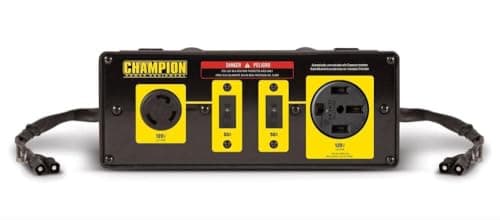
The kit with the outlets and breakers a parallel pair needs.

Combining two inverter machines properly
$75.99 · Check price on Amazon

#ad how this is funded · price as of October 21, 2026

3
Westinghouse iGen4500

One machine, same total output

Westinghouse iGen4500

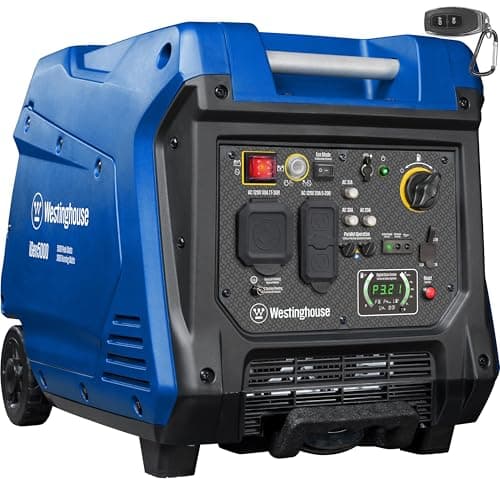
3,700 running watts of inverter power with a telescoping handle and wheels.

Avoiding the second purchase entirely
$849.00 · Check price on Amazon

#ad how this is funded · price as of October 21, 2026

4
Westinghouse WGen9500DF

The reason people buy one big machine

Westinghouse WGen9500DF

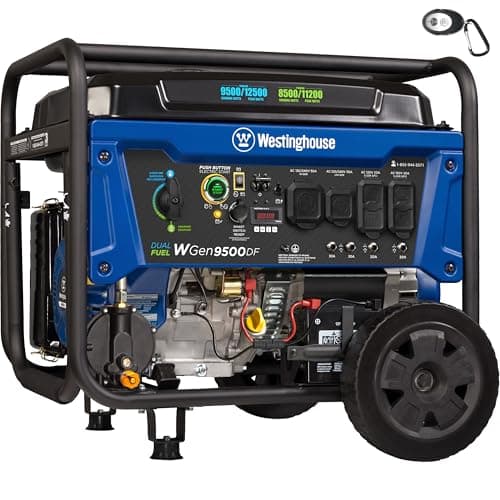
9,500 running watts, dual fuel, with an L14-30R and a 50A 14-50R.

240V, a transfer switch and the whole critical list
$999.00 · Check price on Amazon

#ad how this is funded · price as of October 21, 2026

Prices come from the retailer at page-build time and change constantly. Where no live price is available the button reads “Check price” rather than showing a number we cannot stand behind.

The decision in one line

Two small machines buy portability, quiet and redundancy. One large machine buys watts per dollar and 240V. Everything below is detail on those two sentences.

Side by side

Two small invertersOne large generator
Cost per wattHigher — you buy two engines and a kitLower
CarryingEach unit is a one-person liftWheels, and often two people
Noise at light loadRun one machine only — quietest option there isThe whole engine runs whatever the load
Fuel efficiency at light loadBetter — run one, idle the otherWorse — a big engine loafing
240V outputNo. Parallel adds watts, not voltageYes, on machines with L14-30R or 14-50R
RedundancyOne fails, the other still runs half your listOne failure is total
MaintenanceTwo of everything — oil, plugs, fuelOne of everything

Parallel capability and combined output vary by model; the manufacturer states both. Two 2,200W machines do not always make 4,400W — the kit and the pairing determine the real figure.

The 240V problem, which settles most cases

If your plan involves a transfer switch, a well pump, a water heater or an electric range, you need 120/240V split-phase power. Paralleling two 120V inverter generators does not produce it at any quantity.

That single fact rules out the two-machine approach for whole-house backup, and it is why the parallel setup is most common among campers, RV owners and market traders rather than storm-prone households — the connection guide explains what a switch expects to see.

Where two machines genuinely win

  • Quiet at low load. Running one 2,200W machine to keep a fridge and phones alive is the quietest generator setup available, and half the fuel.
  • Incremental spending. Buy one, live with it, buy the second only if a real outage proves you short.
  • Carrying. Two 47 lb units go where one 130 lb machine cannot — a boat, a rooftop, a second property.
  • Redundancy. The only setup here where a failed engine is an inconvenience rather than the end of the plan.

Where one machine wins

  • Money. One larger machine is cheaper than two smaller ones plus a parallel kit, usually by a wide margin.
  • 240V and transfer switches. The whole category of house backup.
  • Simplicity. One fuel store, one service schedule, one thing to start at 3am.
  • Surge headroom. A single large engine starts a compressor more comfortably than a parallel pair at its limit.

The hybrid most people end up with

A small inverter machine for camping, tailgating and short outages, plus either a larger machine or a battery for the house. It is less elegant than a single answer and it is what the use cases actually demand — the generator versus power station page covers the battery half of that pairing.

The short version

  • Need 240V or a transfer switch? One large machine. The comparison ends there.
  • Carrying it, or care about noise? Two small ones, run singly most of the time.
  • Watts per dollar favors one machine, always.
  • Check parallel capability and buy the matching kit — not all machines combine.

The picks in full

01 — The pair-it machine

Honda EU2200i

2,200 watts at 48 to 57 dB(A) and 47 lb, designed to run in parallel.

The strongest argument for the two-machine approach is that you can buy the second one later, or never. One unit covers a fridge and the internet; two cover considerably more.

At 47 lb each, both are genuinely carryable, which a single 4,400W machine is not.

The honest catch: two premium machines cost far more than one value machine of the same total output.

Skip it ifyou need 240V. No number of these produces it.
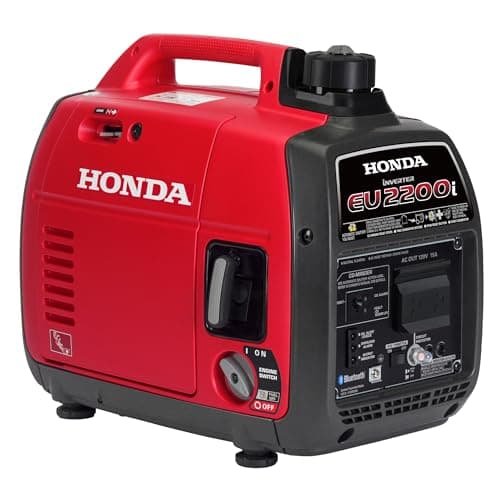
Honda EU2200i
$1,199.00 · Check price on Amazon

#ad how this is funded · price as of October 21, 2026

Published specifications for the Honda EU2200i
SpecificationPublished figure
Output2,200 W max / 1,800 W rated
TypeInverter (pure sine wave)
Noise48–57 dB(A)
Weight47.4 lb
Tank0.95 gal
Run timeup to 8.1 h on a full tank
FeaturesEco Throttle, CO-Minder, Bluetooth app monitoring

Source: Honda Power Equipment — EU2200i specifications. These are the manufacturer's published figures, not ours — we have not tested this unit.

03 — One machine, same total output

Westinghouse iGen4500

3,700 running watts of inverter power with a telescoping handle and wheels.

One machine at this size costs less than two small ones, uses one tank, needs one oil change and takes one spot in the garage.

The wheels are the giveaway: this is transported rather than carried, which is the real difference from the two-machine approach.

The honest catch: when it fails, you have no power. Two machines are their own backup.

Skip it ifyou want to carry it upstairs or into a boat.

Westinghouse iGen4500
$849.00 · Check price on Amazon

#ad how this is funded · price as of October 21, 2026

Published specifications for the Westinghouse iGen4500
SpecificationPublished figure
Output (gasoline)3,700 running W / 4,500 peak W
TypeInverter (pure sine wave)
StartingRemote electric start with auto choke
RV outlet120 V TT-30R, 30 A
ParallelCapable with a second unit

Source: Westinghouse — iGen4500 product specifications. These are the manufacturer's published figures, not ours — we have not tested this unit.

04 — The reason people buy one big machine

Westinghouse WGen9500DF

9,500 running watts, dual fuel, with an L14-30R and a 50A 14-50R.

This is the capability the parallel approach cannot reach: 120/240V split-phase output, which is what a transfer switch, a well pump and an electric range need.

Two 120V inverter machines in parallel still produce 120V. Adding machines adds watts, not voltage.

The honest catch: loud, heavy, and more fuel to store.

Skip it ifyou only need to keep a fridge and some lamps alive.

Westinghouse WGen9500DF
$999.00 · Check price on Amazon

#ad how this is funded · price as of October 21, 2026

Published specifications for the Westinghouse WGen9500DF
SpecificationPublished figure
Output (gasoline)9,500 running W / 12,500 peak W
FuelGasoline or propane (dual fuel)
Engine457cc 4-stroke OHV, cast iron sleeve
Tank6.6 gal (25 L)
Run timeup to 12 h on a full tank
Transfer-switch outlet120/240 V L14-30R, 30 A
RV outlet120/240 V 14-50R, 50 A
StartingPush-button electric with remote key fob
Warranty3-year limited

Source: Westinghouse — WGen9500DF product specifications. These are the manufacturer's published figures, not ours — we have not tested this unit.

How these were chosen

We did not test these. Nobody at Watt & Warden has plugged one in. What we did instead: read the manufacturer's published specifications, compile them into a table where the figures line up, and compute the numbers manufacturers leave out — runtime against a real appliance load, and what an hour of running actually costs.

Anything that could not be sourced was left out rather than estimated, and every pick names the buyer who should skip it. The full method is here, including where it is weaker than a publisher with a test bench.

Questions people actually ask

Is it cheaper to buy two small generators or one big one?

One larger machine is almost always cheaper per watt, because you are buying one engine, one alternator and no parallel kit. The two-machine approach buys portability, quiet running at low loads and redundancy instead -- and lets you spread the spending across two purchases.

Can two generators in parallel give me 240V?

No. Paralleling two 120V inverter generators increases available watts, not voltage. Anything that needs 120/240V split-phase power -- a transfer switch, a well pump, an electric range -- requires a single machine that produces it.

Do both generators have to be the same model to run in parallel?

Usually they must at least be the same series from the same manufacturer, joined with that manufacturer's parallel kit. Check the manual before buying a second machine: compatibility is specific, and a kit designed for one line will not safely combine two unrelated generators.

Is a parallel pair quieter than one big generator?

At light loads, considerably -- because you can run just one machine, and a small inverter at quarter load is the quietest generator arrangement in common use. At full load the pair is roughly as loud as any machine doing the same work.

Which approach is better for an RV?

Often the pair, because RV loads are modest until the air conditioner starts. One machine handles everything else quietly, and the second joins in only when the compressor needs to start. Check your air conditioner's starting draw, or fit a soft starter, before assuming a single small machine will do it.

Sources

Every figure on this page comes from a published source. We have not tested this equipment, so the specifications are the manufacturer's and the statistics are the dataset's — the arithmetic on top of them is ours, and it is shown in full so you can check it. How we work this out.