Skip to content
Watt Warden

Generators

The Best Generators for a Well Pump (2026)

Lose power on a well and you lose water - drinking, washing and flushing all at once. The pump that solves it is also the hardest single load in a normal house to start.

By Sawyer V.Updated Published How we work this out
A red barn and a well in a green field.

Watt & Warden earns a commission on qualifying purchases made through links on this page, at no extra cost to you. It never changes a ranking, and our picks include products we tell you to skip. Full disclosure.

Quick picks

#ProductBest forPrice
1
No photo

Best overall

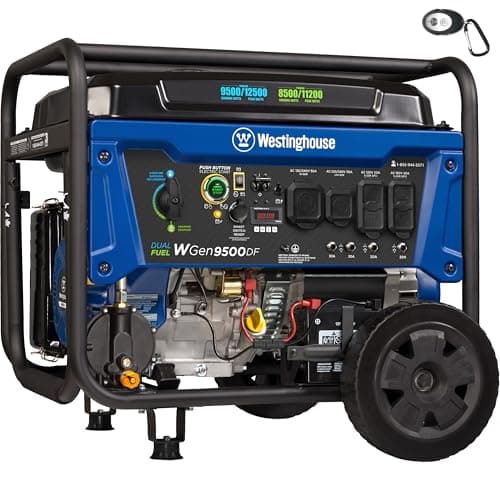
Westinghouse WGen9500DF

9,500 running watts on gasoline with an L14-30R and a 14-50R, plus remote start.

A 1 HP submersible pump with margin
2
No photo

Best for a smaller pump

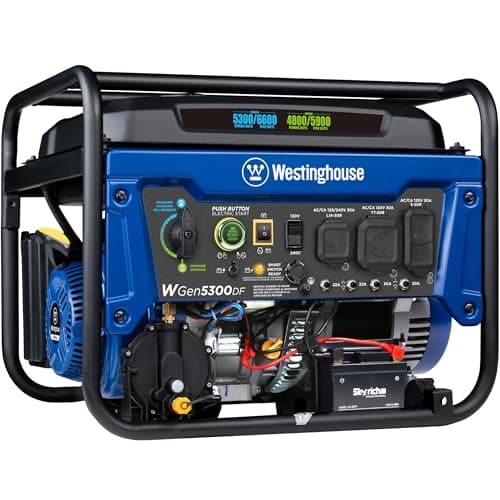
Westinghouse WGen5300DF

5,300 running watts of dual fuel with the 240V outlet the job requires.

A 1/2 HP pump and the rest of the critical list
3
No photo

Best for a deep well and a whole house

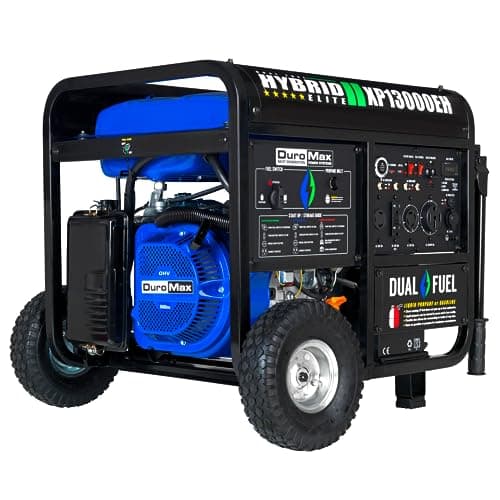
DuroMax XP13000EH

13,000 peak and 10,500 running watts on gasoline, with a 50A outlet.

A demanding pump alongside heating and everything else
4
No photo

The different answer

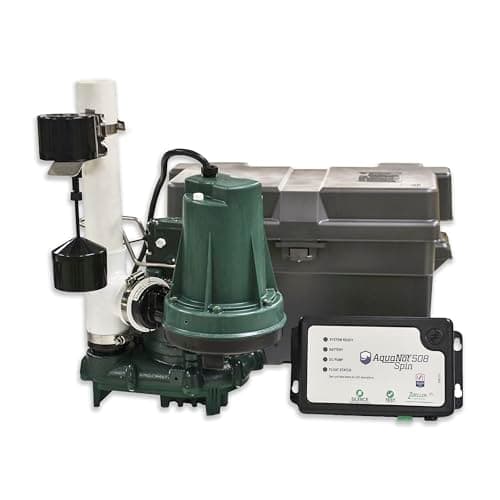
Zoeller 508-0006 AquaNot Spin 508 ProPak

A battery backup pump system that runs without any generator at all.

Keeping the basement dry when the generator is not running

Prices come from the retailer at page-build time and change constantly. Where no live price is available the button reads “Check price” rather than showing a number we cannot stand behind.

Three constraints, in order

Almost every generator on the market fails at least one of these, which is why the shortlist is short.

1. It must produce 240V. Residential well pumps are almost always 240V. A generator with 120V household sockets and a TT-30 RV outlet cannot supply one regardless of its wattage rating, and this is the single commonest mismatch people discover after buying.

2. It must reach a hardwired circuit. A well pump has no plug. Getting generator power to it means a transfer switch or an interlock, wired by an electrician — the comparison page covers the two legal routes.

3. It must survive the starting surge. A submersible pump motor starting under load is one of the hardest transient demands in a normal house, and it is the requirement that sets the size.

How much pump you actually have

Pump sizing varies enormously and rules of thumb are unreliable. The plate is the answer, and these are the ranges the plates typically fall into.

PumpTypical runningGenerator to plan for
1/2 HP jet or shallow wellAround 800-1,000 W5,000W class, with the rest of the list
1/2 HP submersibleAround 1,000 W5,000-7,500W class
1 HP submersibleAround 2,000 W7,500W class or above
1.5 HP or a deep liftHigher again9,500W and up

Running figures are typical ranges for residential pumps. Starting draw is several times these numbers for a fraction of a second, which is what the generator has to absorb — read the plate on your own pump or its control box.

The margin rule that applies elsewhere on this site applies doubly here: add at least 20% to whatever your list totals, because pump plates are optimistic and old pumps draw more than new ones. The starting watts page has the underlying arithmetic.

What losing a well pump actually costs you

People underestimate this until it happens. On a well, an outage takes away drinking water, washing, dishes and flushing simultaneously — a pressure tank holds only a few minutes of use.

That makes water the most urgent thing on a rural outage list, ahead of the refrigerator. The water storage page covers the interim answer, and the rural property page works through what else fails at the same time.

The soft-start option

Worth knowing about before buying a much larger machine. Soft starters and pump control boxes that ramp the motor rather than slamming it on can substantially reduce the starting surge, which is the whole reason people oversize.

This is a job for the well contractor rather than a generic accessory, because it involves the pump control rather than the generator. But asking the question can be considerably cheaper than the next size up of machine.

Running pattern on a well

A well pump is an intermittent load — it runs to refill the pressure tank and then stops. That means it costs very little energy over a day and a great deal of surge capability at unpredictable moments.

The practical approach is to run the generator in blocks and fill containers during them, rather than trying to keep the system pressurized continuously. A couple of hours in the morning and evening covers a household comfortably and keeps fuel use sane — the well pump backup guide goes through the whole routine.

The short version

  • 240V outlet or nothing. Check the control panel before the wattage.
  • Read the pump plate. Half-horse and one-horse are different purchases.
  • Budget the transfer switch. A well pump has no plug.
  • Run in blocks and fill containers. The pump costs surge, not energy.
The picks in full

01Best overall

Westinghouse WGen9500DF

9,500 running watts on gasoline with an L14-30R and a 14-50R, plus remote start.

Well pumps are bought with headroom because their starting surge is the least predictable number in the house. A 1 HP submersible can ask for several times its running current for a moment, and an under-specified machine simply stalls.

Both 240V outlets are present, which is the specification that actually gates this purchase. A generator with only 120V household sockets cannot supply a well pump at any wattage.

Dual fuel matters on rural properties specifically, where a propane tank is often already on site and the nearest gas station is not.

The honest catch: a 30A transfer switch caps this at 7,500W, so unless your switch is 50A you are paying for output you cannot pass. Check the switch first.

Skip it ifyour pump is 1/2 HP and nothing else is on the list. This is more machine than that needs.

Published specifications for the Westinghouse WGen9500DF
SpecificationPublished figure
Output (gasoline)9,500 running W / 12,500 peak W
FuelGasoline or propane (dual fuel)
Engine457cc 4-stroke OHV, cast iron sleeve
Tank6.6 gal (25 L)
Run timeup to 12 h on a full tank
Transfer-switch outlet120/240 V L14-30R, 30 A
RV outlet120/240 V 14-50R, 50 A
StartingPush-button electric with remote key fob
Warranty3-year limited

Source: Westinghouse — WGen9500DF product specifications. These are the manufacturer's published figures, not ours — we have not tested this unit.

02Best for a smaller pump

Westinghouse WGen5300DF

5,300 running watts of dual fuel with the 240V outlet the job requires.

Not every well is a hard problem. A 1/2 HP jet or submersible pump on a shallow well is a much smaller load than the deep-well case, and 5,300 running watts covers it alongside a refrigerator and lighting.

The honest way to find out which case you are in is the plate on the pump or the control box, not a rule of thumb — reading a nameplate properly explains what the numbers on it mean.

The honest catch: if you guess wrong on pump size, this machine will not start it and there is no workaround. Measure before you buy.

Skip it ifthe pump is 1 HP or deeper than about 200 feet. Then size up.

Published specifications for the Westinghouse WGen5300DF
SpecificationPublished figure
Output (gasoline)5,300 running W / 6,600 peak W
Output (propane)4,800 running W / 5,900 peak W
Engine274cc 4-stroke OHV
Tank4.7 gal (18 L)
Run timeup to 14.5 h on a full tank
Transfer-switch outlet120/240 V L14-30R, 30 A
RV outlet120 V TT-30R, 30 A
StartingPush-button electric with remote key fob

Source: Westinghouse — WGen5300DF product specifications. These are the manufacturer's published figures, not ours — we have not tested this unit.

03Best for a deep well and a whole house

DuroMax XP13000EH

13,000 peak and 10,500 running watts on gasoline, with a 50A outlet.

Deep wells, long lifts and older pumps with tired start capacitors all push the starting requirement up. If the property is rural and the well is the critical system, buying obvious margin is defensible rather than wasteful.

The 50A outlet also means the machine can actually deliver its output into a 50A transfer switch, rather than being throttled by a 30A one.

The honest catch: it is heavy, loud, and thirsty. On a day when the pump runs for twenty minutes total, most of the fuel goes into keeping a large engine spinning.

Skip it ifthe pump is the only 240V load. This is a lot of machine to idle.

Published specifications for the DuroMax XP13000EH
SpecificationPublished figure
Output13,000 running W / 16,000 peak W
FuelGasoline or propane (dual fuel)
Engine500cc OHV DuroMax
Transfer-switch outlet50 A
FrameAll-metal, no plastic panels
SafetyLow-oil shutoff; 5 ft propane hose with ACME connector

Source: DuroMax — XP13000EH product specifications. These are the manufacturer's published figures, not ours — we have not tested this unit.

04The different answer

Zoeller 508-0006 AquaNot Spin 508 ProPak

A battery backup pump system that runs without any generator at all.

Included because the two problems get conflated. A well pump brings water in; a sump pump takes water out. On many rural properties both fail in the same outage, and they have different best answers.

A battery backup pump runs automatically the moment the power goes, with nobody home and no generator started. For water removal that automation is worth more than capacity — the sump pump page covers the case fully.

The honest catch: it does nothing whatsoever for water supply. If you need to drink, wash and flush, you still need the generator.

Skip it ifyour problem is water supply rather than water removal.

Published specifications for the Zoeller 508-0006 AquaNot Spin 508 ProPak
SpecificationPublished figure
Primary pumpZoeller M53, 3/10 HP, 120 V
Backup pumpModel 508, 12 V DC
Backup run timeup to 5.5 h continuous
Typical duty coverageabout 2 days at a 10% duty cycle
MonitoringSelf-testing; alerts for outage, high water, switch obstruction
IncludedCheck valve, float switches, PVC discharge piping
BatteryNot included — purchased separately

Source: Zoeller — AquaNot Spin 508 ProPak product page. These are the manufacturer's published figures, not ours — we have not tested this unit.

How these were chosen

We did not test these. Nobody at Watt & Warden has plugged one in. What we did instead: read the manufacturer's published specifications, compile them into a table where the figures line up, and compute the numbers manufacturers leave out — runtime against a real appliance load, and what an hour of running actually costs.

Anything that could not be sourced was left out rather than estimated, and every pick names the buyer who should skip it. The full method is here, including where it is weaker than a publisher with a test bench.

Questions people actually ask

What size generator do I need for a well pump?

It depends on the pump, and the plate is the only reliable source. A 1/2 HP submersible drawing around 1,000W running generally needs a 5,000 to 7,500W machine once the starting surge is covered; a 1 HP pump at around 2,000W running usually needs 7,500W or above. Add at least 20% margin on top of whatever your total is.

Will a 5000 watt generator run a well pump?

A 1/2 HP pump, usually yes. A 1 HP submersible, frequently not -- the starting surge is several times the running draw and that is what stalls the machine. If the well is the reason you are buying a generator, size up rather than hoping.

Does a well pump need 240V?

Almost always. Residential well pumps are typically 240V, which means a generator with only 120V household outlets and an RV connector cannot run one at any wattage. Look for an L14-30R or a 14-50R on the control panel before comparing anything else.

Can I plug a well pump into a generator?

No -- a well pump is hardwired to a dedicated circuit and has no plug. Getting generator power to it requires a transfer switch or an interlock kit installed by an electrician, which is also what makes backfeeding the utility line mechanically impossible.

How long should I run the generator for water?

In blocks rather than continuously. A well pump only runs to refill the pressure tank, so it costs almost no energy over a day -- what it costs is surge capability at unpredictable moments. A couple of hours morning and evening, filling containers while the pump is available, covers a household comfortably.

Sources

Every figure on this page comes from a published source. We have not tested this equipment, so the specifications are the manufacturer's and the statistics are the dataset's — the arithmetic on top of them is ours, and it is shown in full so you can check it. How we work this out.