Skip to content
Watt Warden

Generators

The Best Generators Under $500 (2026)

Under $500 buys roughly 1,800 running watts. That is a fridge, some lights and device charging - a real and useful thing, as long as nobody expects a house.

By Sawyer V.Updated Published How we work this out
A small portable generator standing on grass outdoors.

Watt & Warden earns a commission on qualifying purchases made through links on this page, at no extra cost to you. It never changes a ranking, and our picks include products we tell you to skip. Full disclosure.

Quick picks

#ProductBest forPrice
1
No photo

Best overall in the bracket

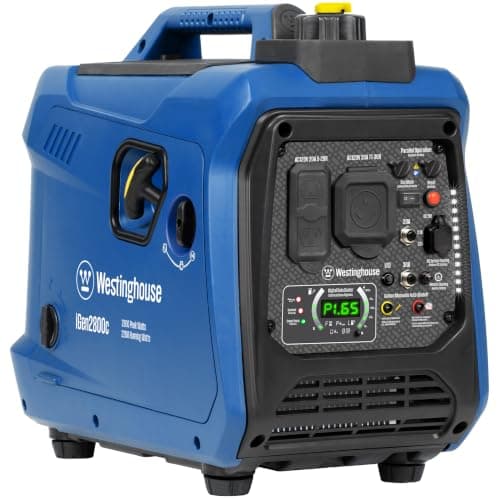
Westinghouse iGen2200

1,800 running watts at as low as 52 dBA, 46 lb, and up to 12 hours on 1.2 gallons.

A fridge and the essentials, quietly
2
No photo

Lightest to carry

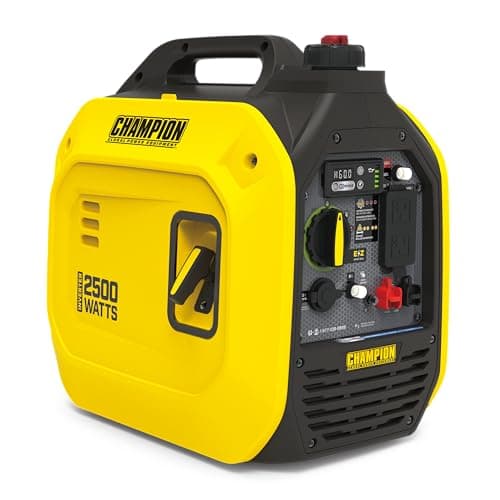
Champion 100692 2000W Ultralight Inverter

2,000 starting watts and 1,700 running at 39 lb, rated 53 dBA from 23 feet.

One person moving it alone
3
No photo

Worth stretching for

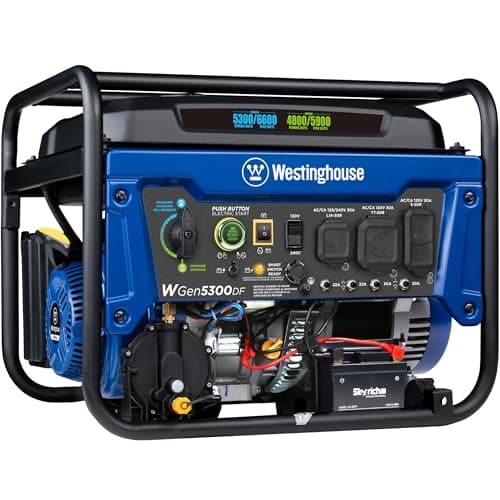
Westinghouse WGen5300DF

5,300 running watts, dual fuel, at about 0.32 gal/hr averaged across a tank.

A furnace, a well pump, and the kitchen
4
No photo

Buy this before the generator

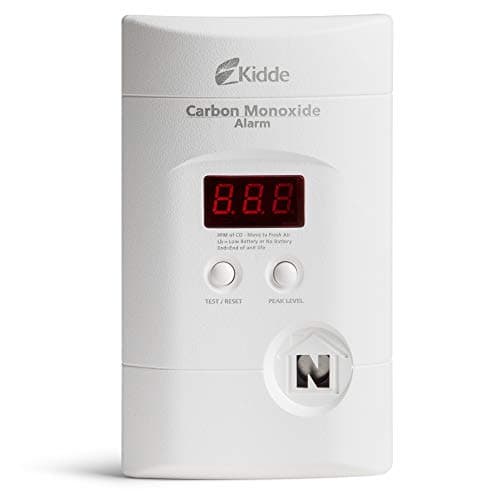
Kidde Nighthawk KN-COPP-3 CO alarm

A plug-in CO alarm with battery backup and a digital ppm readout.

Every level of the house

Prices come from the retailer at page-build time and change constantly. Where no live price is available the button reads “Check price” rather than showing a number we cannot stand behind.

What $500 buys, honestly

Roughly 1,700 to 1,800 running watts in an enclosed inverter, weighing 39 to 46 lb, running 10 to 12 hours on a gallon or so of gasoline.

That is a genuinely useful machine and it is not a house. Here is what it covers:

LoadRunning wattsInside 1,800W?
Refrigerator~150 average, 500-1,000 startingYes
Freezer100-500, 500-1,000 startingYes, but not at the same instant as the fridge
Lights, router, phones, TV~100-200Yes
Furnace fan (½ HP)300-800, 800-1,600 startingAlone, yes — not with a fridge
Sump pumpVaries, high starting surgeMarginal — check yours
Well pumpHigh running and startingNo
Space heater, kettle, hair dryer750-1,500 eachOne at a time, and nothing else
Air conditioning, electric water heater2,000+No

Wattage figures other than the fridge average are Champion Power Equipment's published ranges. The 150W fridge average is this site's stated planning assumption, listed on the methodology page.

The pattern is clear enough to plan around: refrigeration and communications, yes. Heat, water and air, no.

Buy an inverter, not the cheapest watts

At this budget you can find open-frame conventional generators offering more watts for the same money. Three reasons not to:

  • Waveform. An inverter synthesizes a clean sine wave — the iGen2200 publishes under 3% total harmonic distortion. Cheap conventional machines can produce a dirty waveform that damages switch-mode supplies in laptops, TVs and modern appliance control boards.
  • Noise. A conventional machine holds 3,600 rpm regardless of load. An inverter throttles down, which is why 52 dBA is achievable at all. Decibels are logarithmic, so the gap is much larger than it looks.
  • Fuel. Throttling down at partial load — which is nearly all the time in a real outage — is why 0.1 gal/hr is possible.

The full comparison goes through the architecture.

Budget the accessories too

This is where a $500 budget quietly becomes a $650 one, and it is better to know now:

  • A CO alarm per level. Non-optional, and the cheapest item here.
  • A heavy-duty outdoor extension cord long enough to keep the machine twenty feet from the house.
  • Two fuel cans and stabilizer. At 0.1 gal/hr, five gallons is a lot of running — but the cans still have to exist.
  • Oil for the first change. The break-in change comes early and nothing is open during a storm.
  • A running cover, if you expect to use it in rain.

The full list, in priority order.

Two of these instead of one bigger one

Both picks here are parallel capable, which is a genuinely good route out of the bracket.

Two 1,800W inverters in parallel give roughly 3,600W — real house territory — while each unit stays light enough to carry, and you can run just one when the load is small, which halves the fuel and the noise. Buying the second unit a year later is a legitimate plan.

How paralleling works covers the kit and the limits.

Or spend it on a battery instead

Worth considering seriously at this budget, because the trade is closer than at any other price point.

A kilowatt-hour-class power station costs about the same and cannot run a furnace blower, cannot be refilled from a can, and stops when it is empty. But it is silent, produces no carbon monoxide, works indoors and in an apartment, needs no fuel stored, and requires essentially no maintenance.

If your outages are short, or you live somewhere a generator is not practical, the same money buys a better answer. Generator versus power station weighs it properly.

What to avoid at this price

  • Unbranded machines with no published dB or THD figures. If a manufacturer will not publish them, assume the answer is bad.
  • Anything without low-oil shutdown. It is standard now and its absence tells you what corners were cut.
  • Brands with no parts availability. A carburetor for a machine nobody stocks parts for is the end of the machine.
  • Buying on peak watts. Peak is a fraction of a second. Running watts is what you own.
The picks in full

01Best overall in the bracket

Westinghouse iGen2200

1,800 running watts at as low as 52 dBA, 46 lb, and up to 12 hours on 1.2 gallons.

The published 52 dBA figure is what earns this the top slot. Very little at this price publishes a decibel number at all, and an enclosed inverter at 52 dBA is a machine you can run in a suburban street without an argument.

1.2 gallons over up to 12 hours is about 0.1 gallons an hour, which makes a five-gallon can nearly two days of running. Small engines burn very little, and that is a real advantage in an outage where fuel is hard to get.

Less than 3% total harmonic distortion means laptops and modern appliances are safe on it — the specification that separates an inverter from a cheap open-frame machine, and the reason not to buy below this class.

Parallel capable, so a second unit later doubles the output rather than replacing the first.

Skip it ifyou need to run a well pump or a furnace blower and a fridge together.

Published specifications for the Westinghouse iGen2200
SpecificationPublished figure
Output1,800 running W / 2,200 peak W
Noiseas low as 52 dBA
Weight46 lb
Tank1.2 gal
Run timeup to 12 h
WaveformLess than 3% THD
ParallelCapable with a second unit

Source: Westinghouse — iGen2200 published specifications. These are the manufacturer's published figures, not ours — we have not tested this unit.

02Lightest to carry

Champion 100692 2000W Ultralight Inverter

2,000 starting watts and 1,700 running at 39 lb, rated 53 dBA from 23 feet.

39 lb is the number. That is a machine one person picks up and carries across a yard, which matters more than it sounds — a generator that requires two people to move is a generator that stays where it was put, including in the wrong place.

53 dBA measured from 23 feet is a useful, honestly-stated figure. Note the distance: any decibel number without one is not a specification.

2,000 starting watts gives a little more surge headroom than the Westinghouse for the same class of load, which helps with a refrigerator compressor.

Skip it ifyou want the longest run time. A smaller tank means more refueling stops.

Published specifications for the Champion 100692 2000W Ultralight Inverter
SpecificationPublished figure
Output2,000 starting W / 1,700 running W
Weight39 lb
Noise53 dBA from 23 feet
Engine79cc Champion 4-stroke
TypeEnclosed inverter, parallel capable

Source: Champion — 100692 2000-Watt Ultralight Inverter listing. These are the manufacturer's published figures, not ours — we have not tested this unit.

03Worth stretching for

Westinghouse WGen5300DF

5,300 running watts, dual fuel, at about 0.32 gal/hr averaged across a tank.

Named here to be honest about what the budget bracket cannot do. Three times the output covers a fridge, a furnace fan, a sump pump and lighting simultaneously — which is what people usually picture when they imagine owning a generator.

If your outages are long and cold, this gap is the difference between keeping the house habitable and keeping the food cold. Size your actual load before deciding the budget is fixed.

Skip it ifthe budget is genuinely fixed. There is no shame in the smaller machine.

Published specifications for the Westinghouse WGen5300DF
SpecificationPublished figure
Output (gasoline)5,300 running W / 6,600 peak W
Output (propane)4,800 running W / 5,900 peak W
Engine274cc 4-stroke OHV
Tank4.7 gal (18 L)
Run timeup to 14.5 h on a full tank
Transfer-switch outlet120/240 V L14-30R, 30 A
RV outlet120 V TT-30R, 30 A
StartingPush-button electric with remote key fob

Source: Westinghouse — WGen5300DF product specifications. These are the manufacturer's published figures, not ours — we have not tested this unit.

04Buy this before the generator

Kidde Nighthawk KN-COPP-3 CO alarm

A plug-in CO alarm with battery backup and a digital ppm readout.

A small generator is not a small carbon monoxide risk. Output has nothing to do with it — the exhaust of a 1,800W machine will still kill people in an enclosed space, and cheaper machines are more often run in the wrong place because they feel less serious.

It costs a fraction of the generator. The safety guidance applies exactly the same at every size.

Skip it ifyours are current and tested.

Published specifications for the Kidde Nighthawk KN-COPP-3 CO alarm
SpecificationPublished figure
SensorElectrochemical
Power120 V AC plug-in with 9 V battery backup
DisplayDigital, 30–999 ppm, refreshed every 15 s
Alarm85 dB
MemoryPeak-level memory of the last detection or test
Warranty10-year limited; UL certified

Source: Kidde — Nighthawk KN-COPP-3 product page. These are the manufacturer's published figures, not ours — we have not tested this unit.

How these were chosen

We did not test these. Nobody at Watt & Warden has plugged one in. What we did instead: read the manufacturer's published specifications, compile them into a table where the figures line up, and compute the numbers manufacturers leave out — runtime against a real appliance load, and what an hour of running actually costs.

Anything that could not be sourced was left out rather than estimated, and every pick names the buyer who should skip it. The full method is here, including where it is weaker than a publisher with a test bench.

Questions people actually ask

What can a $500 generator run?

About 1,800 running watts, which covers a refrigerator, lights, a router and device charging comfortably, and a freezer or a furnace blower on its own. Not a well pump, not air conditioning, not an electric water heater, and not a space heater alongside anything else.

Should I buy an inverter or a conventional generator under $500?

An inverter, even though conventional machines offer more watts for the money. Inverters produce a clean waveform -- the iGen2200 publishes under 3% THD -- which protects laptops and modern appliance boards, and they throttle down at partial load, which is why they are both quieter and much more frugal.

Is a cheap generator enough for a power outage?

For refrigeration and communications, yes, and that covers most of what people actually lose. It is not enough for heat, water or air conditioning. Decide by sizing your critical load first rather than by budget, then see whether the budget reaches it.

Can I run two small generators together?

If both are parallel capable, which these are. Two 1,800W inverters give roughly 3,600W -- real house territory -- while each stays light enough for one person to carry, and you can run just one when the load is small to halve the fuel and noise. Buying the second later is a valid plan.

Is a power station better than a cheap generator?

At this budget it is genuinely close. A kilowatt-hour battery costs about the same, cannot run a furnace blower and stops when empty -- but it is silent, produces no carbon monoxide, works indoors and in apartments, needs no stored fuel and has almost no maintenance.

Sources

Every figure on this page comes from a published source. We have not tested this equipment, so the specifications are the manufacturer's and the statistics are the dataset's — the arithmetic on top of them is ours, and it is shown in full so you can check it. How we work this out.