The number
The U.S. Consumer Product Safety Commission states that an average of nearly 100 people a year die in the United States of carbon monoxide poisoning caused by portable generators. Most of those deaths happen in residential locations, and they cluster around storms and winter weather — which is to say, they happen to people who bought a generator to be prepared.
The circumstances repeat with grim consistency. The generator was in an attached garage, on a covered porch, in a basement, in a shed, in a carport, or outside but under a window. In almost none of these cases did anyone believe they were taking a risk.
Why it kills without warning
Carbon monoxide is colorless, odorless and tasteless. There is no sensory cue at all — you cannot smell it, and the exhaust smell you can detect is other combustion products, not the CO itself.
It kills by binding to haemoglobin in place of oxygen, with an affinity far higher than oxygen's. Your blood keeps circulating and stops carrying oxygen, and the body has no mechanism to notice.
The early symptoms are the cruel part: headache, dizziness, nausea, weakness, confusion. On the second day of a power outage — cold, tired, stressed, sleeping badly — those symptoms are indistinguishable from how you already feel. And confusion is itself a symptom, so the person affected is the least likely to correctly diagnose it.
By the time symptoms are severe enough to be unmistakable, the person is often too impaired to act. This is why detection has to be mechanical and installed in advance.
The rules
These are CPSC's, restated. They are short, they are specific, and they are not open to interpretation.
- Outdoors only, at least twenty feet from the house. Not close, not just outside the door. Twenty feet.
- Never in a garage, basement, crawlspace or shed — including with the door open. An open garage door does not provide enough air exchange, and this is the single most common fatal error.
- Not on a porch or in a carport. CPSC names these explicitly because they feel outdoors and are too close to the dwelling.
- Exhaust pointed away from the house and from every other building's doors, windows and vents. Seal nearby vent openings.
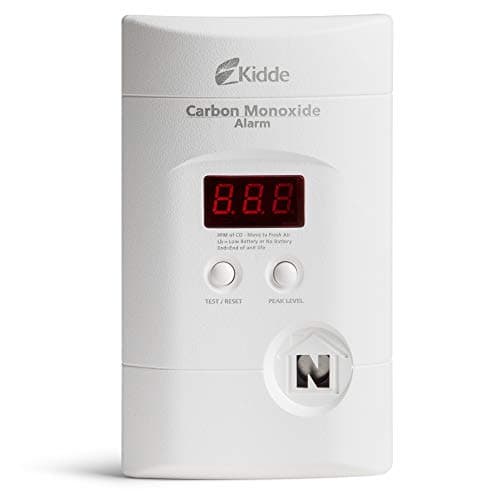
- Interconnected CO alarms on every level of the home and outside sleeping areas, tested monthly.
- Maintain the machine per the manufacturer's instructions, and follow every label and warning on it.
- Prefer a model with a CO shut-off feature. These sense rising CO around the generator and shut it down automatically.
The standards that changed the machines
Two voluntary safety standards now cover portable generators: PGMA G300 and UL 2201. Both add automatic CO shut-off, and CPSC estimates they would reduce CO poisoning deaths by 87% and 100% respectively.
In practical terms: a generator carrying one of these certifications senses CO concentration around itself and shuts the engine down before the level becomes dangerous. It is a genuine engineering safeguard rather than a warning label, and if you are buying a new machine it is worth looking for. Champion markets this as CO Shield; other manufacturers use their own names.
It does not replace any rule above. It is a backstop for the moment somebody makes a mistake, and the whole point is that people do.
The specific mistakes that recur
- “The garage door is open.” The most frequent fatal error. A garage does not exchange air fast enough, especially with a car and stored items reducing the volume, and CO accumulates and drifts into the house through the connecting door.
- “It is under the deck, out of the rain.” A deck traps exhaust and puts it directly beneath a door. Buy a purpose-built generator cover instead — covered here.
- “The window is only open a crack.” A crack is enough. Twenty feet and exhaust pointed away means twenty feet and exhaust pointed away.
- “It is a small generator.” A 2,200W inverter produces lethal quantities of CO. Output has nothing to do with it.
- “We will only run it for an hour.” CO accumulates. In an enclosed space, an hour is more than enough.
- “The alarm is fine, it is a few years old.” CO alarm sensors expire, typically after seven to ten years. Check the manufacture date on the back, not the battery.
If you suspect CO poisoning
Get everyone outside into fresh air immediately — do not stop to open windows or investigate. Call emergency services from outside. Do not go back in for anything, including pets, until responders say it is safe.
Tell the medical team a generator was running. CO poisoning is treatable with oxygen, and treatment is far more effective when the cause is known early. Symptoms can also be delayed, so anyone exposed should be assessed even if they feel recovered.
The one thing to do today
If you own a generator or intend to buy one, fit working CO alarms on every level of the house before storm season, and check the manufacture date on any alarm you already have.
It is the cheapest item in this entire category and the only one whose absence is not recoverable. Everything else on this site is about keeping a fridge cold. The wider outage checklist is here.