Skip to content
Watt Warden

Generators

The Best Portable Generators for Camping (2026)

Check the campground's rules before you check the specs. Many sites restrict generators to set hours, some cap decibels, and some ban them outright — which settles the question for you.

By Sawyer V.Updated Published How we work this out
A campsite tent lit warmly at night.

Watt & Warden earns a commission on qualifying purchases made through links on this page, at no extra cost to you. It never changes a ranking, and our picks include products we tell you to skip. Full disclosure.

Quick picks

#ProductBest forPrice
1
No photo

Best for restricted campgrounds

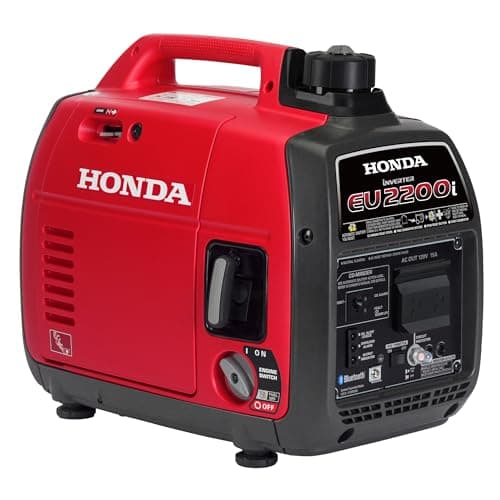
Honda EU2200i

2,200W at a published 48–57 dB(A) and 47.4 lb — the machine campground rules were effectively written around.

Sites with decibel limits or generator hours
2
No photo

Best for an RV air conditioner

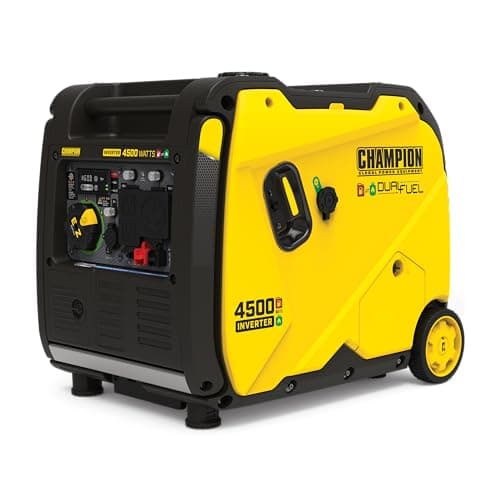
Champion 200988 4500W dual fuel inverter

4,500 starting watts of dual-fuel inverter power with electric start.

Trips where the roof unit has to run
3
No photo

Easiest to move around a site

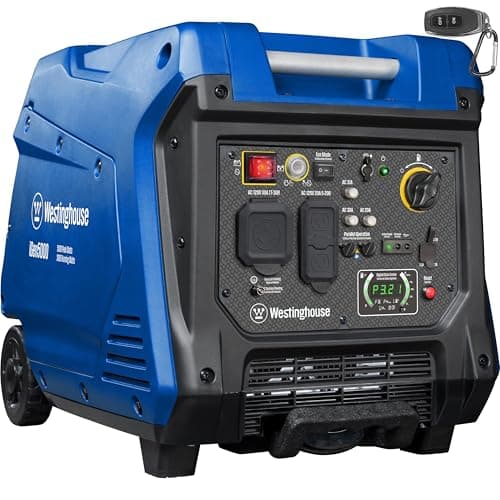
Westinghouse iGen4500

3,700 running watts with a telescoping handle and wheels, plus remote electric start.

Anyone repositioning it alone
4
No photo

The option that is allowed everywhere

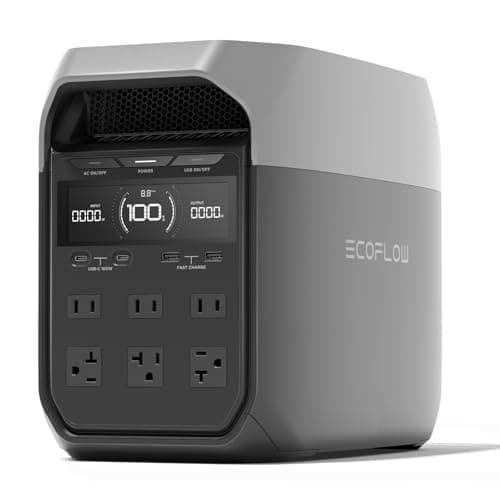
EcoFlow DELTA 2

1,024Wh and 1,800W, silent, expandable to 3kWh — no rules apply to it.

Sites that restrict or ban generators

Prices come from the retailer at page-build time and change constantly. Where no live price is available the button reads “Check price” rather than showing a number we cannot stand behind.

Check the rules first — they may decide it for you

This is the step people skip, and it is the cheapest research in the whole purchase.

Many campgrounds restrict generator use to set hours, commonly a morning and an evening window. Some specify a maximum decibel figure. Some prohibit generators outright, particularly in tent loops and national-park sites.

Batteries are permitted everywhere, silently, at any hour. If you camp at sites with restrictions, that is not a minor preference — it is the difference between kit you can use and kit that stays packed. Look up your specific site's rules before comparing any specifications.

What camping actually needs

Far less than home backup, unless an air conditioner is involved:

LoadTypical drawPer day
Phone and device charging10–20 W~40 Wh
LED lighting30–60 W~200 Wh
12V compressor fridge40–60 W cycling~400 Wh
Laptop45–65 W~300 Wh
Fan overnight20–40 W~250 Wh
CPAP, no humidifier30–60 W~350 Wh
RV roof AC, 13,500 BTU1,200–1,700 W running, 3,000–3,500 W startingThousands of Wh

CPAP figures from Champion Power Equipment's published chart. The other rows are working estimates from typical equipment ratings and duty cycles rather than measurements. The marked row is the one that changes the purchase entirely.

Everything except air conditioning and cooking is small. A day of typical camping is roughly 1,000–1,400Wh, which a mid-sized battery covers outright without any engine.

When you genuinely need an engine

Three cases, and only three:

  • An RV roof air conditioner. The surge exceeds every portable battery, and the running draw would empty a 2kWh station in about an hour.
  • Long trips with no sun. A battery plus panels is sustainable in summer. A week of overcast in the shoulder season is where fuel wins.
  • Power tools or a worksite load. Different requirement, different machine.

Outside those, a battery is the better camping purchase and it is not close — no fuel in the vehicle, no noise, no exhaust, no rules to check. The camping and RV scenario page works through the tiers properly.

Carbon monoxide is worse in this setting, not better

Everything about camping raises the risk relative to a house: people sleep in small, well-sealed spaces, the generator ends up close because cords are short, and tents and vehicles have no CO alarm unless you brought one.

The rules do not relax. Twenty feet minimum, exhaust pointed away from every tent and vehicle — including your neighbors' — and never under an awning, in a vehicle bay, or beside an open window or roof vent.

Bring a battery-powered CO alarm for the tent or RV. It is not the same as the one at home and it is small enough that there is no reason not to. The full safety guidance applies unchanged.

Camping etiquette, which is also mostly safety

  • Observe generator hours even if nobody is enforcing them. It is why the restrictions get tighter every year.
  • Point the exhaust away from other pitches, not just your own.
  • Run it at part load where you can. An inverter throttles down and gets noticeably quieter.
  • Do not run it overnight. Use a battery for the quiet hours — which is the hybrid arrangement that works at home too.
  • Secure it. Generators are stolen from campsites. A cable lock is cheap.

The arrangement that works best

A battery plus a folding panel for the routine load, and a small inverter generator only if an air conditioner or a long overcast stretch demands it. Run the generator inside permitted hours to top the battery up, then run everything off the battery overnight, silently.

That combination is legal at more sites, quieter, uses far less fuel, and gives you a unit that is also a capable home backup battery the rest of the year — which is the strongest argument for buying at that tier at all.
The picks in full

01Best for restricted campgrounds

Honda EU2200i

2,200W at a published 48–57 dB(A) and 47.4 lb — the machine campground rules were effectively written around.

The reason this specific machine dominates campgrounds is the published dB(A) range. Where a site caps noise, 48–57 dB(A) generally sits inside what is permitted while louder machines do not — which makes it the difference between equipment you can use and equipment that stays in the vehicle.

8.1 hours on 0.95 gallons is about 0.117 gallons an hour. For a week-long trip that is a genuinely small amount of fuel to carry, which matters when it rides in the same vehicle as everything else.

47.4 lb is liftable by one person, and parallel capability means a second unit covers an air conditioner later if you need it.

Skip it ifyou need to run an RV roof air conditioner. 1,800W rated will not start a 13,500 BTU unit alone.

Published specifications for the Honda EU2200i
SpecificationPublished figure
Output2,200 W max / 1,800 W rated
TypeInverter (pure sine wave)
Noise48–57 dB(A)
Weight47.4 lb
Tank0.95 gal
Run timeup to 8.1 h on a full tank
FeaturesEco Throttle, CO-Minder, Bluetooth app monitoring

Source: Honda Power Equipment — EU2200i specifications. These are the manufacturer's published figures, not ours — we have not tested this unit.

02Best for an RV air conditioner

Champion 200988 4500W dual fuel inverter

4,500 starting watts of dual-fuel inverter power with electric start.

A standard 13,500 BTU RV roof air conditioner typically needs 3,000–3,500 starting watts, which is why 3,500W-class inverters are the conventional RV size. This clears it with margin.

Dual fuel earns its place on a long trip: propane cylinders are easy to find, store indefinitely in a vehicle bay, and do not go stale between seasons the way gasoline does.

Skip it ifyou are tent camping. This is more machine, weight and noise than a tent trip needs.

Published specifications for the Champion 200988 4500W dual fuel inverter
SpecificationPublished figure
Output4,500 starting W / 3,500 running W (gasoline)
TypeInverter, RV ready
FuelGasoline or propane (dual fuel)
StartingElectric start
RV outlet120 V TT-30R, 30 A
Warranty3-year limited with free lifetime technical support

Source: Champion Power Equipment — 4500-watt dual fuel inverter specifications. These are the manufacturer's published figures, not ours — we have not tested this unit.

03Easiest to move around a site

Westinghouse iGen4500

3,700 running watts with a telescoping handle and wheels, plus remote electric start.

The handling design is the point: a telescoping handle and wheels mean one person moves it across a site without lifting anything, which is not true of most machines at this output.

Pure sine wave output is worth having if you are charging laptops or camera batteries, and the TT-30R outlet is RV-ready.

Skip it ifweight in the vehicle is your constraint. This is a bigger machine than a tent camper needs to be carrying.

Published specifications for the Westinghouse iGen4500
SpecificationPublished figure
Output (gasoline)3,700 running W / 4,500 peak W
TypeInverter (pure sine wave)
StartingRemote electric start with auto choke
RV outlet120 V TT-30R, 30 A
ParallelCapable with a second unit

Source: Westinghouse — iGen4500 product specifications. These are the manufacturer's published figures, not ours — we have not tested this unit.

04The option that is allowed everywhere

EcoFlow DELTA 2

1,024Wh and 1,800W, silent, expandable to 3kWh — no rules apply to it.

The honest recommendation for most tent and van camping. A battery is permitted at every campground at any hour, makes no noise, produces no exhaust, and can sit inside the tent or vehicle.

1,024Wh covers a 12V fridge, lighting, device charging and a laptop for a day or more, and 500W of solar input means a panel keeps pace in summer.

It is also the same unit that starts a household fridge at home, which is what makes the purchase easy to justify.

Skip it ifyou need air conditioning or several days without sun. A battery has a fixed ceiling and a generator does not.

Published specifications for the EcoFlow DELTA 2
SpecificationPublished figure
Usable capacity1,024 Wh (expandable to 3 kWh)
Cell chemistryLiFePO4 (LFP)
AC output1,800 W continuous / 2,700 W surge
X-Boost output2,200 W for resistive loads
Weight27 lb
Cycle life3,000+ cycles
Max solar input500 W
Warranty5 years

Source: EcoFlow — DELTA 2 product specifications. These are the manufacturer's published figures, not ours — we have not tested this unit.

How these were chosen

We did not test these. Nobody at Watt & Warden has plugged one in. What we did instead: read the manufacturer's published specifications, compile them into a table where the figures line up, and compute the numbers manufacturers leave out — runtime against a real appliance load, and what an hour of running actually costs.

Anything that could not be sourced was left out rather than estimated, and every pick names the buyer who should skip it. The full method is here, including where it is weaker than a publisher with a test bench.

Questions people actually ask

What size generator do I need for camping?

Without an air conditioner, almost none -- a day of typical camping is roughly 1,000-1,400Wh and a battery covers it silently. With a 13,500 BTU RV roof air conditioner you need 3,000-3,500 starting watts, which is why 3,500W-class inverters are the standard RV size.

Are generators allowed at campgrounds?

It varies by site. Many restrict them to set hours, some specify a maximum decibel level, and some ban them outright -- particularly tent loops and national-park sites. Batteries are permitted everywhere at any hour. Check your specific site's rules before comparing specifications.

How quiet does a camping generator need to be?

Quiet enough for whatever your site specifies, which is why Honda's published 48-57 dB(A) for the EU2200i gets quoted so often in this context. Where a campground caps noise, that range generally sits inside what is permitted while conventional open-frame machines do not.

Is a power station better than a generator for camping?

For everything except air conditioning and long overcast trips, clearly. It is permitted at sites that restrict or ban generators, it is silent, it produces no exhaust so it can be inside the tent or vehicle, and it needs no fuel carried in the same vehicle as everything else.

Do I need a carbon monoxide alarm when camping with a generator?

Yes, and the risk is higher than at home rather than lower -- people sleep in small sealed spaces, and cords are short so the machine ends up close. Bring a battery-powered CO alarm for the tent or RV, keep the generator twenty feet away, and never run it under an awning or in a vehicle bay.

Sources

Every figure on this page comes from a published source. We have not tested this equipment, so the specifications are the manufacturer's and the statistics are the dataset's — the arithmetic on top of them is ours, and it is shown in full so you can check it. How we work this out.