1. Find out how big it is
Before anything else, establish whether this is your house or your street. Look out of the window: are your neighbors' lights on? Is the street lighting on?
If everyone else has power, the problem is yours — check your main breaker and any GFCI outlets that may have tripped. If the street is dark, it is the utility's, and there is nothing to fix indoors.
Report it. Utilities do not automatically know your house is out, and restoration is often prioritized by the number of reports from an area. Most have an outage line, a text-message option and an online map — find yours now and save it, because searching for it in the dark on a phone with 14% battery is a poor experience.
2. Shut the fridge and the freezer, and leave them shut
This is the single most valuable free action, and every opening spends some of it.
The USDA's guidance is specific: perishable food stays safe in a refrigerator for four hours. A full freezer holds for about 48 hours and a half-full one for about 24 — provided the doors stay closed. After four hours without power, refrigerated perishables — meat, poultry, fish, eggs, leftovers — should be discarded.
Two practical moves. Decide what you need before you open the door, and get it out in one trip. And if the freezer is half empty, fill the gaps with bottles of water — thermal mass is what buys the hours, and this works even part-way through an outage.
3. Unplug the sensitive electronics — now, not later
This is the step people get backwards. The damaging voltage spike typically arrives when power is restored, not when it fails. The grid does not come back gently, and the surge as circuits re-energize is what actually kills televisions, computers and anything with a delicate power supply.
So unplug them at the start of the outage, while you are thinking about it — not at the end, when you may be asleep or out. Leave one lamp plugged in so you can tell at a glance when the power returns. More on what an outage actually damages.
4. Deal with water
If you are on a private well, you have no water at all beyond what is already in the pressure tank. The pump is electric. Fill a bath and some containers immediately — you will want it for flushing, washing and drinking.
On municipal water you generally keep pressure for a while, but extended regional outages can affect treatment and pumping and trigger boil-water notices. Filling a couple of containers early costs nothing.
And if you have a basement with a sump pump, this is the moment to think about it — the pump is off, and the weather that caused the outage is often the weather that fills the pit. Sump pump backup, properly covered.
5. Light, safely
Flashlights and battery lanterns, not candles. Candles cause house fires, and a house fire during an outage is considerably worse than the outage. If you have nothing else, a phone flashlight works and a battery pack keeps it going.
Put a light in each occupied room rather than carrying one around — the risk in a dark house is stairs and furniture, not the absence of ambience.
6. Get the information
Your utility's outage map gives a restoration estimate, and that estimate is the most useful thing you can have: a two-hour outage and a two-day outage call for completely different behavior.
This is why a battery on the router and modem is the best-value purchase in this whole category. A modem and router draw about 20W together, so a very small battery keeps them running for hours, and phones can then use wifi instead of cellular data.
7. Only now, the generator
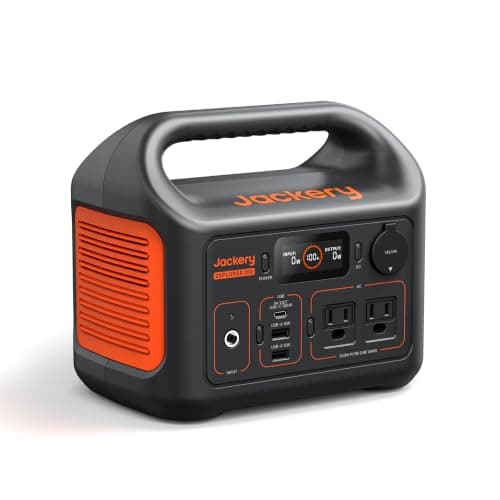
If you have one and the outage is going to last, this is where it comes in — after the free steps, not before them.
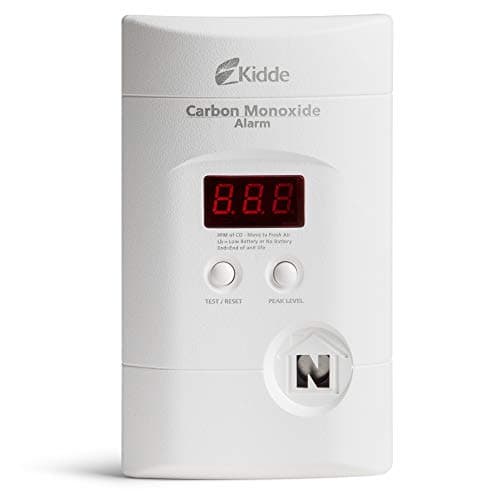
The rules do not bend for weather or for tiredness: outdoors only, at least twenty feet from the house, exhaust pointed away from every door, window and vent. Never in a garage, a basement, a shed, on a porch or in a carport. CPSC records nearly 100 deaths a year from generator carbon monoxide, and they happen in exactly this situation. Read the full guide before you need it.
Never plug a generator into a wall outlet to feed the house. It sends power up the utility line at lethal voltage and can kill the lineworker restoring your street. The safe methods are here.
8. Heat or cool, deliberately
In winter: close off rooms you are not using, gather in one, and use blankets before you use fuel. If you have a gas fireplace with a standing pilot it will work; a gas furnace will not, because the blower and controls are electric. Never use a gas oven, a charcoal grill or a camping stove indoors for heat — the same carbon monoxide risk as a generator, in the same house.
In summer: close blinds and curtains on the sunny side early, open windows once the outside air is cooler than the inside, and stay on the lowest floor. If anyone in the house is vulnerable to heat, find somewhere with air conditioning rather than trying to power one.
9. Work out whether to stay
The one nobody plans and everybody should. If the outage is going to run for days in extreme cold or heat, and you have somewhere to go, going is often the right answer and it is not a defeat.
Decide before it becomes urgent, and take a photograph of what is in the freezer on your way out — it is useful for an insurance claim if the food is lost.
When it comes back
- Turn things on gradually. Everything restarting at once creates a surge on a freshly restored circuit.
- Check the fridge and freezer temperatures. The USDA gives clear thresholds: the refrigerator should be at 40°F or below and the freezer at 0°F or below. Frozen food may be safely refrozen if it still contains ice crystals or is at 40°F or below, though quality may suffer.
- Never taste food to check it. The USDA is explicit on this and it is worth repeating.
- Reset what needs resetting. Clocks, alarms, thermostat schedules, and any equipment that lost its configuration.
- Recharge everything. Phones, battery packs, the power station. The next outage will not announce itself.
- Write down what you wished you had. Do it now, while it is fresh. That list is a much better shopping guide than any review site, including this one.