Skip to content
Watt Warden

Generators

Open Frame vs Closed Frame Generators

Almost everyone conflates frame type with inverter type. They are different axes, and the enclosure decides four practical things that have nothing to do with the electronics.

By Sawyer V.Updated Published How we work this out
Metal frame machinery in close detail.

Watt & Warden earns a commission on qualifying purchases made through links on this page, at no extra cost to you. It never changes a ranking, and our picks include products we tell you to skip. Full disclosure.

Quick picks

#ProductBest forPrice
1
No photo

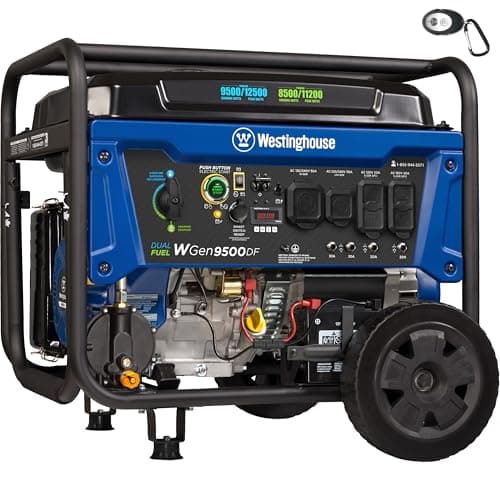
Best open-frame machine

Westinghouse WGen9500DF

9,500 running watts from a 457cc engine, with a 30A transfer-switch outlet and remote start.

House-sized output at a sensible price
2
No photo

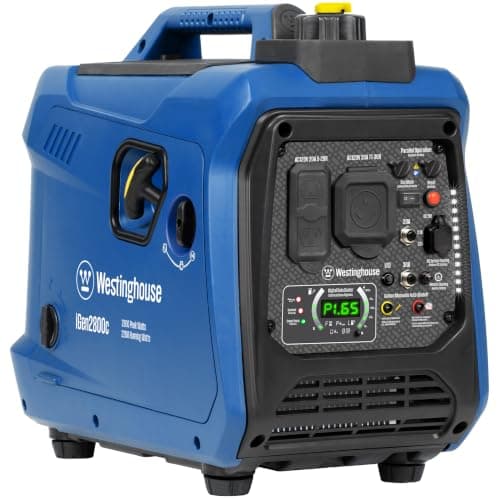
Best closed-frame at a budget

Westinghouse iGen2200

1,800 running watts at as low as 52 dBA, 46 lb, under 3% THD.

Quiet, portable, suburban
3
No photo

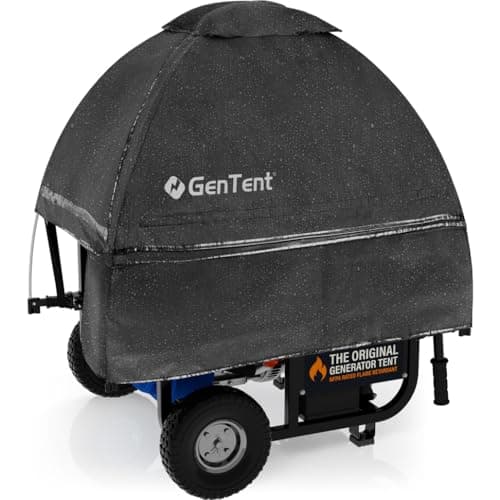
Weather cover — open frame version

GenTent Safety Canopy, open-frame

NFPA 701 canopy clamping to the frame, rated to 110 mph and 12 in of rain per hour.

Open-frame machines, 3,000-10,000W
4
No photo

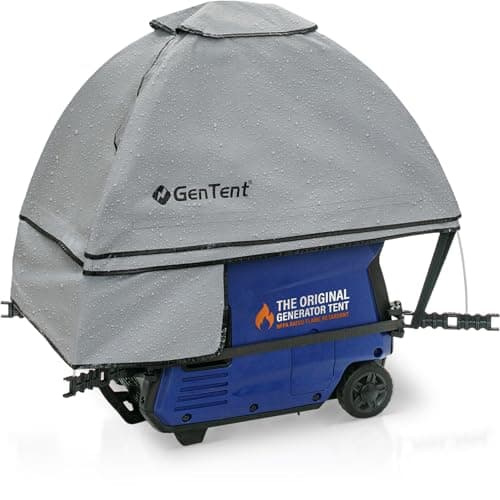
Weather cover — enclosed version

GenTent Safety Canopy, inverter

The same canopy concept sized for a smooth enclosed body.

Fully encased inverter generators

Prices come from the retailer at page-build time and change constantly. Where no live price is available the button reads “Check price” rather than showing a number we cannot stand behind.

Frame type and inverter type are different questions

The category muddles these constantly, and it makes buying advice confusing.

  • Frame type is a physical question: is the engine and alternator sitting in an open tubular cage, or inside a closed plastic case?
  • Inverter versus conventional is an electrical question: does the machine synthesize its AC output electronically, or produce it directly from a spinning alternator?

They correlate — most enclosed machines are inverters and most open-frame machines are conventional — but they are not the same thing. Open-frame inverter generators exist, and they are a useful and growing category: inverter electronics with the cooling, serviceability and price of an open frame.

The electrical comparison covers the other axis. This page is only about the enclosure.

What the enclosure actually does

Open frameClosed frame
NoiseNothing between the engine and youSound-damping material and a closed case
CoolingExcellent — air everywhereManaged through ducted intakes; needs clearance
Weight per wattLower — no case to carryHigher at the same output
Price per wattLowerHigher
ServicingEverything reachable without removing anythingPanels off to reach the plug, filter or oil drain
WeatherEverything exposed, including the panelCase sheds some water; intakes still open
HandlingFrame doubles as a lifting point and roll cageMolded handle, nothing to snag
Available outputUp to the top of the portable rangeGets expensive above about 4,000W

This describes the general behavior of the two designs rather than any specific product. Noise figures vary enormously and only some manufacturers publish one — where they do, note the distance it is measured at, because a dB figure without a distance is not a specification.

Noise is the reason people buy enclosed

And it is a real difference rather than a marketing one. An enclosure with sound-damping material genuinely reduces radiated noise, and the published figures reflect it — Westinghouse quotes as low as 52 dBA for the enclosed iGen2200, and Champion 53 dBA from 23 feet for its enclosed ultralight.

Because decibels are logarithmic, the gap between an enclosed machine near 52 dB and a conventional open-frame machine near 70 dB is roughly four times the perceived loudness, not a modest improvement.

Worth separating two contributions though. Some of that gap is the enclosure, and some is the inverter electronics throttling the engine to the load. An open-frame inverter gets the second without the first, and lands somewhere in between.

Cooling is the argument for open frame

The one people do not think about until a machine shuts down on a hot day.

An air-cooled engine sheds heat to the air moving past it. An open frame has air on every side. An enclosure has to duct that air in, past the engine and out again — which works, but with less margin, and which is why enclosed machines specify clearances and why blocking one is more consequential.

  • Give an enclosed machine its stated clearance on every side. Against a wall is not acceptable.
  • Keep the intake grilles clear of leaves, snow and debris. On an open frame you would see the problem; on an enclosed one you may not.
  • Sustained full load in high ambient temperature is where the difference shows.

Servicing favors open frame, clearly

A consideration that only appears at year three, and by then you own the machine.

On an open frame the spark plug, air filter, oil drain and fuel valve are all simply there. On an enclosed machine, several of those are behind panels held by fasteners, and some designs make the oil drain genuinely awkward.

If you intend to do your own maintenance — and the whole schedule is under an hour a year — an open frame makes that easier every single time. It is a small factor per service and it compounds over a decade.

Neither is weatherproof

The most common misconception about closed-frame machines, and worth being direct about.

A plastic case is a sound-damping enclosure. It is not a weather enclosure. The air intakes are open, the exhaust is open, and the outlet panel is exposed. Manufacturers tell you not to run either type in rain.

Both need a purpose-made running cover to operate in weather — and, as the picks above make clear, they need different covers, because one clamps to a frame and the other does not. The rain guidance applies equally to both.

Which to buy

Open frame if output per dollar matters, if the machine will live twenty feet from the house where noise is manageable, if you service it yourself, or if you need more than about 4,000 watts — where enclosed options thin out and get expensive.

Closed frame if noise is a constraint rather than a preference: a campground with a decibel limit, close neighbors, a residential job site with working-hours rules, or overnight running in a dense street.

Open-frame inverter if you want clean power and part-load efficiency at open-frame prices and output, and can accept being quieter than a conventional machine but not as quiet as an enclosed one. For a lot of households buying at 4,000W and up, that is the sweet spot nobody mentions.

Size the load first, then let the output requirement narrow the frame choice — above a certain wattage it makes itself.

The picks in full

01Best open-frame machine

Westinghouse WGen9500DF

9,500 running watts from a 457cc engine, with a 30A transfer-switch outlet and remote start.

Open frame is what you buy when output per dollar is the priority. At this power level an enclosure would add cost, weight and cooling complexity for a machine that will live twenty feet from the house anyway.

The frame is also the reason a 457cc engine at this output is serviceable — every side of it is reachable without removing panels.

Skip it ifyou need it quiet enough for a campground. That is enclosed territory.

Published specifications for the Westinghouse WGen9500DF
SpecificationPublished figure
Output (gasoline)9,500 running W / 12,500 peak W
FuelGasoline or propane (dual fuel)
Engine457cc 4-stroke OHV, cast iron sleeve
Tank6.6 gal (25 L)
Run timeup to 12 h on a full tank
Transfer-switch outlet120/240 V L14-30R, 30 A
RV outlet120/240 V 14-50R, 50 A
StartingPush-button electric with remote key fob
Warranty3-year limited

Source: Westinghouse — WGen9500DF product specifications. These are the manufacturer's published figures, not ours — we have not tested this unit.

02Best closed-frame at a budget

Westinghouse iGen2200

1,800 running watts at as low as 52 dBA, 46 lb, under 3% THD.

The published 52 dBA figure is what the enclosure buys. Sound damping material and a closed case are most of the reason an enclosed machine is quieter — the throttling behavior of the inverter electronics is the other half.

46 lb with a suitcase handle is the other benefit: a closed case has somewhere to put a handle and nothing to snag.

Skip it ifyou need house-sized output. Enclosed machines get expensive fast above about 4,000W.

Published specifications for the Westinghouse iGen2200
SpecificationPublished figure
Output1,800 running W / 2,200 peak W
Noiseas low as 52 dBA
Weight46 lb
Tank1.2 gal
Run timeup to 12 h
WaveformLess than 3% THD
ParallelCapable with a second unit

Source: Westinghouse — iGen2200 published specifications. These are the manufacturer's published figures, not ours — we have not tested this unit.

03Weather cover — open frame version

GenTent Safety Canopy, open-frame

NFPA 701 canopy clamping to the frame, rated to 110 mph and 12 in of rain per hour.

This is the clearest practical consequence of frame type, and the one people get wrong when buying accessories. The open-frame canopy clamps to the tubular frame; there is nothing to clamp to on an enclosed machine.

Skip it ifyour machine is enclosed. It has no frame posts to clamp to.

Published specifications for the GenTent Safety Canopy, open-frame
SpecificationPublished figure
FitsOpen-frame generators, 3,000–10,000 W
FabricNFPA 701 flame-certified
Wind ratingup to 110 mph
Rain ratingup to 12 in per hour
Snow loadup to 18 in
InstallationTool-free clamp mount

Source: GenTent — Safety Canopy product page. These are the manufacturer's published figures, not ours — we have not tested this unit.

04Weather cover — enclosed version

GenTent Safety Canopy, inverter

The same canopy concept sized for a smooth enclosed body.

The counterpart, and worth naming because an enclosed case is a sound-damping enclosure rather than a weatherproof one. The intakes and exhaust are still open, so the same rain rules apply.

Skip it ifyou have an open-frame machine.

Published specifications for the GenTent Safety Canopy, inverter
SpecificationPublished figure
FitsFully encased inverter generators
FabricNFPA 701 flame-certified
PurposeRunning cover — keeps airflow and exhaust clear
InstallationTool-free mount

Source: GenTent — inverter Safety Canopy product page. These are the manufacturer's published figures, not ours — we have not tested this unit.

How these were chosen

We did not test these. Nobody at Watt & Warden has plugged one in. What we did instead: read the manufacturer's published specifications, compile them into a table where the figures line up, and compute the numbers manufacturers leave out — runtime against a real appliance load, and what an hour of running actually costs.

Anything that could not be sourced was left out rather than estimated, and every pick names the buyer who should skip it. The full method is here, including where it is weaker than a publisher with a test bench.

Questions people actually ask

What is the difference between an open frame and closed frame generator?

Open frame means the engine and alternator sit in a tubular cage with nothing enclosing them; closed frame means they sit inside a plastic case with sound-damping material. It is a physical question, separate from whether the machine is an inverter -- open-frame inverters exist and are a useful category.

Are closed frame generators quieter?

Yes, genuinely -- Westinghouse quotes as low as 52 dBA for the enclosed iGen2200 against roughly 70 dB for a conventional open-frame machine, which because decibels are logarithmic is about four times the perceived loudness. Part of that gap is the enclosure and part is the inverter throttling to the load.

Do closed frame generators overheat more easily?

They have less cooling margin. An open frame has air on every side; an enclosure ducts air in, past the engine and out, which works but is more sensitive to blocked grilles and inadequate clearance. Give an enclosed machine its stated clearance and keep the intakes clear of leaves and snow.

Is a closed frame generator weatherproof?

No, and this is the most common misconception. The case is a sound-damping enclosure, not a weather one -- the intakes, exhaust and outlet panel are all open, and manufacturers tell you not to run either type in rain. Both need a purpose-made running cover, and they need different ones.

Which frame type should I buy?

Open frame for output per dollar, easier servicing, and anything above about 4,000 watts where enclosed options thin out. Closed frame where noise is a constraint rather than a preference -- a campground decibel limit, close neighbors, or overnight running. An open-frame inverter splits the difference.

Sources

Every figure on this page comes from a published source. We have not tested this equipment, so the specifications are the manufacturer's and the statistics are the dataset's — the arithmetic on top of them is ours, and it is shown in full so you can check it. How we work this out.