Skip to content
Watt Warden

Outage Prep

Backup Power for a Sump Pump

The single strongest case for backup power there is: the pump stops in exactly the weather that fills the pit. Three approaches, and the cheapest one is not the worst.

By Sawyer V.Updated Published How we work this out
A sump pump installed in a basement pit.

Watt & Warden earns a commission on qualifying purchases made through links on this page, at no extra cost to you. It never changes a ranking, and our picks include products we tell you to skip. Full disclosure.

Quick picks

#ProductBest forPrice
1
No photo

Best dedicated system

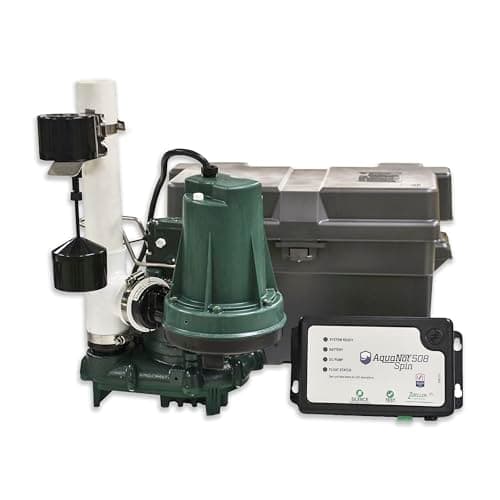
Zoeller 508-0006 AquaNot Spin 508 ProPak

A complete system: the M53 primary pump plus a 12V DC backup that takes over automatically.

Anyone whose basement genuinely floods
2
No photo

Best general-purpose battery for a pit

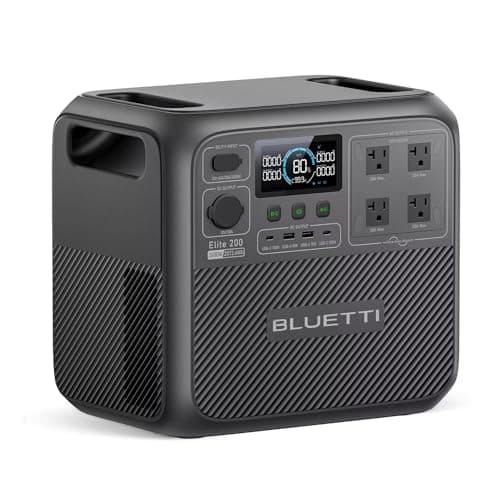
BLUETTI Elite 200 V2

2,600W inverter and 2,073Wh — enough surge for a half-horsepower pump plus a fridge.

Covering a sump pump and everything else
3
No photo

For multi-day rain

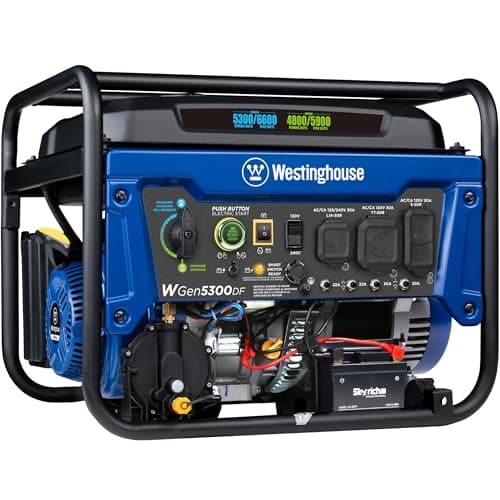
Westinghouse WGen5300DF

5,300 running watts — the only option here that does not run out.

Storm seasons that last days

Prices come from the retailer at page-build time and change constantly. Where no live price is available the button reads “Check price” rather than showing a number we cannot stand behind.

Why this is the strongest case in the category

Everything else on this site is about comfort and food. This one is about a five-figure repair.

A sump pump keeps groundwater out of a basement. It is electric. And the weather that overwhelms a pit — heavy sustained rain, a spring thaw, a storm — is precisely the weather that brings down power lines. The failure is not a coincidence; the two events share a cause.

So a sump pump is the one appliance in a house where losing power has an immediate, escalating, expensive consequence. A fridge full of food is a few hundred dollars. A flooded basement is drywall, flooring, contents, and a mold remediation.

What a pump actually draws

Champion's published wattage chart puts a third-horsepower sump pump at 500–800W running and 1,000–1,600W starting, and a half-horsepower unit at 800–1,050W running and 1,300–2,150W starting.

The starting figure is what eliminates most batteries. A 600W or 1,000W inverter cannot start a half-horsepower pump, and no amount of capacity changes that. Check the inverter number before the battery number.

The running figure is more forgiving than it looks, because a pump does not run continuously — it cycles. In moderate rain a pit might run six minutes in an hour, a 10% duty cycle. At 800W running, that is an average of 80W, which a modest battery sustains for a very long time. In an extreme event the duty cycle rises sharply, and that is exactly when you find out what you bought.

The three approaches

1. A dedicated battery backup pump

A second, independent 12V DC pump plumbed into the same discharge line, with its own deep-cycle battery and charger. When the primary loses power — or fails outright — the backup takes over automatically.

Why it wins: it is automatic. Nobody has to be home, awake, or aware. It is also independent of the primary pump, so it covers pump failure as well as power failure, and running at 12V DC it needs no inverter and no surge headroom.

What it costs you: a plumbing installation, a battery that needs replacing every few years, and a system that does one job and nothing else. Zoeller publishes up to 5.5 hours of continuous run time, which at a 10% duty cycle they characterize as roughly two days of protection.

2. A power station

Plug the existing pump into a battery with a large enough inverter. No plumbing, no installation, and the same battery covers the fridge and the lights.

Why it wins: versatility and no installer. One purchase covers several problems.

What it costs you: switchover. Unless the station has a UPS mode and the pump is plugged through it permanently, somebody has to notice the outage and move the plug — which is fine at 8pm and useless at 3am. And you need serious inverter capacity: 2,600W to be confident with a half-horsepower pump.

3. A generator

Why it wins: it does not run out, which for multi-day rain is the only property that matters.

What it costs you: a person. It must be started manually, run outdoors, and connected through a transfer switch because a sump pump is hard-wired. Basements flood while people are at work.

How long each one lasts

ApproachLight rain (5% duty)Steady rain (15% duty)Extreme (40% duty)
Dedicated 12V backupSeveral daysAbout 1.5 daysRoughly 14 hours
1,000Wh station, ⅓ HP pump~21 h~7 h~2.7 h
2,000Wh station, ⅓ HP pump~42 h~14 h~5.3 h
Generator with fuelIndefinite

Power station rows computed as capacity × 0.85 ÷ (800W × duty cycle), using the upper end of Champion's published running figure for a third-horsepower pump. Dedicated-backup rows are derived from Zoeller's published 5.5 hours of continuous run time scaled by duty cycle. Duty cycles are illustrative bands, not measurements — your pit's actual cycling depends on your water table, your soil and the rainfall, and it is the number worth observing during the next heavy rain.

The extreme column is the honest one. In a severe event, a 1,000Wh station gives you under three hours. That is enough to get home; it is not enough to sleep through.

What we would actually do

If your basement has ever taken water: a dedicated battery backup, without hesitation. Automatic operation is the whole product, and it also covers primary pump failure, which is a real and separate risk.

If your pit runs occasionally and you want one purchase: a 2,000Wh power station with a 2,600W inverter, plugged in permanently with the pump running through it in UPS mode. It covers the pump, the fridge and the lights.

If you get multi-day storms: both, plus a generator. Dedicated backup covers the first hours automatically, the generator takes over when someone is home.

If you rent, or cannot install anything: a station in UPS mode is the only option, and it is a legitimate one.

Two free things worth doing first

Test the pump. Pour a bucket of water into the pit and confirm it starts, pumps and stops. Do it twice a year. A significant share of “the backup failed” stories are actually a primary pump that had been dead for months.

Check the discharge line. A pump working perfectly into a frozen or blocked discharge line achieves nothing. Confirm the outlet is clear, drains away from the house, and cannot freeze shut in winter.

Then read the outage sequence so the pump is the first thing you check rather than the last.
The picks in full

01Best dedicated system

Zoeller 508-0006 AquaNot Spin 508 ProPak

A complete system: the M53 primary pump plus a 12V DC backup that takes over automatically.

A dedicated backup is a second, independent pump on its own 12V battery. It does not need the primary pump to work, it does not need an inverter, and it switches over by itself — which is the whole point, because the failure happens at 3am while you are asleep.

Zoeller publishes up to 5.5 hours of continuous backup run time, which at a typical 10% duty cycle works out to roughly two days of protection. That is a genuinely different claim from “runs for 5.5 hours” and worth understanding: a pump that runs six minutes an hour lasts far longer than the continuous figure implies.

The system self-monitors and alarms on a power outage, a high-water condition or a stuck switch. Note that the 12V battery is not included and is bought separately — a real cost that catches people out.

Skip it ifyour pit runs rarely and you already own a power station. A general-purpose battery covers a light-duty pit for less.

Published specifications for the Zoeller 508-0006 AquaNot Spin 508 ProPak
SpecificationPublished figure
Primary pumpZoeller M53, 3/10 HP, 120 V
Backup pumpModel 508, 12 V DC
Backup run timeup to 5.5 h continuous
Typical duty coverageabout 2 days at a 10% duty cycle
MonitoringSelf-testing; alerts for outage, high water, switch obstruction
IncludedCheck valve, float switches, PVC discharge piping
BatteryNot included — purchased separately

Source: Zoeller — AquaNot Spin 508 ProPak product page. These are the manufacturer's published figures, not ours — we have not tested this unit.

02Best general-purpose battery for a pit

BLUETTI Elite 200 V2

2,600W inverter and 2,073Wh — enough surge for a half-horsepower pump plus a fridge.

The inverter figure is what qualifies it. Champion's chart puts a half-horsepower sump pump at 800–1,050W running and 1,300–2,150W starting. An 1,800W inverter is a gamble against the top of that range; 2,600W is not.

2,073Wh against a pump cycling at a 10% duty cycle — call it 100W averaged — is a very long time. The same battery also runs the fridge and the lights, which a dedicated system cannot.

The catch is switchover. Unless you wire it as a UPS, somebody has to plug the pump in. A dedicated backup does not wait for anyone.

Skip it ifthe pump is your only concern. A dedicated system is cheaper and switches over automatically.

Published specifications for the BLUETTI Elite 200 V2
SpecificationPublished figure
Usable capacity2,073.6 Wh
Cell chemistryAutomotive-grade LiFePO4 (LFP)
AC output2,600 W continuous / 3,900 W power lifting
Cycle life6,000+ cycles
Fast charge0–80% in 50 min via dual AC/DC input

Source: BLUETTI — Elite 200 V2 product specifications. These are the manufacturer's published figures, not ours — we have not tested this unit.

03For multi-day rain

Westinghouse WGen5300DF

5,300 running watts — the only option here that does not run out.

Batteries run out and rain does not. For a multi-day event, a generator is the only approach that keeps a pump running indefinitely, and 5,300 running watts covers a well pump and a fridge alongside it.

The unavoidable weakness: it must be started by hand, outdoors, and connected through a transfer switch because a sump pump is hard-wired. If the house is empty when the power goes, it does nothing.

Which is why the right answer for a serious pit is usually a dedicated battery backup and a generator: the battery covers the first hours automatically, and the generator takes over when someone gets home.

Skip it ifnobody will be home. A generator needs a person to start it, and basements flood while people are away.

Published specifications for the Westinghouse WGen5300DF
SpecificationPublished figure
Output (gasoline)5,300 running W / 6,600 peak W
Output (propane)4,800 running W / 5,900 peak W
Engine274cc 4-stroke OHV
Tank4.7 gal (18 L)
Run timeup to 14.5 h on a full tank
Transfer-switch outlet120/240 V L14-30R, 30 A
RV outlet120 V TT-30R, 30 A
StartingPush-button electric with remote key fob

Source: Westinghouse — WGen5300DF product specifications. These are the manufacturer's published figures, not ours — we have not tested this unit.

How these were chosen

We did not test these. Nobody at Watt & Warden has plugged one in. What we did instead: read the manufacturer's published specifications, compile them into a table where the figures line up, and compute the numbers manufacturers leave out — runtime against a real appliance load, and what an hour of running actually costs.

Anything that could not be sourced was left out rather than estimated, and every pick names the buyer who should skip it. The full method is here, including where it is weaker than a publisher with a test bench.

Questions people actually ask

How long can a sump pump run on a battery backup?

Zoeller publishes up to 5.5 hours of continuous run time for its AquaNot 508 system, which at a typical 10% duty cycle they characterize as roughly two days of protection. In an extreme rainfall event the duty cycle rises sharply and that figure falls with it.

Will a power station run a sump pump?

If the inverter is large enough. Champion's chart puts a half-horsepower pump at 1,300-2,150W starting, so an 1,800W inverter is a gamble and 2,600W is not. Once it starts, capacity is generous -- a cycling pump averages far less than its running draw.

Is a battery backup sump pump worth it?

If your basement has ever taken water, yes, and it is the clearest case for backup power on this site. It is automatic, so it works while you are asleep or at work, and it covers primary pump failure as well as power failure.

Do battery backup sump pumps include the battery?

Often not. Zoeller's 508 ProPak system, for example, includes the pumps, controller, check valve, float switches and discharge piping, but the 12V battery is purchased separately. Budget for it, and for replacing it every few years.

Can I run a sump pump off a generator?

Yes, but a sump pump is hard-wired, so it needs a transfer switch or an interlock kit rather than an extension cord. The bigger limitation is that a generator needs a person to start it, and basements flood while people are asleep or away.

Sources

Every figure on this page comes from a published source. We have not tested this equipment, so the specifications are the manufacturer's and the statistics are the dataset's — the arithmetic on top of them is ours, and it is shown in full so you can check it. How we work this out.