The two numbers a refrigerator has
Almost every mistake in this category comes from reading one of them and not the other.
Running draw: about 150 watts, averaged. A domestic refrigerator does not draw continuously. The compressor runs in cycles, and averaged across an hour a typical unit lands near 150W — less than two old light bulbs.
Starting draw: 500 to 1,000 watts, briefly. Every time that compressor starts, its motor asks for several times its running current for a fraction of a second. A generator that cannot supply that surge trips, and the fridge never starts at all.
So the machine is bought against the second number even though the fuel bill is set by the first. The refrigerator power page goes through this in detail, including how to find your own figures.
How long food actually lasts without power
This decides how you run the generator, and it is the most useful thing on the page.
| Appliance | Safe while unopened |
|---|
| Refrigerator | About 4 hours |
|---|
| Freezer, full | About 48 hours |
|---|
| Freezer, half full | About 24 hours |
|---|
These are the standard US food-safety guidance intervals, and they assume the door stays shut. Every opening resets the clock downwards.
The consequence is that you do not need to run a generator continuously to keep food safe. Running it for a couple of hours every four or five brings the fridge back down, and the freezer needs even less attention.
Block running is the whole strategy
Continuous running at roughly 0.75 gallons an hour is around 18 gallons a day, which is more than most garages may legally store and more than the job requires.
Running in blocks — two hours on, four off, across the daylight hours — keeps a fridge and freezer perfectly safe and cuts the fuel bill by two-thirds or better. The fuel consumption page works the arithmetic through with current EIA prices.
Two practical notes on block running. Start the generator before plugging the fridge in, so the compressor start lands on a machine already at speed. And leave the freezer connected during the same blocks — it costs almost nothing extra and buys you an enormous thermal margin.
Where the generator has to be
Not in the garage, not on the porch, not in a breezeway, and not under an open window. Carbon monoxide from a portable generator has killed people who thought an open door was ventilation.
Twenty feet from the house with the exhaust pointing away is the standard guidance, which means the cord matters as much as the machine. The cord page covers gauge and length, and the CO safety page is the one to read before the first run.
The quiet alternative for exactly this job
A refrigerator is close to the ideal battery load: modest average draw, a manageable surge, and hours of thermal buffer that let you run it intermittently.
A 1,000Wh power station carries a fridge for roughly six hours of continuous running, and far longer in blocks, with no fuel, no exhaust and no noise. The power station roundup for refrigerators covers that side. The generator wins once the outage runs past what a battery holds — which is the usual dividing line.
The short version
- Buy for the surge, budget for the average. 500-1,000W to start, about 150W to run.
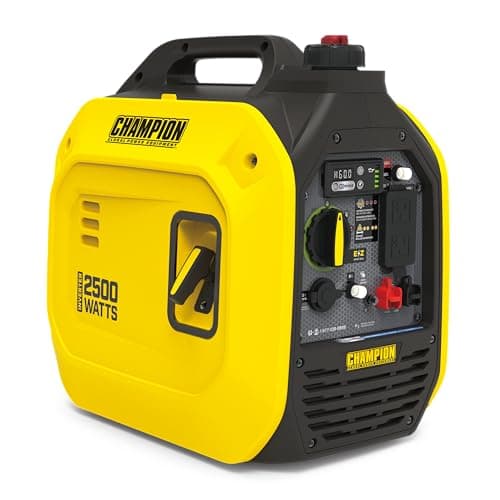
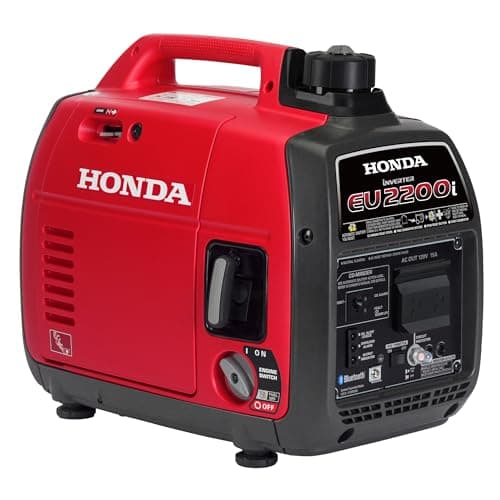
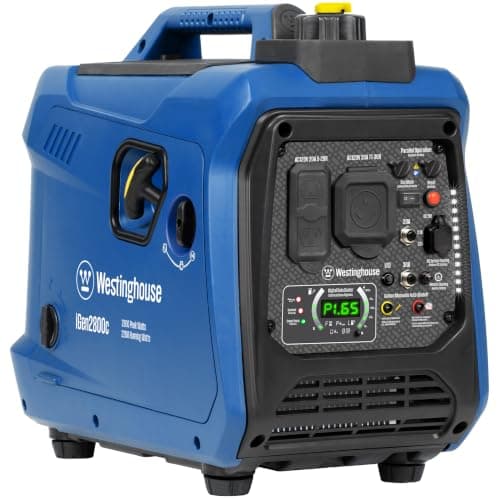
- 2,000W class is enough for a fridge, a freezer and lighting.
- Run in blocks. Four hours of fridge safety and 48 of freezer safety mean continuous running is waste.
- Twenty feet away, exhaust pointing out. Every time, including at 3am.