Skip to content
Watt Warden

Generators

Can You Run a Generator in the Rain?

Not uncovered, no. And the two things people reach for instead — the garage and a tarp — are both worse than the rain. There is a correct answer and it costs less than either mistake.

By Sawyer V.Updated Published How we work this out
Rain falling on covered outdoor equipment.

Watt & Warden earns a commission on qualifying purchases made through links on this page, at no extra cost to you. It never changes a ranking, and our picks include products we tell you to skip. Full disclosure.

The short answer

No, not uncovered. Water reaching the outlets or the alternator causes short circuits and electrocution risk, and every manufacturer's manual prohibits it. Running one in the rain uncovered will also generally void the warranty.

Which creates the actual problem, because rain is precisely the weather that takes the power out. A generator you cannot use in a storm is a generator you cannot use.

Why water is a genuine hazard here

A generator produces household-voltage electricity in an open-frame machine with exposed receptacles. Three specific failures follow from getting it wet:

  • Electrocution. Water bridging live terminals or standing water around a machine you then touch. This is the one that hurts people.
  • Short circuits and damage. Water in the alternator windings or the control panel destroys expensive parts, usually permanently.
  • Fuel system contamination. Water entering the fuel tank or cap causes running problems that outlast the storm.

Ground-fault protection helps and does not solve it. GFCI outlets protect against a fault through the outlets; they do nothing about water inside the machine.

The two wrong answers

The garage. The most common and the most dangerous. It is dry, it is close, it feels sensible, and it kills people. CPSC is explicit: never in a garage, basement, crawlspace or shed, including with the door open — a garage does not exchange air fast enough, CO accumulates, and it drifts into the house through the connecting door. Porches and carports are named too, because they feel outdoors and are not. The full CO guide is here and it is worth reading before storm season rather than during it.

A tarp over the machine. Second most common, and it fails in three ways at once. It traps exhaust, so you have made a small enclosed space with a combustion engine in it. It blocks the cooling airflow the engine needs, so the machine overheats. And a tarp resting on a hot muffler is a fire — one that starts under a plastic sheet next to a tank of gasoline.

What actually works

A purpose-built generator cover or tent. These are designed for exactly this: a rigid or semi-rigid canopy that keeps rain off the machine while leaving all four sides open for airflow and exhaust. They sit above and around the generator with substantial clearance rather than resting on it. Look for one rated for your machine's dimensions and check the stated clearance around the exhaust.

A permanent open-sided shelter. If you use a generator regularly, a small roof on posts — sited at least twenty feet from the house, with no walls — is the best solution there is. It costs a weekend and it means the machine has a designated safe home rather than a decision made in the dark.

A pad and elevation. Whatever the cover, keep the generator off wet ground. A concrete paver, a purpose-made pad or a pressure-treated platform keeps it clear of standing water and out of the mud.

The checklist for wet-weather running

  1. Twenty feet from the house minimum, exhaust pointed away from every door, window and vent. The cover does not change this.
  2. Open sides. Whatever is over the machine must leave all four sides open. If air cannot move freely through it, it is not a cover, it is an enclosure.
  3. Elevated off wet ground. A paver or a pad.
  4. Dry hands, dry footing. Do not touch the machine or its connections while standing in water.
  5. Refuel with the engine off and cool. Fuel spilled on a hot engine is a fire, and rain makes the spill more likely.
  6. Cover the outlets you are not using. Most machines have flip-down receptacle covers. Use them.
  7. Working CO alarms indoors. The backstop for the moment wind blows exhaust the wrong way.

Snow, and the thing about the exhaust

Snow is easier than rain in one respect — it is not conductive until it melts — and harder in another. Drifting snow can bury a generator and block its exhaust, and a blocked exhaust drives CO backwards into the machine's surroundings at concentrations far higher than normal.

In snow: clear a wide area around the machine before starting it, check it hourly during heavy snowfall, and keep the exhaust outlet visibly clear. Cold also thickens oil and makes starting harder, which is a separate argument for electric start.

Plan the location before the storm

The reason this page exists is that people improvise in the dark, in the rain, on the first night — and improvised placement is what the CO statistics are made of.

Pick the spot on a dry afternoon. Measure twenty feet. Check what is downwind of it: your windows, your neighbor's windows, the dryer vent, the fresh-air intake. Buy the cover and the cord that reaches from there. Then work out how it connects, which is the other thing people discover too late.

Quick picks

#ProductBest forPrice
1
No photo

Because the wrong answer to rain is a CO problem

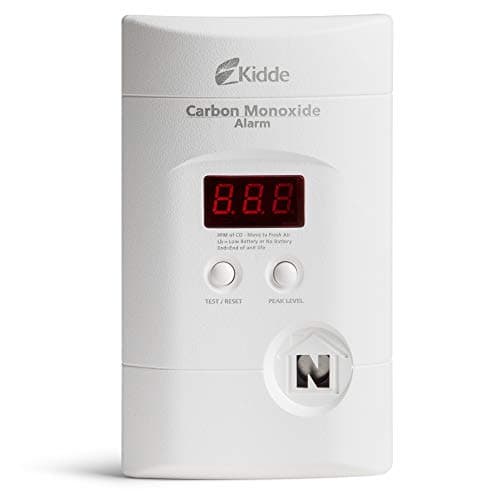
Kidde Nighthawk KN-COPP-3 CO alarm

Plug-in with battery backup — it keeps working when utility power does not.

Every level of the house
2
No photo

Built for the weather it will meet

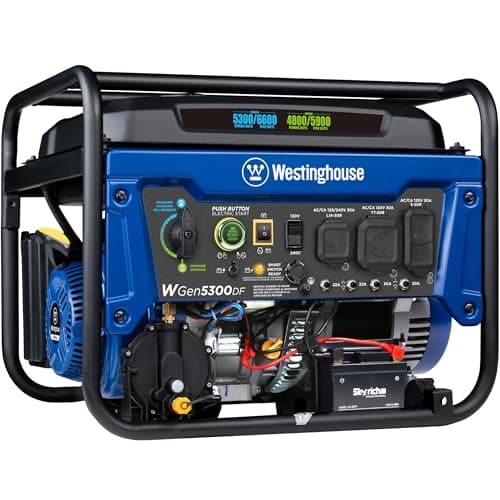
Westinghouse WGen5300DF

GFCI outlets, covered receptacles and automatic low-oil shutdown — the protections that matter outdoors.

Storm-season use with a proper cover

Prices come from the retailer at page-build time and change constantly. Where no live price is available the button reads “Check price” rather than showing a number we cannot stand behind.

The picks in full

01Because the wrong answer to rain is a CO problem

Kidde Nighthawk KN-COPP-3 CO alarm

Plug-in with battery backup — it keeps working when utility power does not.

This is on a page about rain because the mistakes people make to stay dry — the garage, the porch, under the deck — are carbon monoxide mistakes, and CO is what actually kills people during storms.

Battery backup is the specification that matters: an alarm that only works on utility power is useless in exactly the situation a generator creates.

Skip it ifyou already have in-date alarms on every level. Check the manufacture date rather than buying more.

Published specifications for the Kidde Nighthawk KN-COPP-3 CO alarm
SpecificationPublished figure
SensorElectrochemical
Power120 V AC plug-in with 9 V battery backup
DisplayDigital, 30–999 ppm, refreshed every 15 s
Alarm85 dB
MemoryPeak-level memory of the last detection or test
Warranty10-year limited; UL certified

Source: Kidde — Nighthawk KN-COPP-3 product page. These are the manufacturer's published figures, not ours — we have not tested this unit.

02Built for the weather it will meet

Westinghouse WGen5300DF

GFCI outlets, covered receptacles and automatic low-oil shutdown — the protections that matter outdoors.

Outdoor-rated protections are worth checking for on any generator you intend to run in weather: GFCI outlets, covered receptacles that close over unused outlets, and an automatic low-oil shutdown.

None of that makes a generator waterproof. It makes it appropriately protected for use under a proper cover, which is the only condition in which any generator should be running in rain.

Skip it ifyou have no covered, ventilated place to put it. Buy the cover before the generator.

Published specifications for the Westinghouse WGen5300DF
SpecificationPublished figure
Output (gasoline)5,300 running W / 6,600 peak W
Output (propane)4,800 running W / 5,900 peak W
Engine274cc 4-stroke OHV
Tank4.7 gal (18 L)
Run timeup to 14.5 h on a full tank
Transfer-switch outlet120/240 V L14-30R, 30 A
RV outlet120 V TT-30R, 30 A
StartingPush-button electric with remote key fob

Source: Westinghouse — WGen5300DF product specifications. These are the manufacturer's published figures, not ours — we have not tested this unit.

How these were chosen

We did not test these. Nobody at Watt & Warden has plugged one in. What we did instead: read the manufacturer's published specifications, compile them into a table where the figures line up, and compute the numbers manufacturers leave out — runtime against a real appliance load, and what an hour of running actually costs.

Anything that could not be sourced was left out rather than estimated, and every pick names the buyer who should skip it. The full method is here, including where it is weaker than a publisher with a test bench.

Questions people actually ask

Can you run a generator in the rain?

Not uncovered. Water in the outlets or the alternator causes short circuits and electrocution risk, and manufacturers prohibit it. Use a purpose-built generator cover or an open-sided shelter that keeps rain off while leaving all four sides open for airflow and exhaust.

Can I put a tarp over my generator?

No. A tarp traps exhaust, blocks the cooling airflow the engine needs, and can catch fire on a hot muffler -- next to a tank of gasoline. Buy a purpose-built generator tent instead; they cost very little and are designed for exactly this.

Can I run a generator in the garage if it is raining?

Never. CPSC excludes garages explicitly, including with the door open, because a garage does not exchange air fast enough and carbon monoxide drifts into the house through the connecting door. This is the most common fatal error with generators.

Can a generator run in the snow?

Yes, with care. Snow is not conductive until it melts, but drifting snow can bury the machine and block the exhaust, which drives carbon monoxide back into its surroundings. Clear a wide area before starting, check it hourly in heavy snowfall, and keep the exhaust visibly clear.

Sources

Every figure on this page comes from a published source. We have not tested this equipment, so the specifications are the manufacturer's and the statistics are the dataset's — the arithmetic on top of them is ours, and it is shown in full so you can check it. How we work this out.