Skip to content
Watt Warden

Generators

The Best 7500 Watt Generators (2026)

There is a reason so many machines land on this number. A 30A transfer switch is rated at 7,500 watts, so this is the largest generator a standard house connection can actually use.

By Sawyer V.Updated Published How we work this out
A red industrial electrical cable plug.

Watt & Warden earns a commission on qualifying purchases made through links on this page, at no extra cost to you. It never changes a ranking, and our picks include products we tell you to skip. Full disclosure.

Quick picks

#ProductBest forPrice
1
No photo

Best overall

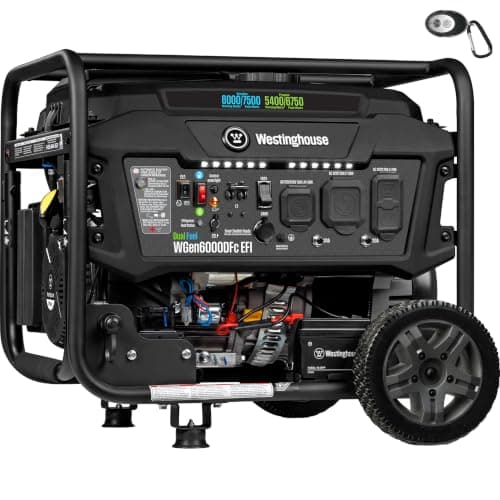
Westinghouse WGen7500DF

7,500 running watts, an L14-30R transfer-switch outlet, and a wireless remote key fob.

A house on a 30A switch, with remote start
2
No photo

Best instrumentation

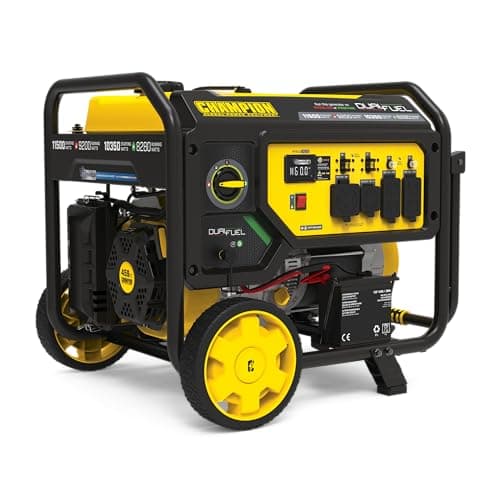
Champion 100165

7,500 running watts of dual fuel with Intelligauge metering and Volt Guard protection.

Seeing what the machine is actually doing
3
No photo

The step up, if the switch allows

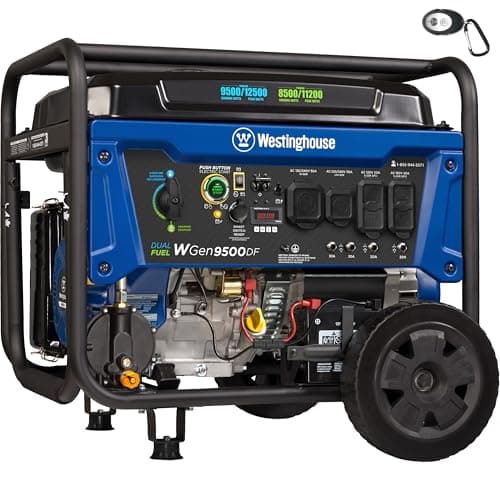
Westinghouse WGen9500DF

9,500 running watts with both an L14-30R and a 14-50R outlet.

A 50A switch and a well pump or central air
4
No photo

The half of the purchase people forget

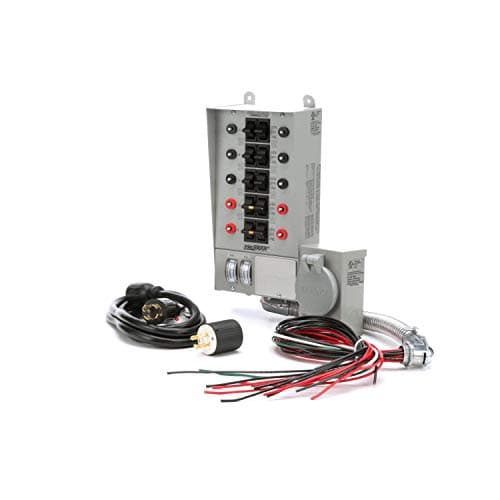
Reliance Controls 31410CRK Pro/Tran

A 10-circuit manual transfer switch rated 30A / 7,500W, with two watt meters.

Reaching the furnace, the well pump and the sump pump

Prices come from the retailer at page-build time and change constantly. Where no live price is available the button reads “Check price” rather than showing a number we cannot stand behind.

Why 7,500 is the number

It looks arbitrary and is not. The standard residential generator connection is an L14-30 — a 30A, 120/240V twist-lock — and a 30A transfer switch is rated at 7,500 watts.

So 7,500 running watts is the largest output a standard house connection will pass. Below it you are leaving switch capacity unused; above it you are paying for watts that stop at the switch.

That single fact explains why so many machines cluster here and why this is the size to default to unless something specific pushes you off it.

What 7,500 watts covers that 5,000 does not

LoadInside 5,000 WInside 7,500 W
Fridge, freezer, lighting, networkYesYes
Furnace blowerYesYes, with room to spare
Well pump, 1 HPMarginalGenerally yes
Well pump while the furnace runsNoYes
Central air conditioningNoPossibly, with a soft starter and nothing else running
Electric range or water heaterNoOne of them, alone

The meaningful gain is not a new appliance, it is simultaneity. At 5,000W you sequence things; at 7,500W the house behaves more or less normally across the circuits you backed up.

Gasoline and propane are different machines

Every dual fuel unit at this size derates on propane, typically by around 10%. That turns a 7,500W machine into a 6,750W machine — still useful, but it changes what fits.

MachineGasoline runningPropane running
Westinghouse WGen7500DF7,500 W6,750 W
Champion 1001657,500 W6,750 W
Westinghouse WGen9500DF9,500 W8,500 W

Which fuel is right depends on the outage. The dual fuel page covers the trade properly: propane stores indefinitely and does not gum a carburetor, gasoline delivers more watts and more run time per tank.

Fuel at this size is a logistics problem

A 7,500W machine under real load burns more than the 0.75 gallons per hour figure this site uses for mid-size units, and the tank on these holds six to seven gallons.

Run continuously that is a fill roughly every eight to eleven hours and a genuine storage problem across a multi-day outage. Run in blocks — four to six hours a day, which keeps a fridge and freezer perfectly safe — and it becomes manageable. The fuel storage page covers how much you may legally keep and how to keep it usable.

Two things to check before buying

1. Your transfer switch amperage. A 30A switch caps you at 7,500W. If you already own one, that decides the machine.

2. The outlet panel. A generator without an L14-30R cannot feed a 240V transfer switch, whatever its wattage. It is the single commonest mismatch in this area and it is visible in one photo of the control panel. The connection guide covers the legal ways to make the link.

The short version

  • 7,500W matches a 30A switch exactly. That is why the size exists.
  • The gain over 5,000W is simultaneity, not a new appliance.
  • Propane costs about 10% of the output. Plan around the derated figure.
  • Budget the switch. Without it the machine reaches only what a cord reaches.
The picks in full

01Best overall

Westinghouse WGen7500DF

7,500 running watts, an L14-30R transfer-switch outlet, and a wireless remote key fob.

This is the size matched to the connection. An L14-30R outlet feeding a 30A transfer switch passes 7,500W, and this machine produces exactly that on gasoline — nothing wasted at either end.

The wireless remote start is worth more than it sounds during the weather that caused the outage. Starting a generator from indoors on the second morning of an ice storm is a genuine quality-of-life difference.

6.6 gallons and up to 11 hours means one fill covers a night, which is the practical unit of generator operation.

The honest catch: on propane it drops to 6,750 running watts, and the remote start relies on a battery that will be flat if nobody maintains it — a maintainer is the cheap fix.

Skip it ifyou have a 50A switch and want to use it. Then a larger machine is the point.

Published specifications for the Westinghouse WGen7500DF
SpecificationPublished figure
Gasoline output9,500 peak / 7,500 running W
Propane output8,550 peak / 6,750 running W
Engine420cc 4-stroke OHV with a cast iron sleeve
Fuel tank6.6 gal, up to 11 h
StartingPush-button electric start plus a wireless remote key fob
Outlets2x GFCI 5-20R 120V duplex, 1x L14-30R 120/240V
Warranty3-year limited

Source: Westinghouse — WGen7500DF product specifications. These are the manufacturer's published figures, not ours — we have not tested this unit.

02Best instrumentation

Champion 100165

7,500 running watts of dual fuel with Intelligauge metering and Volt Guard protection.

Intelligauge displays volts, hertz and run-time hours, and the third of those is the one that changes behavior. Maintenance intervals are specified in hours, and a machine that counts its own hours is a machine that actually gets serviced.

Volt Guard is a built-in surge protector on the output, which matters because a conventional generator's voltage moves when large loads start and stop.

The 439cc engine is the largest here for the output, which generally means it is working less hard for the same watts.

The honest catch: propane run time is 5.5 hours against 8 on gasoline, which is a short night if propane is your primary fuel.

Skip it ifyou want remote start. This is electric start at the panel.

Published specifications for the Champion 100165
SpecificationPublished figure
Gasoline output9,375 starting / 7,500 running W
Propane output8,400 starting / 6,750 running W
Engine439cc Champion, electric start with battery included
Run timeUp to 8 h on gasoline, 5.5 h on propane
MeteringIntelligauge — volts, hertz and run-time hours
ProtectionVolt Guard built-in surge protector, low oil shut-off
Warranty3-year limited with lifetime technical support

Source: Champion Power Equipment — 100165 dual fuel generator listing. These are the manufacturer's published figures, not ours — we have not tested this unit.

03The step up, if the switch allows

Westinghouse WGen9500DF

9,500 running watts with both an L14-30R and a 14-50R outlet.

The arithmetic here is the reason this pick exists. A 30A switch limits this 9,500W machine to 7,500W — you would pay for two thousand watts you physically cannot use.

It is the right buy only if the switch is 50A, or if a substantial part of the machine's job happens through its own outlets on a job site rather than through the house.

The honest catch: more fuel per hour, more weight, more noise. Buying more generator than the connection can pass is the commonest expensive mistake in house backup.

Skip it ifyour transfer switch is 30A. It will cap this machine at 7,500W anyway.

Published specifications for the Westinghouse WGen9500DF
SpecificationPublished figure
Output (gasoline)9,500 running W / 12,500 peak W
FuelGasoline or propane (dual fuel)
Engine457cc 4-stroke OHV, cast iron sleeve
Tank6.6 gal (25 L)
Run timeup to 12 h on a full tank
Transfer-switch outlet120/240 V L14-30R, 30 A
RV outlet120/240 V 14-50R, 50 A
StartingPush-button electric with remote key fob
Warranty3-year limited

Source: Westinghouse — WGen9500DF product specifications. These are the manufacturer's published figures, not ours — we have not tested this unit.

04The half of the purchase people forget

Reliance Controls 31410CRK Pro/Tran

A 10-circuit manual transfer switch rated 30A / 7,500W, with two watt meters.

A 7,500W generator with no transfer switch reaches whatever a cord reaches. The furnace, the well pump, the sump pump and the water heater are all hardwired, and those are usually the reason people buy at this size in the first place.

The two watt meters are the underrated feature. They let you balance the load across both legs of the service, which is how you avoid tripping one side while the other idles.

The honest catch: this is the item that requires an electrician and a permit, and its cost is a real part of the project rather than an accessory line.

Skip it ifeverything you want to power has a plug on it.

Published specifications for the Reliance Controls 31410CRK Pro/Tran
SpecificationPublished figure
Circuits10 — six 15 A and four 20 A single-pole breakers
Rating30 A, up to 7,500 W
MeteringTwo watt meters for balancing the load
SwitchingBreak-before-make double-throw, Line / Off / Gen
BackfeedMechanically prevented — the grid cannot be energized
InstallationLicensed electrician; a permit is usually required

Source: Reliance Controls — Pro/Tran 31410CRK product page. These are the manufacturer's published figures, not ours — we have not tested this unit.

How these were chosen

We did not test these. Nobody at Watt & Warden has plugged one in. What we did instead: read the manufacturer's published specifications, compile them into a table where the figures line up, and compute the numbers manufacturers leave out — runtime against a real appliance load, and what an hour of running actually costs.

Anything that could not be sourced was left out rather than estimated, and every pick names the buyer who should skip it. The full method is here, including where it is weaker than a publisher with a test bench.

Questions people actually ask

What will a 7500 watt generator run?

A refrigerator, freezer, furnace blower, sump pump, well pump, lighting and the network -- and crucially, several of those at the same time. It will usually not run central air conditioning alongside everything else, and an electric range or water heater only on its own.

Is 7500 watts enough for a whole house?

For the circuits people mean by whole-house backup, yes. It is also exactly what a 30A transfer switch passes, which is the standard residential connection. What it does not cover is running central air conditioning and electric heat alongside everything else, which is a standby generator's job.

Why do so many generators come in at 7500 watts?

Because a 30A transfer switch is rated at 7,500 watts, and an L14-30 twist-lock is the standard residential generator connection. Producing more than 7,500 running watts gains you nothing through a 30A switch, so manufacturers cluster at the number the connection can actually pass.

Does propane reduce a generator's output?

Yes, by roughly 10% at this size. A 7,500W machine on gasoline typically becomes 6,750W on propane. Propane's advantages are that it stores indefinitely and never gums a carburetor, which is why dual fuel is popular for a machine that sits unused for most of the year.

Do I need a transfer switch for a 7500 watt generator?

If you want to power anything hardwired -- the furnace, well pump, sump pump or water heater -- yes, because no extension cord reaches a dedicated circuit. It also makes backfeeding mechanically impossible, which is what stops a generator energizing the utility line outside.

Sources

Every figure on this page comes from a published source. We have not tested this equipment, so the specifications are the manufacturer's and the statistics are the dataset's — the arithmetic on top of them is ours, and it is shown in full so you can check it. How we work this out.