The number, and where it comes from
Fuel consumption depends on engine size and on load, and manufacturers publish it inconsistently — usually as a tank size and a run time at some unstated load, occasionally as gallons per hour at 50% load.
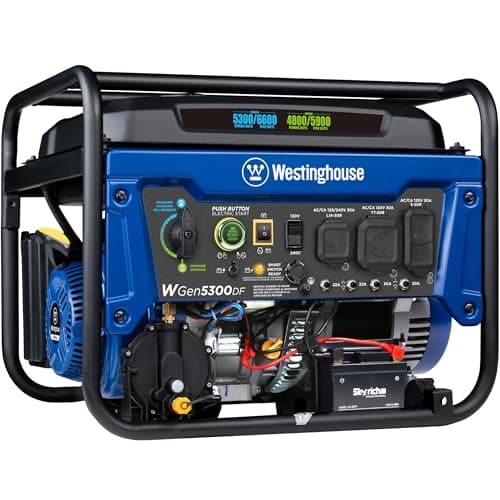
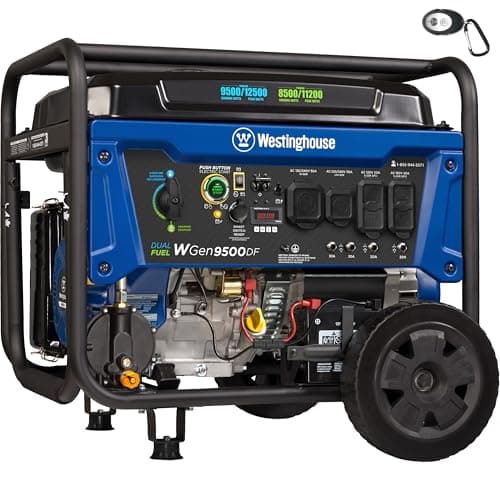
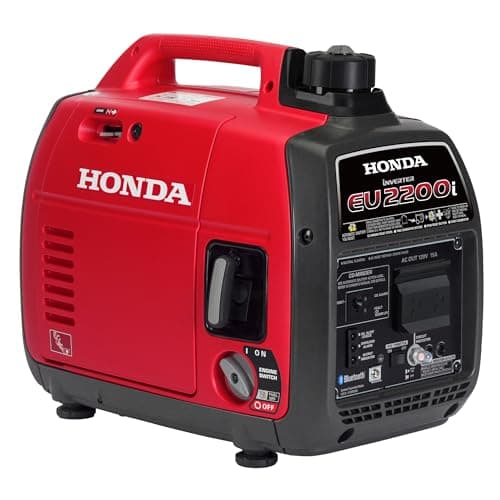
Where a manufacturer gives both a tank size and a run time, consumption is directly computable. Honda publishes 0.95 gallons and up to 8.1 hours for the EU2200i, which is 0.117 gal/hr. Westinghouse publishes 4.7 gallons and up to 14.5 hours for the WGen5300DF, which is 0.32 gal/hr, and 6.6 gallons over up to 12 hours for the WGen9500DF, which is 0.55 gal/hr.
Those are averages across a tank at whatever load the manufacturer tested. Under a heavier load every one of them rises. As a working planning figure for a mid-sized generator at half load, 0.75 gallons an hour is a reasonable and slightly conservative number, and it is what this site uses where a manufacturer's own figure is not available.
The fuel price, stated and dated
Every cost figure below uses $4.071 a gallon for regular gasoline — the U.S. Energy Information Administration's weekly retail average for the week ending 31 August 2026 — and $2.674 a gallon for residential propane, the EIA's weekly average for the week ending 30 March 2026, which is the most recent in a series that publishes through the winter heating season only.
Your local price is almost certainly different. Substitute it and the ratios below hold. A propane note worth knowing: a 20 lb exchange cylinder costs substantially more per gallon than the EIA's bulk residential figure, because you are paying for the cylinder service — which is why refilling beats exchanging.
Cost per hour and per day
What it costs to actually run
The sticker price of a dual-fuel generator is a fraction of what it costs you. The sticker price of a battery is nearly all of it. Here is the arithmetic, with the inputs stated so you can redo it with your own fuel price.
| Unit | Published consumption | Cost per hour | Cost per 24 h |
|---|
| Honda EU2200i (2,200W), light load | 0.117 gal/hr (computed from published figures) | $0.48 | $11.44 |
|---|
| Westinghouse WGen5300DF (5,300W), averaged | 0.32 gal/hr (computed from published figures) | $1.32 | $31.63 |
|---|
| Westinghouse WGen9500DF (9,500W), averaged | 0.55 gal/hr (computed from published figures) | $2.24 | $53.74 |
|---|
| Mid-size at half load (planning figure) | 0.75 gal/hr | $3.05 | $73.28 |
|---|
| Same machine on propane | ~1.0 gal/hr (propane is less energy-dense by volume) | $2.67 | $64.18 |
|---|
Gasoline at $4.071/gal (EIA weekly retail, U.S. average, week ending 31 August 2026). Propane at $2.674/gal (EIA weekly residential, week ending 30 March 2026). The first three rows are computed directly from the manufacturers' published tank sizes and run times. The last two are planning figures for a mid-sized machine at half load, because manufacturers rarely publish consumption at a stated fraction of rated output — your manual does, and it beats ours.
What three days actually needs
The volume is a larger problem than the money, and it is the part people do not plan for.
| Running pattern | Gallons per day | Over 3 days | Five-gallon cans | 3-day cost |
|---|
| Continuous | 18 | 54 | 11 | $219.83 |
|---|
| 12 hours a day | 9 | 27 | 6 | $109.92 |
|---|
| 6 hours a day (blocks) | 4.5 | 13.5 | 3 | $54.96 |
|---|
| 4 hours a day (fridge only) | 3 | 9 | 2 | $36.64 |
|---|
Computed at 0.75 gal/hr and $4.071/gal. Eleven five-gallon cans is more gasoline than fire codes typically permit in a residential garage — check your local limit, which your fire authority publishes.
The marked row is the realistic plan. Six hours a day keeps a fridge and freezer perfectly safe — FoodSafety.gov puts a sealed refrigerator at about four hours and a full freezer at about 48 — and it needs three cans rather than eleven.
Cost per kilowatt-hour, and the comparison that surprises people
A generator at 0.75 gal/hr delivering, say, 2,500W of actual load produces 2.5 kWh an hour for $3.05 — about $1.22 per kilowatt-hour.
The EIA's Electric Power Monthly puts the U.S. average residential electricity price at 18.34 cents per kilowatt-hour for June 2026. So generator power costs roughly six to seven times grid power.
That is not an argument against generators — you are not choosing between a generator and the grid, you are choosing between a generator and nothing. But it does explain why running one continuously for a week is a genuinely expensive decision, and why block running plus a battery is the arrangement that actually makes sense.
What changes consumption
- Load, above all. A generator at 25% load uses much less than the same machine at 75%. This is the biggest single factor and the one you control.
- Inverter versus conventional. An inverter throttles the engine to the load; a conventional machine holds 3,600 rpm regardless. At light load the difference can be more than half — covered in full here.
- Engine size. A 500cc engine burns more than a 274cc one doing identical work. Buying more machine than you need costs you fuel every hour it runs.
- Fuel type. Propane holds less energy per gallon, so volume consumption rises roughly a third for the same output — though the cost per hour can still be lower, as the table shows.
- Altitude and temperature. Both affect combustion efficiency. Manuals often specify a jet change above a stated elevation.
How to cut it in half
Run in blocks. The single biggest lever. Four to six hours a day covers refrigeration, water and charging, and it costs a quarter of continuous running.
Add a battery. Run the generator two hours to fill a power station and cool the freezer hard, then run the house off the battery overnight. Generator endurance, battery silence, a quarter of the fuel — the arrangement is here.
Shed load. Do not run the well pump, the fridge and a space heater together. Sequencing them means a smaller machine at a lighter load, which is cheaper twice over.
Right-size the machine. A generator two sizes too large burns fuel to do the same work. Compute your number first.