Skip to content
Watt Warden

Generators

The Best Tri-Fuel Generators (2026)

One engine, three published output ratings. The gap between them tells you exactly what each fuel costs - and the third fuel is the one that never runs out.

By Sawyer V.Updated Published How we work this out
A large propane tank beside a rural building.

Watt & Warden earns a commission on qualifying purchases made through links on this page, at no extra cost to you. It never changes a ranking, and our picks include products we tell you to skip. Full disclosure.

Quick picks

#ProductBest forPrice
1
No photo

Best tri-fuel machine

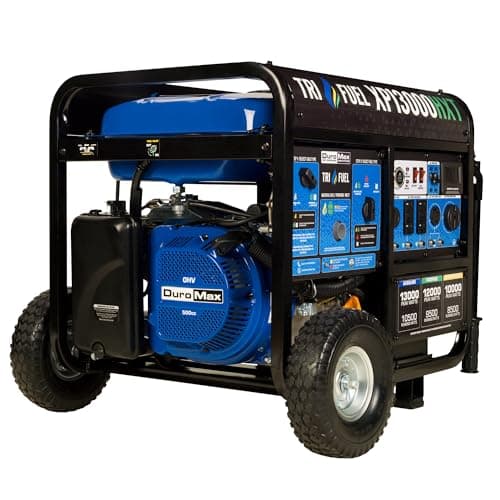
DuroMax XP13000HXT tri-fuel generator

10,500W running on gasoline, 9,500W on propane, 8,500W on natural gas, with a 50A transfer-switch outlet.

A house with a gas main and a propane tank
2
No photo

The dual-fuel alternative

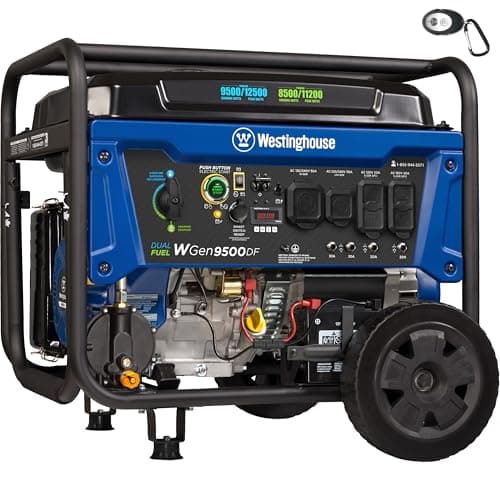
Westinghouse WGen9500DF

9,500 running watts on gasoline, dual fuel, with remote electric start.

No gas main at the property
3
No photo

How it reaches the house

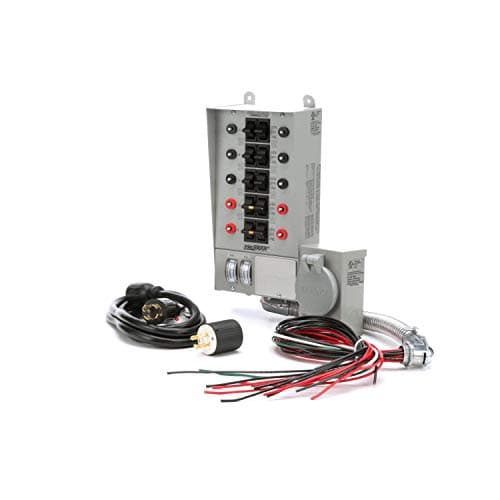
Reliance Controls 31410CRK Pro/Tran

A 10-circuit manual transfer switch rated 30A / 7,500W with mechanical backfeed prevention.

Hardwired circuits
4
No photo

Required regardless of fuel

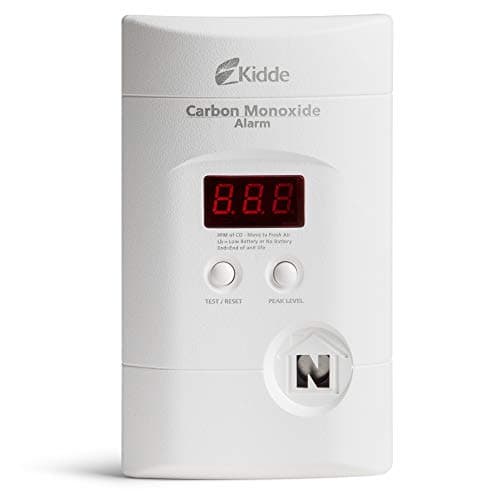
Kidde Nighthawk KN-COPP-3 CO alarm

A plug-in CO alarm with battery backup and a digital ppm display.

Every level of the house

Prices come from the retailer at page-build time and change constantly. Where no live price is available the button reads “Check price” rather than showing a number we cannot stand behind.

The output ladder, with real numbers

Most fuel comparisons in this category are qualitative. DuroMax publishes all three ratings for the XP13000HXT, which lets the argument be made properly:

FuelRunning wattsStarting wattsAgainst gasoline
Gasoline10,50013,000Reference
Propane9,50012,000About 10% less
Natural gas8,50010,000About 19% less

DuroMax's published ratings for the XP13000HXT. Percentages are calculated from those figures. The pattern holds across the category — Generac publishes 24kW on propane and 21kW on natural gas for the same standby unit — because it follows from the energy density of each fuel rather than from any manufacturer's design choice.

The practical instruction that falls out of this: size against the fuel you will actually run. A machine marketed as 13,000 watts is an 8,500-watt machine on the gas main, and if your calculation landed on 9,000W you have just under-bought.

Why natural gas is worth the third connection

The output penalty is the largest of the three fuels, and the advantage is larger still: it does not run out.

A gasoline machine is limited by what is in your cans. A propane machine is limited by what is in the tank. A machine on the gas main runs for as long as the outage lasts, with nobody carrying anything.

In a multi-day outage that is worth far more than 19% of output, because the thing that ends most generator runs is fuel rather than capacity.

The catches are real and worth naming:

  • Connecting to the gas main is plumbing work. A permanent connection needs a licensed installer, a shut-off valve and usually a permit. A quick-connect fitting is the common arrangement.
  • Pipe sizing may need upgrading. A generator is a large gas appliance, and the existing run may not deliver enough at the required pressure.
  • The main can be interrupted by the same earthquakes and major storms that take the power out. It is more reliable than the grid, not infallible.

The fuel comparison works through the same trade at standby scale.

Is tri-fuel worth it over dual fuel?

The answer is unusually clean, and it is a yes-or-no question about your property rather than a judgment call.

Yes, if you have a natural gas main at the house. The third fuel is unlimited runtime, and that is the single most valuable property a backup fuel can have. It is worth the price premium and the installation.

No, if you do not. Without a main, the natural gas capability is a fitting you will never connect, and you have bought a dual-fuel machine at a higher price. Buy dual fuel instead and put the difference toward fuel storage or a battery.

How the three fuels compare on everything else

GasolinePropaneNatural gas
Runtime limitWhat is in the cansWhat is in the tankNone
Goes staleYes — monthsNoNot applicable
Availability in an outagePoor — station pumps are electricGood if already storedExcellent, unless the main is cut
Cold weatherFineVaporizes more slowly in severe coldUnaffected
Storage on siteCans, rotated, legally limitedCylinders or a tankNothing to store
Setup costNoneTank or cylindersPlumbing and possibly a permit

Fuel prices are deliberately absent — they vary too much by region and season for a comparison to be useful. The dual-fuel page works costs at dated EIA prices for the two fuels where a national figure exists.

How to actually run one

The strategy that gets the most from a tri-fuel machine is not to pick a fuel — it is to use each one for what it is good at.

  1. Natural gas as the default. Unlimited runtime, nothing to carry, nothing to store. Accept the output penalty and size for it.
  2. Propane as the reserve. For the case where the main is cut, and for the higher output if you ever need it. It never goes stale, so a cylinder bought today still works in five years.
  3. Gasoline as the emergency option only, and only if you have a reason to keep it. Otherwise skip it — running the gasoline system dry and never using it removes the entire stale-fuel maintenance problem.
  4. Exercise it monthly on gas or propane, which keeps the engine healthy with no fuel-storage consequences at all.

That arrangement gives you a machine that always starts, never needs fuel rotation, and has a fallback for the one failure its primary fuel can have.

The safety rules do not change

Every fuel here produces carbon monoxide when burned. Outdoors, at least twenty feet from windows, doors and attached garages, exhaust pointed away, and a working alarm on every level of the house.

The one addition specific to gaseous fuel: a leak at the connection is a different hazard from a gasoline spill, and it is why the gas connection is licensed work rather than a job for a fitting from a hardware store. The full safety guidance covers the rest.
The picks in full

01Best tri-fuel machine

DuroMax XP13000HXT tri-fuel generator

10,500W running on gasoline, 9,500W on propane, 8,500W on natural gas, with a 50A transfer-switch outlet.

The reason to feature this specific machine is that DuroMax publishes all three ratings, which almost nobody does. That ladder — 10,500, 9,500, 8,500 — is the clearest illustration in the category of what each fuel actually costs you in output.

8.3 gallons over 8.82 hours at 50% load on gasoline, and 7.63 hours on propane at the same load. Those are published figures rather than estimates, which is rarer than it should be.

The transfer-switch-ready 50A outlet is what makes it a house machine, and the built-in CO Alert shutdown is a genuine safety feature rather than a marketing one.

Skip it ifyou have no gas main. Then a dual-fuel machine does the same job for less.

Published specifications for the DuroMax XP13000HXT tri-fuel generator
SpecificationPublished figure
Gasoline13,000 peak W / 10,500 running W
Propane12,000 peak W / 9,500 running W
Natural gas10,000 starting W / 8,500 running W
Engine500cc OHV, 100% copper windings
Tank8.3 gal
Run time8.82 h on gasoline at 50% load, 7.63 h on propane
OutletsTransfer-switch-ready 50 A outlet
StartingPush-button electric with remote start
SafetyBuilt-in CO Alert shutdown

Source: DuroMax — XP13000HXT tri-fuel generator listing. These are the manufacturer's published figures, not ours — we have not tested this unit.

02The dual-fuel alternative

Westinghouse WGen9500DF

9,500 running watts on gasoline, dual fuel, with remote electric start.

Named to be honest about when tri-fuel is not worth paying for. If there is no gas main, the natural gas capability is inert and you are buying a dual-fuel machine at a tri-fuel price.

Most households are in exactly that position, which is why dual fuel is the more common recommendation.

Skip it ifyou have natural gas at the house. The third fuel is the whole point of tri-fuel.

Published specifications for the Westinghouse WGen9500DF
SpecificationPublished figure
Output (gasoline)9,500 running W / 12,500 peak W
FuelGasoline or propane (dual fuel)
Engine457cc 4-stroke OHV, cast iron sleeve
Tank6.6 gal (25 L)
Run timeup to 12 h on a full tank
Transfer-switch outlet120/240 V L14-30R, 30 A
RV outlet120/240 V 14-50R, 50 A
StartingPush-button electric with remote key fob
Warranty3-year limited

Source: Westinghouse — WGen9500DF product specifications. These are the manufacturer's published figures, not ours — we have not tested this unit.

03How it reaches the house

Reliance Controls 31410CRK Pro/Tran

A 10-circuit manual transfer switch rated 30A / 7,500W with mechanical backfeed prevention.

A tri-fuel machine on the gas main is only useful if it can reach the furnace and the well pump, and both are hardwired. The switch is not optional.

Note the rating: a 30A switch caps a 10,500W machine at 7,500W. If you buy at the top of the portable range, size the switch to the machine rather than the other way round.

Skip it ifyour machine has a 50A outlet and you want its full output. Then size the switch to match.

Published specifications for the Reliance Controls 31410CRK Pro/Tran
SpecificationPublished figure
Circuits10 — six 15 A and four 20 A single-pole breakers
Rating30 A, up to 7,500 W
MeteringTwo watt meters for balancing the load
SwitchingBreak-before-make double-throw, Line / Off / Gen
BackfeedMechanically prevented — the grid cannot be energized
InstallationLicensed electrician; a permit is usually required

Source: Reliance Controls — Pro/Tran 31410CRK product page. These are the manufacturer's published figures, not ours — we have not tested this unit.

04Required regardless of fuel

Kidde Nighthawk KN-COPP-3 CO alarm

A plug-in CO alarm with battery backup and a digital ppm display.

Every fuel produces carbon monoxide. Natural gas and propane burn cleaner than gasoline in some respects and that changes nothing about the requirement — an engine outdoors, twenty feet away, exhaust pointed away, and a working alarm on every level.

Skip it ifyours are current and tested.

Published specifications for the Kidde Nighthawk KN-COPP-3 CO alarm
SpecificationPublished figure
SensorElectrochemical
Power120 V AC plug-in with 9 V battery backup
DisplayDigital, 30–999 ppm, refreshed every 15 s
Alarm85 dB
MemoryPeak-level memory of the last detection or test
Warranty10-year limited; UL certified

Source: Kidde — Nighthawk KN-COPP-3 product page. These are the manufacturer's published figures, not ours — we have not tested this unit.

How these were chosen

We did not test these. Nobody at Watt & Warden has plugged one in. What we did instead: read the manufacturer's published specifications, compile them into a table where the figures line up, and compute the numbers manufacturers leave out — runtime against a real appliance load, and what an hour of running actually costs.

Anything that could not be sourced was left out rather than estimated, and every pick names the buyer who should skip it. The full method is here, including where it is weaker than a publisher with a test bench.

Questions people actually ask

How much power do you lose on natural gas?

About 19% against gasoline on the machine we can cite figures for. DuroMax publishes 10,500 running watts on gasoline, 9,500 on propane and 8,500 on natural gas for the XP13000HXT -- and the pattern holds across the category because it follows from each fuel's energy density.

Is a tri-fuel generator worth it?

Only if you have a natural gas main at the house. Then the third fuel is unlimited runtime, which is the most valuable property a backup fuel can have, and it is worth the premium and the plumbing. Without a main you have bought a dual-fuel machine at a tri-fuel price.

Can I connect a generator to my house gas line?

Yes, and it is licensed plumbing work. A permanent connection needs an installer, a shut-off valve and usually a permit, with a quick-connect fitting as the common arrangement. Pipe sizing may also need upgrading back toward the meter, because a generator is a large gas appliance.

Which fuel should I run a tri-fuel generator on?

Natural gas as the default for unlimited runtime, propane as the reserve for when the main is cut and for the higher output, and gasoline only if you have a reason to keep it. Skipping gasoline entirely removes the stale-fuel maintenance problem completely.

Do I still need a carbon monoxide alarm with a gas generator?

Yes. Every fuel here produces carbon monoxide when burned, and natural gas or propane burning cleaner in some respects changes nothing about the requirement. Outdoors, twenty feet from windows, doors and attached garages, exhaust pointed away, and a working alarm on every level.

Sources

Every figure on this page comes from a published source. We have not tested this equipment, so the specifications are the manufacturer's and the statistics are the dataset's — the arithmetic on top of them is ours, and it is shown in full so you can check it. How we work this out.