Skip to content
Watt Warden

Generators

What Oil to Use in a Generator

Small engines are not fussy about brands and are extremely fussy about viscosity and level. Get those two right and a generator will outlive the house it backs up.

By Sawyer V.Updated Published How we work this out
A mechanic pouring engine oil into an engine.

Watt & Warden earns a commission on qualifying purchases made through links on this page, at no extra cost to you. It never changes a ranking, and our picks include products we tell you to skip. Full disclosure.

The answer, in one table

Briggs & Stratton publishes the clearest temperature guidance in the small-engine business, and because most portable generator engines are air-cooled four-strokes of the same general design, it is the right starting point. Your own manual wins where it disagrees.

OilTemperature rangeNotes from the manufacturer
SAE 30Above 40F (4C)The default for all engines above that temperature
SAE 10W-30Varying temperaturesBetter cold starting; may increase oil consumption above 80F (27C)
Synthetic 5W-30All temperaturesBest protection and starting, with less consumption; approved across the range
SAE 5W-30Very coldThe conventional cold-weather grade

Viscosity and temperature guidance from Briggs & Stratton's published oil recommendations, linked below. Below 40F, straight SAE 30 makes an engine hard to start — which is precisely when a storm generator gets used.

If you want one answer and no thinking: synthetic 5W-30. Briggs & Stratton now approves synthetic 5W-30 across all temperature ranges, it starts better when it is cold, and it consumes less. It costs more per quart than conventional and a generator holds well under a quart, so the difference across the life of the machine is negligible.

What about the brand on the bottle?

Far less important than the grade. An air-cooled small engine wants the right viscosity, a detergent oil rated for service, and a correct level. Beyond that, brand loyalty is mostly marketing.

Two things genuinely matter:

  • Do not use oil with friction modifiers intended for motorcycles with wet clutches or anything sold for a purpose other than four-stroke engines. It is not the same product.
  • Do not use two-stroke oil in a four-stroke generator, and do not mix oil into the fuel. Almost every portable generator sold for home backup is a four-stroke.

How much, and how to check it

Most portable generator engines hold somewhere between half a quart and 1.2 quarts, and the manual states yours exactly. The number matters less than the method, because these engines are filled to a mark, not to a capacity.

  • Check it cold and level. On a slope you will misread it, and a generator on a slope is a bad idea anyway.
  • Do not overfill. Too much oil is as damaging as too little in an air-cooled engine — it gets whipped into foam and stops carrying heat.
  • Expect the low-oil shutdown to save you once. Nearly every modern generator has one, and it is the reason old machines survive neglect.
  • Check before every start in an outage. Not every season — every start. It takes twenty seconds and it is the single most effective maintenance habit there is.

When to change it

Oil changes are counted in running hours, and a generator used for storms accumulates them in bursts: a three-day outage is easily 40 to 60 hours, which is a service interval in one week.

WhenWhy
After the first few hours of a new machineBreak-in debris. Manufacturers specify an early first change for exactly this reason — check your manual for the hour figure.
At the interval in your manualTypically stated in running hours. Without a meter, write the hours in a notebook taped to the machine.
After a long outageSeveral days of continuous running is a full interval by itself.
Annually, whichever comes firstOil ages in the sump. A machine that ran four hours all year still deserves fresh oil before storm season.

Intervals vary by engine; the schedule in your manual is the one that counts. Our maintenance schedule page covers plugs, filters and the rest of the annual routine.

The cold-weather problem, specifically

This is where the wrong oil actually bites. A generator bought for winter storms sits in an unheated garage, and the first cold snap is when you need it.

Straight SAE 30 at 20F is thick. The starter motor — or your arm — has to turn the engine through that, and the manufacturer's own guidance is that SAE 30 below 40F causes hard starting. Every winter there are people convinced their generator has failed when what has actually happened is that they left summer oil in it.

If your outages are winter outages, run synthetic 5W-30 year round and stop thinking about it. The cold-weather roundup covers the other half of the problem, which is batteries and fuel.

The short version

  • SAE 30 above 40F is the default for air-cooled generator engines.
  • Synthetic 5W-30 is approved across all temperatures and is the simplest single answer.
  • Never leave SAE 30 in a machine you may start in the cold. Hard starting is the published consequence.
  • Check the level before every start, fill to the mark, and change it on hours rather than on feel.

Quick picks

#ProductBest forPrice
1
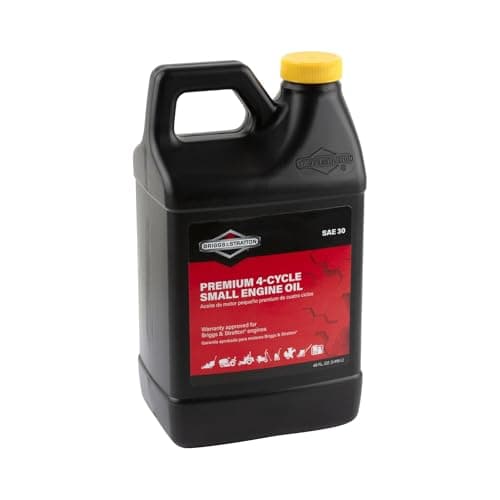
Briggs & Stratton SAE 30 engine oil, 48 oz

The default answer

Briggs & Stratton SAE 30 engine oil, 48 oz

Straight SAE 30 small-engine oil — the grade most air-cooled generator engines are specified for.

Anything running above 40F
2
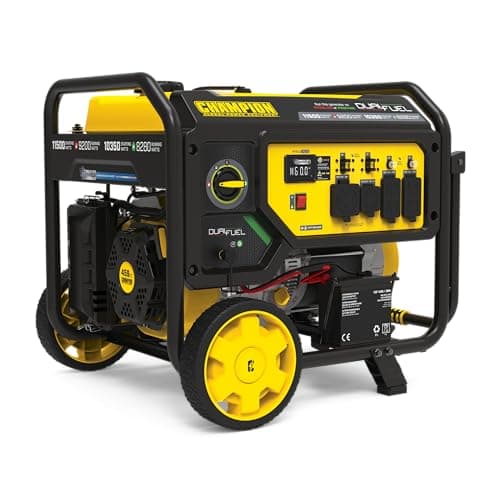
Champion 11,500W dual fuel generator

The machine that tells you when

Champion 11,500W dual fuel generator

11,500 starting watts of dual fuel with electric start.

Anyone who forgets service intervals
$1,159.00 · Check price on Amazon

#ad how this is funded · price as of October 20, 2026

3
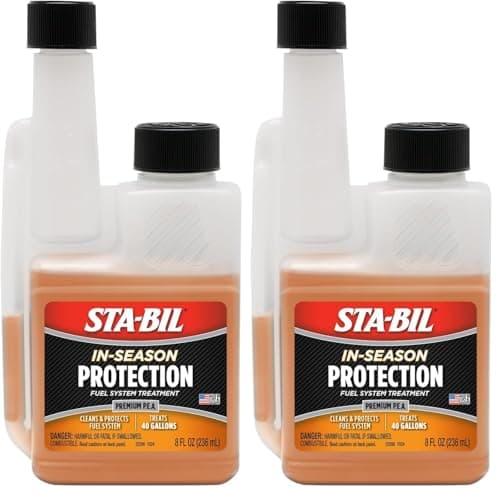
STA-BIL 360 Protection fuel stabilizer

The other fluid that kills generators

STA-BIL 360 Protection fuel stabilizer

Fuel stabilizer, which prevents the varnish that blocks the carburetor jets.

A machine that runs twice a year
4
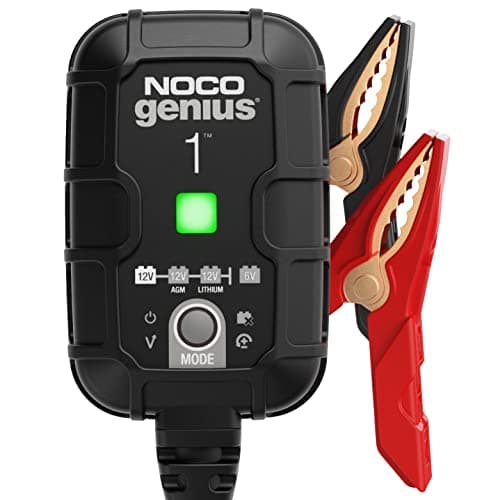
NOCO GENIUS1 battery charger and maintainer

For electric-start machines

NOCO GENIUS1 battery charger and maintainer

A 1A maintainer that keeps the starting battery alive between outages.

The battery that fails before the engine does
$29.95 · Check price on Amazon

#ad how this is funded · price as of October 20, 2026 · $39.95 25% off

Prices come from the retailer at page-build time and change constantly. Where no live price is available the button reads “Check price” rather than showing a number we cannot stand behind.

The picks in full

01 — The default answer

Briggs & Stratton SAE 30 engine oil, 48 oz

Straight SAE 30 small-engine oil — the grade most air-cooled generator engines are specified for.

Briggs & Stratton specifies SAE 30 above 40F for all its engines, and that is the grade the majority of generator manuals echo because the engines are air-cooled and run hot.

Small-engine oil is not car oil in a smaller bottle in any meaningful sense of price — buying the right grade costs so little that using whatever is in the garage is a strange economy.

The honest catch: straight 30-weight is a poor cold starter. If your outages are winter outages, buy the synthetic instead and read the next section.

Skip it ifyou start the machine in freezing weather. Below 40F this makes starting hard.

Published specifications for the Briggs & Stratton SAE 30 engine oil, 48 oz
SpecificationPublished figure
GradeSAE 30 detergent, 4-cycle
Volume48 oz
SpecificationAPI SJ/CD or higher
TemperatureAbove 40°F; use a multigrade below that
CoversAbout one change on most portable generators

Source: Briggs & Stratton — engine oil product page. These are the manufacturer's published figures, not ours — we have not tested this unit.

02 — The machine that tells you when

Champion 11,500W dual fuel generator

11,500 starting watts of dual fuel with electric start.

Oil change intervals are counted in running hours, and almost nobody tracks running hours on a machine without a meter.

Electric start displays them on the panel, which turns "it has been a while" into a number you can act on.

The honest catch: a cheap inline hour meter does the same job for a fraction of the price on a machine you already own.

Skip it ifyou already keep a logbook in the garage. That works too.

Champion 11,500W dual fuel generator
$1,159.00 · Check price on Amazon

#ad how this is funded · price as of October 20, 2026

Published specifications for the Champion 11,500W dual fuel generator
SpecificationPublished figure
Output11,500 starting W
FuelGasoline or propane (dual fuel)
StartingElectric start
UseWhole-panel backup through a transfer switch

Source: Champion — 11,500-watt dual fuel listing. These are the manufacturer's published figures, not ours — we have not tested this unit.

03 — The other fluid that kills generators

STA-BIL 360 Protection fuel stabilizer

Fuel stabilizer, which prevents the varnish that blocks the carburetor jets.

More generators are killed by stale gasoline than by worn oil. Fuel left in a carburetor for a season turns to varnish and blocks the pilot jet, and the machine then will not start in the outage it was bought for.

Stabilizer and a monthly run are the two habits that prevent almost all of it — the fuel storage guide covers the rest.

The honest catch: stabilizer slows degradation, it does not stop it. Rotate the fuel anyway.

Skip it ifyou run the machine dry and store it empty, or you run it on propane.

Published specifications for the STA-BIL 360 Protection fuel stabilizer
SpecificationPublished figure
Treats40 gallons (8 fl oz bottle)
Storage lifeKeeps ethanol-blended fuel fresh up to 12 months
Dose1 oz treats up to 5 gallons of fuel
Also doesFuel-system cleaning, corrosion and water-absorption protection
UseAdd before filling, then run the engine 5 minutes

Source: STA-BIL — 360 Protection product page. These are the manufacturer's published figures, not ours — we have not tested this unit.

04 — For electric-start machines

NOCO GENIUS1 battery charger and maintainer

A 1A maintainer that keeps the starting battery alive between outages.

An electric-start generator with a flat battery is a recoil-start generator with a heavy handle, and a battery sitting unused for a year is usually flat.

A maintainer on a shelf beside the machine solves it permanently for very little money.

The honest catch: it needs an outlet near where the generator is stored, which not every garage has where you want it.

Skip it ifyour generator is recoil start only.

NOCO GENIUS1 battery charger and maintainer
$29.95 · Check price on Amazon

#ad how this is funded · price as of October 20, 2026 · $39.95 25% off

Published specifications for the NOCO GENIUS1 battery charger and maintainer
SpecificationPublished figure
Output1 A DC at 6 V or 12 V
Capacity rangeUp to 30 Ah, maintains larger batteries
ChemistriesFlooded, gel, AGM, SLA, maintenance-free and LiFePO4
RepairDetects sulfation and acid stratification, desulfation mode
RecoveryCharges from 1 V, or from 0 V in Force Mode
CompensationThermal sensor adjusts charging for ambient temperature
Operating range-4°F to 104°F
Size3.5 x 2.3 x 1.3 in

Source: NOCO — GENIUS1 product page. These are the manufacturer's published figures, not ours — we have not tested this unit.

How these were chosen

We did not test these. Nobody at Watt & Warden has plugged one in. What we did instead: read the manufacturer's published specifications, compile them into a table where the figures line up, and compute the numbers manufacturers leave out — runtime against a real appliance load, and what an hour of running actually costs.

Anything that could not be sourced was left out rather than estimated, and every pick names the buyer who should skip it. The full method is here, including where it is weaker than a publisher with a test bench.

Questions people actually ask

What oil does a generator take?

For most air-cooled portable generators, SAE 30 small-engine oil above 40F, or synthetic 5W-30 which Briggs & Stratton approves across all temperature ranges. SAE 10W-30 suits varying temperatures but can increase oil consumption above 80F. Your engine manual overrides any general guidance.

Can I use car oil in a generator?

A conventional four-stroke detergent oil of the correct viscosity will run in a generator engine, and plenty of people do it. Avoid oils formulated for motorcycles with wet clutches, and never use two-stroke oil or mix oil into the fuel. Given how little oil a generator holds, buying the specified small-engine grade costs almost nothing.

How often should I change generator oil?

On running hours, not calendar months -- a three-day outage can be 40 to 60 hours, which is often a full interval. Change it early on a new machine to clear break-in debris, at the interval your manual states, after any long outage, and at least once a year before storm season.

Is synthetic oil worth it in a generator?

Usually yes. Briggs & Stratton states synthetic 5W-30 may be used in all temperature ranges and gives the best protection and starting with less consumption. Since a portable generator holds around a quart, the extra cost over the machine's life is trivial next to one hard winter start it prevents.

What happens if I overfill the oil?

In an air-cooled engine, too much oil is genuinely harmful. The crankshaft whips it into foam, foam does not carry heat or lubricate properly, and the engine can smoke, run poorly or be damaged. Fill to the mark on the dipstick, check the machine level and cold, and drain the excess if you overshoot.

Sources

Every figure on this page comes from a published source. We have not tested this equipment, so the specifications are the manufacturer's and the statistics are the dataset's — the arithmetic on top of them is ours, and it is shown in full so you can check it. How we work this out.