Skip to content
Watt Warden

Generators

The Best Generator Brands (2026)

Nobody buys a brand. They buy a machine that has to start in five years, which is a question about parts and dealers rather than about the badge on the tank.

By Sawyer V.Updated Published How we work this out
The inside of a workshop filled with tools and equipment.

Watt & Warden earns a commission on qualifying purchases made through links on this page, at no extra cost to you. It never changes a ranking, and our picks include products we tell you to skip. Full disclosure.

Quick picks

#ProductBest forPrice
1
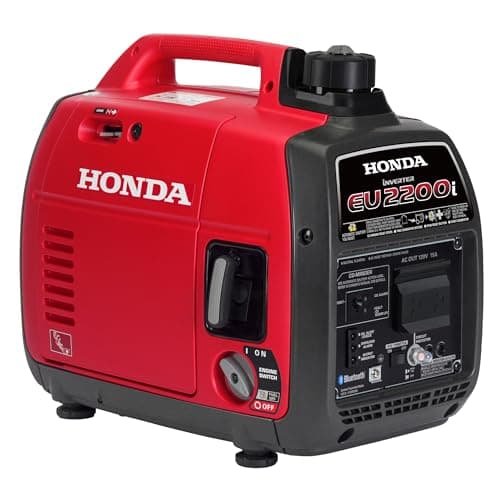
Honda EU2200i

Honda — the reliability benchmark

Honda EU2200i

1,800 running watts at 48 to 57 dBA, with the deepest service network in the category.

A machine you expect to own for fifteen years
$1,199.00 · Check price on Amazon

#ad how this is funded · price as of October 21, 2026

2
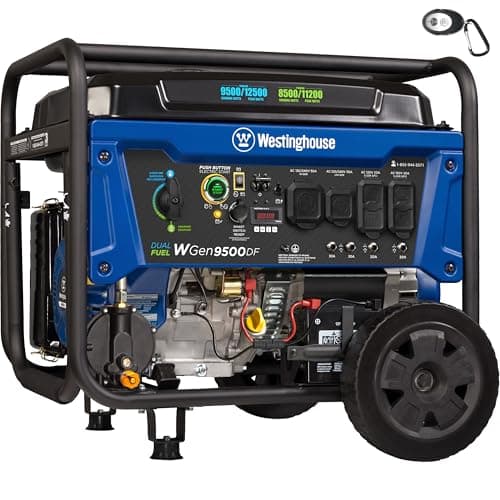
Westinghouse WGen9500DF

Westinghouse — best specification per dollar

Westinghouse WGen9500DF

9,500 running watts, dual fuel, remote start, both 240V outlets, 3-year warranty.

House backup where features matter more than pedigree
$999.00 · Check price on Amazon

#ad how this is funded · price as of October 21, 2026

3
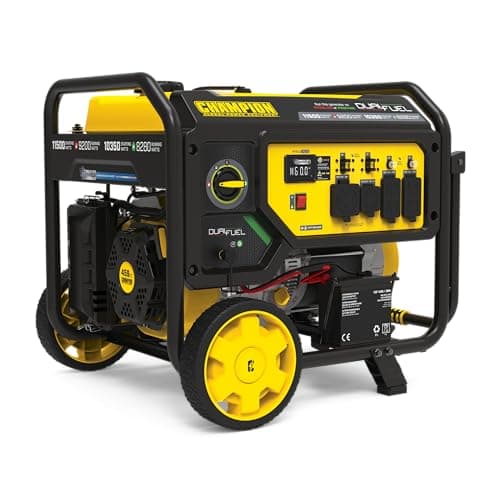
Champion 11,500W dual fuel generator

Champion — best support and documentation

Champion 11,500W dual fuel generator

11,500 starting watts of dual fuel with electric start.

A first generator, where help matters
$1,159.00 · Check price on Amazon

#ad how this is funded · price as of October 21, 2026

4
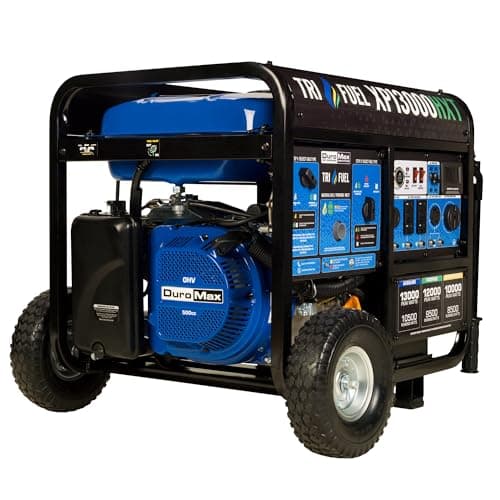
DuroMax XP13000HXT tri-fuel generator

DuroMax — most output per dollar

DuroMax XP13000HXT tri-fuel generator

Tri-fuel with published ratings on gasoline, propane and natural gas.

Big loads, rural properties, fuel flexibility
$1,499.00 · Check price on Amazon

#ad how this is funded · price as of October 21, 2026 · $2,499.00 40% off

Prices come from the retailer at page-build time and change constantly. Where no live price is available the button reads “Check price” rather than showing a number we cannot stand behind.

What brand actually predicts

Less than the marketing suggests, and more than the cynics claim. Here is the honest division.

What brand does not predict well: whether the machine works out of the box, whether it makes its rated watts, and whether it runs for its first few hundred hours. Modern manufacturing has narrowed those gaps substantially across the whole market.

What brand does predict: whether you can get a carburetor in year six, whether a local shop will work on it, what it is worth when you sell it, and how honest the published specifications are.

That last one is worth dwelling on. The single most useful brand signal in this category is whether the maker publishes a propane rating, a distortion figure and a noise figure — or publishes only the biggest number on the box.

The engine is often not the brand

Worth knowing before paying for a badge. A number of generator brands do not build their own engines, and several use the same engine families across nominally competing products.

That is not a scandal — it is how most equipment categories work — but it does mean two machines from different brands can share more than their prices suggest. What differs is the alternator, the control electronics, the frame, the fuel system and the support behind it.

The practical consequence: compare published specifications and warranty terms rather than assuming a brand premium buys a fundamentally different machine.

Who is good at what

BrandStrongest atWeakest at
HondaLongevity, noise, parts availability, resalePrice, and limited output range
WestinghouseFeatures per dollar, dual fuel, remote startLocal dealer service
ChampionDocumentation, support, instrumentation, valueNoise at a given output
DuroMaxOutput per dollar, fuel flexibilityWeight and noise
GeneracStandby installations and dealer networksPortable range is not its center of gravity
EcoFlow, Jackery, Anker, BluettiBatteries, not engines — a different categoryAnything requiring sustained kilowatts

Assessments are based on published specifications, warranty terms and stated service arrangements. This site does not bench-test generators and does not claim to.

Standby is a different market

The brands that dominate portable generators are mostly not the brands that dominate home standby, and the buying process is different too — a standby unit is a quoted installation with a dealer relationship attached, not a box you carry out of a store.

There, the brand question is really a dealer question: who will install it, who will service it annually, and who will come out in the week after a regional storm when everybody is calling. The Generac versus Kohler page covers that comparison, and the whole-house page covers what to ask before signing.

Four questions that beat brand loyalty

  • Does it publish a propane rating? A dual fuel machine that advertises only the gasoline number is hiding a 10% derate you will discover later.
  • Does it publish a noise figure, and at what load? "Quiet" without a dBA figure and a load condition is not a specification.
  • Are parts orderable, and is there a local shop? The machine will need a carburetor eventually. Find out now whether that is a phone call or a project.
  • What does the warranty cover, and for how long? Three years is common in this segment; the interesting detail is what is excluded.

What actually decides reliability

Uncomfortable but true: how you treat it matters more than who made it.

The overwhelming majority of generators that fail to start have stale fuel in the carburetor, a flat starting battery, or old oil — none of which is a manufacturing defect. A cheap machine that is exercised monthly and stored with stabilized fuel will outstart an expensive one that sat untouched for two years.

The maintenance schedule is three items and takes an hour twice a year, and it is a better investment than the brand premium.

The short version

  • Brand predicts parts, dealers and resale — not whether it works this year.
  • Honda for longevity, Westinghouse for features, Champion for support, DuroMax for output.
  • Published honesty is the best signal. Propane ratings, dBA figures, distortion numbers.
  • Maintenance beats badge. Stale fuel fails more machines than manufacturing ever has.

The picks in full

01 — Honda — the reliability benchmark

Honda EU2200i

1,800 running watts at 48 to 57 dBA, with the deepest service network in the category.

Honda's reputation is built on the engine and on parts availability, and the second is the part that matters in year eight. Carburetors, recoil assemblies and gaskets for these machines are stocked by small-engine shops everywhere.

The noise floor is genuinely class-leading rather than marketing, and resale value is the highest in the category by a clear margin — which narrows the real cost gap considerably.

The honest catch: you pay a large premium for capability the cheaper machines match on paper. For a unit that runs twice a decade, that premium buys very little.

Skip it ifyou need house-sized wattage. Honda's consumer range tops out well below it.

Honda EU2200i
$1,199.00 · Check price on Amazon

#ad how this is funded · price as of October 21, 2026

Published specifications for the Honda EU2200i
SpecificationPublished figure
Output2,200 W max / 1,800 W rated
TypeInverter (pure sine wave)
Noise48–57 dB(A)
Weight47.4 lb
Tank0.95 gal
Run timeup to 8.1 h on a full tank
FeaturesEco Throttle, CO-Minder, Bluetooth app monitoring

Source: Honda Power Equipment — EU2200i specifications. These are the manufacturer's published figures, not ours — we have not tested this unit.

02 — Westinghouse — best specification per dollar

Westinghouse WGen9500DF

9,500 running watts, dual fuel, remote start, both 240V outlets, 3-year warranty.

Westinghouse consistently packs more into a price point than anyone else in home backup: dual fuel, remote start and both 240V connectors appear at wattages where competitors charge extra for each.

The three-year warranty with lifetime technical support is genuinely good for the segment.

The honest catch: service is largely through the manufacturer rather than local dealers, which means shipping a machine or waiting for parts rather than dropping it off.

Skip it ifyou want a dealer network you can walk into.

Westinghouse WGen9500DF
$999.00 · Check price on Amazon

#ad how this is funded · price as of October 21, 2026

Published specifications for the Westinghouse WGen9500DF
SpecificationPublished figure
Output (gasoline)9,500 running W / 12,500 peak W
FuelGasoline or propane (dual fuel)
Engine457cc 4-stroke OHV, cast iron sleeve
Tank6.6 gal (25 L)
Run timeup to 12 h on a full tank
Transfer-switch outlet120/240 V L14-30R, 30 A
RV outlet120/240 V 14-50R, 50 A
StartingPush-button electric with remote key fob
Warranty3-year limited

Source: Westinghouse — WGen9500DF product specifications. These are the manufacturer's published figures, not ours — we have not tested this unit.

03 — Champion — best support and documentation

Champion 11,500W dual fuel generator

11,500 starting watts of dual fuel with electric start.

Champion's differentiator is unglamorous and genuinely useful: clear manuals, a published wattage worksheet, accessible technical support, and parts that are easy to order.

Instrumentation is better than the segment average too — the hour counter on this machine is what makes maintenance happen rather than being intended.

The honest catch: the machines are generally louder than the equivalent Honda and less feature-dense than the equivalent Westinghouse. It sits in the middle deliberately.

Skip it ifyou want the quietest machine at a given output.

Champion 11,500W dual fuel generator
$1,159.00 · Check price on Amazon

#ad how this is funded · price as of October 21, 2026

Published specifications for the Champion 11,500W dual fuel generator
SpecificationPublished figure
Output11,500 starting W
FuelGasoline or propane (dual fuel)
StartingElectric start
UseWhole-panel backup through a transfer switch

Source: Champion — 11,500-watt dual fuel listing. These are the manufacturer's published figures, not ours — we have not tested this unit.

04 — DuroMax — most output per dollar

DuroMax XP13000HXT tri-fuel generator

Tri-fuel with published ratings on gasoline, propane and natural gas.

DuroMax competes on raw capability, and publishing honest ratings for all three fuels — rather than the gasoline figure and silence — is a genuine mark in its favor.

For a rural property where the machine lives in a shed and runs a well pump, that is the right set of priorities.

The honest catch: heavy, loud, and thirsty. These are open-frame machines with all the trade-offs that implies — the open frame page covers them.

Skip it ifnoise or weight is a constraint. These machines optimize for neither.

DuroMax XP13000HXT tri-fuel generator
$1,499.00 · Check price on Amazon

#ad how this is funded · price as of October 21, 2026 · $2,499.00 40% off

Published specifications for the DuroMax XP13000HXT tri-fuel generator
SpecificationPublished figure
Gasoline13,000 peak W / 10,500 running W
Propane12,000 peak W / 9,500 running W
Natural gas10,000 starting W / 8,500 running W
Engine500cc OHV, 100% copper windings
Tank8.3 gal
Run time8.82 h on gasoline at 50% load, 7.63 h on propane
OutletsTransfer-switch-ready 50 A outlet
StartingPush-button electric with remote start
SafetyBuilt-in CO Alert shutdown

Source: DuroMax — XP13000HXT tri-fuel generator listing. These are the manufacturer's published figures, not ours — we have not tested this unit.

How these were chosen

We did not test these. Nobody at Watt & Warden has plugged one in. What we did instead: read the manufacturer's published specifications, compile them into a table where the figures line up, and compute the numbers manufacturers leave out — runtime against a real appliance load, and what an hour of running actually costs.

Anything that could not be sourced was left out rather than estimated, and every pick names the buyer who should skip it. The full method is here, including where it is weaker than a publisher with a test bench.

Questions people actually ask

What is the most reliable generator brand?

Honda has the strongest record for longevity, noise and parts availability, and by far the best resale value. But brand predicts parts and dealer access far better than it predicts whether a machine works in its first few hundred hours -- modern manufacturing has narrowed that gap across the market.

Is a Honda generator worth the extra money?

For a machine that runs regularly -- job site, RV, frequent outages -- yes, because duty cycle is where the difference shows and resale narrows the real gap. For a unit that runs twice a decade and sits in a garage otherwise, the premium buys capability you will not use, and maintenance matters far more than the badge.

Do generator brands make their own engines?

Not all of them, and several use shared engine families across nominally competing products. That is normal for the category rather than a scandal, but it does mean a brand premium may not buy a fundamentally different machine. Compare published specifications and warranty terms rather than assuming.

How do I judge a generator brand I have not heard of?

By what it publishes. A maker that states a propane rating as well as a gasoline one, a dBA figure with the load condition attached, and a total harmonic distortion number is telling you things a less honest maker omits. Then check whether parts are orderable and whether any local shop will work on it.

Which brand is best for a whole-house standby generator?

That is a dealer question more than a brand one. A standby unit is a quoted installation with an annual service relationship attached, so who will install it, service it, and turn up in the week after a regional storm matters more than the badge. Generac and Kohler dominate that market for different reasons.

Sources

Every figure on this page comes from a published source. We have not tested this equipment, so the specifications are the manufacturer's and the statistics are the dataset's — the arithmetic on top of them is ours, and it is shown in full so you can check it. How we work this out.