Skip to content
Watt Warden

Sizing

What Size Home Battery Backup Do I Need?

Two numbers decide this and they are not interchangeable: kilowatts says what you can run, kilowatt-hours says for how long. Here is how to get both from your own house.

By Sawyer V.Updated Published How we work this out
A notebook, calculator, marker and pens arranged on a wooden desk, seen from above.

Watt & Warden earns a commission on qualifying purchases made through links on this page, at no extra cost to you. It never changes a ranking, and our picks include products we tell you to skip. Full disclosure.

The verdict, in one paragraph

Most households sizing a battery for a critical-load keep-list — refrigerator, freezer, furnace blower, lighting, network, charging — land between 3kWh and 15kWh, depending on how many days they want. The sum is (daily watt-hours of your keep-list) x (days of cover) / 0.85. Sizing a battery for a whole house behaving normally is a different question with a much larger answer: the EIA puts average US residential use at 10,791 kWh a year, about 899 kWh a month, which is roughly 30kWh a day. The inverter number is separate, and it is set by your largest simultaneous load plus its starting surge.

Two numbers, and people only check one

A battery has a kilowatt rating and a kilowatt-hour rating, and they answer different questions:

  • Kilowatts (the inverter) decides what you can run. Too small and the furnace will not start, no matter how large the battery is.
  • Kilowatt-hours (the cells) decides for how long. Too small and everything works beautifully until it stops.

Oversizing one does nothing for the other. This is the single most common sizing error, and it is the same error in reverse as sizing a portable power station, where people buy capacity and get caught by the inverter.

Step 1 — write the keep-list, not the house

Sizing starts with a decision, not a calculation: what has to keep running. Three lists, and almost everybody belongs on the first:

  1. Keep the house from being damaged. Sump pump, well pump, furnace blower, freezer. Skipping these costs money in ruined food, frozen pipes or a flooded basement.
  2. Keep the house livable. Refrigerator, lighting, network, phone charging, a fan or one small heater.
  3. Keep the house normal. Central air, electric range, dryer, water heater. This is the list that turns a 5kWh question into a 50kWh one.

Everything below sizes list one plus list two. If list three is genuinely non-negotiable, the honest comparison is against a standby generator — generator versus home battery runs the economics rather than the arithmetic.

Step 2 — get real watt-hours a day

A nameplate wattage is what a device draws when it is on. A battery cares about watt-hours a day, which means wattage multiplied by how long it is actually running — the duty cycle. The gap is enormous. A refrigerator rated 600W on the compressor runs maybe a fifth of the time.

This site's working averages, from the pages linked beside each figure, are a starting point. Your own measurements beat them every time:

LoadRunning averageWatt-hours a dayStarting surge
RefrigeratorAbout 150 W1,200 - 3,600 Wh500 - 1,000 W
Chest freezer, well filledAbout 100 W1,000 - 2,000 Wh500 - 1,000 W
Gas furnace blowerAbout 800 W when running2,500 - 6,000 Wh in cold weather800 - 1,600 W
Sump pump800 - 1,050 W when runningEntirely dependent on water2,000 W and up
Well pump1,000 W and up, 240V500 - 1,500 Wh typical householdUp to the 5,000 W class
Router, modem, ONT20 - 40 W500 - 1,000 WhNone
LED lighting, a few rooms40 - 100 W300 - 600 WhNone
Phones, laptops, tabletsIntermittent200 - 500 WhNone

These are this site's working averages, each derived on the per-appliance page linked in the next section. They are a starting point for arithmetic, not a substitute for measuring your own appliances.

Every row has a page behind it: refrigerator, freezer, furnace, sump pump and well pump. The appliance wattage chart covers everything else, and reading a nameplate explains why the sticker usually overstates the number you need.

Step 3 — the inverter number

This one is not an average. Add up everything that could plausibly be running at the same moment, then check the largest starting surge against that total:

  • 120V keep-list, nothing heated: fridge 150W + freezer 100W + blower 800W + lights 100W + network 40W is about 1,200W running. A 1,800W inverter covers it; 2,400W covers it with the blower starting mid-cycle.
  • Add one 1,500W space heater: 2,700W running. You now need a 3,000W-class inverter, and this is the single cheapest decision to reverse — turn the heater off instead.
  • Add a well pump: the running total barely moves, but the surge requirement jumps to the 5,000W class and the whole machine has to produce 240V. Starting watts versus running watts is why.

If the surge requirement is what pushes you up a tier, price a soft starter first — soft starter versus a bigger machine is frequently the cheaper answer.

Step 4 — the capacity sum

Now the arithmetic. Published battery capacity is at the cells; the inverter loses some of it on the way to the outlet. This site uses 85% inverter efficiency as a standing convention, which means:

Battery kWh needed = (daily keep-list kWh x days) / 0.85

Four worked households:

  • Suburban, gas heat, one night. Fridge 2.4kWh + freezer 1.5kWh + blower 3kWh + lights 0.5kWh + network 0.7kWh + devices 0.3kWh = 8.4kWh a day. One night at 0.85 is about 10kWh. Two nights is 20kWh.
  • Apartment, no heat to run, one night. Fridge 2.4kWh + lights 0.4kWh + network 0.7kWh + devices 0.4kWh = 3.9kWh. At 0.85, about 4.6kWh — the DELTA Pro 3 band, or an Elite 300 with the fridge door kept shut.
  • Rural with a well, two days. 8.4kWh of the suburban list + 1kWh of pumping = 9.4kWh a day, two days, at 0.85 = about 22kWh. One F3800 plus five expansion batteries, or a DELTA Pro Ultra with two.
  • Whole house, central air, one day. Using the EIA average of roughly 30kWh a day and no load shedding at all, one day at 0.85 is about 35kWh — and summer air conditioning pushes the daily figure up, not down. This is the case where a standby generator usually wins on cost per hour.

Step 5 — the recharge check, which decides whether it lasts

This is the step that gets skipped, and it is the one that turns a correctly sized battery into a disappointing one. Capacity is how much you have once. Recharge is whether you get it twice.

  • From the wall. Most units in this class accept around 1,800W of AC input. A 10kWh bank is therefore five and a half hours of grid time; a 22kWh bank is over twelve. If your outages come in clusters with short restorations between them, this is your real constraint.
  • From solar. Published maximums range from 500W on a DELTA 3 to 2,600W on a DELTA Pro 3, and a panel never produces its rating. How much solar you need for an outage has the honest derating.
  • From a generator. The fastest path, and the reason hybrid setups exist — Anker publishes 6,000W of AC charging on the F3800 Plus via generator or Home Power Panel. Running a battery and a generator together covers which systems accept it and which do not.

The rule of thumb that falls out of this: beyond about 15kWh, a battery without either serious solar or generator input is a very expensive single-use device.

Buy one size up, once

The same conclusion as every sizing page on this site, for the same reason. Load lists grow — a new freezer, a home office, a medical device — and expansion is almost always more expensive per kilowatt-hour than buying the next tier at the outset. Going up one rung is one decision. Going up one rung twice is two purchases and a leftover battery.

Where you cannot buy up, buy expandable: expandable power stations covers which ecosystems let you add later and what the lock-in costs, and outage duration and capacity turns your own utility's outage history into the days figure this page multiplies by.

Quick picks

#ProductBest forPrice
1
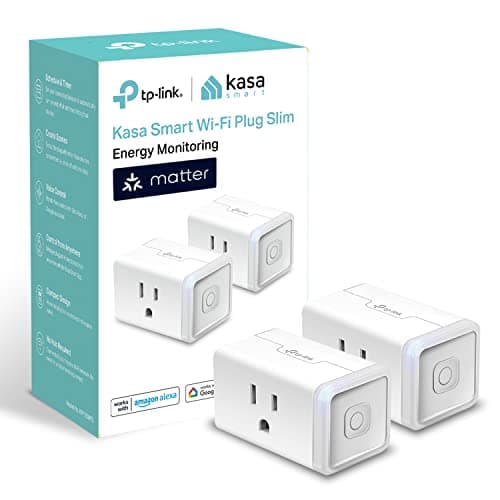
Kasa KP125M Smart Plug

Step 2, for under $30

Kasa KP125M Smart Plug

A metering plug that logs real-time and historical consumption per outlet, rated to 1,800W.

Replacing one guess with one measurement
$29.99 · Check price on Amazon

#ad how this is funded · price as of October 20, 2026

2
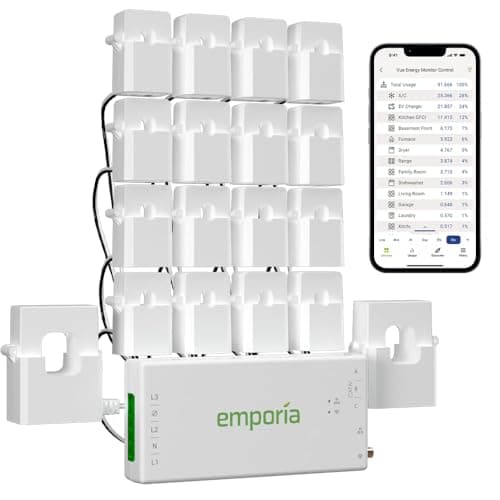
Emporia Vue 3 Energy Monitor

The whole keep-list at once

Emporia Vue 3 Energy Monitor

Clamp-on sensors measuring the whole panel plus individual circuits, hourly history kept indefinitely.

Anyone sizing a system over 5kWh
$199.99 · Check price on Amazon

#ad how this is funded · price as of October 20, 2026

3
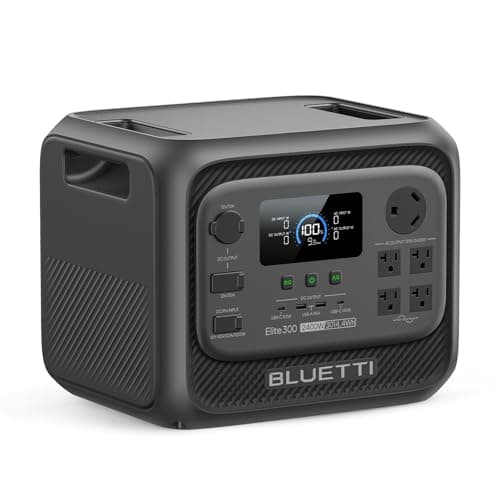
BLUETTI Elite 300

The 3kWh answer, 120V only

BLUETTI Elite 300

3,014.4Wh behind 2,400W with 4,800W of lifting power and a 6,000-cycle rating.

A critical-load keep-list with no 240V on it
$1,199.00 · Check price on Amazon

#ad how this is funded · price as of October 20, 2026 · $1,499.00 20% off

4
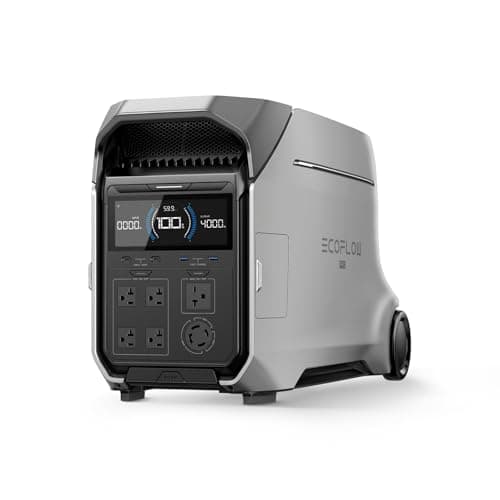
EcoFlow DELTA Pro 3

The 4kWh answer with room to grow

EcoFlow DELTA Pro 3

4,096Wh and 4,000W with 8,000W of surge, 240V on demand, and a published 12kWh single-unit ceiling.

Two nights of critical loads, with an expansion path
$2,799.00 · Check price on Amazon

#ad how this is funded · price as of October 20, 2026 · $3,699.00 24% off

5
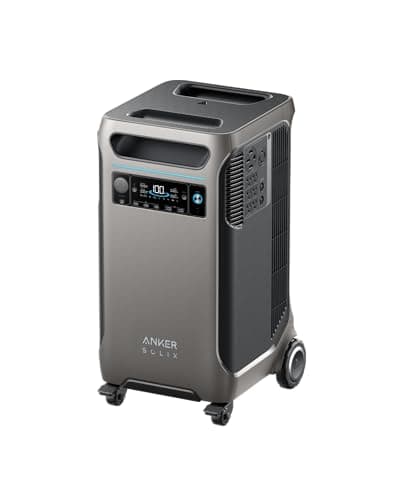
Anker SOLIX F3800

The answer when the keep-list has a well pump on it

Anker SOLIX F3800

3,840Wh with 6,000W continuous and 9,000W surge at native 120/240V, expandable to 26.88kWh.

A rural household with 240V loads it cannot drop
$1,759.99 · Check price on Amazon

#ad how this is funded · price as of October 20, 2026

Prices come from the retailer at page-build time and change constantly. Where no live price is available the button reads “Check price” rather than showing a number we cannot stand behind.

The picks in full

01 — Step 2, for under $30

Kasa KP125M Smart Plug

A metering plug that logs real-time and historical consumption per outlet, rated to 1,800W.

This is the cheapest way to turn this entire page from estimation into arithmetic. Put one on the refrigerator for a week and you have its real daily watt-hours, including the duty cycle that every published average gets wrong for your kitchen.

One plug, moved between the fridge, the freezer, the home office and the modem over a month, measures most of a typical keep-list.

The honest catch: 1,800W and 15A is the ceiling. The loads that most need measuring — well pump, furnace, water heater — are exactly the ones it cannot reach.

Skip it ifthe load is hardwired or 240V. A plug cannot measure a well pump or a dryer.

Kasa KP125M Smart Plug
$29.99 · Check price on Amazon

#ad how this is funded · price as of October 20, 2026

Published specifications for the Kasa KP125M Smart Plug
SpecificationPublished figure
Rating100-120 V, 15 A, 1,800 W maximum
MonitoringReal-time and historical consumption, per outlet
BillingRate entry for single or time-of-use estimates
ControlSchedules, auto-off timers and presets in the Kasa app
StandardsMatter, 2.4 GHz Wi-Fi, UL certified
VoiceAlexa, Google Assistant and Siri
Size2.6 x 1.5 x 1.6 in

Source: TP-Link — Kasa KP125M product specifications. These are the manufacturer's published figures, not ours — we have not tested this unit.

02 — The whole keep-list at once

Emporia Vue 3 Energy Monitor

Clamp-on sensors measuring the whole panel plus individual circuits, hourly history kept indefinitely.

Above about 5kWh the cost of guessing exceeds the cost of measuring. A panel monitor gives you every circuit at once, including the 240V ones a smart plug cannot see, and hourly history kept indefinitely means a month of real data before you commit.

It also keeps working after the purchase, which is where it pays for itself a second time: during an outage it shows which circuit is eating the battery.

The honest catch: it measures circuits, not appliances. A kitchen circuit reads as one line no matter how many things are plugged into it.

Skip it ifyou will not open a breaker panel or pay someone to. The sensors clamp around live conductors.

Emporia Vue 3 Energy Monitor
$199.99 · Check price on Amazon

#ad how this is funded · price as of October 20, 2026

Published specifications for the Emporia Vue 3 Energy Monitor
SpecificationPublished figure
CoverageWhole panel plus individual circuits via clamp-on sensors
CompatibilitySingle phase, single-split phase and 2-wire systems
AccuracySensors rated to +/- 2%
Resolution1-second data live in the app; 1-minute kept 7 days; hourly kept indefinitely
SolarSolar and net metering supported
Connection2.4 GHz Wi-Fi with an internet connection
CertificationUL certified

Source: Emporia — Vue 3 home energy monitor listing. These are the manufacturer's published figures, not ours — we have not tested this unit.

03 — The 3kWh answer, 120V only

BLUETTI Elite 300

3,014.4Wh behind 2,400W with 4,800W of lifting power and a 6,000-cycle rating.

Three kilowatt-hours is where most 120V keep-lists land for a single night: a refrigerator, a freezer, a furnace blower, lighting and a network. At the site's 85% convention this delivers about 2,560Wh.

The 6,000-cycle rating is the quiet argument for it. A battery used twenty times a year is not cycle-limited at all, but one that doubles as daily storage is.

The honest catch: 2,400W continuous rules out running a 1,500W heater alongside everything else, and 1,200W of solar input means a slow refill from panels alone.

Skip it ifanything on your list is 240V. This is a 120V machine.

BLUETTI Elite 300
$1,199.00 · Check price on Amazon

#ad how this is funded · price as of October 20, 2026 · $1,499.00 20% off

Published specifications for the BLUETTI Elite 300
SpecificationPublished figure
Capacity3,014.4 Wh
Cell chemistryAutomotive-grade LiFePO4, CNAS certified
AC output2,400 W / 4,800 W lifting power
Max solar input1,200 W (12-60 V, 22 A)
Cycle life6,000+ cycles
UPS10 ms or less
RV socketTT-30 supported
Weight26.3 kg (58 lb)

Source: BLUETTI — Elite 300 product listing. These are the manufacturer's published figures, not ours — we have not tested this unit.

04 — The 4kWh answer with room to grow

EcoFlow DELTA Pro 3

4,096Wh and 4,000W with 8,000W of surge, 240V on demand, and a published 12kWh single-unit ceiling.

Four kilowatt-hours is the band where a battery stops being a single night and starts being a weekend, and the DELTA Pro 3 adds the two things a keep-list often needs later: 240V output and an expansion path to a published 12kWh on one unit.

8,000W of surge against 4,000W continuous is a 2x ratio, which matters more for a well pump or a compressor than the capacity does.

The honest catch: EcoFlow's 48kWh figure is a multi-unit system number, not a single-unit one. Plan around 12kWh if you are buying one machine — the stacking page separates the two ceilings properly.

Skip it ifone night is genuinely enough. The rung below costs considerably less.

EcoFlow DELTA Pro 3
$2,799.00 · Check price on Amazon

#ad how this is funded · price as of October 20, 2026 · $3,699.00 24% off

Published specifications for the EcoFlow DELTA Pro 3
SpecificationPublished figure
Capacity4,096 Wh
Cell chemistryLiFePO4 (LFP)
AC output4,000 W, 120V / 240V
Cycle life4,000+ cycles to 80% capacity
Wall recharge0-80% in about 1 hour
Max solar input2,600 W
Expansion4 kWh to 48 kWh

Source: EcoFlow — DELTA Pro 3 product listing. These are the manufacturer's published figures, not ours — we have not tested this unit.

05 — The answer when the keep-list has a well pump on it

Anker SOLIX F3800

3,840Wh with 6,000W continuous and 9,000W surge at native 120/240V, expandable to 26.88kWh.

The moment a well pump, a septic pump or a 240V furnace appears on the keep-list, the sizing question changes shape: you are no longer buying kilowatt-hours, you are buying a voltage and a surge ceiling.

6,000W continuous at 120V and 240V with 9,000W of surge covers a standard residential submersible without a hub or an autotransformer, and six expansion batteries take one unit to 26.88kWh.

The honest catch: 3,840Wh is modest for the money if you have no 240V loads. Buy this for the inverter, not the battery.

Skip it ifnothing on your list is 240V. You are paying for a second voltage you will never switch on.

Anker SOLIX F3800
$1,759.99 · Check price on Amazon

#ad how this is funded · price as of October 20, 2026

Published specifications for the Anker SOLIX F3800
SpecificationPublished figure
Capacity3,840 Wh
Cell chemistryLiFePO4
AC output6,000 W continuous, 9,000 W surge
Voltage120V / 240V split-phase
Cycle life3,000+ cycles to 80% capacity
Recharge1,800 W AC, up to 2,400 W solar
ExpansionUp to six expansion batteries, 26.9 kWh total
Warranty5 years
Current Amazon listingRenewed. Anker's new first-party F3800 listing is currently unavailable and the model has been succeeded by the F3800 Plus; the unit itself is unchanged

Source: Anker SOLIX — F3800 product specifications. These are the manufacturer's published figures, not ours — we have not tested this unit.

How these were chosen

We did not test these. Nobody at Watt & Warden has plugged one in. What we did instead: read the manufacturer's published specifications, compile them into a table where the figures line up, and compute the numbers manufacturers leave out — runtime against a real appliance load, and what an hour of running actually costs.

Anything that could not be sourced was left out rather than estimated, and every pick names the buyer who should skip it. The full method is here, including where it is weaker than a publisher with a test bench.

Questions people actually ask

What size home battery backup do I need?

For a critical-load keep-list — refrigerator, freezer, furnace blower, lighting and network — most households land between 3kWh and 15kWh depending on how many days they want. The sum is daily keep-list watt-hours times days, divided by 0.85 for inverter losses. Backing up a whole house behaving normally is a different question: the EIA average of roughly 30kWh a day means one day needs about 35kWh.

How do I calculate the battery size from my appliances?

Multiply each appliance's running wattage by the hours it actually runs per day to get watt-hours, add them up, multiply by the number of days of cover you want, then divide by 0.85 to allow for inverter losses. A refrigerator at a 150W average is 3,600Wh a day flat out, or around 1,200Wh with the door kept shut and the compressor cycling normally.

How many kWh do I need to run a house for 24 hours?

It depends entirely on whether you mean the whole house or a keep-list. A disciplined critical-load list is typically 4 to 9kWh a day, so 5 to 11kWh of battery. An unrestricted house at the EIA average of about 30kWh a day needs roughly 35kWh of battery for one day, and summer air conditioning raises that rather than lowering it.

Why divide by 0.85?

Published capacity is measured at the cells. The inverter loses some of it converting DC to AC, so not all of a battery's rated watt-hours reach the outlet. This site uses 85% as a standing convention, which means a 3,000Wh battery delivers about 2,550Wh of usable AC.

Does a bigger battery help if my furnace will not start?

No. Starting a motor is a wattage problem, which is the inverter's job, not the cells'. A 20kWh bank behind a 1,800W inverter starts exactly the same loads as a 3kWh bank behind the same inverter. Size the inverter on your largest simultaneous load plus its surge, and the cells on watt-hours per day.

How long does it take to recharge a home battery?

At a typical 1,800W AC input, divide capacity by 1,800. A 10kWh bank is about five and a half hours of grid time; 22kWh is over twelve. Solar is slower and weather-dependent, and generator charging is fastest - Anker publishes 6,000W of AC charging on the F3800 Plus via a generator or the Home Power Panel.

Should I size for the worst outage I have had, or the typical one?

Size the capacity for the typical outage and the inverter for the worst one. Capacity you rarely use is expensive and sits idle; an inverter too small to start a well pump fails on every outage, not just the long ones. Your utility's published outage history is the right input, which is what the outage duration page works from.

Sources