What expansion actually adds
An expansion battery is a dumb pack of cells. It plugs into the base unit, and the base unit's electronics do all the work: the inverter, the charge controller, the battery management, the outlets.
Which means the arithmetic is narrower than the marketing:
| Specification | Does expansion change it? |
|---|
| Capacity (watt-hours) | Yes — this is the entire benefit |
|---|
| Continuous output (watts) | No — the inverter is in the base unit |
|---|
| Surge output | No |
|---|
| Maximum solar input | No — the charge controller is in the base unit |
|---|
| Number of outlets | No |
|---|
| Time to recharge | Worse — more energy to refill at the same input rate |
|---|
This is the general architecture across the category rather than one manufacturer's design. Check the specific pairing before buying — a few systems do raise input limits with certain packs, and the manufacturer will say so explicitly if they do.
So expansion answers "it ran out overnight" and does nothing at all for "it would not start the freezer." Those are different complaints with different fixes, and confusing them is how people spend money on the wrong thing.
The recharge trap
This is the consequence people find out about later, and it is worth thinking through before you buy.
If a base unit accepts 500W of solar, it accepts 500W of solar whether it is holding 1kWh or 3kWh. Tripling the capacity triples the time to refill from empty.
In a summer outage with good sun, that may be fine — you are topping up daily rather than refilling from flat. In a winter storm at four peak sun hours, a 3kWh bank that has been drained overnight will not be full again by evening, and the deficit compounds across days.
Which means expansion is most useful for people who have an AC recharge path — a grid that flickers back, or a generator running in blocks — and least useful for people relying purely on folding panels. The solar sizing page has the arithmetic.
The ecosystem lock
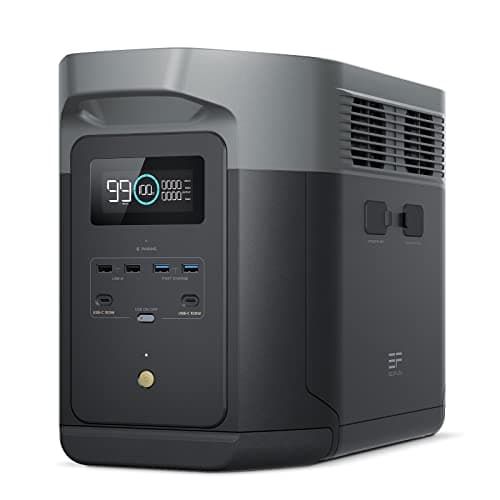
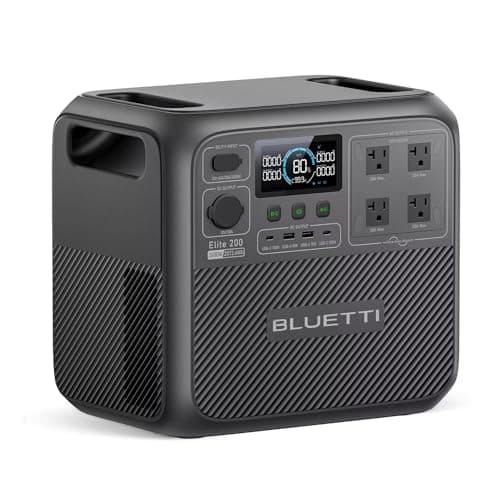
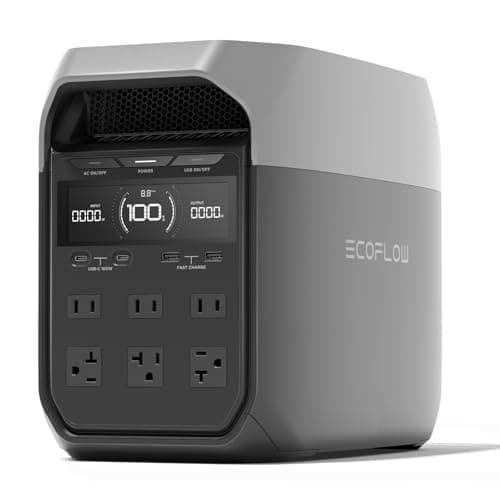
Expansion packs are proprietary. An EcoFlow pack does not fit a BLUETTI base, and there is no standard for this and no sign of one coming.
Practically, buying into an expandable system is a commitment to that manufacturer for as long as you own the base unit. Two things follow:
- Discontinuation risk is real. If the pack for your base is withdrawn in three years, the expansion port becomes decorative. Prefer manufacturers with a long track record in the category.
- Compare total system prices, not base prices. A cheaper base with an expensive pack can cost more at 3kWh than a rival whose base costs more.
When expansion is the right call
- You are genuinely unsure how much you need. This is the honest majority case. Buy the expandable base, live through an outage, and then decide with real information instead of a guess.
- Your requirement is growing. A new medical device, a home office, a chest freezer.
- Budget is staged. Buying capacity across two years is a legitimate reason on its own.
- You want portability sometimes and capacity others. A 1kWh base travels; the pack stays home.
When to skip it
- You have done the arithmetic. If you know you need 2kWh, size it properly and buy that once. One unit, usually less money, one thing to store.
- The base unit's inverter is your real limit. Expansion will never fix a surge problem.
- You need multiple days and have no AC recharge path. At that point a generator refilling a modest battery is cheaper and more robust than a very large battery alone.
- The ceiling is barely above the base. A unit that expands by 50% is not solving a capacity problem.
The alternative nobody mentions
Two separate power stations. It is less elegant and it is often the better answer.
Two independent units mean two inverters, two sets of outlets and two solar inputs — so you genuinely can start more things at once, and one failure does not take the whole system down. You can also put one in the kitchen for the fridge and one in the bedroom for a CPAP, which a single larger unit cannot do without running cords through the house.
The trade is two things to charge and two to store, and no single large pool of energy. For households whose loads are in different rooms, that trade usually goes the right way.
The short version
Expansion buys hours, never watts. Buy an expandable base if you are uncertain; buy the right size outright if you are not; and if your problem is that something will not start, no amount of expansion is going to help. The under-$1,000 bracket is where most expandable bases live, and the 2kWh tier is what you are expanding toward.