The two numbers, and why they disagree
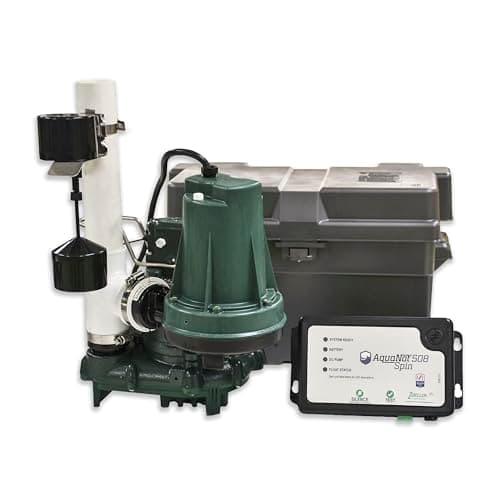
A sump pump is the clearest example on this site of a load whose energy use and whose power demand point in completely opposite directions.
| Pump | Running watts | Starting watts |
|---|
| 1/3 HP submersible | About 800 W | Roughly 1,300-2,000 W |
|---|
| 1/2 HP submersible | About 1,050 W | Up to about 2,150 W |
|---|
| 3/4 HP submersible | Higher again | Read the plate — this is where batteries start failing |
|---|
| Pedestal pump | Generally lower than submersible | Still several times running |
|---|
Running and starting figures are the ranges used across this site — see the appliance wattage chart for the full list and sources. Your own pump's plate, or the label on its control box, is the authoritative number.
The starting figure is what buys the equipment. The starting watts page explains why an induction motor asks for several times its running current for a fraction of a second, and why a device that cannot supply that simply refuses.
Now the energy, which is almost nothing
Here is the part people get wrong in the other direction. A sump pump does not run continuously. It runs when the float rises, empties the pit, and stops.
A common duty cycle during heavy rain is something like five minutes in every thirty — call it one sixth of the time. A 1,050W pump at that duty averages about 175W, and across a twelve-hour night that is roughly 2.1 kilowatt-hours.
| Duty during the storm | Average draw | Energy over 12 hours |
|---|
| Light — 2 min in 30 | About 70 W | About 0.84 kWh |
|---|
| Typical heavy rain — 5 min in 30 | About 175 W | About 2.1 kWh |
|---|
| Severe — 10 min in 30 | About 350 W | About 4.2 kWh |
|---|
Calculated as 1,050 W x duty fraction x 12 hours. Duty cycle varies enormously with rainfall, water table and pit size — time yours during a storm and use your own figure.
The middle row is the useful one. About two kilowatt-hours is well inside a 2,000Wh battery and comfortably inside a 3,000Wh one, which is a very different conclusion from the one the starting-watt figure suggests.
Why correctly sized batteries still fail
Because people size against the energy and the device trips on the surge.
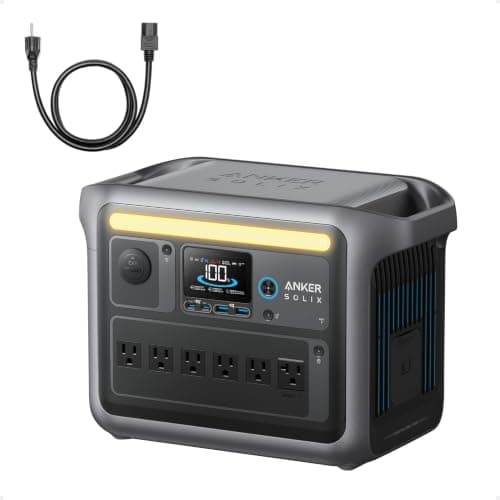
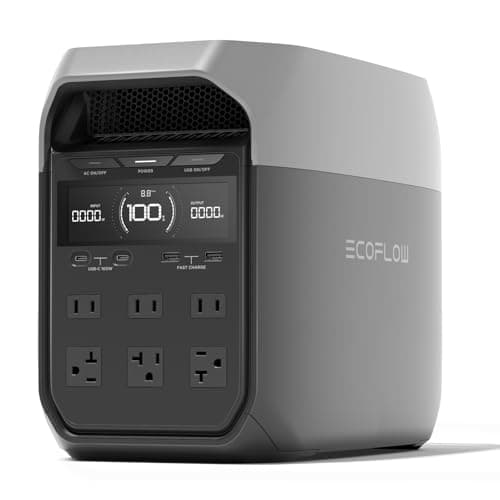
A 2,000Wh battery with a 1,000W inverter has ample capacity for a night of pumping and cannot start the pump at all. A 1,000Wh battery with a 2,400W surge rating has less capacity and works.
So the order is: check the inverter's surge rating against the pump's starting watts first, and only then ask whether the capacity covers the night. Getting that order backwards is the single commonest mistake in this category.
What the pit actually needs
One more number worth knowing, because it changes how urgent this is.
Sump pump capacity is rated in gallons per hour at a given lift. A typical 1/3 HP pump moves something like 2,000 to 2,500 gallons per hour at ten feet of head. A battery backup pump is usually rated lower.
That means a backup pump is designed to keep water below the floor, not to match the primary pump's output. In a genuinely severe storm it buys you time rather than parity — which is still the difference between a damp floor and a flooded basement.
Three things worth doing before storm season
- Read the plate. Horsepower, amps and voltage are printed on the pump or its control box. Reading a nameplate properly explains what those numbers do and do not promise.
- Test the start on your actual battery. Pour a bucket into the pit with the pump on the battery and watch it start. That is the only test that matters and it takes five minutes.
- Check the backup battery's date. Backup pump batteries fail quietly on a three-to-five year schedule, exactly like UPS batteries.
The short version
- Running: roughly 800-1,050W for common residential pumps.
- Starting: up to about 2,150W, and that is the number that buys the equipment.
- Energy: about 2 kWh across a wet night. Far less than people expect.
- Check surge before capacity. Reversing that order is the usual failure.