Skip to content
Watt Warden

Sizing

How Much Power Does a Furnace Use?

If your furnace burns gas or oil, electricity only runs the fan. That single fact is the largest cost saving available in backup power, and most people do not know which type they have.

By Sawyer V.Updated Published How we work this out
A basement furnace and ductwork.

Watt & Warden earns a commission on qualifying purchases made through links on this page, at no extra cost to you. It never changes a ranking, and our picks include products we tell you to skip. Full disclosure.

The question is what your furnace burns

This is the largest single variable in household backup power, and a surprising number of people do not know the answer for their own house.

A gas or oil furnace makes heat by burning fuel. Electricity runs the blower that moves air through the ducts, the igniter, and the control board. That is it.

An electric furnace makes heat with resistance elements. Electricity is the heat, and the load is enormous.

The difference is not marginal — it is the difference between a load a battery covers overnight and one no portable equipment touches.

Gas and oil furnaces: just the blower

Blower motorRunning wattsStarting watts
⅛ HP300500
⅙ HP500750
¼ HP6001,000
⅓ HP7001,400
½ HP300-800 (Champion) / 875 (Honda)800-1,600

The by-horsepower rows come from Honda Power Equipment's wattage estimation guide; the half-horsepower range and the starting figures from Champion Power Equipment's published chart. Where the two publish different figures for the same motor size we give both rather than choosing — that spread is real and it tells you how much variation exists between installations.

So a gas furnace is a 300 to 875 watt load while the blower runs, with a starting surge up to about 1,600W.

Which is the sentence this page exists for: a modest battery can keep a whole gas-heated house above freezing. That is a far better use of stored energy than a space heater, which warms one room and empties the same battery in under ninety minutes.

Electric furnaces and heat pumps: a different category

An electric furnace's resistance elements draw thousands of watts — the same order as an electric water heater or an oven, and continuously rather than in bursts.

Heat pumps are more efficient but complicate the picture:

  • In moderate cold, a heat pump moves heat rather than making it, so its draw is closer to an air conditioner's than to a furnace's.
  • In severe cold, most systems fall back to resistance strip heat — and then the load is an electric furnace's.
  • Which is exactly when you need it. The auxiliary heat comes on in the conditions that also cause outages.

For backup purposes, treat a heat pump with strip heat as an electric furnace and plan accordingly. The whole-house tiers put it in context.

Duty cycle matters as much as the figure

A furnace blower does not run continuously. It runs while the thermostat calls for heat and then stops, and how often depends on outside temperature, insulation and the thermostat setting.

A reasonable planning assumption for a cold night is roughly a third of the time, which at 500W average gives about 4,000Wh across 24 hours, or around 1,500-2,500Wh for the overnight portion that actually matters.

On a very cold night with a marginally sized system it will run much more than a third. Treat the figure as a planning basis rather than a prediction — your own thermostat behavior is the real answer.

The other electrical parts of a heating system

Small, but worth knowing they exist because they can be on separate circuits.

  • The igniter. A hot-surface igniter draws a few hundred watts briefly at the start of each cycle.
  • The control board and thermostat. A few watts, but nothing works without them.
  • A condensate pump on a high-efficiency furnace. Small, and if it stops the furnace may lock out.
  • A zone valve or circulator pump on a hydronic system.
  • An oil burner motor and pump on an oil-fired system, which is a larger load than a gas igniter.

The practical instruction: put the whole furnace circuit on your transfer switch rather than trying to power components individually.

Everything is hardwired

The constraint that makes winter backup a different problem from summer backup.

A furnace has no plug. Neither does a well pump or a sump pump. So a battery or generator that covers the load in watts still cannot reach it, and the missing component is a transfer switch or an interlock kit.

That is licensed-electrician work with a permit in most jurisdictions, and it is the thing to arrange in October rather than during a storm warning. The connection guide walks the whole chain.

What this means for equipment

  • Gas or oil heat: a 2kWh battery with 2,400W or more of inverter covers the blower overnight. A 5,300W generator covers it plus everything else.
  • Electric heat: a generator, and a large one. No portable battery is viable.
  • Heat pump: size for the auxiliary strip heat, because that is what runs in the conditions that cause outages.
  • Either way, a transfer switch. Without it the arithmetic is academic.

And the substitution worth knowing: a 1,500W space heater warms one room and empties a 2kWh battery in under ninety minutes. The same battery running a 500W blower heats the entire house for four hours or more. The winter kit covers the rest of the season.

Quick picks

#ProductBest forPrice
1
No photo

Enough for a gas furnace blower

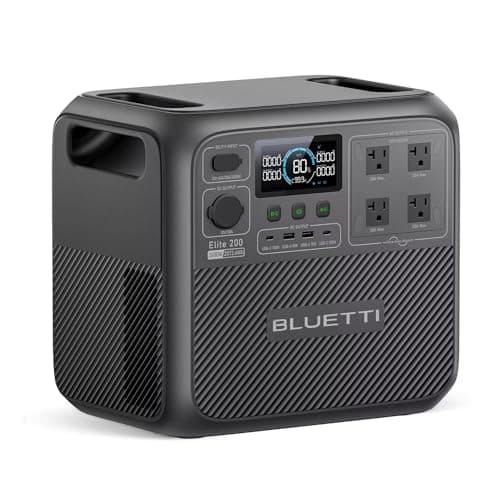
BLUETTI Elite 200 V2

2,073Wh of LiFePO4 with 2,600W of continuous output.

Keeping a house above freezing overnight
2
No photo

The part that reaches it

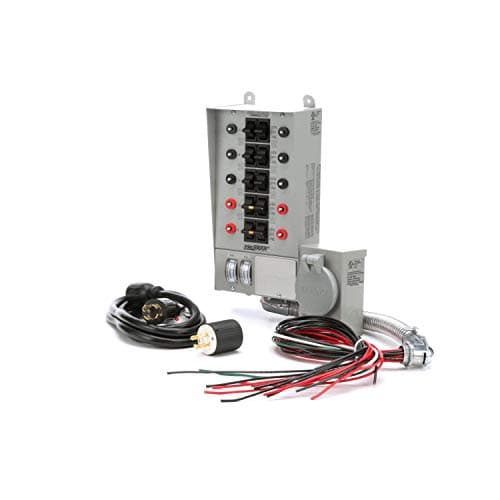
Reliance Controls 31410CRK Pro/Tran

A 10-circuit manual transfer switch rated 30A / 7,500W with two watt meters.

A furnace, which has no plug
3
No photo

For a multi-day cold snap

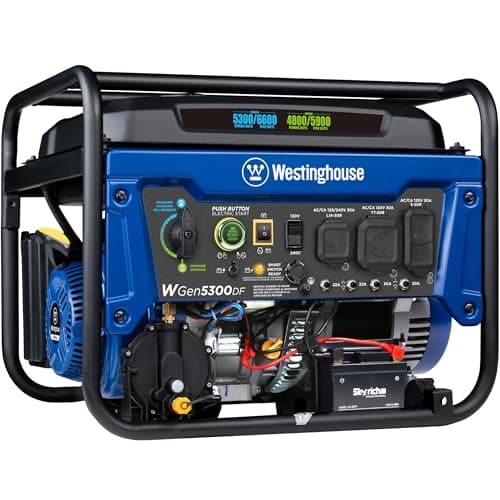
Westinghouse WGen5300DF

5,300 running watts, dual fuel, at about 0.32 gal/hr averaged across a tank.

The furnace plus the rest of the critical circuits

Prices come from the retailer at page-build time and change constantly. Where no live price is available the button reads “Check price” rather than showing a number we cannot stand behind.

The picks in full

01Enough for a gas furnace blower

BLUETTI Elite 200 V2

2,073Wh of LiFePO4 with 2,600W of continuous output.

2,600W covers the 800-1,600W starting draw Champion publishes for a half-horsepower furnace fan with real margin, which is the specification that decides whether the blower starts at all.

A blower running at 300-800W for a third of a cold night is roughly 1,500-2,500Wh, so one full battery is somewhere between most of a night and a whole one — enough to keep the house above freezing.

Skip it ifyou have electric heat. No portable battery covers that.

Published specifications for the BLUETTI Elite 200 V2
SpecificationPublished figure
Usable capacity2,073.6 Wh
Cell chemistryAutomotive-grade LiFePO4 (LFP)
AC output2,600 W continuous / 3,900 W power lifting
Cycle life6,000+ cycles
Fast charge0–80% in 50 min via dual AC/DC input

Source: BLUETTI — Elite 200 V2 product specifications. These are the manufacturer's published figures, not ours — we have not tested this unit.

02The part that reaches it

Reliance Controls 31410CRK Pro/Tran

A 10-circuit manual transfer switch rated 30A / 7,500W with two watt meters.

The constraint that catches people out in winter: a furnace is hardwired to a dedicated circuit, so no extension cord will ever reach it regardless of what is on the other end.

Fitted by an electrician, out of season. During a storm warning no electrician is available.

Skip it ifeverything you need to power has a plug — which a furnace does not.

Published specifications for the Reliance Controls 31410CRK Pro/Tran
SpecificationPublished figure
Circuits10 — six 15 A and four 20 A single-pole breakers
Rating30 A, up to 7,500 W
MeteringTwo watt meters for balancing the load
SwitchingBreak-before-make double-throw, Line / Off / Gen
BackfeedMechanically prevented — the grid cannot be energized
InstallationLicensed electrician; a permit is usually required

Source: Reliance Controls — Pro/Tran 31410CRK product page. These are the manufacturer's published figures, not ours — we have not tested this unit.

03For a multi-day cold snap

Westinghouse WGen5300DF

5,300 running watts, dual fuel, at about 0.32 gal/hr averaged across a tank.

5,300W covers a furnace blower, a fridge, a sump pump and lighting simultaneously, which is what a winter storm actually demands.

Dual fuel matters in an ice storm because gas station pumps are electric and the stations near you are out too.

Skip it ifyour outages are short. A battery is quieter and needs no fuel.

Published specifications for the Westinghouse WGen5300DF
SpecificationPublished figure
Output (gasoline)5,300 running W / 6,600 peak W
Output (propane)4,800 running W / 5,900 peak W
Engine274cc 4-stroke OHV
Tank4.7 gal (18 L)
Run timeup to 14.5 h on a full tank
Transfer-switch outlet120/240 V L14-30R, 30 A
RV outlet120 V TT-30R, 30 A
StartingPush-button electric with remote key fob

Source: Westinghouse — WGen5300DF product specifications. These are the manufacturer's published figures, not ours — we have not tested this unit.

How these were chosen

We did not test these. Nobody at Watt & Warden has plugged one in. What we did instead: read the manufacturer's published specifications, compile them into a table where the figures line up, and compute the numbers manufacturers leave out — runtime against a real appliance load, and what an hour of running actually costs.

Anything that could not be sourced was left out rather than estimated, and every pick names the buyer who should skip it. The full method is here, including where it is weaker than a publisher with a test bench.

Questions people actually ask

How many watts does a furnace use?

If it burns gas or oil, only the blower -- Honda's guide runs from 300W for an eighth-horsepower fan to 875W for a half-horsepower one, and Champion publishes 300-800 running with 800-1,600 starting for a half-horsepower motor. An electric furnace uses thousands of watts continuously.

Can a power station run a furnace?

A gas or oil furnace, yes -- a 2kWh battery with 2,400W or more of inverter covers the blower overnight, which keeps a whole house above freezing. An electric furnace, no: resistance elements draw thousands of watts continuously and no portable battery is viable.

Does a heat pump use more power than a gas furnace in an outage?

Far more, and in the worst way. In moderate cold a heat pump moves heat efficiently, but in severe cold most systems fall back to resistance strip heat -- and that is exactly when outages happen. For backup planning, treat a heat pump with strip heat as an electric furnace.

Why can't I just plug my furnace into a generator?

It has no plug. A furnace is hardwired to a dedicated circuit, as are well pumps and sump pumps, so no extension cord reaches it whatever is on the other end. You need a transfer switch or an interlock kit, fitted by an electrician -- arrange it in October, not during a storm warning.

Is a space heater or a furnace blower a better use of a battery?

The blower, by a wide margin. A 1,500W space heater warms one room and empties a 2,000Wh battery in under ninety minutes. The same battery running a 500W blower keeps the entire house above freezing for four hours or more -- provided you have a transfer switch to reach it.

Sources

Every figure on this page comes from a published source. We have not tested this equipment, so the specifications are the manufacturer's and the statistics are the dataset's — the arithmetic on top of them is ours, and it is shown in full so you can check it. How we work this out.