Skip to content
Watt Warden

Sizing

How to Read an Appliance Nameplate

Every chart on this site is someone else's average. The label on the back of your own appliance is the only figure that is actually about your house.

By Sawyer V.Updated Published How we work this out
An appliance label sticker in close detail.

Watt & Warden earns a commission on qualifying purchases made through links on this page, at no extra cost to you. It never changes a ranking, and our picks include products we tell you to skip. Full disclosure.

Where the label is

Every appliance sold has one, and it is usually somewhere inconvenient:

  • Refrigerator: inside the fridge compartment on a side wall, or on the back near the compressor.
  • Freezer: on the back, or inside the lid.
  • Furnace: inside the access panel, on the blower housing.
  • Air conditioner: on the outdoor condenser unit, on the side facing away from the house.
  • Well pump: on the control box or the pressure switch in the basement or well house — not on the pump itself, which is down the shaft.
  • Small appliances: underneath, or molded into the plastic near the cord entry.

Take a photograph of each one while you are there. You will want them again, and photographing is faster than writing.

What the fields mean

MarkingMeansUse it for
W or WattsPower consumption directlyRunning watts — the easiest case
A or Amps, sometimes FLACurrent draw, full loadMultiply by volts to get watts
V or VoltsSupply voltage — 120 or 240 in US homesThe multiplier, and whether a 120V machine can feed it
LRALocked rotor amperage — the starting surge, in ampsMultiply by volts for starting watts
RLARated load amps, on compressorsRunning current under normal load
HPHorsepower, on motorsCross-reference against a wattage chart
HzFrequency — 60 in the USNothing, unless the appliance is imported
kWh/yearAnnual energy from a standardized testEstimating average draw across a day

Not every label carries every field. A well pump label typically gives HP and voltage; an air conditioner gives RLA and LRA; a fridge gives amps and often an annual kWh figure. Use what is there.

Amps to watts

The conversion you will use most, because most labels give amps.

Watts = amps × volts

  • A fridge marked 6.5 A at 115 V is about 750 W while the compressor runs.
  • A well pump marked 9 A at 240 V is about 2,160 W running.
  • An air conditioner with LRA 48 A at 240 V has a starting surge in the region of 11,500 W — which is why soft starters exist.

Note the voltage in each case. A 240V appliance draws twice the watts of a 120V one at the same amperage, and it also means a 120V-only generator or power station cannot feed it at all.

The nameplate is a maximum, not an average

This is the interpretation people get wrong, and it cuts both ways.

A nameplate figure is generally the appliance's draw at full load, in the worst case. It is used for wiring and breaker sizing, where you must design for the maximum.

For backup power that makes it:

  • Right for sizing the inverter or generator. You need to cover the maximum, so use the nameplate.
  • Wrong for estimating watt-hours. An appliance that cycles — a fridge, a furnace, an air conditioner — averages far below its nameplate across a day.

Which is the same distinction as starting versus running watts, applied one level up: use the maximum for what can start, and the average for how long it lasts.

What the label will not tell you

  • Starting surge, unless it happens to give LRA. Most motor appliances do not, which is why manufacturer wattage charts exist.
  • Duty cycle. Nothing on any label tells you what fraction of the time it runs.
  • Real condition. A twenty-year-old motor with worn bearings draws more than its label. Labels describe new appliances.
  • Standby draw. Anything with a clock, a display or a remote receiver draws a little continuously, and none of them say so.

Three ways to get a real number instead

  1. A plug-in energy meter. A cheap device between the socket and the appliance that reads instantaneous watts and accumulated kilowatt-hours. Leave one on a fridge for 24 hours and you have your actual duty cycle rather than a planning average.
  2. Your power station's display. Plug the appliance into it and read the output. Free if you already own one, and it shows the surge as well as the running draw.
  3. A transfer switch with watt meters. Reads whole circuits during a real outage, including the hardwired loads a plug-in meter cannot reach.

Any of the three beats every chart, because a chart is somebody else's appliance in somebody else's house.

Building your own list

Worth half an hour once, and it makes every other sizing decision on this site straightforward.

  1. Walk the house and photograph every nameplate on anything you would want running in an outage.
  2. Convert each to watts using amps × volts.
  3. Note the voltage — 240V items rule out 120V-only equipment entirely.
  4. Note which are hardwired, because those need a transfer switch rather than a cord.
  5. Find the largest single starting figure, from LRA where given or from a published chart otherwise.
  6. Estimate duty cycle for the cycling loads, or measure it.

That list feeds directly into generator sizing and battery sizing, and it is the difference between buying against your house and buying against an article.

Quick picks

#ProductBest forPrice
1
No photo

Reads the real number for you

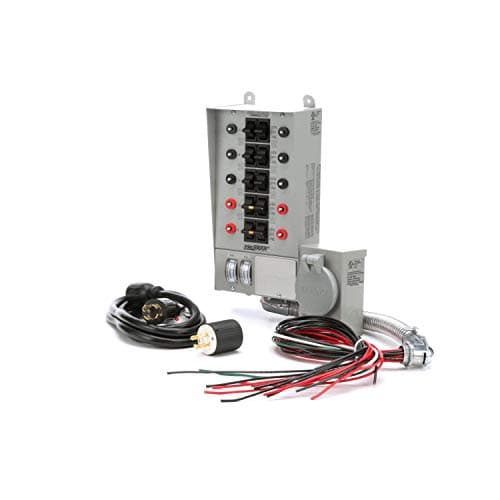
Reliance Controls 31410CRK Pro/Tran

A 10-circuit manual transfer switch with two watt meters on the panel.

Measuring instead of estimating
2
No photo

Shows the draw on its display

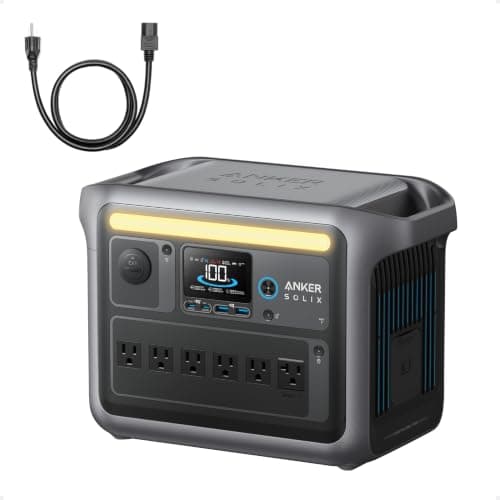
Anker SOLIX C1000

1,056Wh of LiFePO4 with 1,800W output and a live output display.

Metering a single appliance
3
No photo

For when the nameplate says LRA

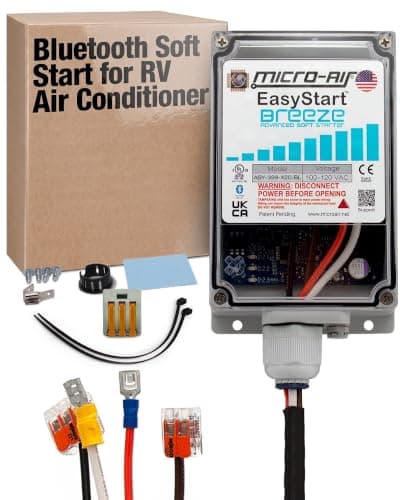
Micro-Air EasyStart 364 soft starter

65-75% start current reduction against the compressor's locked-rotor amperage.

Air conditioning compressors

Prices come from the retailer at page-build time and change constantly. Where no live price is available the button reads “Check price” rather than showing a number we cannot stand behind.

The picks in full

01Reads the real number for you

Reliance Controls 31410CRK Pro/Tran

A 10-circuit manual transfer switch with two watt meters on the panel.

The two watt meters turn this from a switching device into a measuring one. During a real outage you can see exactly what each leg is drawing with your appliances, in your weather.

That is worth more than any chart, including the ones on this site, because it is a measurement rather than an average.

Skip it ifeverything you power has a plug and no hardwired load is involved.

Published specifications for the Reliance Controls 31410CRK Pro/Tran
SpecificationPublished figure
Circuits10 — six 15 A and four 20 A single-pole breakers
Rating30 A, up to 7,500 W
MeteringTwo watt meters for balancing the load
SwitchingBreak-before-make double-throw, Line / Off / Gen
BackfeedMechanically prevented — the grid cannot be energized
InstallationLicensed electrician; a permit is usually required

Source: Reliance Controls — Pro/Tran 31410CRK product page. These are the manufacturer's published figures, not ours — we have not tested this unit.

02Shows the draw on its display

Anker SOLIX C1000

1,056Wh of LiFePO4 with 1,800W output and a live output display.

An underrated use for a power station: plug one appliance into it and the display tells you what that appliance actually draws, cycling and all.

Run a fridge from it for a few hours and you learn your own duty cycle rather than using this site's 150W planning average.

Skip it ifyou already own a plug-in energy meter.

Published specifications for the Anker SOLIX C1000
SpecificationPublished figure
Usable capacity1,056 Wh
Cell chemistryLiFePO4 (LFP)
AC output1,800 W continuous / 2,400 W SurgePad
Cycle life3,000 cycles
Wall recharge80% in 43 min, full in 58 min
Max solar input600 W (full solar recharge ~1.8 h)
Ports11 total, including 6 AC on panel-equipped bundles

Source: Anker — SOLIX C1000 product specifications. These are the manufacturer's published figures, not ours — we have not tested this unit.

03For when the nameplate says LRA

Micro-Air EasyStart 364 soft starter

65-75% start current reduction against the compressor's locked-rotor amperage.

LRA — locked rotor amperage — is the nameplate figure this product directly addresses, and it is the number that decides whether a compressor starts on your equipment.

If your air conditioner's label shows an LRA you cannot meet, a soft starter is the alternative to a larger machine.

Skip it ifthe appliance is not an air conditioner.

Published specifications for the Micro-Air EasyStart 364 soft starter
SpecificationPublished figure
Reduction65-75% start current reduction vs compressor LRA
CapacityUp to 36,000 BTU (3 ton) compressor
Method4-part self-optimizing start ramp
EnclosureWater resistant, UV protected, integrated mounting flange
Fitted toThe air conditioner, not the generator

Source: Micro-Air — EasyStart 364 product page. These are the manufacturer's published figures, not ours — we have not tested this unit.

How these were chosen

We did not test these. Nobody at Watt & Warden has plugged one in. What we did instead: read the manufacturer's published specifications, compile them into a table where the figures line up, and compute the numbers manufacturers leave out — runtime against a real appliance load, and what an hour of running actually costs.

Anything that could not be sourced was left out rather than estimated, and every pick names the buyer who should skip it. The full method is here, including where it is weaker than a publisher with a test bench.

Questions people actually ask

How do I convert amps to watts on an appliance label?

Multiply amps by volts. A fridge marked 6.5A at 115V is about 750W while the compressor runs; a well pump marked 9A at 240V is about 2,160W. Note the voltage in each case -- a 240V appliance cannot be fed by a 120V-only generator or power station at all.

What does LRA mean on an appliance nameplate?

Locked rotor amperage -- the current the motor draws at the instant of starting, before it begins to turn. Multiply by voltage for starting watts. An air conditioner with LRA 48A at 240V has a surge in the region of 11,500W, which is the number soft starters exist to reduce.

Is the nameplate figure the appliance's actual power use?

It is the maximum, not the average. That makes it right for sizing an inverter or generator, where you must cover the worst case, and wrong for estimating watt-hours -- anything that cycles averages far below its nameplate across a day.

Where is the nameplate on a refrigerator?

Usually inside the fridge compartment on a side wall, or on the back near the compressor. A freezer's is on the back or inside the lid, a furnace's is inside the access panel on the blower housing, and a well pump's is on the control box or pressure switch rather than on the pump down the shaft.

How can I measure what an appliance actually uses?

Three ways, all better than any chart. A plug-in energy meter between the socket and appliance reads instantaneous watts and accumulated kilowatt-hours. A power station's display shows draw and surge when you plug the appliance into it. A transfer switch with watt meters reads whole circuits, including hardwired loads.

Sources

Every figure on this page comes from a published source. We have not tested this equipment, so the specifications are the manufacturer's and the statistics are the dataset's — the arithmetic on top of them is ours, and it is shown in full so you can check it. How we work this out.