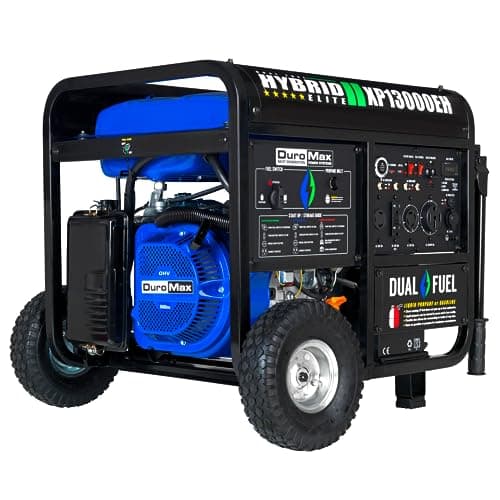
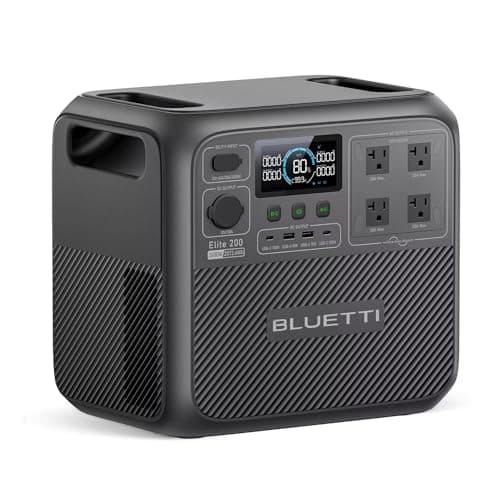
What each one is
A standby generator is a permanently installed engine wired to your panel through an automatic transfer switch, running on natural gas or propane. It monitors the utility, starts itself when power fails, and transfers the house across in under about thirty seconds.
A home battery is a permanently installed lithium-ion energy storage system, also wired through a transfer mechanism. It charges from the grid or from rooftop solar, and it supplies the house from stored energy — silently and instantly.
Both are five-figure installed decisions and both need an electrician and a permit. They differ in almost every other respect.
The difference that decides it
A generator does not run out. A battery does.
A standby unit on a natural gas main has effectively unlimited fuel — the gas does not stop when the grid does. It will run for as many days as the outage lasts, subject only to oil service intervals.
A home battery holds a fixed amount of energy. When it is empty, it is empty — unless it can recharge, which in a grid outage means solar and nothing else.
This single fact reorganizes the comparison. If your outages are hours, the battery wins on nearly every other axis. If they are days, the battery only competes when paired with enough solar to genuinely refill it, and that is a much larger installation.
Side by side
| Property | Standby generator | Home battery |
|---|
| Runtime | Unlimited on natural gas | Fixed, unless recharged by solar |
|---|
| Switchover | ~30 seconds (engine must start) | Effectively instant |
|---|
| Noise | Audible; reduced-rpm self-test modes exist | Silent |
|---|
| Maintenance | Oil changes, filters, annual service | Essentially none |
|---|
| Emissions on site | Combustion exhaust | None |
|---|
| Use outside outages | None — it idles for a weekly self-test | Daily: time-of-use arbitrage, solar self-consumption |
|---|
| Pairs with solar | No | Yes — this is the main design case |
|---|
| Central air conditioning | Yes, at appropriate sizing | Depends on inverter capacity; often limited |
|---|
| Fuel cost during an outage | Ongoing gas or propane | None, if solar-charged |
|---|
| Degradation over time | Mechanical wear; rebuildable | Capacity fade; eventual replacement |
|---|
Generator characteristics from Generac's and Kohler's published product information. Home battery characteristics are general to the product class — we deliberately do not quote a specific model's capacity, price or warranty here, because the systems we could verify are not sold through channels we can link and installed pricing varies too much for a figure to be honest.
The economics run differently
This is the part most comparisons miss, and it changes the answer for some households entirely.
A standby generator earns nothing between outages. It sits on its pad running a weekly self-test and depreciating. Its whole value is contingent on outages happening.
A home battery can work every day. Where a utility charges time-of-use rates, it charges when power is cheap and discharges when it is expensive. Paired with rooftop solar it stores daytime generation for evening use rather than exporting it at a low rate. Some utilities also pay for grid services from residential batteries.
Whether any of that adds up depends entirely on your tariff, your solar and your utility's programs — which is why we are not going to publish a payback figure. It would be a national average of something that is purely local. What we can say is that this is a real difference in kind: one device only pays off when things go wrong, and the other can pay off every day.
What a battery struggles with
Large motor loads. Central air conditioning is the usual casualty. Champion's reference puts a three-ton compressor at 5,000–6,000W just to start, and a home battery's inverter capacity is often the binding constraint rather than its stored energy. Many installations back a selected-circuit panel that deliberately excludes air conditioning for this reason.
Multi-day outages without solar. A battery with no recharge path is a large, silent, finite reservoir. It is excellent for the first evening and useless on the third day.
Winter, with solar. The recharge path that makes a battery viable for long outages is weakest exactly when winter storms cause them — short days, low sun angle, and possibly snow on the panels.
What a generator struggles with
Noise, repeatedly. It runs for the whole outage, and after a regional event so does everyone else's.
Maintenance discipline. Oil changes and annual service are required, and a machine that has not been serviced in four years is a machine that may not start.
The thirty-second gap. The engine has to start and stabilize before transfer. That is fine for a fridge and not fine for a desktop computer, which is why plenty of households with standby generators still have a UPS on the important equipment.
Doing nothing the rest of the time. Between outages it is a depreciating asset running a weekly test.
Which to choose
A generator if your outages run for days, you have a natural gas main, you need central air conditioning to work, and nobody will necessarily be home when the power fails.
A battery if your outages are hours, you already have or want rooftop solar, your utility has time-of-use rates that make it earn its keep, and silence and zero maintenance are worth a lot to you.
Both, if the budget allows, and this is genuinely the best technical answer: the battery covers instant switchover and the common short outage silently, and the generator takes over for the rare multi-day event and recharges the battery while it runs. It is also obviously the most expensive.
Neither, first. Before a five-figure installation, buy a large portable battery and use it through a real outage. It costs a fraction of a percent as much and it tells you what you actually need — which is a far better basis than a comparison table, including this one. The portable options are here.