Skip to content
Watt Warden

Sizing

How Much Power Does a Refrigerator Use?

A refrigerator's label says one thing and its meter says another, because the compressor is off most of the time. The gap between those two numbers is the whole subject.

By Sawyer V.Updated Published How we work this out
An open refrigerator interior with food.

Watt & Warden earns a commission on qualifying purchases made through links on this page, at no extra cost to you. It never changes a ranking, and our picks include products we tell you to skip. Full disclosure.

The number you actually need is not on the label

A refrigerator's nameplate states the power it draws while the compressor is running. It says nothing about how often that is.

In practice a modern fridge cycles — the compressor runs until the cabinet reaches temperature, then stops until it drifts back up. Across a day, the compressor is running perhaps a third of the time.

Which produces the two numbers that matter, and they are different by a factor of several:

  • Compressor running draw — what the label says, and what your inverter has to sustain while it runs.
  • Average draw across the day — running draw multiplied by duty cycle, and the figure that decides your watt-hours.

This site uses 150W as the average fridge draw, stated as a planning assumption on the methodology page, and every runtime figure on the site is calculated from it.

Three numbers, and what each is for

FigureTypical valueWhat it decides
Starting watts500-1,000 WWhether your inverter or generator can start it at all
Running watts, compressor on100-500 WWhat has to be sustained while it cycles
Average across 24 hours~150 WHow many watt-hours a day it consumes

Starting and running figures are Champion Power Equipment's published ranges for refrigerators and freezers. The 150W average is this site's stated planning assumption rather than a manufacturer figure — we have not metered any appliance, and yours will differ.

150W across 24 hours is 3,600Wh a day. Divide by 85% inverter efficiency and a battery needs about 4,200Wh to run a fridge continuously for a day — which is more than any portable unit on this site holds.

That number is not a mistake, and it is why the next section is the most useful thing on the page.

Block running changes everything

A refrigerator is a thermal store. Powered down, a closed fridge holds temperature for hours — USDA guidance is about four hours for a refrigerator and 48 for a full freezer.

So you do not have to run it continuously. Power it long enough to pull the cabinet down to temperature, switch it off, and let it coast.

PatternDaily energyFrom a 1kWh battery
Continuous, 24 h~3,600 WhAbout 6 hours
12 hours on, 12 off~1,800 WhAbout half a day of coverage
4 hours in 12, twice a day~1,200 WhMost of a day, and food stays safe

Calculated from the 150W average with 85% inverter efficiency. The marked row is the pattern we would actually use — it cuts consumption by two thirds and keeps the cabinet comfortably inside the USDA guidance provided the door stays shut between runs.

The discipline that makes it work is simple: keep the door shut. Every opening dumps the cold air you just paid for.

What makes one fridge draw more than another

  • Age. The single biggest factor. Efficiency standards have tightened repeatedly, and a fifteen-year-old unit can use substantially more than a current one of the same size.
  • Ambient temperature. A fridge in a hot garage works far harder than the same unit in a cool kitchen, because it is moving heat against a bigger gradient.
  • Door seals. A perished gasket means the compressor runs more. Test with a sheet of paper — if it pulls out easily with the door closed, the seal is gone.
  • Condenser coils. Dusty coils shed heat badly and raise the duty cycle. Cleaning them is fifteen minutes.
  • How full it is. A full fridge has more thermal mass and holds temperature better between compressor runs.
  • Ice makers and through-door dispensers. Both add real consumption, and both are worth switching off during an outage.

Finding your own number

The 150W planning average is a reasonable default. Your actual figure is knowable and it takes no equipment:

  1. Find the annual kWh figure on the energy label, which most fridges sold in the last two decades carry.
  2. Divide by 365 for kilowatt-hours a day.
  3. Divide by 24 and multiply by 1,000 for the average draw in watts.

A fridge rated at 400 kWh a year works out to about 1.1 kWh a day, or roughly a 46W average — considerably better than the planning figure, and a good illustration of how much modern efficiency standards have achieved.

Treat that as a floor rather than a promise: label figures come from a standardized test, and a real fridge in a real kitchen with a real door being opened does worse. How to read a nameplate covers what the various numbers on an appliance actually mean.

Sizing equipment around it

For a refrigerator specifically:

  • Inverter output of at least 1,800W. The 500-1,000W starting surge needs margin, and a compressor restarting against pressure draws hardest of all.
  • Capacity from your intended run pattern, not from 24 hours. Block running is the realistic plan.
  • Add the freezer separately if you have one — two compressors is a different surge problem.
  • Anything with a compressor is a poor fit for a small UPS. A 300W station will not start it however many watt-hours it holds.

The full sizing method works both numbers through, and the refrigerator roundup covers the products.

Quick picks

#ProductBest forPrice
1
No photo

The right size for one fridge

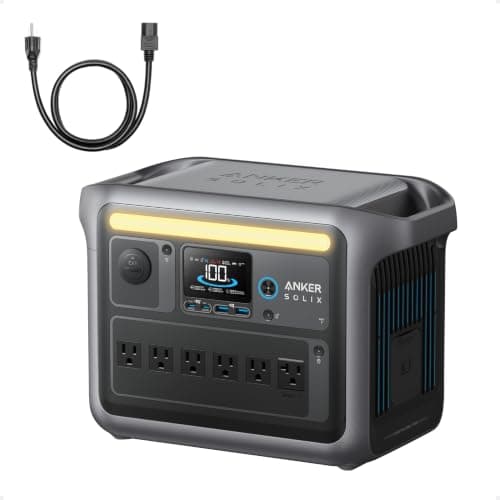
Anker SOLIX C1000

1,056Wh of LiFePO4 with 1,800W output — enough surge for a compressor.

A refrigerator plus lights and devices
2
No photo

For a fridge and a freezer

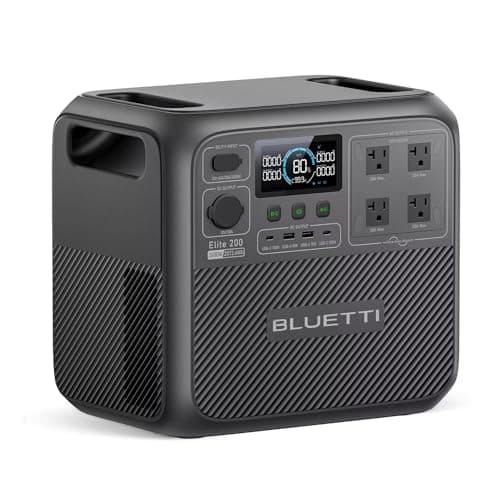
BLUETTI Elite 200 V2

2,073Wh of LiFePO4 with 2,600W output and a ten-year design life.

Two compressors that may start together
3
No photo

For an outage measured in days

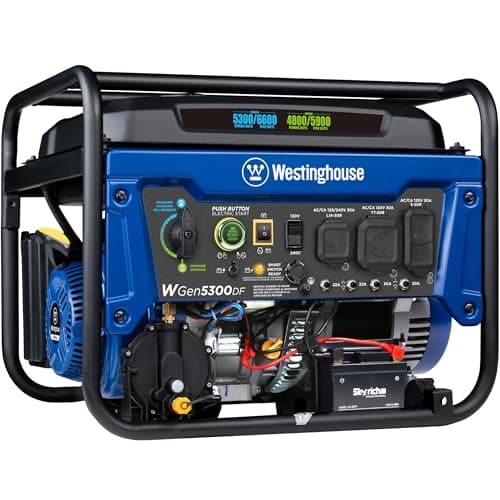
Westinghouse WGen5300DF

5,300 running watts, dual fuel, at about 0.32 gal/hr averaged across a tank.

Refrigeration plus the rest of the house

Prices come from the retailer at page-build time and change constantly. Where no live price is available the button reads “Check price” rather than showing a number we cannot stand behind.

The picks in full

01The right size for one fridge

Anker SOLIX C1000

1,056Wh of LiFePO4 with 1,800W output — enough surge for a compressor.

1,800W clears the 500-1,000W starting surge Champion publishes for a refrigerator with real margin, which is the specification that decides whether a battery works at all.

At this site's stated 150W average and 85% inverter efficiency, a kilowatt-hour is most of a day of refrigeration — or considerably longer if you run it in blocks.

Skip it ifyou need a fridge and a chest freezer at once. Two compressors is a 2kWh problem.

Published specifications for the Anker SOLIX C1000
SpecificationPublished figure
Usable capacity1,056 Wh
Cell chemistryLiFePO4 (LFP)
AC output1,800 W continuous / 2,400 W SurgePad
Cycle life3,000 cycles
Wall recharge80% in 43 min, full in 58 min
Max solar input600 W (full solar recharge ~1.8 h)
Ports11 total, including 6 AC on panel-equipped bundles

Source: Anker — SOLIX C1000 product specifications. These are the manufacturer's published figures, not ours — we have not tested this unit.

02For a fridge and a freezer

BLUETTI Elite 200 V2

2,073Wh of LiFePO4 with 2,600W output and a ten-year design life.

The reason to move up a tier is watts rather than hours. Two compressors on their own thermostats will eventually call within the same second, and 2,600W absorbs that where 1,800W may not.

Skip it ifone appliance is your whole requirement. The extra surge goes unused.

Published specifications for the BLUETTI Elite 200 V2
SpecificationPublished figure
Usable capacity2,073.6 Wh
Cell chemistryAutomotive-grade LiFePO4 (LFP)
AC output2,600 W continuous / 3,900 W power lifting
Cycle life6,000+ cycles
Fast charge0–80% in 50 min via dual AC/DC input

Source: BLUETTI — Elite 200 V2 product specifications. These are the manufacturer's published figures, not ours — we have not tested this unit.

03For an outage measured in days

Westinghouse WGen5300DF

5,300 running watts, dual fuel, at about 0.32 gal/hr averaged across a tank.

A refrigerator is the ideal load for block running because it stores cold. Two hours in the morning and two in the evening keeps food safe indefinitely and costs about a quarter of the fuel that continuous running would.

Skip it ifyour outages are under a day. A battery is quieter and needs no fuel.

Published specifications for the Westinghouse WGen5300DF
SpecificationPublished figure
Output (gasoline)5,300 running W / 6,600 peak W
Output (propane)4,800 running W / 5,900 peak W
Engine274cc 4-stroke OHV
Tank4.7 gal (18 L)
Run timeup to 14.5 h on a full tank
Transfer-switch outlet120/240 V L14-30R, 30 A
RV outlet120 V TT-30R, 30 A
StartingPush-button electric with remote key fob

Source: Westinghouse — WGen5300DF product specifications. These are the manufacturer's published figures, not ours — we have not tested this unit.

How these were chosen

We did not test these. Nobody at Watt & Warden has plugged one in. What we did instead: read the manufacturer's published specifications, compile them into a table where the figures line up, and compute the numbers manufacturers leave out — runtime against a real appliance load, and what an hour of running actually costs.

Anything that could not be sourced was left out rather than estimated, and every pick names the buyer who should skip it. The full method is here, including where it is weaker than a publisher with a test bench.

Questions people actually ask

How many watts does a refrigerator use?

Three different numbers. Champion publishes 500-1,000 starting watts and 100-500 running watts for refrigerators and freezers. But because the compressor only runs about a third of the time, the average across a day is much lower -- this site uses 150W as its stated planning assumption.

How much electricity does a fridge use per day?

At a 150W average, roughly 3,600Wh a day -- which after inverter losses needs about 4,200Wh of battery to cover continuously. Your own figure is knowable: take the annual kWh from the energy label, divide by 365 for daily, then by 24 and times 1,000 for the average watts.

Can I run a fridge intermittently during an outage?

Yes, and it is the single most useful thing you can do. A closed refrigerator holds temperature for about four hours per USDA guidance, so powering it four hours in twelve cuts daily consumption by roughly two thirds while keeping food safe. The discipline is keeping the door shut between runs.

What size power station do I need for a refrigerator?

At least 1,800W of inverter output, because the 500-1,000W starting surge needs margin and a compressor restarting against pressure draws hardest of all. Capacity follows from your run pattern -- roughly 1,200Wh a day with sensible block running rather than 3,600Wh continuous.

Why does my fridge use more power than the label says?

Age is the biggest factor -- efficiency standards have tightened repeatedly. Then ambient temperature, since a fridge in a hot garage works much harder; perished door seals; dusty condenser coils; how full it is; and ice makers or through-door dispensers, both worth switching off during an outage.

Sources

Every figure on this page comes from a published source. We have not tested this equipment, so the specifications are the manufacturer's and the statistics are the dataset's — the arithmetic on top of them is ours, and it is shown in full so you can check it. How we work this out.