The number, from marketplace data
EnergySage, which aggregates quotes from installers across the US, publishes an average of $1,159 per kWh of stored energy, and gives $15,647 installed for its reference system — a 13.5kWh battery. That page was updated in August 2026.
Two things about that figure are worth spelling out.
It is installed cost, not equipment cost. The battery itself is roughly half to two-thirds of it. The rest is the inverter or gateway, the electrical work, the permit, the inspection and the installer's margin.
It is before incentives. What is available to you depends on your state, your utility and the year, and it changes often enough that any number printed here would be wrong by the time you read it. Ask the installer to quote before and after, and verify the credits independently.
What the money actually buys
13.5kWh sounds enormous next to a portable power station, and next to a house it is modest. Here is the same energy expressed as things you care about.
| What you run | Average draw | Hours from 13.5 kWh |
|---|
| Critical loads: fridge, freezer, internet, lights | ~350 W | Well over a day |
|---|
| Critical loads plus a furnace fan | ~550 W | About 21 hours |
|---|
| Add a well pump cycling | ~750 W | About 15 hours |
|---|
| Add central air conditioning | ~3,500 W | Under 4 hours |
|---|
| Whole house, normal living | ~1,200 W average | About 11 hours |
|---|
Draw figures are this site's planning ranges from the appliance wattage chart. Real houses vary enormously; a panel monitor measures yours properly.
So the honest summary of a single 13.5kWh battery: it is a day of careful living, or an evening of normal living with air conditioning. It is not off-grid independence, and the marketing images of a house glowing through a multi-day storm assume solar refilling the battery every day.
Where the cost goes
- The battery. The biggest single line, and the one that scales with kWh.
- The inverter or gateway. Some systems integrate it, some charge separately. It is what allows the house to island itself from the grid.
- Electrical work. A critical-loads subpanel is common, because backing up everything costs far more than backing up what matters.
- Permits and inspection. Non-negotiable and jurisdiction-dependent.
- Labor and overhead. Which is why the same hardware varies between quotes by thousands.
Get at least three quotes and ask each to break out those lines. The spread between installers is routinely larger than the spread between battery brands.
The comparison nobody runs
Before committing to an installation, run the arithmetic against the alternatives honestly.
| Option | Rough cost bracket | What you get | What you give up |
|---|
| Installed home battery, 13.5 kWh | Highest | Automatic, silent, seamless, adds resale appeal | Cost, permits, and a fixed asset |
|---|
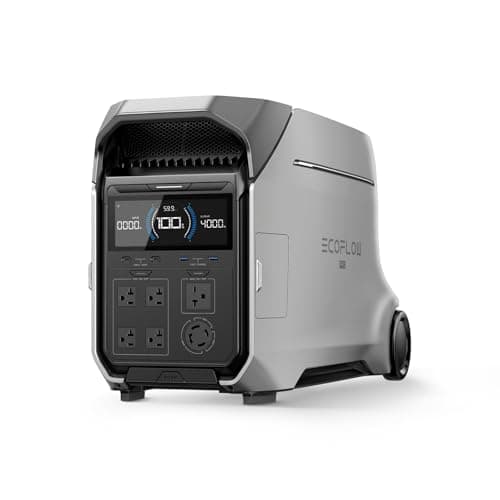
| Large portable with 240V | Middle | Real split-phase power, expandable, moves with you | Manual operation, no automatic transfer |
|---|
| Standby generator | Middle to high | Unlimited runtime on gas or propane | Noise, maintenance, fuel supply |
|---|
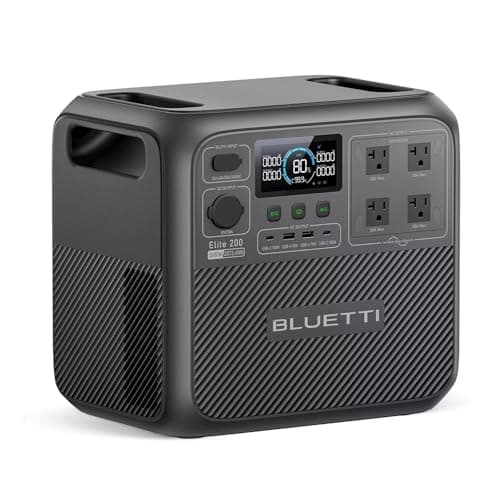
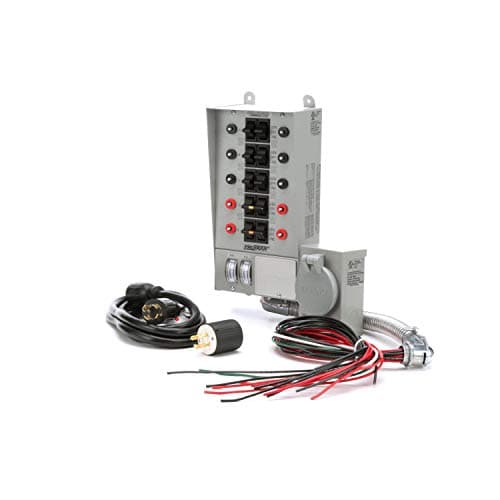
| 2kWh portable and a transfer switch | Lowest | The loads that matter, for a day | Everything else |
|---|
Deliberately expressed as brackets rather than figures: installed prices vary by region and quote, and the live price of every portable on this site is on its own product link. The generator versus battery page compares the two running costs properly.
Is it worth it?
There are three honest reasons to buy an installed battery, and one bad one.
- You already have solar. The battery makes the array useful during an outage, which most grid-tied systems are not.
- You are on a time-of-use tariff with a wide spread. Daily cycling gives the battery an economic job, not just an emergency one.
- Outages are frequent and you want no involvement. Automatic, silent switching has real value at 3am.
- The bad reason: buying one for a once-a-year outage you could cover with a portable costing a tenth as much.
The short version
- About $1,159 per kWh installed on EnergySage's 2026 marketplace average.
- Roughly $15,600 for a 13.5kWh system, before incentives.
- 13.5kWh is about a day of careful living, not a week off-grid.
- Price a large portable plus a transfer switch first. For many households it covers the same loads for a fraction of the cost.