Skip to content
Watt Warden

Home Standby

Running a Home Battery and a Generator Together

A battery is silent and finite. A generator is loud and endless. Put them together correctly and the engine runs two hours a day instead of twenty-four.

By Sawyer V.Updated Published How we work this out
A rural outbuilding with solar panels on the roof and cable reels in the yard.

Watt & Warden earns a commission on qualifying purchases made through links on this page, at no extra cost to you. It never changes a ranking, and our picks include products we tell you to skip. Full disclosure.

The verdict, in one paragraph

A battery-plus-generator pairing is the best answer to a multi-day outage, because the battery runs the house quietly and the generator only runs to refill it. The systems that publish explicit support are Anker SOLIX F3800 Plus, which accepts up to 6,000W of AC charging from a generator, and EcoFlow, whose Smart Home Panel 2 supports gas generators from 3 to 12kW and whose Smart Generator 4000 starts itself to recharge a DELTA Pro 3. The important exception is Tesla Powerwall 3: Tesla documents that it does not support charging from upstream generators or automatic generator control, though it can be installed with a downstream generator. Use an inverter generator, size it to the battery's published AC input, and buy a carbon monoxide alarm the same day.

Why the pairing beats either one alone

The two technologies fail in opposite directions, which is exactly why they combine well:

Battery aloneGenerator aloneBoth
DurationFixed by capacityLimited by fuel on handFuel-limited, at a fraction of the burn
NoiseNoneContinuous while runningAn hour or two a day
Switchover10-20 ms typicalManual, or seconds on a standby unitBattery handles it; engine is invisible
Small loadsEfficientWasteful - engines idle badlyBattery takes them
Large motor startLimited by inverter surgeStrongEither, whichever is running
OvernightSilentA neighbor problemSilent - engine off

Switchover figures are the manufacturer ranges published across the units on this site. Everything else is a structural property of the two technologies rather than a specification.

The practical arithmetic: a generator sized to run a house burns fuel continuously whether the house is drawing 400W or 4,000W. Charging a battery instead means the engine runs at or near its efficient output for a short, chosen period — which is both quieter and less fuel per kilowatt-hour delivered.

Which systems accept generator charging

SystemGenerator chargingAutomatic start
Anker SOLIX F3800 PlusYes - up to 6,000 W via generator or Home Power Panel, against 1,800 W standard ACNot published
EcoFlow DELTA Pro 3Yes - Smart Generator 4000, and 3-12 kW gas generators via Smart Home Panel 2Yes, with the Smart Generator 4000
EcoFlow DELTA Pro UltraYes - up to 12 kW of generator charging publishedYes, via Smart Home Panel 2
Anker SOLIX F3800AC input published at 1,800 W maxNot published
Tesla Powerwall 3No - Tesla documents no charging from an upstream generator; a downstream generator may be installedNo - no automatic generator control

Manufacturer documentation, cited under Sources. Where a figure is not published we say so rather than inferring it from a similar model.

The Tesla exception, stated plainly

This is worth isolating because it is the opposite of what most people assume about the most famous product in the category. Tesla's own design documentation for Powerwall 3 states that it does not support charging from upstream generators or automatic generator control, and that Powerwall 3 can be installed with a downstream generator. Tesla also documents that Powerwall 3 systems must have a grid connection and that fully off-grid systems are not supported.

"Downstream" means the generator feeds loads on the far side of the Powerwall rather than charging it. The engine can keep the house alive; it cannot refill the battery. For a household planning a multi-day hybrid, that is a design constraint rather than a detail — and it is the strongest practical argument for the modular systems in this round. Powerwall versus a generator and Powerwall alternatives cover the wider comparison.

How to wire it, three ways

  1. Cord to the battery. The simplest and the one most people start with: generator outside, extension cord to the battery's AC input, battery feeding the loads. No panel work, no permit, no electrician. It is also the version where somebody has to go outside to start the engine.
  2. Generator to an inlet, battery on the critical-load panel. The engine charges through a proper inlet box while the battery handles switchover. Inlet boxes explained covers the hardware and connecting a generator to your house the wiring.
  3. A smart panel managing both. EcoFlow's Smart Home Panel 2 is the documented example: twelve circuits, a 20ms switchover, and published support for 3 to 12kW gas generators. This is an installation with a contractor, and the version that works unattended.

Whichever route, never backfeed a panel through a dryer outlet. It energizes the utility side, it kills line workers, and it is the reason interlock kits exist — transfer switch versus interlock kit is the page on doing it legally.

Use an inverter generator, not a conventional one

A battery's AC charger is more particular about waveform than a light bulb is. Inverter generators produce pure sine wave output; conventional ones produce a rougher approximation, and some chargers and electronics object to it.

If you already own a conventional generator, try it before you replace it — many batteries accept it without complaint, and Anker's published 30 to 50ms generator switchover suggests the systems expect imperfect input. But if you are buying for this purpose, inverter versus conventional explains why the inverter is the right tool, and pure sine versus modified sine covers what the waveform actually does to a load.

Size the generator to the battery's input, not the house

The common mistake is buying a generator sized for the house when its only job is charging. The number that matters is the battery's published AC input ceiling:

  • 1,800W input — the standard figure across this class. A 2,200W inverter generator matches it almost exactly and nothing larger helps.
  • 3,000 to 4,000W input — a 3,700W running inverter generator keeps the charger saturated.
  • 6,000W input (F3800 Plus) or 12kW (DELTA Pro Ultra) — now you are sizing a real generator, and the hybrid's appeal is speed rather than silence.

One qualifier: if the generator is also running loads while it charges, add those watts. A 3,700W unit charging at 1,800W has 1,900W left for the house, which is a different plan from 3,700W of charging.

The fuel arithmetic, which is the real payoff

Take the suburban keep-list from the home battery sizing page: about 8.4kWh a day. A generator running that load continuously burns fuel for twenty-four hours at a fraction of its rated output, which is the least efficient way an engine can work.

Charging a battery instead means roughly 8.4kWh of generator output delivered near the engine's efficient band — call it four to five hours on an 1,800W charger, or under two on a 6,000W one. Same energy, a fifth of the runtime, and the household sleeps through the night. How much gas a generator uses has the consumption figures, and storing generator fuel covers keeping enough of it to matter.

Who should build a hybrid

  • Multi-day outages, more than once a year: yes. This is the scenario the pairing exists for.
  • Rural property with a well: yes, and prioritize split-phase on the battery — the split-phase page is the shortlist.
  • A neighborhood with noise rules, or a baby in the house: yes. The engine running two hours a day instead of twenty-four is the whole point.
  • Outages that end before morning: no. One battery sized properly does the job and the generator never earns its keep.
  • You already own a Powerwall 3: not as a charging hybrid. Tesla documents that it will not take an upstream generator's power. A downstream generator is a separate backup layer rather than a pairing.

The short version

The battery runs the house; the generator refills the battery. Anker's F3800 Plus publishes the fastest generator input at 6,000W, EcoFlow's ecosystem is the one that automates the engine start, and Tesla's Powerwall 3 explicitly does not charge from an upstream generator. Buy an inverter generator sized to the battery's published AC input rather than to the house, connect it through an inlet rather than a dryer outlet, and put a CO alarm inside the same week the engine arrives.

Quick picks

#ProductBest forPrice
1
Anker SOLIX F3800 Plus

Built for the hybrid

Anker SOLIX F3800 Plus

1,800W of AC charging normally, and 6,000W via a generator or the Home Power Panel — the fastest published generator input here.

A multi-day outage where the engine should run as little as possible
$2,599.99 · Check price on Amazon

#ad how this is funded · price as of October 20, 2026

2
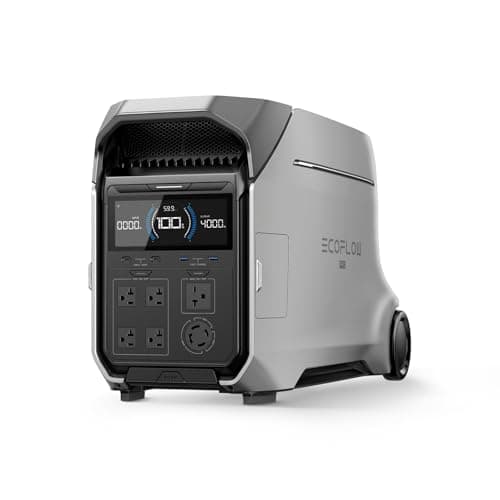
EcoFlow DELTA Pro 3

The automated version

EcoFlow DELTA Pro 3

Compatible with EcoFlow's Smart Generator 4000 for automatic recharging, and with the Smart Home Panel 2, which supports gas generators from 3 to 12kW.

A household that will not be awake to restart the engine
$2,799.00 · Check price on Amazon

#ad how this is funded · price as of October 20, 2026 · $3,699.00 24% off

3
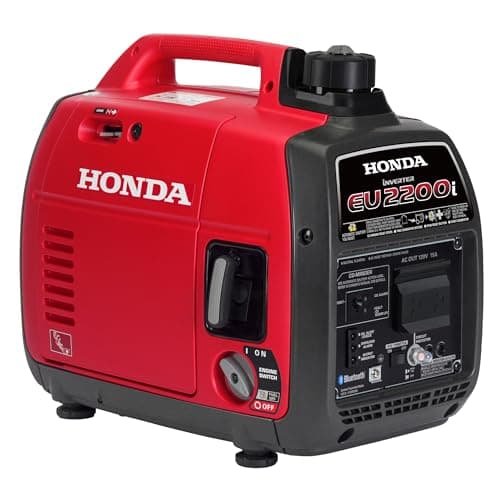
Honda EU2200i

The cleanest charging source

Honda EU2200i

1,800W rated of pure sine inverter power at 48-57 dB(A) and 47 lb, with CO-Minder shutdown built in.

Matching a 1,800W battery input exactly, quietly
$1,199.00 · Check price on Amazon

#ad how this is funded · price as of October 20, 2026

4
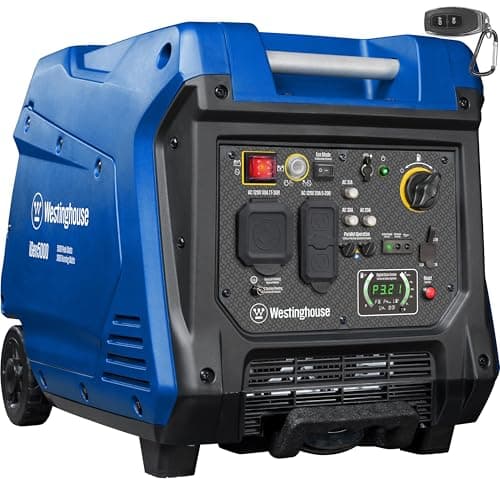
Westinghouse iGen4500

Enough watts to refill a large bank

Westinghouse iGen4500

3,700 running watts of pure sine inverter power with remote electric start and a TT-30R.

A battery that accepts 3,000W or more of AC input
$849.00 · Check price on Amazon

#ad how this is funded · price as of October 20, 2026

5
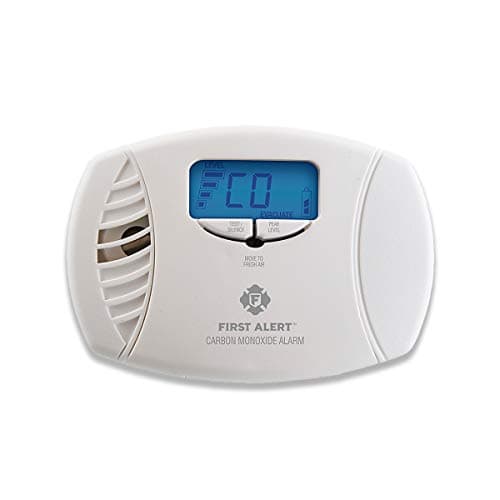
First Alert CO615 CO alarm

The pick that is not optional

First Alert CO615 CO alarm

A plug-in CO alarm with a backlit ppm readout and AA battery backup, 85 dB at 10 ft.

Anyone whose outage plan now involves a running engine
$44.95 · Check price on Amazon

#ad how this is funded · price as of October 20, 2026

Prices come from the retailer at page-build time and change constantly. Where no live price is available the button reads “Check price” rather than showing a number we cannot stand behind.

The picks in full

01 — Built for the hybrid

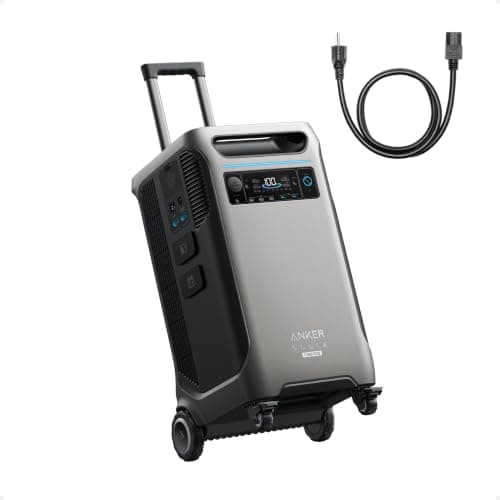
Anker SOLIX F3800 Plus

1,800W of AC charging normally, and 6,000W via a generator or the Home Power Panel — the fastest published generator input here.

Anker publishes two AC charging figures for the F3800 Plus: 1,800W standard, and up to 6,000W via a generator or the Home Power Panel. That second number is the entire argument for the hybrid.

At 6,000W, 3,840Wh of battery refills in well under an hour. A generator that runs for forty minutes twice a day and is silent the rest of the time is a different experience from one that idles through the night.

The honest catch: Anker also publishes a slower switchover on generator power — 30 to 50ms against 20ms from the wall. That is still invisible to a refrigerator and may not be to a desktop computer without its own UPS.

Skip it ifyou have no generator and no intention of buying one. The standard F3800 costs less for the same battery.

Anker SOLIX F3800 Plus
$2,599.99 · Check price on Amazon

#ad how this is funded · price as of October 20, 2026

Published specifications for the Anker SOLIX F3800 Plus
SpecificationPublished figure
Capacity3,840 Wh
Cell chemistryLiFePO4, 3,000+ cycles
AC output6,000 W max; 120V outlets 2,400 W max
Split-phase portL14-30R, 120/240V, 6,000 W
Solar inputUp to 3,200 W across two 165V MPPT inputs
AC charging1,800 W standard; 6,000 W via generator or Home Power Panel
Switchover20 ms from the wall; 30-50 ms on generator
ExpansionUp to six 3.84 kWh batteries, 26.88 kWh total
Weight136.7 lb
Warranty5 years

Source: Anker SOLIX — F3800 Plus product specifications. These are the manufacturer's published figures, not ours — we have not tested this unit.

02 — The automated version

EcoFlow DELTA Pro 3

Compatible with EcoFlow's Smart Generator 4000 for automatic recharging, and with the Smart Home Panel 2, which supports gas generators from 3 to 12kW.

EcoFlow documents the DELTA Pro 3 as compatible with the Smart Generator 4000 for auto-recharging, and EcoFlow's Smart Home Panel 2 publishes support for gas generators in the 3 to 12kW range.

Automatic start on low state of charge is the feature that makes a hybrid work unattended. Without it, somebody has to notice the battery is at 15% and go outside in the weather.

The honest catch: EcoFlow's published 48kWh system ceiling for the DELTA Pro 3 includes the Smart Generator in the count. Read it as a system figure, not a battery one — the stacking page separates the two.

Skip it ifyou already own a conventional generator and have no plans to replace it. Automation is an EcoFlow-ecosystem feature.

EcoFlow DELTA Pro 3
$2,799.00 · Check price on Amazon

#ad how this is funded · price as of October 20, 2026 · $3,699.00 24% off

Published specifications for the EcoFlow DELTA Pro 3
SpecificationPublished figure
Capacity4,096 Wh
Cell chemistryLiFePO4 (LFP)
AC output4,000 W, 120V / 240V
Cycle life4,000+ cycles to 80% capacity
Wall recharge0-80% in about 1 hour
Max solar input2,600 W
Expansion4 kWh to 48 kWh

Source: EcoFlow — DELTA Pro 3 product listing. These are the manufacturer's published figures, not ours — we have not tested this unit.

03 — The cleanest charging source

Honda EU2200i

1,800W rated of pure sine inverter power at 48-57 dB(A) and 47 lb, with CO-Minder shutdown built in.

A charger is a fussy load. An inverter generator produces pure sine wave output, which is what a battery's AC charger expects, and 1,800W rated happens to be exactly the standard AC input of most units in this class.

48 to 57 dB(A) also matters more in a hybrid than in a conventional setup, because the engine is running at the times you chose rather than the times you had no option — the quiet generator roundup compares the field.

The honest catch: 1,800W into a 22kWh bank is over twelve hours of running. For large banks the quiet unit is the wrong tool — fuel consumption is the figure that decides it.

Skip it ifyour battery accepts more than 1,800W. You will be paying for silence instead of speed.

Honda EU2200i
$1,199.00 · Check price on Amazon

#ad how this is funded · price as of October 20, 2026

Published specifications for the Honda EU2200i
SpecificationPublished figure
Output2,200 W max / 1,800 W rated
TypeInverter (pure sine wave)
Noise48–57 dB(A)
Weight47.4 lb
Tank0.95 gal
Run timeup to 8.1 h on a full tank
FeaturesEco Throttle, CO-Minder, Bluetooth app monitoring

Source: Honda Power Equipment — EU2200i specifications. These are the manufacturer's published figures, not ours — we have not tested this unit.

04 — Enough watts to refill a large bank

Westinghouse iGen4500

3,700 running watts of pure sine inverter power with remote electric start and a TT-30R.

Once a battery accepts more than 1,800W of charging, the generator becomes the bottleneck. 3,700 running watts of inverter power fills a 4kWh bank in roughly an hour and a half rather than two and a half.

Remote electric start is the quiet usability feature here: starting the engine from inside during a storm is the difference between a hybrid you use and one you resent.

The honest catch: charging is not the only load. If the generator is also running the house while the battery fills, the available charging wattage is whatever is left over.

Skip it ifyour battery caps AC input at 1,800W. The extra output has nowhere to go.

Westinghouse iGen4500
$849.00 · Check price on Amazon

#ad how this is funded · price as of October 20, 2026

Published specifications for the Westinghouse iGen4500
SpecificationPublished figure
Output (gasoline)3,700 running W / 4,500 peak W
TypeInverter (pure sine wave)
StartingRemote electric start with auto choke
RV outlet120 V TT-30R, 30 A
ParallelCapable with a second unit

Source: Westinghouse — iGen4500 product specifications. These are the manufacturer's published figures, not ours — we have not tested this unit.

05 — The pick that is not optional

First Alert CO615 CO alarm

A plug-in CO alarm with a backlit ppm readout and AA battery backup, 85 dB at 10 ft.

A hybrid setup changes your risk profile. A battery alone produces no exhaust; adding a generator puts a combustion engine into a scenario where doors and windows are shut and the household is asleep.

A plug-in alarm with battery backup and a ppm display is the right shape for this, because the digital readout tells you whether something is accumulating before it reaches alarm threshold.

The honest catch: an alarm is detection, not prevention. Generator carbon monoxide safety covers placement, distances and the mistakes that kill people every storm season.

Skip it ifnothing — and if the only reason you are skipping it is that you already have one, check its date.

First Alert CO615 CO alarm
$44.95 · Check price on Amazon

#ad how this is funded · price as of October 20, 2026

Published specifications for the First Alert CO615 CO alarm
SpecificationPublished figure
SensorElectrochemical
Power120 V AC plug-in with AA battery backup
DisplayBacklit digital ppm readout
Alarm85 dB at 10 ft
FeaturesPeak level memory, test/silence button
Warranty5-year limited

Source: First Alert — CO615 product page. These are the manufacturer's published figures, not ours — we have not tested this unit.

How these were chosen

We did not test these. Nobody at Watt & Warden has plugged one in. What we did instead: read the manufacturer's published specifications, compile them into a table where the figures line up, and compute the numbers manufacturers leave out — runtime against a real appliance load, and what an hour of running actually costs.

Anything that could not be sourced was left out rather than estimated, and every pick names the buyer who should skip it. The full method is here, including where it is weaker than a publisher with a test bench.

Questions people actually ask

Can you charge a home battery with a generator?

On most modular systems, yes. Anker publishes up to 6,000W of AC charging for the F3800 Plus via a generator or the Home Power Panel, against 1,800W from a standard wall outlet. EcoFlow's Smart Home Panel 2 publishes support for gas generators from 3 to 12kW, and the Smart Generator 4000 starts itself to recharge a DELTA Pro 3.

Can a generator charge a Tesla Powerwall 3?

No. Tesla's design documentation states that Powerwall 3 does not support charging from upstream generators or automatic generator control. A downstream generator can be installed, meaning it feeds loads beyond the Powerwall rather than recharging it. Tesla also states that Powerwall 3 systems must have a grid connection and that fully off-grid systems are not supported.

Do I need an inverter generator to charge a battery?

It is the right tool. A battery's AC charger expects clean pure sine wave power, which is what an inverter generator produces. Many batteries accept a conventional generator without complaint, and Anker's published 30 to 50ms generator switchover suggests the systems tolerate imperfect input, but if you are buying for this purpose an inverter generator removes the question.

What size generator do I need to charge a home battery?

Size it to the battery's published AC input ceiling, not to the house. Most units in this class cap AC charging at 1,800W, which a 2,200W inverter generator matches almost exactly. Only move up if the battery accepts more - the F3800 Plus at 6,000W and the DELTA Pro Ultra at 12kW are the exceptions. Add the house loads if the generator will run them at the same time.

Is a battery plus a generator cheaper than a standby generator?

It depends on the outage pattern rather than the hardware price. A hybrid wins where outages are frequent but short, because the battery covers most of them with no engine at all. A standby generator wins where outages are long and the whole house has to behave normally, since battery capacity for that is priced per kilowatt-hour and runs out.

How much fuel does the hybrid save?

The saving comes from runtime, not efficiency tricks. A keep-list drawing about 8.4kWh a day forces a house-sized generator to run all twenty-four hours at a small fraction of its rating, which is the least efficient way an engine works. Charging a battery delivers the same energy in four to five hours on an 1,800W charger, or under two hours at 6,000W.

Can I just run an extension cord from the generator to the battery?

Yes, and it is how most people start. Generator outside at a safe distance, cord to the battery's AC input, battery feeding the loads. No panel work and no permit. The limitation is that somebody has to go outside in the weather to start and stop the engine, which is what automatic generator start and a smart panel exist to solve.

Sources