The three numbers that matter
Champion's published wattage chart puts a freezer at 100 to 500 running watts and 500 to 1,000 starting watts. The third number is the one nobody prints: the duty cycle, or what fraction of the hour the compressor actually runs.
A freezer is not a continuous load. The compressor runs, the cabinet reaches temperature, the compressor stops. On a typical unit in a cool garage that is somewhere between a quarter and a half of the time — and that fraction is why the energy cost is so much lower than the wattage suggests.
| Freezer | Running watts | Average over an hour | Energy per day |
|---|
| Small chest, well filled | ~100 W | ~40 W | About 1 kWh |
|---|
| Large chest | ~200 W | ~70 W | About 1.7 kWh |
|---|
| Upright, frost-free | ~350 W | ~120 W | About 2.9 kWh |
|---|
| Old or poorly sealed unit | Up to 500 W | Up to 250 W | Up to 6 kWh |
|---|
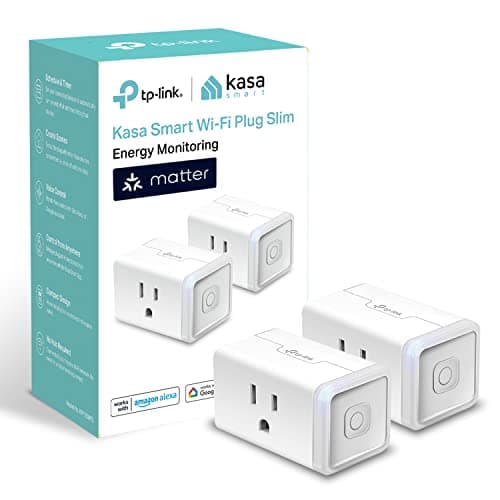
Running and starting watts are Champion's published figures. The averages assume a 35 to 50% duty cycle, which is ours and deliberately cautious — a metering plug gives you your own number in a day.
Two structural points fall out of that table. A chest freezer is dramatically cheaper to back up than an upright one, because cold air does not fall out of it when the lid opens. And a full freezer is cheaper than an empty one, because frozen mass holds temperature while the compressor is off.
What it takes to keep one cold
Planning at 85% inverter efficiency, here is what a battery buys.
| Battery | Usable energy | Chest freezer at 40W avg | Upright at 120W avg |
|---|
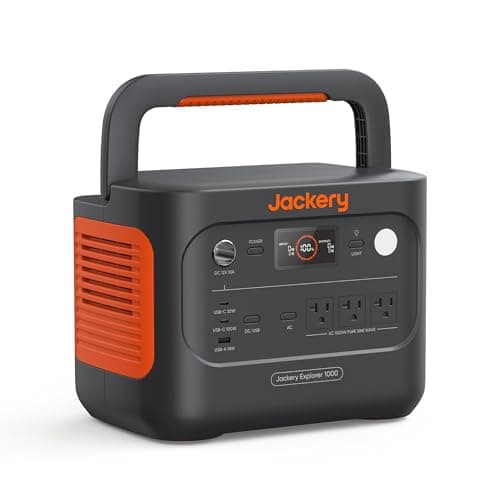
| 500Wh class | ~425 Wh | About 10 hours | About 3.5 hours |
|---|
| 1,000Wh class | ~900 Wh | About 22 hours | About 7.5 hours |
|---|
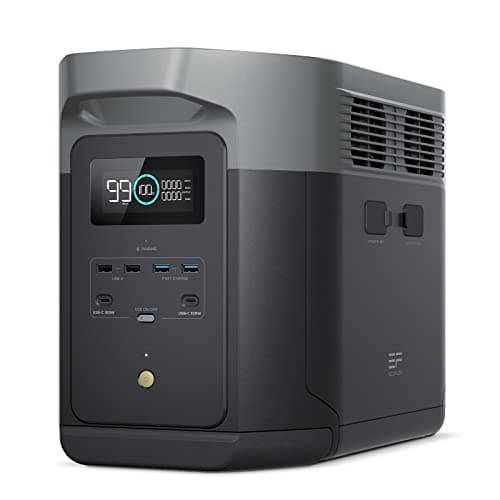
| 2,000Wh class | ~1,740 Wh | Over 40 hours | About 14 hours |
|---|
| 3,000Wh class | ~2,570 Wh | Over 60 hours | About 21 hours |
|---|
Usable energy is capacity x 0.85. Runtimes use the averages above, not the peak running watts — a compressor that runs 40% of the time only spends 40% of the hour drawing power.
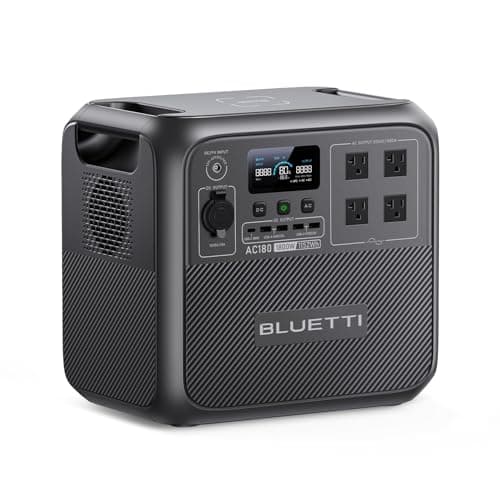
A well-filled chest freezer on a 1kWh battery is close to a full day. That is the single most cost-effective backup purchase in this whole category, and it is why the freezer, not the refrigerator, is often the right first thing to protect.
The surge is the sizing constraint
Energy is easy. The compressor start is not.
At 500 to 1,000 starting watts, a freezer needs an inverter that can deliver that momentarily without folding. Any 1,000W-class battery with 1,500W or more of continuous output and a surge rating above 2,000W has the margin. The starting-watts page explains why the surge lasts a fraction of a second and still decides the purchase.
What does not work: a 300W station, a small inverter in a car, or a UPS. Those fail at the start, not at the run.
Cheaper than buying watts: keep the lid shut
The most effective thing you can do for a freezer in an outage costs nothing.
- Do not open it. Every opening dumps cold air and the compressor has to replace it.
- Fill the empty space. Jugs of water frozen in advance turn air into thermal mass, and thermal mass is what keeps the cabinet cold when the power is off.
- Move the freezer out of the sun and the heat. A garage freezer against a west wall in August works far harder than one in a basement.
- Put a thermometer in it. Knowing the temperature is the difference between a decision and a guess about the contents.
Those habits stretch whatever battery you own, and they are the reason a freezer usually survives short outages with no backup at all.
Generator or battery?
The crossover is around a day.
Under 24 hours: a battery, silently, indoors, with no fuel to store. A 1 to 2kWh unit covers it.
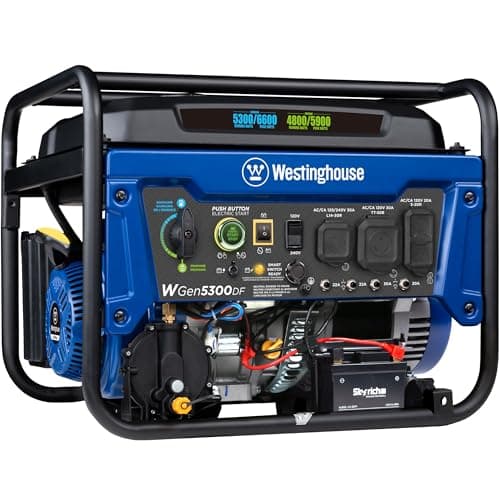
Over 24 hours: a generator, run intermittently. You do not need to run it continuously — two hours morning and evening keeps a freezer frozen, which turns a fuel problem into a manageable one. The freezer backup page covers that routine in full.
The short version
- 100 to 500 running watts, 500 to 1,000 to start, per Champion's chart.
- Roughly 1 to 2 kWh a day for a typical chest freezer, because of the duty cycle.
- A 1kWh battery runs a full chest freezer for the best part of a day.
- Size for the surge, not the run, and keep the lid shut.