Why the gap exists
A stationary electric motor has almost no resistance to current. It is essentially a coil of wire, and until it is turning it generates no back-EMF to oppose the supply.
So at the instant of switching on, current rushes in — the industry term is locked-rotor amperage — and falls away rapidly as the motor spins up and starts opposing the supply itself. The whole event lasts a fraction of a second.
A compressor makes it worse, because it starts against pressure. A refrigerator that has just cycled off and restarts before the pressures equalize draws harder than one starting cold, which is why the same appliance can start fine ten times and trip on the eleventh.
Which appliances do it, and by how much
| Appliance | Running watts | Starting watts | Ratio |
|---|
| Freezer | 100-500 | 500-1,000 | ~2-5x |
|---|
| Furnace fan (½ HP) | 300-800 | 800-1,600 | ~2x |
|---|
| Furnace fan (⅓ HP) | 700 | 1,400 | 2x |
|---|
| Window AC, 10,000 BTU | 900-1,200 | 1,800-2,400 | 2x |
|---|
| Central AC, 3 ton | 3,000-3,500 | 5,000-6,000 | ~1.7x |
|---|
| Space heater | 750-1,500 | — | 1x — no motor |
|---|
| LED lighting, router, laptop | 20-100 | — | 1x — no motor |
|---|
All figures are Champion Power Equipment's published ranges, with the furnace-fan-by-horsepower rows from Honda Power Equipment's wattage estimation guide. Where a manufacturer publishes no starting figure, the appliance has no motor and the cell is left blank rather than filled with an estimate.
The pattern is simple and worth internalizing: if it has a motor or a compressor, expect roughly two to five times. If it makes heat or light or runs electronics, the starting figure is the running figure.
How to do the arithmetic properly
The mistake is adding all the starting watts together. Motors do not start simultaneously by design, and if they all did, no domestic supply would cope either.
The correct method:
- Add the running watts of everything that will be on.
- Find the largest single starting wattage on the list.
- Peak demand = total running watts − that appliance's running watts + its starting watts.
Worked, for a fridge, lights, a router and a furnace fan:
- Running: 150 + 50 + 20 + 800 = 1,020W
- Largest starting figure: furnace fan at 1,600W
- Peak: 1,020 − 800 + 1,600 = 1,820W
So a 2,000W-class inverter covers it, and a 1,500W one does not — even though the running total is only 1,020W.
The two-motor problem
Here is where the neat method breaks down, and it is the single most common reason equipment disappoints.
Two compressors on the same battery are not coordinated. A fridge and a chest freezer both cycle on their own thermostats, and sooner or later they call within the same second. The peak is then both surges together:
- Fridge starting: 1,000W
- Freezer starting: 1,000W
- Everything else running: ~70W
- Worst-case peak: about 2,070W
It will not happen most of the time. It will happen eventually, and when it does an 1,800W inverter shuts off — usually overnight, silently, and you find out in the morning.
That coincidence is the whole reason the 2kWh tier exists, and it is bought for the watts rather than the watt-hours.
Why generators cope better than batteries
Two machines with the same headline output do not behave the same way under a surge.
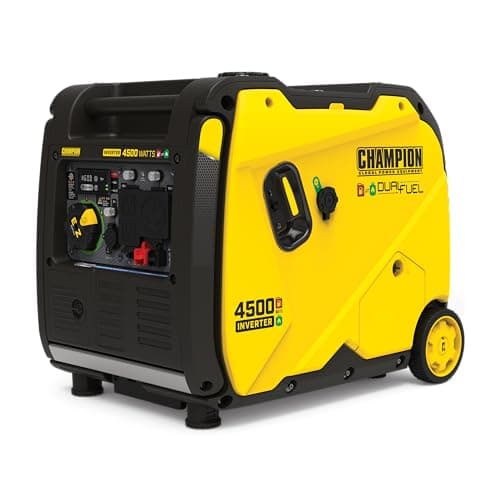
A generator has a spinning alternator with real rotational inertia. A brief overload pulls the engine speed down slightly and it recovers, which gives it a natural tolerance for very short spikes.
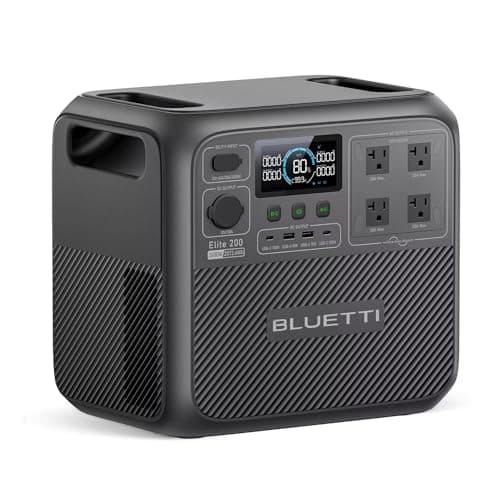
A battery inverter has no inertia. It has semiconductors with hard thermal and current limits, and it protects itself by shutting off rather than sagging. Some units publish a short-term surge rating above their continuous figure; treat that as a specification to check rather than assume.
Practically: be more generous with headroom on a battery than you would be on a generator for the same load.
Five ways to reduce the surge
- Start things one at a time. Get the fridge running, wait, then plug in the next thing. Most people do the opposite in the dark.
- Do not restart a compressor immediately. Give it two or three minutes after it stops so the pressures equalize. Restarting against pressure is the hardest start there is.
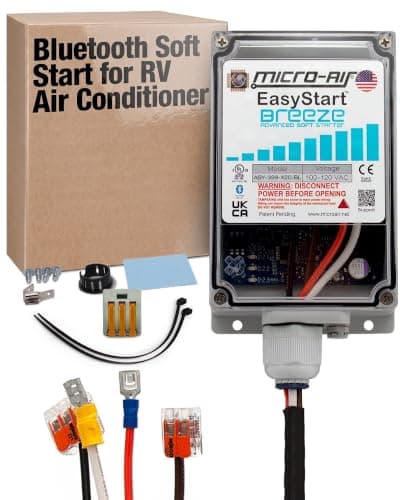
- Fit a soft starter where the appliance is an air conditioner. A reduction of up to 75% in the in-rush current is a large one.
- Prefer inverter-driven appliances if you are buying new. An inverter compressor ramps up rather than slamming on, so the surge is far smaller.
- Use short, thick cords. Voltage drop during a surge makes the motor draw more current to do the same work, which is a real effect on a long thin cord. Gauge matters.
What the specification sheet is telling you
Generators are advertised in starting watts because motor loads are their job, and the running figure is usually smaller and quieter in the marketing. Batteries are advertised in watt-hours because that is the big number.
In both cases the useful reading is the same: continuous output is what you own; the surge figure is what stops you being caught out. Buy on the continuous rating and check that the surge rating covers your largest motor.
Sizing a battery and sizing a generator both start from this calculation.