Skip to content
Watt Warden

Sizing

How Much Power Does a Well Pump Use?

A well pump uses less energy across a day than a refrigerator and demands more power in the instant it starts than anything else in a normal house.

By Sawyer V.Updated Published How we work this out
A pressure gauge attached to water piping.

Watt & Warden earns a commission on qualifying purchases made through links on this page, at no extra cost to you. It never changes a ranking, and our picks include products we tell you to skip. Full disclosure.

What sets the number

Three things, and only the first is on the spec sheet people look at.

1. Horsepower. Residential submersible pumps are commonly 1/2, 3/4 or 1 HP. Each step up is a substantial increase in both running and starting draw.

2. Depth and lift. A pump pushing water up 250 feet works harder than the same pump at 80 feet. Depth is why two houses with identical pumps can have different real-world draw.

3. Pump type. A shallow-well jet pump sitting in the basement behaves differently from a submersible hanging down the casing, and convertible jet pumps differ again.

Typical figures

PumpRunning wattsWhat to plan for
1/2 HP jet, shallow wellAbout 800-1,000 W5,000W class covers it with the rest of the list
1/2 HP submersibleAbout 1,000 W5,000-7,500W class
1 HP submersibleAbout 2,000 W7,500W class or above
1.5 HP or a deep liftHigher again9,500W and up

Running figures are typical residential ranges. Starting draw is several times these numbers for a fraction of a second and is what the equipment has to absorb — the plate on the pump or its control box is the authoritative source for your own installation.

The energy is trivial. The power is not.

This is the surprise, and it changes what you buy.

A well pump only runs to refill the pressure tank. A household using around 200 gallons a day, with a pump moving roughly 10 gallons a minute, is asking the pump to run about 20 minutes across the whole day.

Pump20 min of runningShare of a 2,000 Wh battery
1/2 HP at 1,000 WAbout 0.33 kWhUnder a fifth
1 HP at 2,000 WAbout 0.67 kWhAbout a third

Calculated as running watts x 20/60 minutes. Real household water use varies widely; conservation during an outage cuts this further.

So a day of normal water use costs a fraction of a kilowatt-hour. The battery or generator is not sized for that — it is sized entirely for the instant the motor starts. The starting watts page explains the physics.

Why 240V changes the shortlist before wattage does

A residential well pump is almost always 240V, wired to a dedicated circuit through a control box. Two consequences that eliminate most equipment immediately.

It needs a 240V source. A generator whose panel shows only 120V household sockets and a TT-30 RV outlet cannot run one at any wattage. Look for an L14-30R or a 14-50R first.

It needs a transfer switch or an interlock. There is no plug to use. The comparison page covers the two legal routes and what each costs.

Reducing what the pump has to do

Two moves that make a smaller machine sufficient.

Fill containers while the pump is available. Run the generator in blocks and fill jugs, buckets and the bath. The pump then does not need to be on the same schedule as your water use — the water storage page covers what is worth storing.

Ask about a soft starter. Some pump control boxes can be fitted with a soft start that ramps the motor rather than slamming it on, which substantially reduces the surge. That is a well contractor's job, and it can be cheaper than the next size up of generator.

The short version

  • 1/2 HP is about 1,000W running; 1 HP is about 2,000W.
  • Starting draw is several times that, and it is what you buy against.
  • Energy use is tiny — under a kilowatt-hour for a normal day.
  • 240V and a transfer switch come before wattage.

Quick picks

#ProductBest forPrice
1
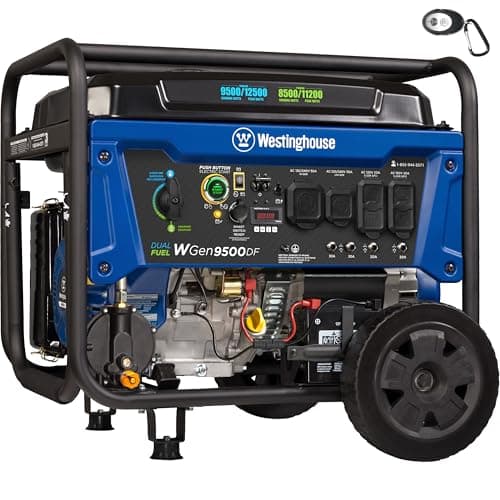
Westinghouse WGen9500DF

Best for a 1 HP pump

Westinghouse WGen9500DF

9,500 running watts on gasoline with both 240V outlets a pump circuit needs.

A deep well with margin left over
$999.00 · Check price on Amazon

#ad how this is funded · price as of October 21, 2026

2
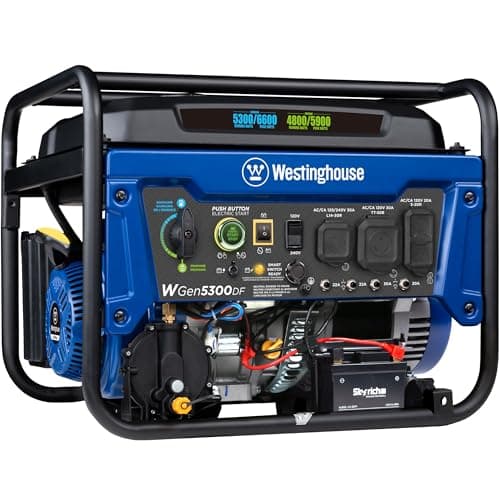
Westinghouse WGen5300DF

Best for a smaller pump

Westinghouse WGen5300DF

5,300 running watts of dual fuel with a 240V outlet.

A 1/2 HP pump plus the rest of the critical list
$649.00 · Check price on Amazon

#ad how this is funded · price as of October 21, 2026

3
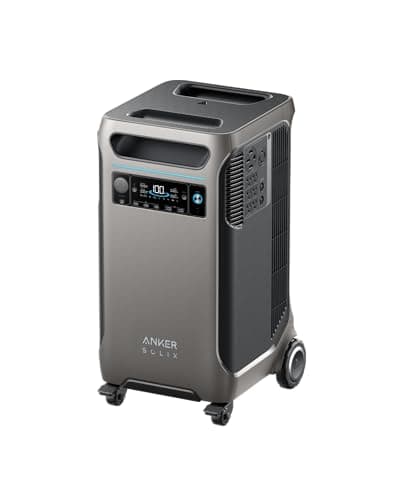
Anker SOLIX F3800

The battery that can do it

Anker SOLIX F3800

3,840Wh with 6,000W continuous, 9,000W surge and true 120/240V split-phase.

Running a pump without an engine
$1,759.99 · Check price on Amazon

#ad how this is funded · price as of October 21, 2026

4
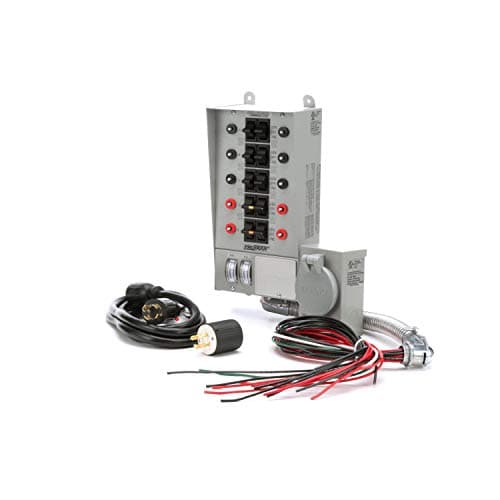
Reliance Controls 31410CRK Pro/Tran

The connection, which is not optional

Reliance Controls 31410CRK Pro/Tran

A 10-circuit manual transfer switch rated 30A / 7,500W with two watt meters.

Getting any source to a hardwired pump
$475.20 · Check price on Amazon

#ad how this is funded · price as of October 21, 2026

Prices come from the retailer at page-build time and change constantly. Where no live price is available the button reads “Check price” rather than showing a number we cannot stand behind.

The picks in full

01 — Best for a 1 HP pump

Westinghouse WGen9500DF

9,500 running watts on gasoline with both 240V outlets a pump circuit needs.

Well pumps are bought against their surge, and the surge is the least predictable number in the house. Margin here is not waste, it is the difference between water and no water.

Both 240V outlets matter because a residential well pump is almost always 240V and hardwired — a machine with only 120V sockets cannot supply one at any wattage.

The honest catch: a 30A transfer switch caps this at 7,500W. Size the switch and the generator together.

Skip it ifyour pump is 1/2 HP and shallow. That is a smaller, cheaper machine.

Westinghouse WGen9500DF
$999.00 · Check price on Amazon

#ad how this is funded · price as of October 21, 2026

Published specifications for the Westinghouse WGen9500DF
SpecificationPublished figure
Output (gasoline)9,500 running W / 12,500 peak W
FuelGasoline or propane (dual fuel)
Engine457cc 4-stroke OHV, cast iron sleeve
Tank6.6 gal (25 L)
Run timeup to 12 h on a full tank
Transfer-switch outlet120/240 V L14-30R, 30 A
RV outlet120/240 V 14-50R, 50 A
StartingPush-button electric with remote key fob
Warranty3-year limited

Source: Westinghouse — WGen9500DF product specifications. These are the manufacturer's published figures, not ours — we have not tested this unit.

02 — Best for a smaller pump

Westinghouse WGen5300DF

5,300 running watts of dual fuel with a 240V outlet.

Not every well is a hard problem. A 1/2 HP submersible on a shallow well is a much smaller load, and 5,300 running watts covers it alongside a refrigerator, lighting and the network.

The honest catch: if you guess the pump size wrong, this machine will not start it and there is no workaround. Read the plate before buying.

Skip it ifthe well is deep or the pump is 1 HP or larger.

Westinghouse WGen5300DF
$649.00 · Check price on Amazon

#ad how this is funded · price as of October 21, 2026

Published specifications for the Westinghouse WGen5300DF
SpecificationPublished figure
Output (gasoline)5,300 running W / 6,600 peak W
Output (propane)4,800 running W / 5,900 peak W
Engine274cc 4-stroke OHV
Tank4.7 gal (18 L)
Run timeup to 14.5 h on a full tank
Transfer-switch outlet120/240 V L14-30R, 30 A
RV outlet120 V TT-30R, 30 A
StartingPush-button electric with remote key fob

Source: Westinghouse — WGen5300DF product specifications. These are the manufacturer's published figures, not ours — we have not tested this unit.

03 — The battery that can do it

Anker SOLIX F3800

3,840Wh with 6,000W continuous, 9,000W surge and true 120/240V split-phase.

Split-phase output is the specification that lets a battery supply a 240V pump at all, and 9,000W of surge is enough for a start that defeats most portable equipment.

The energy arithmetic below is the good news: a household's daily water use costs a battery this size very little.

The honest catch: it needs a transfer switch and an electrician to reach the pump circuit, exactly as a generator does.

Skip it ifyour outages last days. A battery is a fixed store of energy.

Anker SOLIX F3800
$1,759.99 · Check price on Amazon

#ad how this is funded · price as of October 21, 2026

Published specifications for the Anker SOLIX F3800
SpecificationPublished figure
Capacity3,840 Wh
Cell chemistryLiFePO4
AC output6,000 W continuous, 9,000 W surge
Voltage120V / 240V split-phase
Cycle life3,000+ cycles to 80% capacity
Recharge1,800 W AC, up to 2,400 W solar
ExpansionUp to six expansion batteries, 26.9 kWh total
Warranty5 years
Current Amazon listingRenewed. Anker's new first-party F3800 listing is currently unavailable and the model has been succeeded by the F3800 Plus; the unit itself is unchanged

Source: Anker SOLIX — F3800 product specifications. These are the manufacturer's published figures, not ours — we have not tested this unit.

04 — The connection, which is not optional

Reliance Controls 31410CRK Pro/Tran

A 10-circuit manual transfer switch rated 30A / 7,500W with two watt meters.

A well pump has no plug. Whatever you buy to power it, the last link is a transfer switch or an interlock installed by an electrician.

The watt meters are genuinely useful here, because they let you watch what the pump start actually does to the machine.

The honest catch: a 30A switch caps the feed at 7,500W. If your pump needs a bigger generator, it needs a bigger switch too.

Skip it ifyou already have an interlock kit fitted.

Reliance Controls 31410CRK Pro/Tran
$475.20 · Check price on Amazon

#ad how this is funded · price as of October 21, 2026

Published specifications for the Reliance Controls 31410CRK Pro/Tran
SpecificationPublished figure
Circuits10 — six 15 A and four 20 A single-pole breakers
Rating30 A, up to 7,500 W
MeteringTwo watt meters for balancing the load
SwitchingBreak-before-make double-throw, Line / Off / Gen
BackfeedMechanically prevented — the grid cannot be energized
InstallationLicensed electrician; a permit is usually required

Source: Reliance Controls — Pro/Tran 31410CRK product page. These are the manufacturer's published figures, not ours — we have not tested this unit.

How these were chosen

We did not test these. Nobody at Watt & Warden has plugged one in. What we did instead: read the manufacturer's published specifications, compile them into a table where the figures line up, and compute the numbers manufacturers leave out — runtime against a real appliance load, and what an hour of running actually costs.

Anything that could not be sourced was left out rather than estimated, and every pick names the buyer who should skip it. The full method is here, including where it is weaker than a publisher with a test bench.

Questions people actually ask

How many watts does a well pump use?

About 1,000W running for a 1/2 HP submersible and around 2,000W for a 1 HP unit, with starting surges several times those figures for a fraction of a second. Depth and lift push the running figure up, which is why two houses with the same pump can differ. The plate on the pump or its control box is the authoritative source.

How much electricity does a well pump use per day?

Very little. A household using around 200 gallons a day, with a pump moving roughly 10 gallons a minute, runs the pump for about 20 minutes total -- a third of a kilowatt-hour for a 1/2 HP pump. The equipment is sized entirely for the starting surge, not for the energy.

What size generator will run a well pump?

A 1/2 HP pump generally needs the 5,000W class once the surge is covered; a 1 HP submersible usually needs 7,500W or more. Add at least 20% margin to whatever your total is, because pump plates are optimistic and older pumps draw more than new ones.

Can a battery run a well pump?

Only one with genuine 120/240V split-phase output and a large surge rating -- 6,000W continuous with 9,000W of surge covers most residential pumps. It also needs a transfer switch, exactly as a generator does, because a well pump is hardwired with no plug.

Why won't my generator start the well pump?

Almost always the starting surge rather than the running rating. An induction motor asks for several times its running current for a fraction of a second, and equipment that cannot supply that simply trips. Check the pump plate, add margin, and ask your well contractor whether a soft starter can be fitted to the control box -- that is often cheaper than a bigger generator.

Sources

Every figure on this page comes from a published source. We have not tested this equipment, so the specifications are the manufacturer's and the statistics are the dataset's — the arithmetic on top of them is ours, and it is shown in full so you can check it. How we work this out.