The verdict, in one paragraph
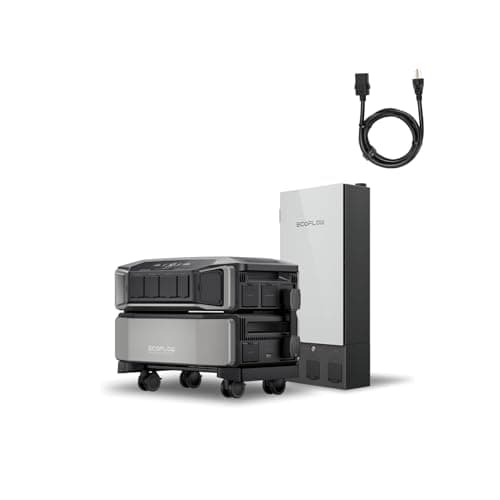
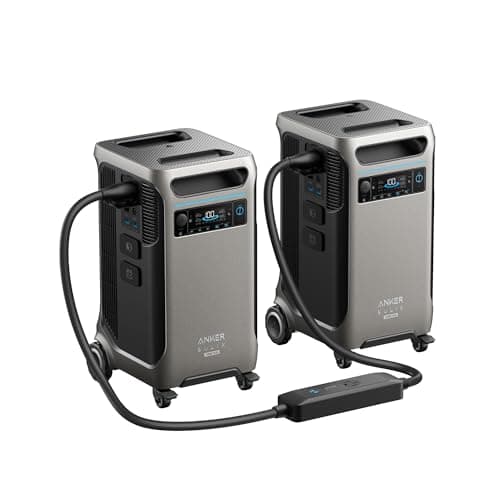
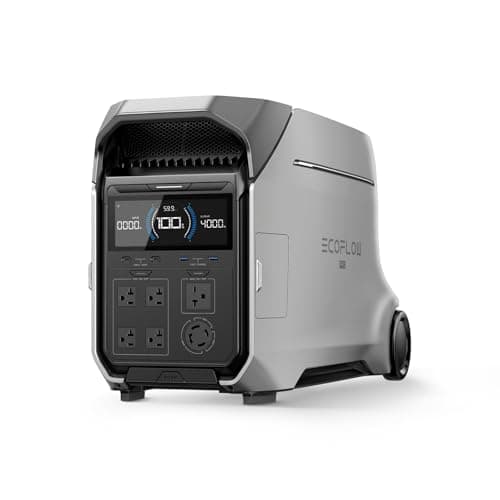
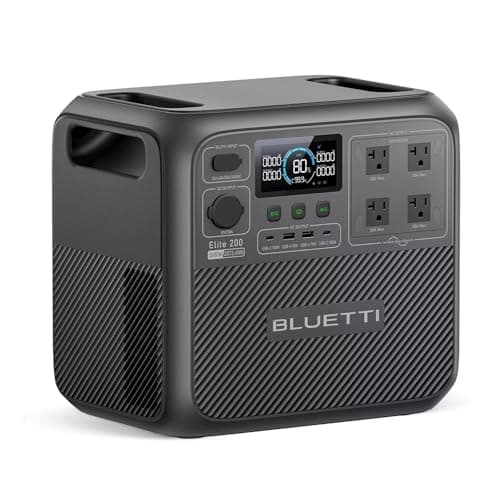
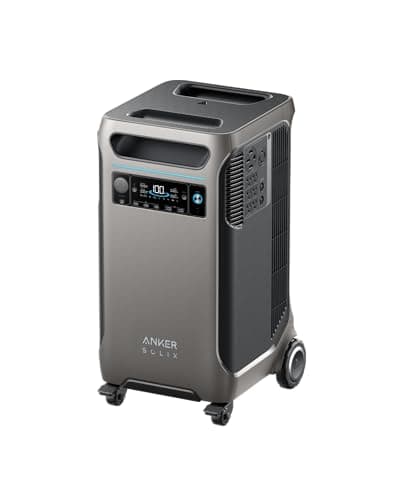
For a 2,000-3,000 square foot house, the battery is decided by your fuel mix, not your floor area. If the heat, the water heater and the range run on gas or propane, the Anker SOLIX F3800 at 3,840Wh and 6,000W of native 120/240V is the right size for most of this bracket — a blower, a well pump, refrigeration and lighting through a night. If the house is all-electric or on a heat pump, the requirement roughly quadruples and the honest answer is the EcoFlow DELTA Pro Ultra with Smart Home Panel 2 at 6,144Wh and 7,200W, scalable to 30kWh. For multi-day outages, two linked F3800s at 7,680Wh. And if the keep-list is short and the heat is gas, a BLUETTI Elite 200 V2 at 2,073.6Wh genuinely covers a night in a house this size.
What EIA data actually says about square footage
This is worth settling with real numbers rather than instinct. EIA's 2020 Residential Energy Consumption Survey publishes average annual household electricity consumption by total square footage. Converting its million-Btu figures at 3,412 Btu per kilowatt-hour:
| Total square footage | Avg electricity, million Btu/yr | Roughly kWh/yr | Roughly kWh/day |
|---|
| Less than 1,000 | 23.2 | 6,800 | 18.6 |
|---|
| 1,000 - 1,499 | 32.1 | 9,400 | 25.8 |
|---|
| 1,500 - 1,999 | 37.6 | 11,000 | 30.2 |
|---|
| 2,000 - 2,499 | 41.5 | 12,200 | 33.4 |
|---|
| 2,500 - 2,999 | 44.4 | 13,000 | 35.7 |
|---|
| 3,000 or more | 52.9 | 15,500 | 42.4 |
|---|
Million-Btu figures are EIA's published averages from RECS 2020 table CE2.1, cited under Sources. The kWh columns are our conversion at 3,412 Btu per kilowatt-hour and our division by 365 — we show the arithmetic so you can check it. These are whole-year household averages, not outage figures.
Now read the two rows that matter. Going from a 2,000-2,499 sq ft house to a 2,500-2,999 one — a 25% increase in floor area — moves average electricity use by about 7%. Across the entire range, tripling the floor area from under 1,000 to over 3,000 barely more than doubles consumption.
Square footage is a weak predictor because the things that dominate a home's electricity bill — whether the heat, the water heater and the range are electric — are invisible in floor area. That is why this page is organized by fuel mix.
You do not back up 33 kilowatt-hours a day
The second thing to clear up before picking anything. A 2,000-3,000 sq ft house averages 33 to 36 kWh of electricity a day across the year. Nobody backs that up, and nobody needs to.
An outage plan covers a keep-list — the things that must keep running — which for most households in this bracket is somewhere between 4 and 10 kWh a day. That gap, four to eight times, is the whole reason a 4kWh battery is a sensible purchase for a house that uses 35kWh a day. Sizing a home battery is the method page that builds that number from your own appliances.
Three houses, all 2,500 square feet
Using this site's standing working averages — a refrigerator at about 150W, a freezer at 100W, a gas furnace blower at about 800W — and Champion's published wattage chart for the large loads:
| House | Keep-list | Daily kWh | Battery for one night | The pick |
|---|
| Gas heat, gas water, municipal water | Fridge, freezer, blower, lights, network | About 5-7 kWh | 6-8 kWh | Elite 200 V2, or DELTA Pro 3 for 240V |
|---|
| Gas heat, well pump, sump pump | The above plus pumping | About 7-9 kWh | 8-11 kWh | Anker SOLIX F3800 |
|---|
| Heat pump or all-electric | The above plus a compressor and air handler, strip heat shed | 20 kWh and up in real cold | 24 kWh and up | DELTA Pro Ultra with expansion |
|---|
Keep-list watt-hours are our arithmetic on this site's published per-appliance figures; the battery column divides by 0.85 for inverter losses. Three identical 2,500 sq ft houses, and the requirement spans roughly 6 kWh to over 24 kWh depending only on what burns gas.
The all-electric row is the one people underestimate. An electric water heater alone is 3,000 to 4,500W, and heat pump auxiliary strip heat runs 9,600 to 19,200W at 240V — more than any battery on this site produces, which is why the honest plan sheds it rather than powering it.
What floor area does change
Square footage is not useless, it is just not what sizes the battery. Three things it genuinely correlates with:
- Service size and circuit count. Larger houses are more likely to be on a 200A service with more circuits, which makes the choice of which twelve circuits to back up a real design task. Both major smart panels publish 12 circuits.
- Standby and phantom loads. More rooms means more always-on draw — networking gear, smart devices, powered sockets. It is small per item and it runs all night.
- Distance. A bigger footprint usually means a longer run from wherever the battery lives to whatever it is feeding, and a garage that is further from the panel.
What it does not tell you is how many kilowatt-hours a night you need, which is the only number that picks a battery.
The siting question at this size
Houses in this bracket usually have an attached garage, which matters more than it sounds. Published residential rules put a hardwired battery system in a garage, a basement, a utility space, on an exterior wall or outdoors — with 80 kWh aggregate allowed in a garage against 40 kWh in an interior utility closet or basement, individual units capped at 20 kWh, and habitable space prohibited.
For a 2,000-3,000 sq ft house that is rarely a constraint, because nothing on this page comes close to 40 kWh. It does decide where the equipment goes, and an unfinished garage wall may need 5/8-inch Type X gypsum board — what can legally go indoors has the full table.
How to get your own number in a week
- Write the keep-list, not the house. What genuinely has to run: refrigeration, heating controls, pumps, lighting, network, any medical equipment.
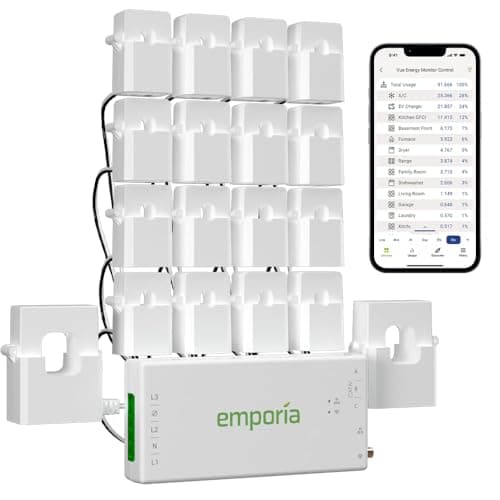
- Measure rather than estimate. A panel monitor gives you circuit-level hourly data; a metering smart plug gives you one appliance exactly. A week of real data beats every rule of thumb on this page.
- Multiply by nights and divide by 0.85. That is the battery size.
- Check the inverter separately. Add the running watts of everything on at once, then check the largest starting surge against the unit's surge figure — continuous output and surge output are two different specifications.
- Check the voltage. A well pump, a dryer or central air needs split-phase, and no amount of 120V capacity substitutes.
When a battery is the wrong answer at this size
Being straight about the ceiling. If your 2,000-3,000 sq ft house is all-electric and your outages run several days and you want the house to behave normally rather than on a keep-list, batteries stop being the economical answer. At 33 to 36 kWh a day of ordinary consumption, three normal days is around 100 kWh — a figure no system on this page reaches at a sane price.
That is standby generator territory, or a battery paired with an engine that refills it. Generator versus home battery runs the economics, and running both together covers the hybrid that most houses in this bracket actually want.
Which one, for which house
- Gas heat, municipal water, short keep-list: BLUETTI Elite 200 V2. Genuinely enough for a night.
- Gas heat, well pump or a 240V circuit: Anker SOLIX F3800. The default answer for this bracket.
- Gas heat, no installation wanted: EcoFlow DELTA Pro 3 on wheels.
- Heat pump or all-electric: DELTA Pro Ultra with the Smart Home Panel 2, strip heat locked out.
- Two to three nights: two linked F3800s at 7,680Wh.
- Not sure which of these you are: a panel monitor first. It costs a fraction of the mistake it prevents.
The short version
EIA's own figures show a 25% jump in floor area moves household electricity use by about 7%, so square footage is a weak input and fuel mix is the real one. A gas-heated house in this bracket needs roughly 6 to 11 kWh of battery for a night and is well served by an F3800; an all-electric one needs four times that and belongs on a DELTA Pro Ultra with expansion. Nobody backs up the 33 to 36 kWh a day a house this size actually uses — you back up a keep-list of 4 to 10 kWh. Measure yours before you buy, because the house next door with the same floor plan may need something completely different.