Why rural outages are longer
It is not neglect, it is arithmetic. Utilities restore in order of customers per repair, and a rural feeder serves a handful of houses over many miles of line.
Three things compound:
- More line per customer. More span exposed to trees, wind and ice, and more of it to inspect before re-energizing.
- Fewer customers per fault. A downed line serving six houses is scheduled after one serving six hundred, and correctly so.
- Harder access. Crews need to reach the fault, and the same storm blocked the road.
The practical consequence: plan for multiple days as the normal case rather than the extreme one. Outage duration data is what should drive the whole purchase.
Water is the difference
In town, an outage is about food and light. On a well, it is about water, and the consequences arrive within an hour.
No drinking water beyond what is stored. No flushing after the cistern refills once. No washing. No water for livestock, which turns an inconvenience into an urgent problem.
And a septic system with a pump — common on properties where gravity does not do the job — stops accepting anything once its tank fills. That is a load worth knowing about before you find out.
The well pump page works through the sizing, and water storage covers the part that needs no equipment at all.
Fuel logistics change the machine
This is the second rural-specific constraint and it points in a clear direction.
In town, running low on fuel is a fifteen-minute problem. Thirty miles from the nearest station, on roads that may be blocked, with the station possibly dark itself, it is not a problem you can solve during the outage.
| Approach | Rural suitability |
|---|
| Large propane tank on site | Best — you own the fuel and it never goes stale |
|---|
| Dual-fuel portable | Very good — propane primary, gasoline as the reserve |
|---|
| Stored gasoline in cans | Workable, but needs rotation and legal storage limits |
|---|
| Gasoline-only, buy as needed | Poor — this is the plan that fails on day three |
|---|
| Solar plus battery | Excellent as a partner, insufficient for a well pump alone |
|---|
If you already have a propane tank for heating, ask your supplier about a tap for a generator. That combination — a large on-site tank feeding a machine that never needs a fuel run — is the strongest rural arrangement there is.
Outbuildings, and the distances between them
A rural property is rarely one building. Barns, workshops, well houses and pump sheds all have their own supplies, and an outage takes all of them at once.
- Decide in advance what gets powered. Trying to cover everything means covering nothing well.
- Distance costs voltage. Long cord runs to an outbuilding need heavier gauge, and undersized cord is a fire rather than a performance problem.
- Consider a second small battery per building rather than one long cable. Lighting a barn from a 300Wh unit for a week costs less than the cord would.
- Livestock water is the one that cannot wait. Work out how you would provide it with no power at all.
A rural load list
Longer than a suburban one, and in a different order:
- Well pump. Everything else depends on it, and its surge sizes the generator.
- Septic pump, if you have one.
- Freezer. Rural households store more food, and often a share of a butchered animal that is worth more than the equipment.
- Refrigerator.
- Heating. A gas or oil furnace blower, or a wood-stove circulation fan.
- Livestock water and ventilation, where applicable.
- Communications. Cell coverage is often worse rurally, which raises the value of a NOAA weather radio.
- Lighting. More buildings, more darkness, no street lights.
The whole-house tiers map this to a machine size.
Standby versus portable, rurally
The case for a permanently installed unit is stronger on a rural property than anywhere else, for reasons that have nothing to do with comfort.
- It starts itself. Which matters if the property is ever unoccupied — a frozen pipe or a thawed freezer discovered on return is a rural failure mode.
- It runs on the on-site propane tank. No fuel runs at all.
- Multi-day is normal here, and a standby unit is built for exactly that duty.
Against it: cost, an installer who may be a long drive away, and an annual service that is harder to schedule. A large dual-fuel portable plus a transfer switch covers the same circuits for far less, at the price of starting it yourself. The comparison weighs both.
The arrangement we would actually build
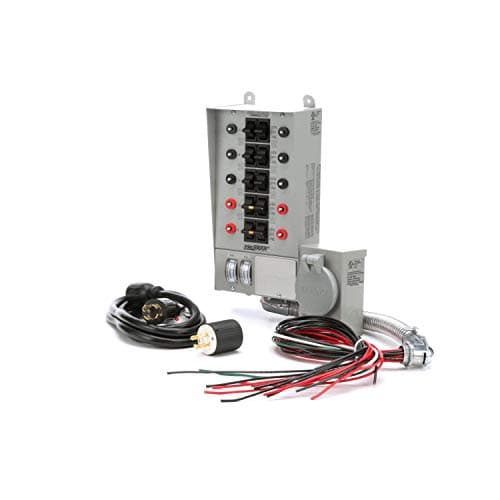
- A transfer switch covering the well pump, septic pump, furnace, fridge, freezer and a lighting circuit.
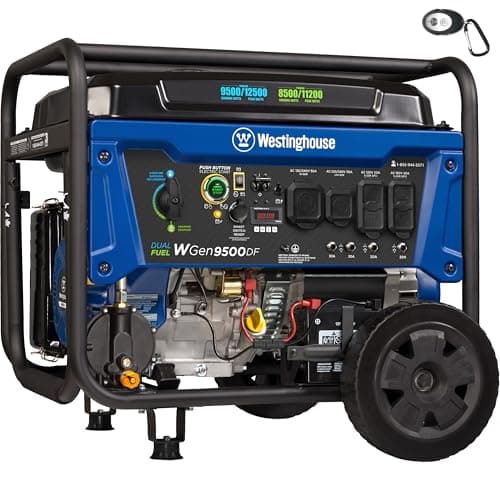
- A dual-fuel portable sized against the well pump nameplate, fed from an on-site propane tank if one exists.
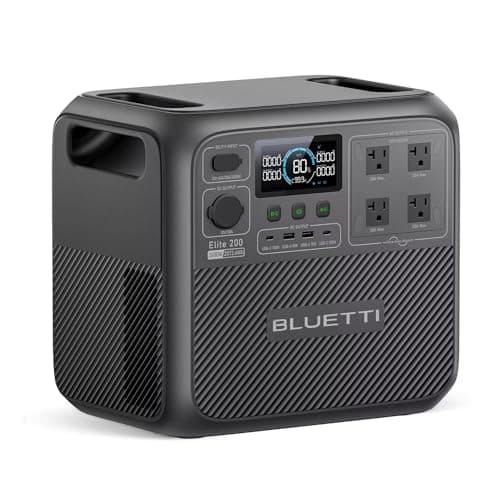
- A 2kWh battery indoors, refilled during generator blocks, running the refrigeration and lights overnight.
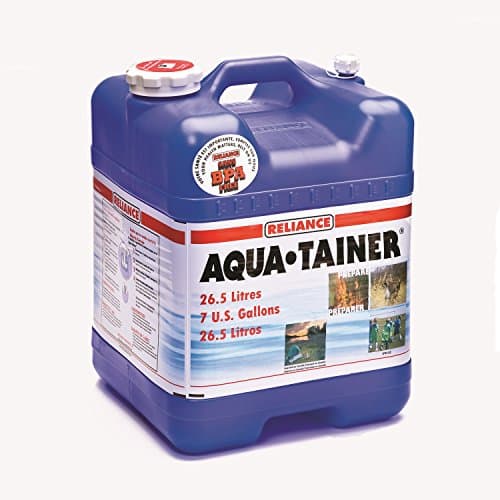
- Water containers filled during each pump run.
- Solar if the property has open aspect — which rural properties usually do, and which makes the battery half indefinite.
That covers the loads that matter, uses a quarter of the fuel of continuous running, and keeps the engine off at night. The general case for the hybrid applies with extra force where refueling means a long drive.