First: does your septic system use power at all?
A large fraction of people asking this question do not need any backup, and finding out takes five minutes.
| System | Needs power? | What happens in an outage |
|---|
| Conventional gravity | No | Nothing. Waste flows downhill as always |
|---|
| Effluent pump to a raised field | Yes | Tank fills; you have roughly a day of normal use |
|---|
| Grinder pump | Yes | Same, and often a smaller holding volume |
|---|
| Aerobic treatment unit | Yes — the aerator runs continuously | Treatment degrades over days; alarms sound |
|---|
| Mound or drip system | Yes — dosing pump | Tank fills, then backs up |
|---|
The test: find the control panel. If there is a box on an exterior wall or near the tank with a breaker, a light and usually an alarm, you have a pumped system. If there is nothing electrical anywhere near the tank, you have gravity and you can stop reading.
How long the tank buys you
This is the number that makes septic a lower priority than it feels.
A pump chamber or dose tank typically holds a day or more of normal household wastewater before the high-level alarm sounds, and the alarm itself is usually set well below the point of backup. Conserving water during an outage stretches that considerably, and you will be conserving anyway if you are on a well.
So the realistic sequence is: outage starts, tank begins filling, alarm sounds some hours later, and you have further hours after that. This is a problem measured in days rather than minutes — unlike a sump pump in a storm, which is measured in hours.
The load is small
| Pump | Typical running watts | Starting |
|---|
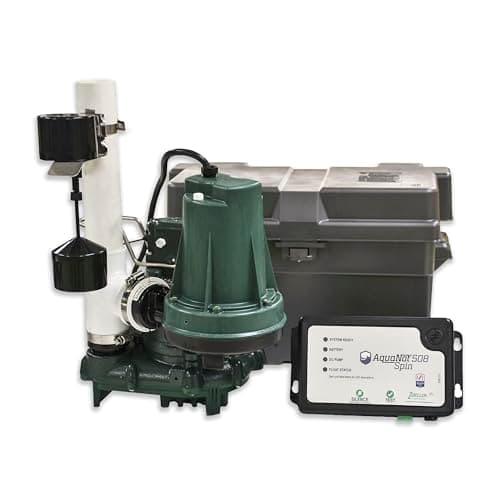
| Effluent pump, 1/2 HP | About 800-1,000 W | Several times running, briefly |
|---|
| Grinder pump, 1-2 HP | 1,500-3,000 W | Substantially higher — often 240V |
|---|
| Aerator on an ATU | Under 200 W, continuous | Negligible |
|---|
Figures are typical residential ranges. The plate on the pump or on the control panel is authoritative for your installation, and reading a nameplate properly explains what the numbers mean.
Like a well pump, a septic pump runs briefly and infrequently, so the energy cost across a day is small — a few dose cycles of a minute or two each. What it needs is surge capability at unpredictable moments, which is the same pattern covered on the sump pump sizing page.
The aerobic unit is the exception
If you have an aerobic treatment unit, the aerator is a continuous load rather than an intermittent one — usually under 200W, but running all the time.
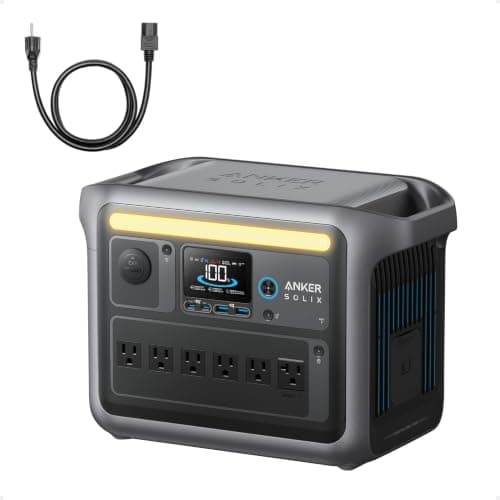
That is trivial for a generator and very manageable for a battery: 200W against a 2,000Wh pack is about eight and a half hours. The consequence of it stopping is not an immediate backup but a gradual loss of treatment quality, which matters over days rather than hours.
Most manufacturers say a day or two without aeration is recoverable. Check yours, and tell your service provider if an outage ran long.
What to do while it is out
- Cut water use hard. No laundry, no dishwasher, short showers, and the usual rule about flushing selectively. This is the single most effective action and it costs nothing.
- Do not silence the alarm and forget it. The alarm is the only warning you get, and it sounds well before anything backs up.
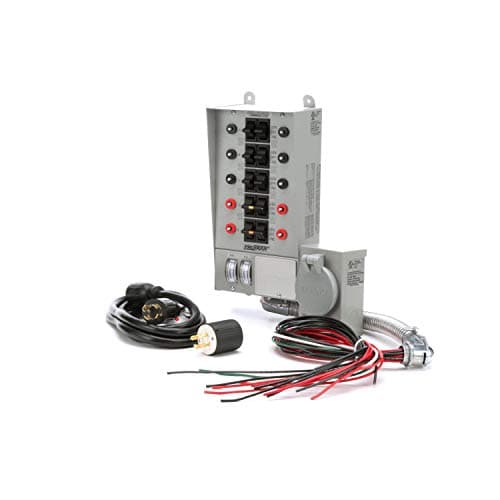
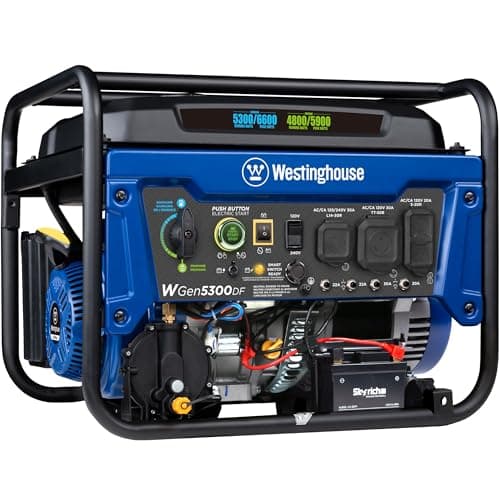
- Run the pump deliberately when the generator is on. If the septic circuit is on your transfer switch, a dose cycle during a block run resets the clock.
- Know where the manual override is, if your panel has one, and know that pumping a tank manually is a contractor's job rather than a DIY one.
Where it sits on the priority list
Below the refrigerator, below the furnace in winter, below the well pump. Above almost everything else on a rural property, because the consequences of getting it wrong are expensive and unpleasant.
The practical answer for most pumped systems is: put the circuit on the transfer switch, run it during the same blocks you run everything else, and conserve water in between. The rural property page works through the whole set of systems that fail together out of town.
The short version
- Gravity systems need nothing. Find the control panel to check.
- A pumped tank buys roughly a day of normal use, more if you conserve.
- The pump is a small energy load with a real surge. Grinder pumps are often 240V.
- Put it on the transfer switch and dose it during block runs.