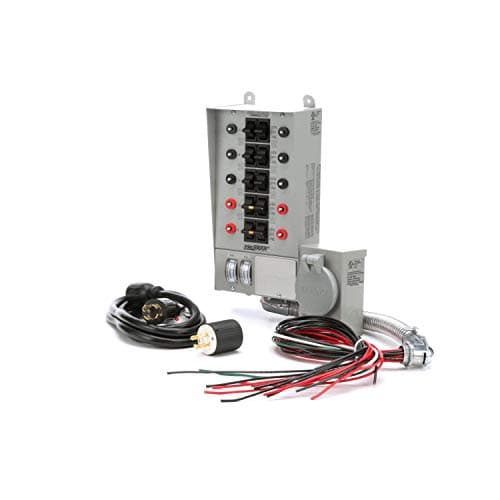
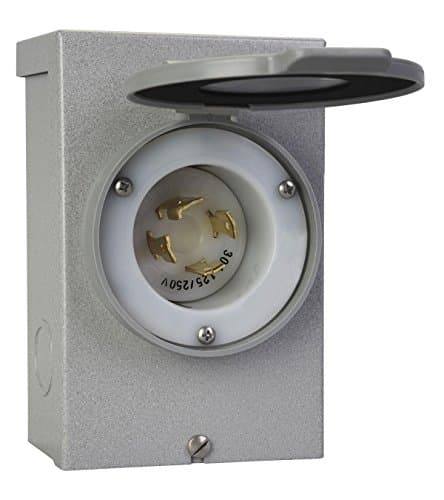
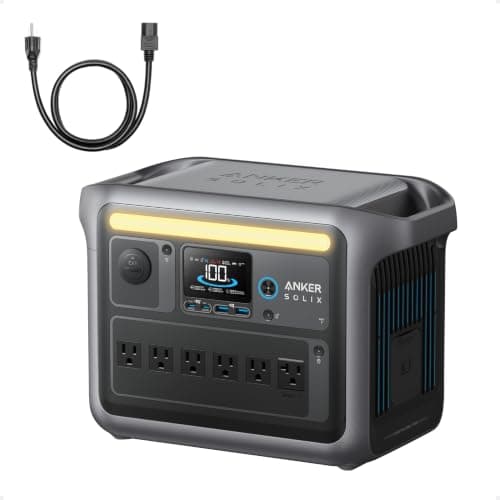
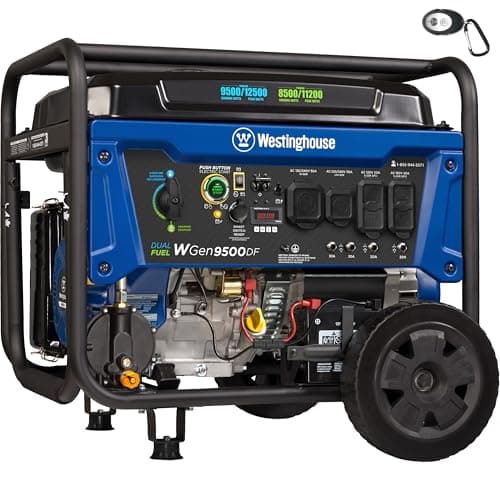
Both reach the same circuits
The assumption worth dismantling first: people often believe a standby generator can power hardwired loads and a portable cannot.
It is not true. A portable with a 240V twist-lock outlet, an inlet box and a manual transfer switch reaches exactly the same furnace, well pump, sump pump and refrigerator circuits that an automatic switch does.
The safety function is identical too — both use break-before-make switching so the grid cannot be energized from your machine. How transfer switches work covers the mechanism.
So the comparison is not about capability. It is about what happens at the moment the power fails.
The real comparison
| Portable + transfer switch | Home standby |
|---|
| Works while you are away | No | Yes — the core of the premium |
|---|
| Works at 3am without waking you | No | Yes |
|---|
| Reaches hardwired circuits | Yes, with a switch | Yes |
|---|
| Fuel | Gasoline or propane you store and carry | Gas main or an on-site tank, untouched |
|---|
| Runtime limit | What is in the cans | Unlimited on natural gas |
|---|
| Cost | A fraction | Equipment plus a two-trade installation |
|---|
| Installation | Electrician, permit, half a day | Electrician and gas work, permit, inspection, weeks |
|---|
| Maintenance | Yours — oil, fuel, exercise | Dealer service, and it exercises itself weekly |
|---|
| Noise, ongoing | Only when running | Weekly exercise cycle, for years |
|---|
| Portability | Goes camping, to a job site, to a new house | Stays with the property |
|---|
| Output ceiling | Up to about 13,000W | Well beyond, into whole-house territory |
|---|
We do not publish installed-price figures for standby systems because the range across regions and site conditions is wide enough to mislead. Get two or three local quotes; the spread between them is itself informative. What drives the cost covers the variables.
What the premium actually buys
Four things, and none of them is watts.
1. It works when nobody is home. This is the big one. A portable does nothing while you are at work, on holiday, or asleep. A frozen pipe or a thawed freezer discovered on return is the failure a standby unit exists to prevent, and it is the strongest argument there is.
2. It works at 3am without anyone going outside. In an ice storm, in the dark, in sleet. The people for whom this matters most are those least able to do it — which is a real consideration in a household with mobility difficulty.
3. The fuel takes care of itself. No cans, no rotation, no stale gasoline, no drive to a station whose pumps are electric. On natural gas, no fuel logistics at all.
4. It exercises and reports on itself. A weekly self-test means it is far more likely to start when needed than a portable that has sat in a garage since spring.
What the portable keeps
- Cost. A large portable plus a manual switch is a small fraction of an installed standby system, and it covers the same circuits.
- Portability. It goes camping, to a job site, to a relative's house, and to your next house.
- Fuel independence. A dual-fuel portable running on stored propane does not care whether the gas main is intact — which is the one failure a natural-gas standby unit cannot cover.
- No weekly noise. A standby unit runs its exercise cycle for years, and the neighbors hear all of it.
- No installation timeline. Which matters if you want something before the coming season rather than after the next one.
The measurement most people skip
Here is the sequence we would actually recommend for anyone considering a standby unit, and almost nobody does it.
- Fit a manual transfer switch and buy a portable. A fraction of the standby cost.
- Live through a season with it. Read the watt meters during a real outage and find out what your house genuinely draws.
- Notice what actually annoyed you. Was it the going outside, the fuel, the noise, or nothing much?
- Then decide. If the answer is "we were away and the freezer thawed", buy the standby unit and size it against a measurement rather than a spreadsheet.
The portable does not become redundant either — it becomes the backup to the backup, covering the annual service window and a gas supply interruption. Sizing a standby unit covers why a measurement beats an estimate.
Who should buy which
Buy a standby unit if: the house is regularly unoccupied; someone in the household depends on power for medical equipment; outages routinely run past a day; you have a gas main; mobility makes going outside in a storm genuinely difficult; or you have a well and frozen-pipe risk in a house you sometimes leave.
Buy a portable and a transfer switch if: the budget is the constraint; someone is usually home; outages are hours to a day; you want the machine to do other jobs; or you would rather spend the difference on a battery and solar.
Buy neither, and buy a battery, if: your outages are measured in hours, you live somewhere a generator is impractical, or the maintenance is what puts you off owning backup power at all. That comparison is the one a lot of households should actually be having.
The arrangement that beats both
Worth stating because it is what we would do.
A portable generator with a transfer switch, plus a 2kWh battery indoors. The generator runs in blocks during the day to carry the heavy loads and refill the battery; the battery runs the fridge, the lights and the network silently overnight.
That uses roughly a quarter of the fuel of continuous running, keeps the engine off at night, and gives you two independent systems rather than one. For a fraction of a standby installation it covers most of what a standby installation does — the exception being the case where nobody is home, which no amount of equipment solves without automation.