Skip to content
Watt Warden

Home Standby

Which Home Batteries Give You Native 120/240V Split-Phase

Three battery systems you can buy outright deliver split-phase from a single box. Everything else needs a second unit and a hub — and the listings rarely say so.

By Sawyer V.Updated Published How we work this out
A hand working inside an opened circuit breaker panel full of colored wiring.

Watt & Warden earns a commission on qualifying purchases made through links on this page, at no extra cost to you. It never changes a ranking, and our picks include products we tell you to skip. Full disclosure.

Quick picks

#ProductBest forPrice
1
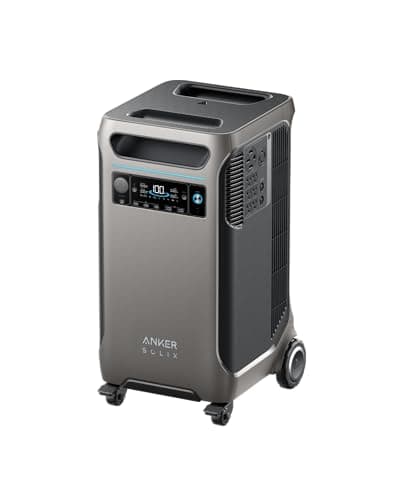
Anker SOLIX F3800

The split-phase answer for most houses

Anker SOLIX F3800

6,000W at 120V and 240V together, through a NEMA 14-50 and an L14-30, with no hub and no autotransformer in the path.

A well pump, a dryer or a range on a 14-50 or L14-30
$1,759.99 · Check price on Amazon

#ad how this is funded · price as of October 21, 2026

2
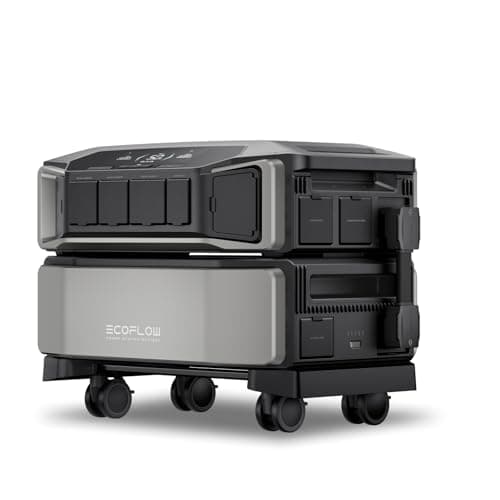
EcoFlow DELTA Pro Ultra

The highest native split-phase output

EcoFlow DELTA Pro Ultra

7,200W of 120V/240V pure sine from one inverter, 10.8kW of surge, and a path to 21.6kW across three.

Central air conditioning and a whole panel, not a critical-load subpanel
$4,199.00 · Check price on Amazon

#ad how this is funded · price as of October 21, 2026

3
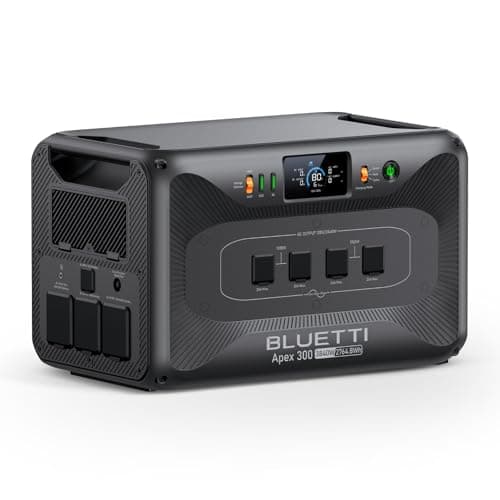
BLUETTI Apex 300

Cheapest way into simultaneous 120/240V

BLUETTI Apex 300

3,840W with 120V and 240V output at the same time, 7,680W of lifting power, and 2,764.8Wh of LFP rated 6,000 cycles.

An RV on a 50A cord, or one 240V circuit in a small house
$1,498.98 · Check price on Amazon

#ad how this is funded · price as of October 21, 2026 · $1,699.00 12% off

4
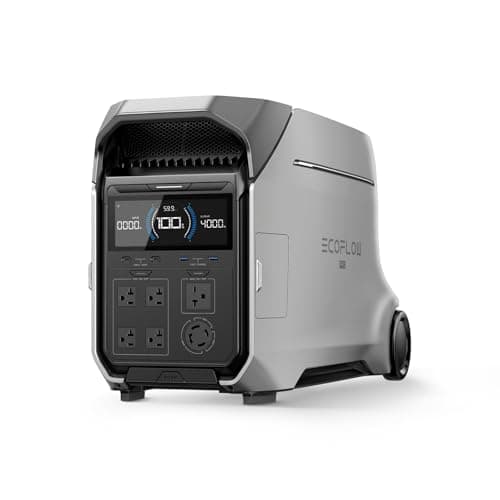
EcoFlow DELTA Pro 3

Split-phase, but as a mode

EcoFlow DELTA Pro 3

4,000W published as 120/240V, with an L14-30 and a 6-20R that go live when the 240V button is pressed.

One 240V circuit at a time, on wheels
$2,799.00 · Check price on Amazon

#ad how this is funded · price as of October 21, 2026 · $3,699.00 24% off

5
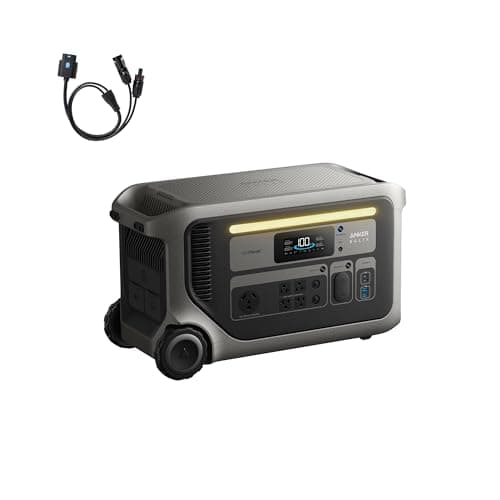
Anker SOLIX F3000

The one that proves the rule

Anker SOLIX F3000

3,072Wh and 3,600W, and Anker states plainly that 240V needs two units and a Double Voltage Hub.

Showing exactly what the F3800 premium buys
$1,398.98 · Check price on Amazon

#ad how this is funded · price as of October 21, 2026 · $1,699.00 18% off

Prices come from the retailer at page-build time and change constantly. Where no live price is available the button reads “Check price” rather than showing a number we cannot stand behind.

The verdict, in one paragraph

Three residential battery systems deliver true 120/240V split-phase from a single unit with no external autotransformer and no voltage hub: EcoFlow DELTA Pro Ultra at 7,200W, Anker SOLIX F3800 (and the F3800 Plus) at 6,000W, and BLUETTI Apex 300 at 3,840W simultaneous. A fourth, the EcoFlow DELTA Pro 3, is native split-phase at 4,000W but as a selectable mode rather than a simultaneous output. Everything else in this class — Anker SOLIX F3000, EcoFlow DELTA 3 Ultra Plus, BLUETTI Elite 400, Jackery HomePower 3000 — is 120V only, and reaching 240V means a second unit plus a hub.

What "native split-phase" actually means

A US residential service is 240V split-phase: two 120V legs that are 180 degrees out of phase with each other, sharing a neutral. A 120V circuit uses one leg and the neutral. A 240V circuit — well pump, dryer, range, water heater, most central air — uses both legs and no neutral.

A battery produces DC. Whether you get 240V out of it depends entirely on what its inverter is built to do:

  • Native split-phase. The inverter generates both legs itself. One unit, one cable, 240V available at a 14-50 or L14-30.
  • Two units plus a hub. Two 120V machines are synchronized by an external device that phase-shifts one of them. EcoFlow calls it a Double Voltage Hub; Anker uses the same name. This is the "external autotransformer" case in everything but the component name, and it is what the question is asking you to avoid.
  • An autotransformer proper. A separate transformer that derives a second leg from a single 120V source. It works and it is common in RV and marine installations, but it is another box, another failure point and another purchase.

The comparison, from published specifications

SystemNative split-phase?240V outputCapacity
EcoFlow DELTA Pro UltraYes, from one inverter7,200 W, 120V/240V, 10.8 kW surge6,144 Wh
Anker SOLIX F3800Yes, from one unit6,000 W via NEMA 14-50 and L14-303,840 Wh
BLUETTI Apex 300Yes, simultaneous with 120V3,840 W continuous, 7,680 W lifting2,764.8 Wh
EcoFlow DELTA Pro 3Yes, but as a selected mode4,000 W; L14-30 and 6-20R live in 240V mode4,096 Wh
EcoFlow DELTA 3 Ultra PlusNo120V only; 3,600 W rated3,072 Wh
Anker SOLIX F3000NoNeeds two units and a Double Voltage Hub3,072 Wh
BLUETTI Elite 400No120V only; 2,600 W continuous3,840 Wh
Jackery HomePower 3000No120V only — 4 x 20 A outlets plus 1 x 30 A, 3,600 W total3,072 Wh

Every row is the manufacturer's own published figure, from the pages cited under Sources. Current prices sit inside the buy buttons above, with the date they were last refreshed.

The spec-sheet trap: "120V/240V" is not one claim

Four different things get written the same way in a specification table, and only the first is what someone asking this question wants:

  1. Simultaneous dual voltage. 120V outlets and a 240V receptacle both live at once. The F3800 and the Apex 300 publish this.
  2. Selectable split-phase. One mode or the other. The DELTA Pro 3 documents this explicitly.
  3. 240V with an accessory. True of the F3000 and of the original DELTA Pro, and the accessory is usually priced like a component rather than a cable.
  4. 240V input only. Some units accept 240V charging and output nothing but 120V. Read which side of the table the figure is on.

The reliable test is the outlet list. If a NEMA 14-50, 14-30 or L14-30 appears on the unit itself and is rated in watts, the inverter makes 240V. If the only sockets are 5-15R, 5-20R and a TT-30, it does not — a TT-30 is 120V at 30 amps, which catches people out regularly.

When you actually need it

Split-phase is not a general upgrade. It is the answer to a specific list of loads, and if none of them is on your list you are buying nothing:

  • A well pump. Most residential submersibles are 240V. This is the single most common reason a household needs split-phase backup — the well pump page has the arithmetic.
  • Central air or a 240V heat pump. Both legs, high surge, and the reason the DELTA Pro Ultra exists.
  • An electric range, dryer or water heater. Possible, though the stove page explains why these are usually the first things to leave off a backup plan.
  • Feeding a transfer switch or inlet. If your inlet is an L14-30, the source has to produce both legs or half your switch is dead — connecting a generator to the house covers the hardware either way.

If your backup list is a refrigerator, a furnace blower, lighting, a network and some charging, you need none of this. A 120V unit at the same money buys more kilowatt-hours, which is the thing that actually runs out at 3am. The home-backup roundup is the better starting point in that case.

The one number that is not on the spec sheet

Published split-phase ratings are the inverter's combined ceiling, not a per-leg figure. The F3800's 6,000W covers everything at once. The Apex 300's 3,840W is, in BLUETTI's own framing, about two 1,920W legs.

That matters because 240V loads are rarely balanced against the 120V ones. A 4,500W water heater element on a 6,000W unit leaves 1,500W for the entire rest of the house, and a well pump's inrush can be three to five times its running draw for a second or two. Size on the surge, not the nameplate — soft starter versus a bigger machine is the cheaper fix more often than people expect.

Who should buy which

  • Well pump, septic pump, one 240V circuit: Anker SOLIX F3800. It is the cheapest unit that feeds a 14-50 or L14-30 at a serious wattage with nothing bolted on.
  • Central air, whole panel, installed system: EcoFlow DELTA Pro Ultra, with the Smart Home Panel doing the switching.
  • An RV on a 50A cord, or a small house with one 240V circuit: BLUETTI Apex 300, with eyes open about the 3,840W ceiling.
  • A wheeled unit that can do 240V when asked: EcoFlow DELTA Pro 3, understanding that it is a mode.
  • No 240V loads at all: none of these. Buy kilowatt-hours instead.

The short version

Native split-phase from one unit is a short list: DELTA Pro Ultra, F3800 and F3800 Plus, Apex 300, and the DELTA Pro 3 in 240V mode. Everything else gets there with a second machine and a Double Voltage Hub, which is the external device the question is trying to rule out. Decide first whether anything in your backup plan is genuinely 240V, because if the answer is no, the entire premium is wasted on a feature that stays switched off.

The picks in full

01 — The split-phase answer for most houses

Anker SOLIX F3800

6,000W at 120V and 240V together, through a NEMA 14-50 and an L14-30, with no hub and no autotransformer in the path.

Anker publishes the F3800 as 6,000W continuous, 120V and 240V dual voltage, with six 120V 5-20 outlets alongside a NEMA 14-50 and an L14-30 that are each rated to the full 6,000W. That is split-phase from the machine itself: two 120V legs 180 degrees apart, generated inside the unit, with nothing bolted on.

The practical consequence is that the F3800 can feed a transfer switch or an inlet the same way a 240V generator does. A well pump, a dryer, a range, a mini-split on a 240V circuit — none of them care that the source is a battery.

The honest catch: 6,000W is the ceiling for everything combined, not per leg, and the unit holds 3,840Wh. At full output that is under forty minutes. Split-phase answers the question of what you can run; capacity still answers how long.

Skip it ifnothing in your backup plan is 240V. You are paying for a second voltage you will never switch on.

Anker SOLIX F3800
$1,759.99 · Check price on Amazon

#ad how this is funded · price as of October 21, 2026

Published specifications for the Anker SOLIX F3800
SpecificationPublished figure
Capacity3,840 Wh
Cell chemistryLiFePO4
AC output6,000 W continuous, 9,000 W surge
Voltage120V / 240V split-phase
Cycle life3,000+ cycles to 80% capacity
Recharge1,800 W AC, up to 2,400 W solar
ExpansionUp to six expansion batteries, 26.9 kWh total
Warranty5 years
Current Amazon listingRenewed. Anker's new first-party F3800 listing is currently unavailable and the model has been succeeded by the F3800 Plus; the unit itself is unchanged

Source: Anker SOLIX — F3800 product specifications. These are the manufacturer's published figures, not ours — we have not tested this unit.

02 — The highest native split-phase output

EcoFlow DELTA Pro Ultra

7,200W of 120V/240V pure sine from one inverter, 10.8kW of surge, and a path to 21.6kW across three.

EcoFlow publishes the DELTA Pro Ultra's AC output as 7,200W, 120V/240V, 60Hz pure sine, with 10.8kW of surge and 6,144Wh in the inverter unit. It is the highest native split-phase figure on this site, and the only one in the category EcoFlow markets against a 4-ton central air conditioner.

It is also a system rather than a product. Three inverters in parallel publish 21.6kW, which is more than most 200A services ever draw at once.

The honest catch: this is installed equipment with a price to match, and the 7,200W figure assumes the Smart Home Panel 2 doing the switching. Bought as a box and plugged into extension cords, most of what you paid for stays switched off.

Skip it ifyour 240V loads are a well pump and a dryer. The F3800 covers those for a fraction of this.

EcoFlow DELTA Pro Ultra
$4,199.00 · Check price on Amazon

#ad how this is funded · price as of October 21, 2026

Published specifications for the EcoFlow DELTA Pro Ultra
SpecificationPublished figure
Capacity6,144 Wh (102.4 V, 60 A)
Cell chemistryLFP
AC output7,200 W continuous, 120V/240V, 60 Hz pure sine
AC surge10.8 kW
Expansion (one inverter)30 kWh with 5 extra batteries
Expansion (system)90 kWh with 15 batteries; 21.6 kW across 3 inverters
UPSBackup UPS under 20 ms; online UPS 0 ms
Cycle life3,500 cycles to 80% capacity
Ingress ratingIP54
Warranty5 years

Source: EcoFlow — DELTA Pro Ultra product specifications. These are the manufacturer's published figures, not ours — we have not tested this unit.

03 — Cheapest way into simultaneous 120/240V

BLUETTI Apex 300

3,840W with 120V and 240V output at the same time, 7,680W of lifting power, and 2,764.8Wh of LFP rated 6,000 cycles.

BLUETTI publishes the Apex 300 as 3,840W of continuous pure sine with 120V and 240V simultaneous output and 7,680W of lifting power. It is the lowest-priced unit on this page that does split-phase without a second box.

BLUETTI frames the 3,840W rating as roughly two 1,920W legs at 120V, which is the honest way to read any split-phase number: you do not get 3,840W on one leg.

The honest catch: 2,764.8Wh is a night of refrigeration, not a day of air conditioning, and the 240V ceiling is low enough that a well pump with a hard start is a real question rather than a formality. Starting watts versus running watts is the page that settles it.

Skip it ifyou need to start a 240V compressor. 3,840W is a modest split-phase ceiling and the lifting figure is brief by definition.

BLUETTI Apex 300
$1,498.98 · Check price on Amazon

#ad how this is funded · price as of October 21, 2026 · $1,699.00 12% off

Published specifications for the BLUETTI Apex 300
SpecificationPublished figure
Capacity2,764.8 Wh
Cell chemistryLiFePO4 (LFP)
AC output3,840 W continuous pure sine / 7,680 W lifting
Voltage120V and 240V simultaneous output
Max solar input2,400 W (2 x 1,200 W, 12-60 V, 20 A each)
ExpansionB300K at 2,764.8 Wh each, or B500K at 5,120 Wh each
Cycle life6,000 cycles to 80% capacity
Weight83.78 lb (38 kg)
Warranty5 years

Source: BLUETTI — Apex 300 RV power system guide (published specifications). These are the manufacturer's published figures, not ours — we have not tested this unit.

04 — Split-phase, but as a mode

EcoFlow DELTA Pro 3

4,000W published as 120/240V, with an L14-30 and a 6-20R that go live when the 240V button is pressed.

EcoFlow's own FAQ is specific about how the DELTA Pro 3 does this: the unit is split-phase 120V or 240V, not simultaneously, and when the 240V button is pressed, one L14-30 split-phase outlet and one 6-20R 240V outlet output power.

So it is native — there is no autotransformer and no hub in the box — but it is a switch, not a second set of live outlets. For a transfer-switch feed that is irrelevant, because the switch takes the L14-30 and distributes both legs. For someone planning to run a 240V well pump and a 120V refrigerator off the same machine simultaneously, it matters a great deal.

The honest catch: 4,096Wh and 4,000W is a genuinely useful pairing, but read the mode behavior before you buy on the strength of the 120/240V line in the spec table.

Skip it ifyou need 120V and 240V at once. EcoFlow documents this as a mode you select, not a simultaneous output.

EcoFlow DELTA Pro 3
$2,799.00 · Check price on Amazon

#ad how this is funded · price as of October 21, 2026 · $3,699.00 24% off

Published specifications for the EcoFlow DELTA Pro 3
SpecificationPublished figure
Capacity4,096 Wh
Cell chemistryLiFePO4 (LFP)
AC output4,000 W, 120V / 240V
Cycle life4,000+ cycles to 80% capacity
Wall recharge0-80% in about 1 hour
Max solar input2,600 W
Expansion4 kWh to 48 kWh

Source: EcoFlow — DELTA Pro 3 product listing. These are the manufacturer's published figures, not ours — we have not tested this unit.

05 — The one that proves the rule

Anker SOLIX F3000

3,072Wh and 3,600W, and Anker states plainly that 240V needs two units and a Double Voltage Hub.

The F3000 is here as the counter-example. It is a capable 3,072Wh machine rated for 4,000 cycles, and Anker's own specification says 120V only; 240V needs two units and a Double Voltage Hub.

A Double Voltage Hub is the external hardware the question "no external autotransformer" is really about. It takes two 120V units and phase-shifts one of them so the pair produces 240V across the outer legs. It works. It also means buying two machines and a third device, and it is the single most common reason someone ends up with a battery that will not run their well pump.

The honest catch: for a household with no 240V loads in the backup plan, this unit is the better value and the whole discussion is moot.

Skip it ifanything in your plan is 240V. This is the unit people buy by mistake when they wanted the F3800.

Anker SOLIX F3000
$1,398.98 · Check price on Amazon

#ad how this is funded · price as of October 21, 2026 · $1,699.00 18% off

Published specifications for the Anker SOLIX F3000
SpecificationPublished figure
Capacity3,072 Wh
Cell chemistryLiFePO4, 4,000 cycles
AC output3,600 W continuous total, 7,200 W surge
Voltage120V only; 240V needs two units and a Double Voltage Hub
Solar inputUp to 2,400 W (1,600 W high-PV plus 800 W low-PV)
AC charging1,800 W standard; 3,600 W via a TT-30 adapter
Switchover20 ms
Weight91.5 lb
ExpansionBP3000 expansion batteries, 3,072 Wh each

Source: Anker SOLIX — F3000 product specifications. These are the manufacturer's published figures, not ours — we have not tested this unit.

How these were chosen

We did not test these. Nobody at Watt & Warden has plugged one in. What we did instead: read the manufacturer's published specifications, compile them into a table where the figures line up, and compute the numbers manufacturers leave out — runtime against a real appliance load, and what an hour of running actually costs.

Anything that could not be sourced was left out rather than estimated, and every pick names the buyer who should skip it. The full method is here, including where it is weaker than a publisher with a test bench.

Questions people actually ask

Which home battery backup systems provide native 120/240V split-phase without an external autotransformer?

EcoFlow DELTA Pro Ultra (7,200W, 120V/240V), Anker SOLIX F3800 and F3800 Plus (6,000W via NEMA 14-50 and L14-30), and BLUETTI Apex 300 (3,840W, 120V and 240V simultaneous). The EcoFlow DELTA Pro 3 also does it natively at 4,000W, but as a selectable 240V mode rather than simultaneously with 120V.

Does the Anker SOLIX F3000 do 240V?

Not on its own. Anker's published specification says the F3000 is 120V only, and that 240V requires two units plus a Double Voltage Hub. The F3800 is the model in that family with native dual-voltage output.

Is the Jackery HomePower 3000 split-phase?

No. Jackery publishes its AC output as four 120V 20A outlets plus one 120V 30A outlet, 3,600W total. The 30A port is a TT-30, which is 120V at 30 amps, not 240V.

What is a Double Voltage Hub and do I need one?

It is an external device that synchronizes two 120V power stations and phase-shifts one of them so the pair produces 240V across the outer legs. You need one only if your unit does not generate split-phase itself. It means buying two machines plus the hub, which is usually more expensive than buying one native split-phase unit.

Can a split-phase battery run my well pump?

It can supply the voltage. Whether it can supply the current depends on the pump's starting draw, which is typically three to five times its running watts for a second or two. A 6,000W unit like the F3800 covers most residential submersibles; a 3,840W unit is a real question rather than a formality, and a soft starter is often the cheaper answer than a bigger battery.

How much of the split-phase rating can I use on one leg?

Less than the headline figure. Published split-phase ratings are the inverter's combined ceiling across both legs. BLUETTI frames the Apex 300's 3,840W as roughly two 1,920W legs, and the same split applies in principle to every unit on this page.

Does split-phase mean I can skip a transfer switch?

No. Split-phase determines what voltage reaches the switch; it says nothing about how power gets into your panel safely. You still need a transfer switch, an interlock kit or an inlet box, and backfeeding a panel without one is both dangerous and against code.

Sources