What an inlet box actually is
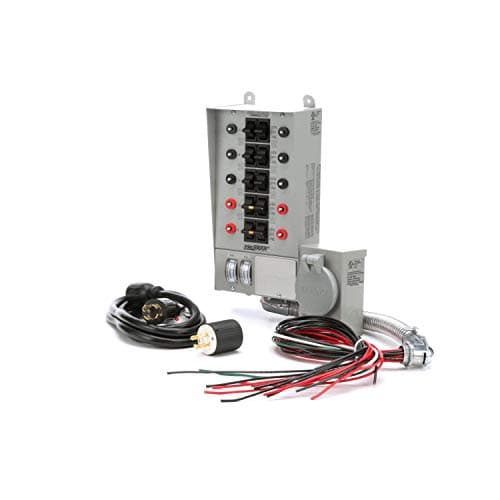
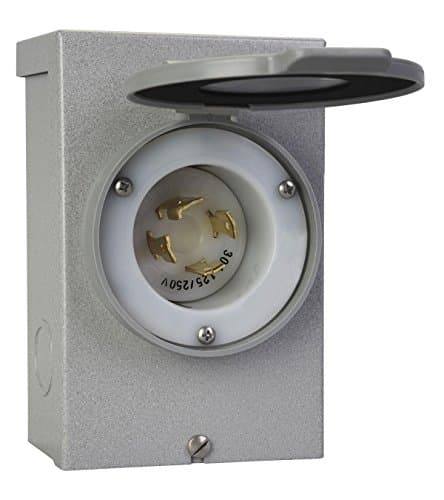
It is a weatherproof socket mounted on the outside wall of the house, wired back to a transfer switch or an interlock-equipped panel. Its connector is male — an inlet rather than an outlet — because power flows into the house through it.
You plug the generator's cord into it from outside. Nothing runs through a door or a window, nothing has to be threaded past a weather seal, and the generator can sit wherever it is safe to sit.
That is the whole function, and it is easy to dismiss as a convenience. It is not. It is what makes a correctly installed backup arrangement usable in the weather that caused the outage.
Why you cannot just run a cord through a window
- The window has to stay open. Which puts an opening in the house in the direction of the machine producing carbon monoxide — precisely the arrangement every safety authority tells you to avoid.
- Extension cords cannot reach hardwired circuits. The furnace, the well pump, the sump pump and the water heater have no plug. In a winter storm those are the loads you actually need.
- A trapped cord is a damaged cord. A window sash closed onto a cable crushes insulation over time, and the failure is a fire or a shock, not an inconvenience.
- Rain follows the cable. Water runs along a cord and into whatever it is plugged into.
And the alternative people reach for instead — a double-male "suicide cord" into a dryer outlet — energizes the utility line outside the house. It can kill a lineworker working on what they believe is a dead conductor, and it will destroy the generator when power returns. It is illegal everywhere in the United States.
Matching the ratings
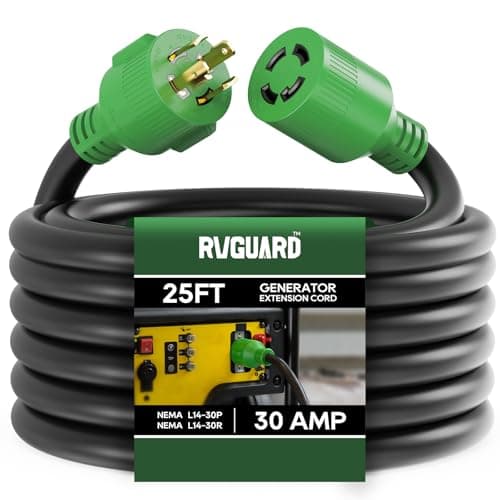
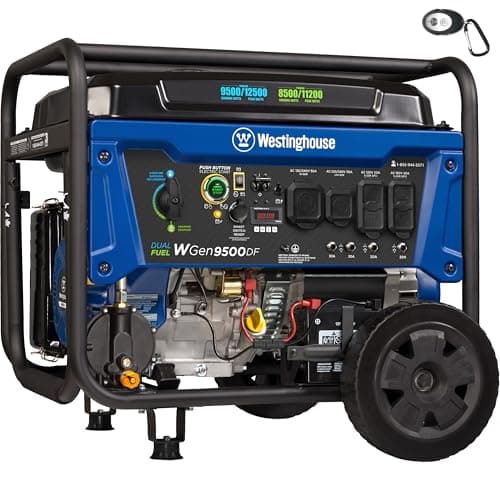
Three things have to agree: the generator's outlet, the cord, and the inlet box. Get one wrong and the set does not connect.
| Connector | Rating | Maximum | Typical use |
|---|
| NEMA L14-30 | 30 A, 125/250 V | 7,500 W | The common portable-generator house connection |
|---|
| NEMA CS6365 / 50 A | 50 A, 125/250 V | 12,500 W | Larger portables feeding a 50A switch |
|---|
| NEMA TT-30 | 30 A, 120 V | 3,600 W | RV connection — not a house feed |
|---|
Maximum wattage figures are the connector ratings expressed at their nominal voltage. Reliance rates the PB30 inlet box for generators up to 7,500 running watts and the 31410CRK transfer switch at 30 A / 7,500 W, which is where the pairing comes from. Your generator's own rated output is the other limit and it may be lower.
The mismatch worth naming: a TT-30 outlet looks like a 30A connection and is not one. It is 120V only, so it cannot feed a 240V transfer switch. Look for the four-prong twist-lock L14-30R on the generator, not the three-prong RV socket.
Where it goes
- Near the electrical panel, on an exterior wall. Short runs of cable inside are cheaper and simpler than long ones.
- Where the cord reaches a safe generator position — at least twenty feet from windows, doors and attached garages. Measure this before the electrician arrives.
- Facing down or outward, so water cannot collect in the inlet.
- Above likely snow depth if you are in a winter region. Waist height is typical.
- Reachable in the dark, in the rain. You will use it exactly once a year, at the worst possible moment.
Installation and cost
This is licensed-electrician work. The inlet box is wired to the transfer switch or to the panel with an interlock, and in most jurisdictions the job requires a permit and an inspection.
In practice it is not a separate project — the inlet box is fitted as part of the transfer switch or interlock installation, and its marginal cost is small next to the labor of that job. What transfer switch installation costs covers the whole figure rather than this one part.
Do it out of season. During a storm warning no electrician is available, and this is the one component you cannot improvise safely.
The complete chain
Working from the machine inward, a correct portable setup is:
- A generator with a 240V twist-lock outlet, running outdoors at least twenty feet from the house.
- A cord rated for the full amperage, long enough to allow that distance.
- A NEMA 3R inlet box on the exterior wall.
- A transfer switch or panel interlock that makes backfeed mechanically impossible.
- The circuits you chose in advance — furnace, fridge, well pump, a few lights.
Miss any one and the chain does not work. The full connection guide walks the whole thing, and the cord guide covers gauge and length.