Skip to content
Watt Warden

Accessories

Pure Sine Wave vs Modified Sine Wave Inverters

One of these costs more and one of them occasionally destroys things. The list of things it destroys is shorter than the internet suggests, and longer than the box implies.

By Sawyer V.Updated Published How we work this out
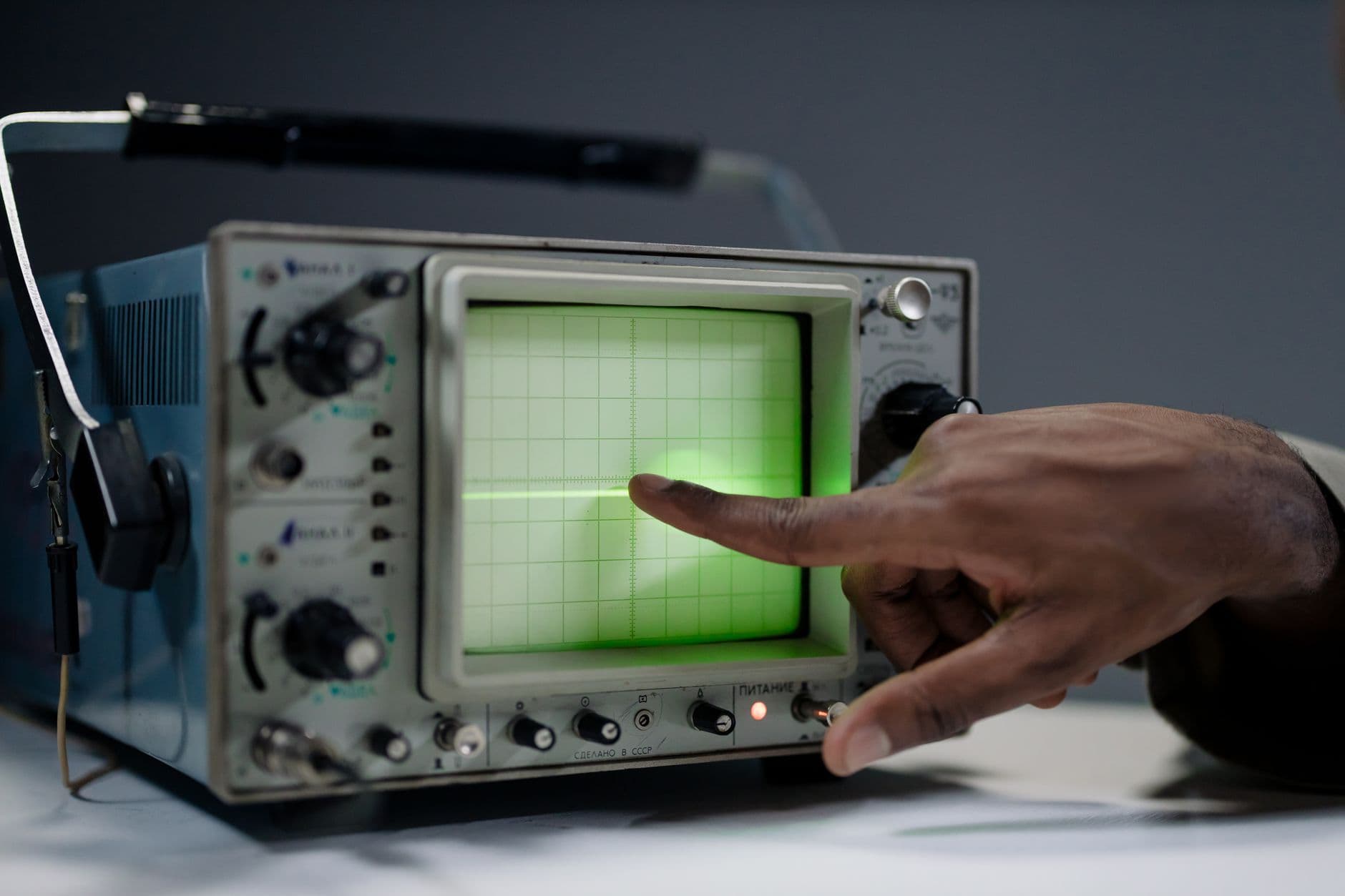
A hand pointing at the screen of a vintage oscilloscope.

Watt & Warden earns a commission on qualifying purchases made through links on this page, at no extra cost to you. It never changes a ranking, and our picks include products we tell you to skip. Full disclosure.

Quick picks

#ProductBest forPrice
1
LANDERPOW 1000W Pure Sine Wave Inverter

Pure sine, wired to a battery

LANDERPOW 1000W Pure Sine Wave Inverter

1,000W of pure sine wave output, wired direct to the battery terminals.

A refrigerator or tools from a car battery
$84.99 · Check price on Amazon

#ad how this is funded · price as of October 21, 2026 · $99.99 15% off

2
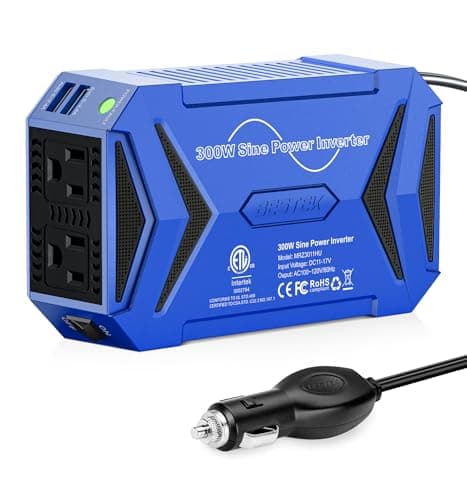
BESTEK 300W Pure Sine Wave Inverter

Pure sine, plugged in

BESTEK 300W Pure Sine Wave Inverter

300W of pure sine wave through the 12V accessory socket — no tools required.

A laptop or a CPAP in a vehicle
$41.99 · Check price on Amazon

#ad how this is funded · price as of October 21, 2026 · $51.99 19% off

3
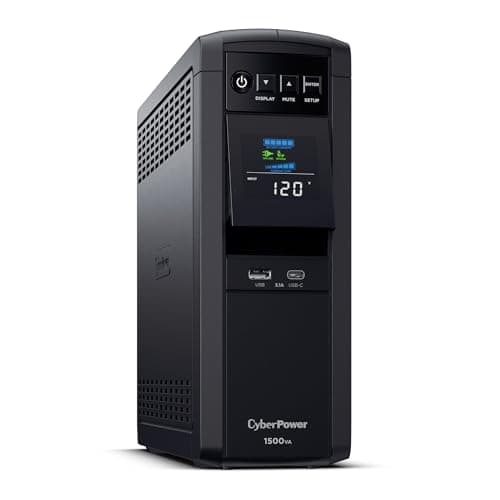
CyberPower CP1500PFCLCD

Pure sine, for a desk

CyberPower CP1500PFCLCD

1,500VA of pure sine wave output with automatic voltage regulation.

A PC with an active PFC power supply
$239.95 · Check price on Amazon

#ad how this is funded · price as of October 21, 2026 · $274.95 13% off

4
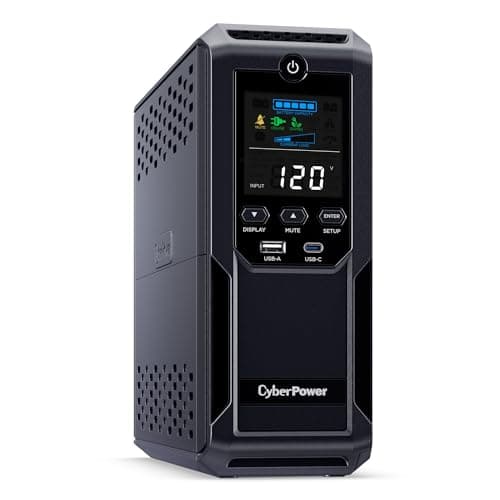
CyberPower CP1500AVRLCD3

The modified sine case

CyberPower CP1500AVRLCD3

The same 1,500VA and battery warranty with a simulated sine wave output.

Simple loads that genuinely do not care
$199.95 · Check price on Amazon

#ad how this is funded · price as of October 21, 2026 · $219.95 9% off

Prices come from the retailer at page-build time and change constantly. Where no live price is available the button reads “Check price” rather than showing a number we cannot stand behind.

What the two waveforms are

Grid power is a smooth sine wave. A pure sine wave inverter reproduces that shape closely. A modified sine wave inverter — more honestly called a stepped or square-wave approximation — produces a blocky shape that averages out to roughly the same voltage.

Plenty of equipment cannot tell the difference. Some equipment can, and the ways it expresses that range from a faint buzz to a failure.

What actually cares

LoadOn modified sineWhy
Incandescent lamp, heater, kettleFinePure resistance — the shape is irrelevant
Phone and laptop chargersUsually fineSimple switching supplies tolerate it
Refrigerator, pump, power toolRuns hot, less efficiently, may fail earlyInduction motors dislike the harmonics
Desktop PC, NAS, serverMay buzz, run hot, or refuse to transferActive power factor correction supplies object
CPAP and medical devicesDo not risk itManufacturers often specify pure sine
Furnace control boardCan misread the waveformFlame-sense circuits time against the sine wave
Microwave, TV with a switching supplyOften works, sometimes noisilyVaries by design — unpredictable

Behavior varies by specific appliance. Where a manufacturer states a requirement — and CPAP and furnace makers frequently do — treat that as the answer rather than a general rule.

The furnace case, which catches people out

A gas furnace is one of the most valuable things to back up in winter and one of the fussiest about waveform. Its control board uses flame rectification to prove the burner is lit, and that circuit can be confused by a stepped waveform — so the furnace runs the blower, fails to confirm flame, and locks out.

If the furnace is on your list, buy pure sine and stop reading comparisons. The furnace backup page covers the rest of that setup.

Where modified sine is a rational purchase

  • A known, simple load list you control — lights, a router, a fan, a camera recorder.
  • Occasional use where efficiency losses over a handful of hours a year do not matter.
  • Tight budgets where the saving is the difference between having backup and not.

What makes it a bad purchase is uncertainty. If you cannot list everything that will ever be plugged in — and in a household outage, nobody can — the cheaper inverter becomes a gamble on equipment you value more than the saving.

What about power stations?

Nearly every modern portable power station outputs pure sine wave, and the good ones publish it. If a listing does not say, assume nothing and ask — a station whose waveform is unstated at this point in the market is telling you something. The inverter explainer covers what else to look for in the spec sheet.

The short version

  • Motors, control boards and active PFC supplies want pure sine.
  • Resistive loads do not care — heat is heat.
  • The furnace is the one that bites, and it is the one you most want working.
  • Buy modified sine only for a load list you fully control.

The picks in full

01 — Pure sine, wired to a battery

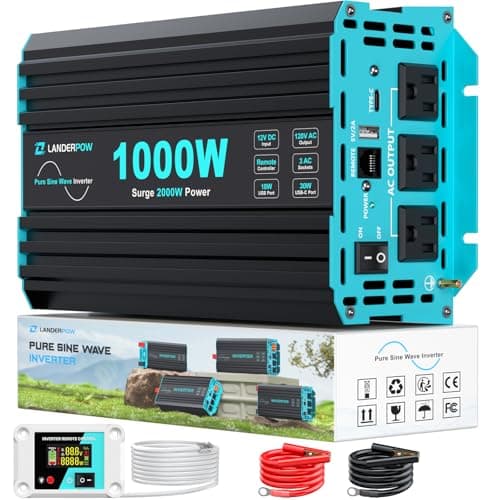
LANDERPOW 1000W Pure Sine Wave Inverter

1,000W of pure sine wave output, wired direct to the battery terminals.

Pure sine is the right call when the load list includes a compressor or anything with a control board, which is most of what people actually want to run from a vehicle.

Direct terminal wiring is what lets it deliver its rating — a 12V accessory socket is typically limited to about 150W.

The honest catch: running a fridge from a car battery flattens it quickly unless the engine is running.

Skip it ifyou want to plug into the cigarette lighter. That socket cannot carry this.
LANDERPOW 1000W Pure Sine Wave Inverter
$84.99 · Check price on Amazon

#ad how this is funded · price as of October 21, 2026 · $99.99 15% off

Published specifications for the LANDERPOW 1000W Pure Sine Wave Inverter
SpecificationPublished figure
Output1,000 W continuous / 2,000 W peak
WaveformPure sine wave
InputDC 12 V
Output voltage120 V AC
AC outlets3
Charging30 W USB-C plus a 5 V / 3.1 A USB-A port
ControlWired remote control included

Source: LANDERPOW — 1000W pure sine wave car inverter listing. These are the manufacturer's published figures, not ours — we have not tested this unit.

02 — Pure sine, plugged in

BESTEK 300W Pure Sine Wave Inverter

300W of pure sine wave through the 12V accessory socket — no tools required.

For laptops, cameras and a CPAP without a humidifier, this is the honest size and the waveform those devices deserve.

No wiring means it moves between vehicles freely.

The honest catch: 300W is a hard ceiling, and the socket's fuse may be lower than that.

Skip it ifanything on your list has a compressor.

BESTEK 300W Pure Sine Wave Inverter
$41.99 · Check price on Amazon

#ad how this is funded · price as of October 21, 2026 · $51.99 19% off

Published specifications for the BESTEK 300W Pure Sine Wave Inverter
SpecificationPublished figure
Output300 W
WaveformPure sine wave
ConnectionCigarette lighter plug — no wiring required
InputDC 12 V
Output voltage110 V AC
Charging4.8 A dual USB fast charging ports

Source: BESTEK — 300W pure sine wave car inverter listing. These are the manufacturer's published figures, not ours — we have not tested this unit.

03 — Pure sine, for a desk

CyberPower CP1500PFCLCD

1,500VA of pure sine wave output with automatic voltage regulation.

Modern desktop power supplies use active power factor correction, and those are the supplies most likely to object to a stepped waveform.

Pure sine removes the question entirely — the UPS sizing page covers how big it needs to be.

The honest catch: runtime at desktop loads is minutes. This is a shutdown device, not an outage device.

Skip it ifyou are protecting a router and nothing else. That is a smaller unit.

CyberPower CP1500PFCLCD
$239.95 · Check price on Amazon

#ad how this is funded · price as of October 21, 2026 · $274.95 13% off

Published specifications for the CyberPower CP1500PFCLCD
SpecificationPublished figure
Capacity1,500 VA / 1,000 W
WaveformPure sine wave (PFC compatible)
Outlets12 NEMA 5-15R — 6 battery-backed, 6 surge-only
RegulationAutomatic voltage regulation (AVR)
Run timeabout 10 min at half load, 2.5 min at full load
Warranty3 years including the battery

Source: CyberPower — CP1500PFCLCD product specifications. These are the manufacturer's published figures, not ours — we have not tested this unit.

04 — The modified sine case

CyberPower CP1500AVRLCD3

The same 1,500VA and battery warranty with a simulated sine wave output.

For a router, a modem, a camera recorder or a lamp, a stepped waveform is invisible and the saving is real.

This is the honest place for modified sine: known, simple loads that you control.

The honest catch: you will not discover whether your equipment minds until the power fails, which is a bad moment to find out.

Skip it ifa desktop PC, a NAS or anything with a motor is plugged into it.

CyberPower CP1500AVRLCD3
$199.95 · Check price on Amazon

#ad how this is funded · price as of October 21, 2026 · $219.95 9% off

Published specifications for the CyberPower CP1500AVRLCD3
SpecificationPublished figure
Capacity1,500 VA / 900 W
WaveformSimulated sine wave — not for active PFC supplies
Outlets12 NEMA 5-15R — 6 battery-backed, 6 surge-only
RegulationAVR, plus GreenPower bypass when the line is stable
Charging2 USB ports
Run timeabout 12 min at half load, 3 min at full load
Warranty3 years including the battery

Source: CyberPower — CP1500AVRLCD3 product details and specifications. These are the manufacturer's published figures, not ours — we have not tested this unit.

How these were chosen

We did not test these. Nobody at Watt & Warden has plugged one in. What we did instead: read the manufacturer's published specifications, compile them into a table where the figures line up, and compute the numbers manufacturers leave out — runtime against a real appliance load, and what an hour of running actually costs.

Anything that could not be sourced was left out rather than estimated, and every pick names the buyer who should skip it. The full method is here, including where it is weaker than a publisher with a test bench.

Questions people actually ask

What is the difference between pure sine wave and modified sine wave?

Pure sine wave inverters reproduce the smooth waveform grid power uses. Modified sine wave inverters produce a stepped approximation that averages to a similar voltage. Resistive loads cannot tell the difference; motors, control boards and active power factor correction supplies can.

Will a modified sine wave inverter damage my appliances?

Rarely instantly, but it can shorten their life. Induction motors in refrigerators, pumps and power tools run hotter and less efficiently on a stepped waveform, and some electronics buzz, misbehave or refuse to run at all. Anything with a manufacturer requirement for pure sine should get it.

Can I run a furnace on a modified sine wave inverter?

It is a bad idea. Furnace control boards use flame rectification to confirm the burner is lit, and a stepped waveform can confuse that circuit so the furnace locks out. If backing up heat is the point of the purchase, buy pure sine.

Do power stations use pure sine wave?

Nearly all modern portable power stations do, and reputable makers publish it in their specifications. If a listing does not state the waveform, treat that as a warning rather than an oversight.

Is pure sine wave worth the extra cost?

For most households yes, because the saving is small next to the value of the equipment you might plug in. Modified sine remains rational for a fixed, simple load list you control completely -- lights, a router, a fan -- and irrational as soon as an unknown appliance can be plugged in during an outage.

Sources

Every figure on this page comes from a published source. We have not tested this equipment, so the specifications are the manufacturer's and the statistics are the dataset's — the arithmetic on top of them is ours, and it is shown in full so you can check it. How we work this out.