The verdict, in one paragraph
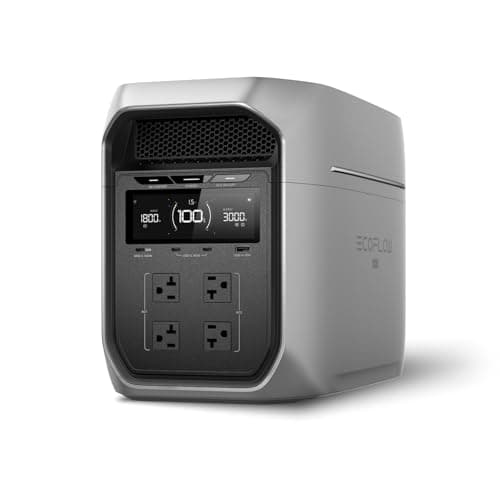
If quiet operation and low maintenance are your two criteria, a home battery wins both outright and it is not close. EcoFlow publishes 25 dB for the DELTA 3 Max Plus; Generac publishes 61 to 69 dB(A) at 23 feet across the Guardian standby range, and a four-tier service schedule to go with it. A battery has no oil, no filter, no plug, no valve clearance and no fuel that can go stale. The trade is runtime: silence lasts exactly as long as your kilowatt-hours do. For outages longer than a battery can cover, the quietest engine with a published figure is the Honda EU2200i at 48-57 dB(A), and the best of both is a battery that runs the house with an inverter generator that refills it for an hour a day.
How these were chosen
This site runs no test bench and owns no sound meter, so nothing below is a measurement of ours. Every figure is the manufacturer's own published number, cited at the foot of the page. Three rules shaped the list:
- A published noise figure was required to be ranked. Plenty of units are marketed as "super quiet" without a number anywhere. Those are not comparable and are not here.
- Maintenance means a published schedule, not an impression. Generac publishes intervals in hours and years. Briggs & Stratton publishes a portable schedule. Battery manufacturers publish no service schedule at all, which is itself the finding.
- Everything had to be currently purchasable. Checked before writing, not assumed. One product that would otherwise have appeared here - a fuel stabilizer - came back unavailable and was dropped rather than featured on a dead listing.
Standby generators are discussed throughout and are deliberately not a pick. They are installer-mediated equipment that is not sold through a retail buy button, so quoting one here would be dishonest about how you actually acquire it. The whole-house generator page covers that route properly.
Published noise, ranked
| System | Published noise | Measurement basis |
|---|
| EcoFlow DELTA 3 Max Plus (battery) | 25 dB | Manufacturer figure; fan runs under load and fast charge |
|---|
| BLUETTI Elite 100 V2 (battery) | 30 dB | Published "under light loads" |
|---|
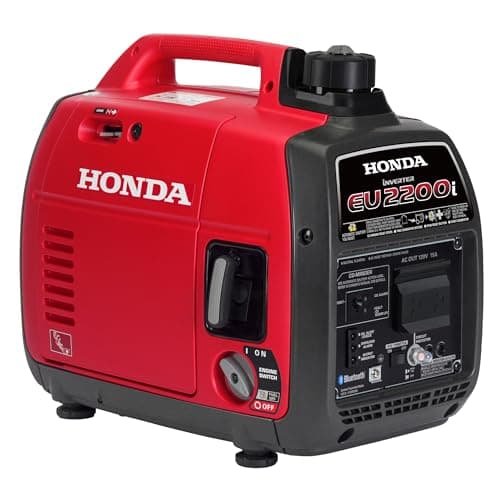
| Honda EU2200i (inverter generator) | 48-57 dB(A) | Range reflects engine throttling to load |
|---|
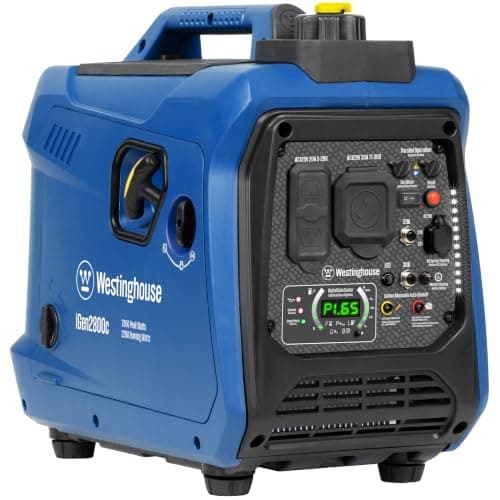
| Westinghouse iGen2800 (inverter generator) | 52 dBA | Manufacturer figure |
|---|
| Generac Guardian 10kW (standby) | 61 dB(A) | 23 ft, normal load, measured from the front |
|---|
| Generac Guardian 14-18kW (standby) | 65 dB(A) | 23 ft, normal load, measured from the front |
|---|
| Generac Guardian 20-24kW (standby) | 67 dB(A) | 23 ft, normal load, measured from the front |
|---|
| Generac Guardian 26kW (standby) | 68 dB(A) | 23 ft, normal load, measured from the front |
|---|
| Generac PowerPact 7.5kW (standby) | 69 dB(A) | 23 ft, normal load - the loudest in the range |
|---|
Every figure is the manufacturer's own, from the pages cited under Sources. Note that the smallest Generac in the range is also the loudest: 69 dB(A) on the 7.5kW PowerPact against 61 dB(A) on the 10kW. Output and noise do not track each other.
Why these decibel figures do not subtract cleanly
Three things make a straight comparison across that table unreliable, and it is worth saying so before anyone treats 25 against 67 as arithmetic:
- The measurement distances differ. Generac states 23 feet. A battery's figure is effectively at the unit. Sound falls off with distance, so the standby figure would be higher measured at arm's length and the battery figure lower measured across a yard.
- Decibels are logarithmic. A 10 dB rise is roughly a doubling of perceived loudness. The gap between a 61 dB(A) and a 69 dB(A) standby unit is far larger than the eight-point spread suggests.
- Generac notes its figures are taken from the front and that other sides may be louder - which is a siting decision, not a product one.
What survives all three caveats is the direction, and the direction is not in doubt. An engine is an order of magnitude louder than a battery under any measurement convention you pick. The quiet generator roundup goes further into what a published dB figure leaves out, and standby generator noise and neighbors covers siting, exercise scheduling and the local rules you may be subject to.
Published maintenance, ranked
| System | Published service schedule | Runs when you are not using it? |
|---|
| Home battery | None published - no oil, filter, plug, valve clearance or fuel | No |
|---|
| Portable inverter generator | Oil at 5 h then every 50 h or yearly; air cleaner pre-filter every 25 h; plug, spark arrester and cooling system yearly; valve clearance at 100 h; storage prep after 30 idle days | No - hours accrue only when you run it |
|---|
| Standby generator | Break-in at 25 h (20 h on the 7.5kW PowerPact); yearly at 100 h or 1 year; Schedule A at 200 h or 2 years; Schedule B at 400 h or 4 years | Yes - weekly exercise cycle, outage or not |
|---|
Standby intervals are Generac's published schedule. The portable column is transcribed from a Briggs & Stratton 8,000W operator's manual as a representative published example - other manufacturers publish different figures, which is why the per-model manual is always the authority.
The third column is the one people miss. A standby generator is the only system here that consumes its own service life while nothing is wrong. It exercises weekly to keep itself healthy, and those minutes accumulate toward the same hour-based intervals that an outage would. Generac also publishes a stricter rule for extreme climates - below 40°F or above 85°F, oil changes move to annually or every 100 run hours.
"Low maintenance" for a battery is not "no maintenance"
The tables above would let you conclude a battery needs nothing, and that is very nearly true but not entirely. Three things still apply:
- State of charge in storage. Lithium cells do not like sitting empty for long periods. Topping a battery up every six months is good practice universally, and on at least one brand it is a warranty condition rather than advice - power station warranties compared sets out which clauses bite.
- Where you keep it. Most units in this class cannot charge below freezing, so an unheated garage creates a problem that only shows up during a January storm. Storing a power station covers the temperature windows.
- Firmware. These are connected devices and updates arrive through the app. Not a chore, but not nothing either.
Against a generator's oil, filters, plugs, valve clearance, stabilized fuel and an annual test run, that is still a rout. But "zero" is the wrong word and "two reminders a year" is the right one.
What silence actually costs
A roundup where the winner has no downsides is an advertisement, so here is the bill for choosing quiet:
- Runtime is capped and the cap is low. Four kilowatt-hours is a night of critical loads, not a week. A generator with fuel in a can is effectively unlimited. This is the single real reason people buy engines.
- Refilling needs the grid, the sun or an engine. A battery that empties during a multi-day event is a heavy box until something charges it, and solar is weather-dependent at exactly the wrong moment. Outage duration and capacity turns your own outage history into the number you actually need.
- Cost per kilowatt-hour is far higher. Stored energy is expensive to buy and cheap to use; generated energy is the reverse. Over a long outage the generator wins on cost and loses on everything else.
- Heavy 240V loads are a separate question. A well pump or central air needs split-phase output, which most batteries in the quiet tier do not have - the split-phase shortlist covers the ones that do.
The setup that actually wins both criteria
If your outages are long enough that a battery alone will not cover them, the quiet answer is not a bigger generator. It is a battery running the house with an engine that refills it on a schedule you choose.
The arithmetic is straightforward. A generator sized to run a house burns fuel continuously whether the house is drawing 400W or 4,000W, which means noise for twenty-four hours a day. Charging a battery instead means the engine runs near its efficient output for one or two chosen hours and is silent the rest of the time - including overnight, which is when noise actually costs you something. Running a home battery and a generator together covers which systems accept generator charging, at what wattage, and the one major brand that does not accept it at all.
Which one, for which buyer
- Outages of a few hours, a few times a year: EcoFlow DELTA 3 Max Plus. Silent, nothing to service, and the 10ms switchover means you find out from the neighbors rather than from your own lights.
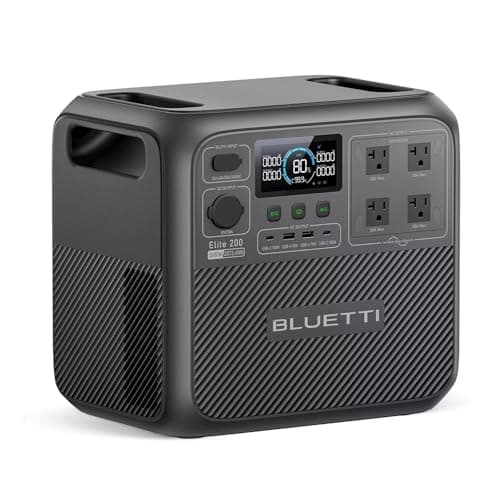
- A battery that will also be cycled regularly: BLUETTI Elite 200 V2, for the 6,000+ cycle rating.
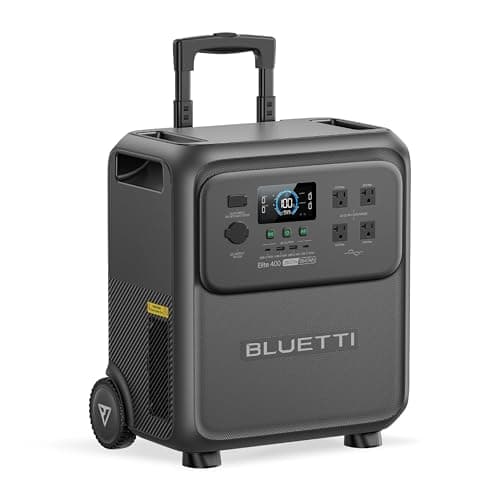
- Overnight or multi-hour outages, critical loads only: BLUETTI Elite 400. Nearly four kilowatt-hours and a 3W standby draw for the months it spends waiting.
- Multi-day outages, and you accept an engine: Honda EU2200i for the quietest published figure, or the Westinghouse iGen2800 for 52 dBA at much less money.
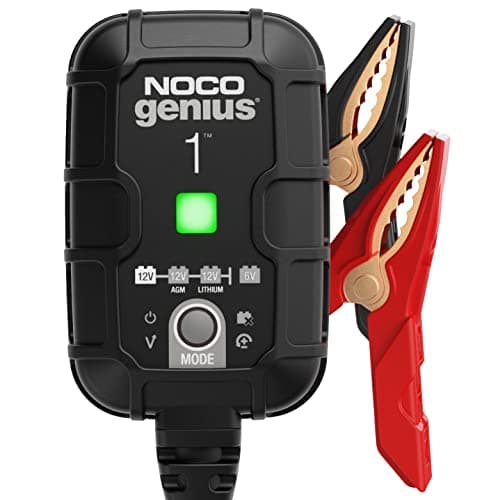
- You already own a standby or an electric-start generator: a NOCO GENIUS1 on the start battery. It is the cheapest line item here and it addresses the most common no-start failure.
- A whole house behaving normally through a long event: none of these alone. That is a standby generator, and it is the loudest, highest-maintenance option for a reason - generator versus home battery runs the economics honestly.
The short version
On the two criteria in the title there is no contest: a battery publishes 25 to 30 dB and no service schedule, an inverter generator publishes 48 to 57 dB(A) and a schedule measured in operating hours, and a standby generator publishes 61 to 69 dB(A), a four-tier schedule, and a weekly exercise cycle that runs whether or not anything has ever gone wrong. The honest qualifier is that quiet is finite and fuel is not, so size the battery against your real outage history first - and if the answer comes back longer than a battery can cover, pair one with the quietest engine you can find rather than buying a louder machine.